



Platinum Spot Price


| Platinum Spot Prices | Today | Change |
|---|---|---|
| Platinum Price Per Ounce | $1,663.20 | -9.85 |
| Platinum Price Per Gram | $53.47 | -0.32 |
| Platinum Price Per Kilo | $53,473.12 | -316.68 |
Platinum Price Today
View the live platinum spot price per troy ounce, gram, and kilogram. You can also see the 24-hour price trend for platinum. Below is an interactive platinum price chart with historical pricing, as well as additional historic long term platinum price charts below.
Metal Performance History
October 14, 2026 3:00 AM EST
| Time | Price | Change
|
Change % |
|---|---|---|---|
| 1 Day | $1,666.30 | -7.45 | -0.45% |
| 7 Days | $1,633.85 | +24.75 | +1.52% |
| 1 Months | $1,766.05 | -107.45 | -6.08% |
| 6 Months | $2,107.70 | -449.1 | -21.31% |
| 1 Years | $1,635.70 | +22.9 | +1.40% |
| 5 Years | $1,055.88 | +602.72 | +57.08% |
| 10 Years | $935.51 | +723.095 | +77.30% |
| 15 Years | $1,555.55 | +103.05 | +6.63% |
Platinum Spot Price and the Price of Platinum per Ounce
The platinum spot price is the live market price of one troy ounce of platinum, quoted in U.S. dollars and updated throughout global trading hours. SD Bullion displays the current platinum price per troy ounce, gram, and kilogram, along with live charts that help investors compare today’s platinum price against historical platinum price trends.
Investors use the platinum spot price as the baseline for comparing retail prices on platinum bars, platinum coins, and platinum rounds. Physical platinum products usually sell above spot because final prices include premiums for minting, distribution, dealer spread, and product demand.
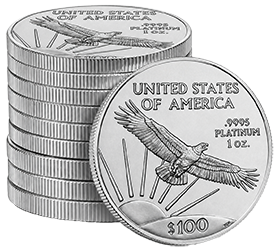
What Is the Platinum Spot Price?
The platinum spot price is the baseline cost of one troy ounce of physical platinum at a specific moment in time. Because precious metals are traded continuously across global markets, this price changes quickly and can fluctuate within minutes or seconds depending on economic activity. To ensure investors have access to the most accurate information, SD Bullion updates live pricing every 10 to 15 seconds alongside interactive historical charts. Platinum prices can change by the minute during global trading hours.

Why are investors buying Platinum Bullion products?
The following short video covers current supply-demand investment factors for platinum.
100% FREE guide on platinum bullion buying ➩ Bullion Buying eBook
Platinum Price Units
Precious metals use unique weight standards that differ from everyday measurements. The following table defines the standard units used to measure and trade platinum:
Weight Unit
Relationship to Troy Ounce
Typical Product Form
Troy Ounce
1.00 (Slightly heavier than a standard ounce)
Investment coins, 1 oz bars, rounds
Gram
Approximately 0.032 troy ounces
Small fractional bars, assay cards
Kilogram
32.151 troy ounces
Large-scale institutional bars
Platinum Spot Price vs. Retail Platinum Product Price
Investors looking to purchase physical metal will not buy it exactly at the live spot price. The retail price of any product incorporates manufacturing, distribution, and dealer costs. Understanding how these components form the final retail price requires familiarity with standard industry pricing terms:
Pricing Term
Definition
Impact on Investor
Ask Price
The price a bullion dealer uses when selling platinum to the retail public.
This is the base price you pay before product-specific premiums are applied.
Bid Price
The price a bullion dealer offers when buying platinum back from the public.
This is the payout price you receive when liquidating your assets.
Premium
The additional cost above the spot price to cover minting, handling, and profit.
Varies by item; bars typically carry lower premiums than government coins.
Dealer Spread
The difference between the dealer's bid price and ask price.
A narrow spread indicates a highly liquid, competitive market, making it easier to break even.
What Was Platinum’s Highest Price Ever?
Platinum experienced significant price expansion during the full fiat currency era following the 1971 Nixon Shock. Over the decades, the metal's valuation has seen dramatic swings, trading from a post-Nixon low of $96.10 per ounce on January 20, 1970, to historic highs nearing $3,000 per ounce.
When President Richard Nixon closed the gold window on August 15, 1971, platinum was trading at roughly $115.00 per ounce. This geopolitical shift catalyzed a multi-decade commodities boom. Today, day-to-day market price discovery for platinum remains heavily dominated by trading on the New York Mercantile Exchange (NYMEX) alongside global spot market fixes.
The asset's modern history is defined by two monumental peaks:
- March 4, 2008: Platinum hit a long-standing London PM Fix record of $2,276.00 per ounce (with NYMEX futures peaking intraday at $2,308.80) due to severe electrical grid crises in South African mines.
- January 23, 2026: Platinum shattered its previous records to establish a new, all-time historic high of $2,734.72 per ounce (with continuous contract charting registering a maximum squeeze extension of $2,923.70), driven by severe structural supply deficits and aggressive green-energy industrial demand.
Historic Milestone Table
Historic Milestone
Date
Price (USD / Troy Ounce)
Market Context
All-Time Record High
January 2026
$2,923.70(Spot/CFD High)
Driven by severe global supply deficits, aggressive industrial hedging, and resurgent investment demand pushing the metal near the $3,000 threshold.
Pre-Crisis Peak
March 4, 2008
$2,276.00 (AM London Fix)
The previous long-standing record, fueled by deep industrial demand and acute South African mining power grid constraints right before the 2008 financial crisis.
Gold-Ratio Peak
March 4, 2008
Over 2x the price of gold
A legendary valuation anomaly where platinum traded at more than double the price of gold ($981.75), 4x palladium ($588), and 100x silver ($20.32).
Modern Value & Rebound Window
2009–2025
Variable ($593 – $1,600+)
Following a steep post-2008 structural correction, platinum spent over a decade as an attractive long-term value play before building the macro momentum for its 2026 breakout.
What Factors Move Platinum Prices?
Platinum prices are driven by a dual dynamic, functioning simultaneously as a rare monetary asset and a heavy industrial metal.
- Industrial and Automotive Demand: Unlike gold, which serves primarily financial and ornamental purposes, platinum is deeply integrated into global manufacturing. Its single largest industrial application is in the automotive sector for producing catalytic converters to reduce exhaust pollution. It is also highly utilized in aerospace applications, industrial processing, and jewelry fabrication.
- Mining Constraints and Supply: Physical platinum is exceptionally rare and is heavily concentrated as a byproduct of nickel and copper mining. Supply disruptions in major mining regions (such as South Africa and Russia), processing shortages, or rising operational costs immediately push the live spot price upward.
- Macroeconomic Elements: Global geopolitical instability, shifting currency values (particularly the strength of the U.S. dollar), fluctuating interest rates, and overall stock market performance create strong secondary price movements.
Platinum vs. Gold, Silver, and Palladium
While all precious metals act as a wealth preservation hedge against inflation and currency devaluations, their fundamental drivers vary. Gold serves mostly as a financial asset, whereas platinum remains tightly linked to industrial cycles and stock market health.
Historically, platinum has spent long spans of time priced significantly higher than gold. However, market shifts can cause the Platinum-to-Gold ratio to swing dramatically. When the ratio widens (meaning an ounce of gold purchases a historically high amount of platinum), long-term investors often view the white metal as severely undervalued relative to its historical performance.

Best Platinum Bullion Products for Investors
When deploying capital into the platinum market, choosing the right vehicle depends directly on your goals regarding premiums, liquidity, and asset control.
Product Type
Typical Metal Content
Legal Tender?
Typical Premium
Best For
Platinum bars
Commonly 1 oz, 10 oz, or gram sizes
No
Usually lower
Investors seeking low premium per ounce
Platinum rounds
Usually 1 troy oz
No
Usually lower to moderate
Buyers focused on metal content
Platinum coins
Often 1 troy oz or fractional sizes
Yes, if government-minted
Usually higher
Investors who want recognizable sovereign coins
Platinum ETFs
Share-based exposure
No physical possession
Expense ratio instead of product premium
Traders seeking paper exposure
For wealth insulation, physical bullion outright remains the industry benchmark. New investors generally target physical platinum bars in one-ounce or fractional gram sizes. For those looking to blend raw metal content with legal tender security and collectible appeal, sovereign coins like the American Platinum Eagle (US Mint) or the Canadian Platinum Maple Leaf (Royal Canadian Mint) provide excellent market liquidity.
Platinum Price Frequently Asked Questions
Compare today’s live platinum spot price with current platinum bars, coins, and IRA-eligible platinum products at SD Bullion.