









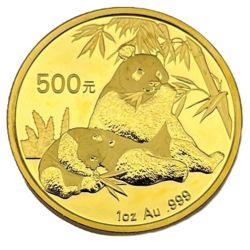
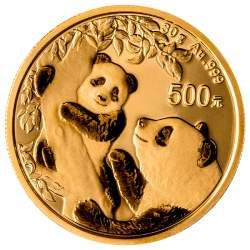
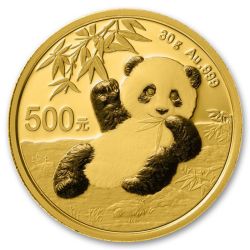
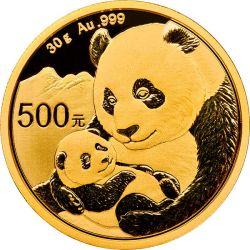


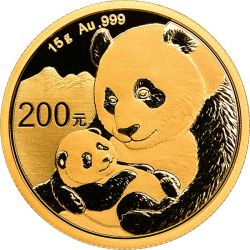
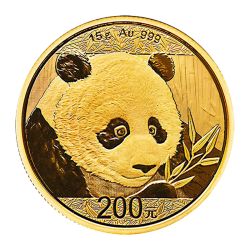
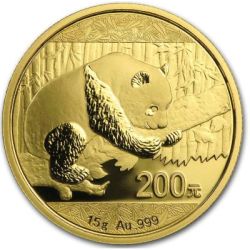
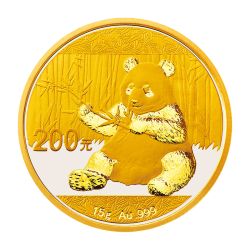
Chinese Gold Panda Coins
Chinese Gold Panda coins combine .999 fine gold with distinctive, changing designs inspired by one of China's most recognizable symbols. First introduced in 1982, the series has become a well-known choice among precious metals investors and coin collectors. Its combination of gold content, official Chinese issuance, and evolving panda artwork gives the series both bullion value and collectible appeal.
Available in several weights, Chinese Gold Panda coins provide different options for owning physical gold. The series also offers collectors a long history to explore, from its original troy-ounce issues to the metric-weight coins introduced in 2016.
Highlights
-
Contains .999 fine gold
-
Includes 30g, 15g, 8g, 3g, and 1g weight options
-
Carries yuan-denominated legal tender face values
-
Features the giant panda on the reverse
-
Displays the Temple of Heaven on the obverse
-
Showcases changing panda designs across many annual issues
-
Comes from China Gold Coin Corporation
-
Bears no mint marks
-
Transitioned from troy-ounce to metric weight denominations in 2016
-
Offers bullion and collectible appeal
-
Provides multiple Gold Panda sizes and issues for investors and collectors
What Is a Gold Panda Coin?
A Gold Panda coin is a Chinese legal-tender gold coin featuring the giant panda as its central design theme. Struck from .999 fine gold, these coins carry face values denominated in yuan. It is part of the Panda Collection, which also delivers Silver Panda Coins.
The Chinese Mint, also known as China Gold Coin Corporation, oversees China's modern precious-metal coin program and its established quality production standards. Although Gold Pandas have a stated monetary value, their market prices are primarily influenced by their gold content and any applicable premiums.
In addition to its legal tender status, fully backed by the Chinese government, the series is particularly distinctive for its changing panda artwork. While the reverse traditionally presents a new panda design across many annual issues, the obverse consistently features a standard motif.
History of Chinese Gold Panda Coins
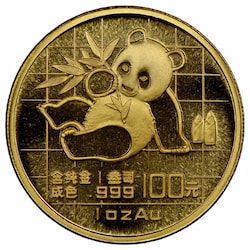
The Chinese Gold Panda series debuted in 1982 with 1 oz, 1/2 oz, 1/4 oz, and 1/10 oz gold coins. China added a 1/20 oz issue in 1983, followed by additional sizes and special larger-format releases over the years.
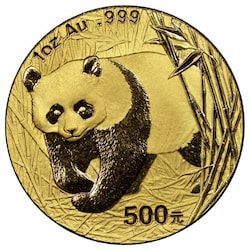
In 2001, the series temporarily departed from its tradition of changing the panda design each year. Annual design changes returned in 2002, restoring one of the program's most distinctive characteristics.
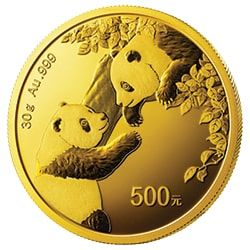
Another major change came in 2016, when Gold Panda bullion coins transitioned from troy-ounce denominations to metric weights. Modern issues are identified in grams, including 30g, 15g, 8g, 3g, and 1g, marking a significant evolution in the series' specifications.
Chinese Gold Panda Designs
Chinese Gold Panda coins combine a consistent architectural motif on the obverse with changing panda artwork on the reverse. This contrast gives the series a recognizable visual identity while allowing individual issues to stand apart through their yearly designs.
Reverse Design
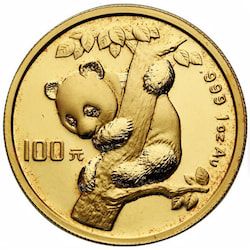
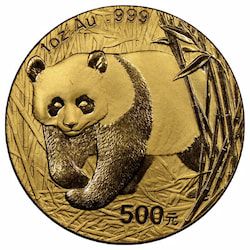
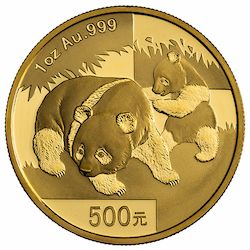
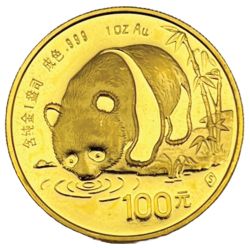
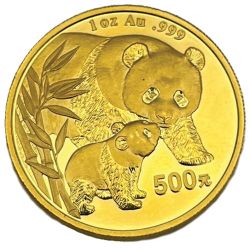
The reverse features the giant panda, with artwork varying across many annual issues. Designs depict pandas in different poses and settings, sometimes alongside bamboo or elements of their natural habitat. Inscriptions provide key information about the coin, including its weight, gold content, and face value. The 2015 issue is a notable exception, as its reverse omitted the weight and fineness.
Obverse Design
The obverse features the Hall of Prayer for Abundant Harvests at Beijing's Temple of Heaven, a landmark associated with China's cultural heritage. Chinese characters identify the People's Republic of China, while the year of issue also appears on this side.
The consistent Temple of Heaven design provides continuity across the series, while the changing panda imagery gives each annual release its individual character.
Chinese Gold Panda Coin Specifications
Chinese Gold Panda coins are widely recongized for its technical precision and artwork. The coins are struck from .999 fine gold and have been issued in different weights and denominations throughout the series.
Earlier bullion coins used troy-ounce denominations, while modern issues use metric weights. The transition to grams took place in 2016, creating modern sizes that closely correspond to several of the series' traditional fractional-ounce formats.
|
Modern Gold Panda |
Approx. Troy Ounces |
Traditional Ounce Counterpart |
Face Value |
|
30 grams |
0.9645 oz |
1 oz |
500 Yuan |
|
15 grams |
0.4823 oz |
1/2 oz |
200 Yuan |
|
8 grams |
0.2572 oz |
1/4 oz |
100 Yuan |
|
3 grams |
0.0965 oz |
1/10 oz |
50 Yuan |
|
1 gram |
0.0322 oz |
No direct equivalent |
10 Yuan |
These metric weights are close to, but not exact equivalents of, the earlier ounce denominations, Therefore, it is not possible to say a troy ounce coin was replaced by an equivalent gram coin. A 30g Gold Panda, for example, contains slightly less gold than a full 1 troy oz coin, which contains 31.1035 grams. Similarly, 15g, 8g, and 3g closely correspond to the former 1/2 oz, 1/4 oz, and 1/10 oz sizes.
Gold Pandas have also been issued in different finishes and formats, including bullion and proof versions. Dimensions can vary by weight, year, and issue, so collectors should consult the specifications for the particular coin rather than applying one measurement across the entire series.
Why Buy Chinese Gold Panda Coins?
Chinese Gold Panda coins combine physical gold ownership with collectible appeal. Investors can use them to add gold to their holdings, while collectors can appreciate the series for its changing designs, Chinese cultural themes, and established history.
Their distinctive combination of bullion and numismatic characteristics also makes Gold Pandas an alternative to more conventional gold bullion coins. For buyers interested in both precious metals and modern coin collecting, the series offers a way to pursue both interests in a single product.
Gold Panda vs. Other Gold Bullion Coins
Gold Panda coins compete with several established bullion programs, including the American Gold Eagle and Canadian Gold Maple Leaf. Comparing their key characteristics can help investors and collectors evaluate differences in gold purity, design, face value, and overall appeal.
|
Feature |
Chinese Gold Panda |
American Gold Eagle |
Canadian Gold Maple Leaf |
|
Gold Purity |
.999 fine gold |
.9167 fine gold |
.9999 fine gold |
|
Design |
Changing panda designs |
Liberty and eagle |
Maple leaf |
|
Face Value |
Yuan |
U.S. dollar |
Canadian dollar |
|
Primary Appeal |
Bullion and collecting |
Bullion and recognition |
Bullion and high purity |
Gold Panda vs. American Gold Eagle
Chinese Gold Pandas and American Gold Eagles are both established gold bullion coins, but they differ in purity and design. Gold Pandas contain .999 fine gold, while American Gold Eagles are struck in 22-karat gold with a .9167 fineness. Gold Pandas are also known for changing panda artwork, whereas American Gold Eagles retain their established Liberty and eagle designs.
Gold Panda vs. Canadian Gold Maple Leaf
Both coins contain high-purity gold, with Gold Pandas at .999 fine gold and Canadian Gold Maple Leafs at .9999 fine gold. Their designs follow different traditions: Gold Pandas feature changing depictions of the giant panda, while the Maple Leaf consistently showcases Canada's national symbol. For investors and collectors, purity, premiums, availability, and design preferences can all influence the choice.
Gold Panda Coins: Premiums, Value, and Rarity
The value of a Gold Panda coin depends on more than its gold content. The current gold spot price reflects the bullion's underlying value, while the coin's year, availability, condition, and collector appeal can influence the price above that value.
Premiums vary among Gold Panda issues. Readily available modern bullion coins may carry lower premiums, while older, scarcer, or particularly sought-after issues can command more from collectors.
Mintage and surviving examples can also affect rarity, but a low mintage does not automatically make a Gold Panda highly valuable. Collector demand, condition, and availability also play important roles in determining what buyers may be willing to pay.
Gold Panda Prices and Premiums Over Time
Gold Panda prices can change with the broader gold market, while individual issues may follow different price patterns based on their year, weight, mintage, condition, availability, and collector demand. As a result, the market price of a Gold Panda does not necessarily move in direct proportion to the spot price of gold.
The 1 oz and 30g Gold Pandas provide useful reference points when comparing different generations of the series. The 1 oz coins belong to the traditional ounce-denominated era, while 30g coins represent the metric format adopted for modern Gold Panda bullion coins in 2016. Their gold content is similar but not identical: a 1 troy oz coin contains 31.1035 grams of gold, compared with 30 grams in a 30g Gold Panda.
|
Gold Panda Format |
Era |
Gold Content |
Pricing Consideration |
|
1 oz |
Pre-2016 |
1 troy oz |
Gold value plus any issue-specific premium |
|
30g |
2016–present |
30g |
Gold value plus any issue-specific premium |
When evaluating a Gold Panda's price, compare the coin's current market price with the spot price of gold and consider the characteristics of the specific issue. For current pricing, the live gold spot price and the current price of the particular Gold Panda provide a more useful reference than a historical average.
How to Buy and Sell Gold Panda Coins
Buying or selling Chinese Gold Panda coins is easier when you know the specific weight, year, condition, and issue you are dealing with. These details can affect both the coin's gold value and its potential collector appeal.
When buying, compare the dealer's asking price with the current gold spot price and consider whether the premium is appropriate for that particular issue. For older or collectible Gold Pandas, mintage, condition, and availability can also influence the price. Purchasing from an established precious metals dealer can provide greater confidence in the coin's authenticity and specifications.
When selling, compare offers from reputable buyers and provide accurate information about the coin's weight, year, and condition. Keeping purchase records and, when available, original packaging can also help document the coin's specifications and history.
How to Store Gold Panda Coins
Proper storage helps protect Gold Panda coins from scratches, moisture, handling damage, and loss while preserving their condition and potential collectible value.
For home storage, keep individual coins in protective holders or their original packaging and place them in a secure, dry location away from excessive humidity and temperature fluctuations. Handle coins by their edges whenever possible to avoid fingerprints or marks on their surfaces.
A safe-deposit box can provide additional protection against theft and household risks. Collectors with larger or higher-value holdings may also consider a professional precious metals vault for specialized security and storage conditions.
If you insure your Gold Pandas, review the policy carefully to confirm that precious metals are covered and understand its limits, exclusions, documentation requirements, and conditions for coverage.
Why Buy Chinese Gold Panda Coins From SD Bullion?
SD Bullion offers Chinese Gold Panda coins in a selection of weights and years, subject to availability. Explore our available Gold Pandas to add .999 fine gold to your holdings or expand your collection with one of China's most distinctive bullion coin series.
What Is a Gold Panda Coin?
A Gold Panda coin is a Chinese legal-tender bullion coin made from .999 fine gold and featuring the giant panda. First issued in 1982, the series includes multiple weights and yuan-denominated face values. Its changing panda designs distinguish it from many other bullion programs, giving Gold Pandas appeal among investors seeking physical gold and collectors interested in modern Chinese coinage.
What Is the History of the Chinese Gold Panda Coin Series?
The Chinese Gold Panda series began in 1982 with 1 oz, 1/2 oz, 1/4 oz, and 1/10 oz coins. China added a 1/20 oz issue in 1983, followed by additional sizes and special releases. In 2001, the panda design was temporarily carried forward rather than changed. Annual design changes returned in 2002, while 2016 brought the transition from troy-ounce to metric weight denominations.
How Have Chinese Gold Panda Designs Changed by Year?
Chinese Gold Panda reverse designs have traditionally changed from year to year, depicting the giant panda in different poses and settings. This evolving artwork is a defining feature of the series and encourages collectors to pursue different dates. The 2001 issue was an exception to the annual design tradition, while new panda designs returned in 2002 and continued across subsequent releases.
What Are the Gold Panda Coin Specifications by Year?
Gold Panda specifications differ by year, weight, and issue. Earlier bullion coins used troy-ounce denominations, while modern issues use metric weights. Gold Pandas are generally struck from .999 fine gold and carry yuan-denominated face values. Dimensions can also vary by weight and issue, so collectors should consult the specifications for the particular coin rather than applying one set of measurements across the entire series.
Why Are Gold Panda Coins Popular With Investors and Collectors?
Gold Panda coins appeal to investors because they provide ownership of .999 fine gold in several weights. Collectors value the changing panda designs, Chinese cultural themes, and the series' long history. This combination of bullion and collectible characteristics gives Gold Pandas a distinctive place among modern gold coins, particularly for buyers who appreciate physical precious metals alongside artistic and numismatic interest.
Is a Gold Panda Coin a Good Investment for Beginners?
A Gold Panda can be an appealing option for beginners interested in owning physical gold, but buyers should understand its bullion value and potential premiums. Weight, price relative to spot gold, availability, and collector demand can affect the purchase cost. Beginners may benefit from comparing Gold Pandas with other established bullion coins and considering premiums, liquidity, and personal investment goals before buying.
Why Do Gold Panda Coins Have Higher Premiums?
Gold Panda premiums can exceed the value of their gold content because pricing may reflect factors beyond bullion value. Year, mintage, availability, condition, and collector demand can influence the premium. Older or harder-to-find issues may command more than readily available bullion coins. A low mintage alone does not guarantee a high premium, since demand for the specific issue remains an important factor.
What Are the Rare Gold Panda Coin Years and Key Dates?
Rare or desirable Gold Panda issues can include coins with lower mintages, limited availability, unusual characteristics, or strong collector demand. Early issues and certain lower-mintage releases may attract particular attention, but rarity should be evaluated alongside condition and market demand. Collectors should research the specific year, weight, mintage, and variety of a coin rather than assuming every older Gold Panda is automatically rare or valuable.
How Can I Verify the Authenticity of a Gold Panda Coin?
To verify a Gold Panda, compare its weight, dimensions, inscriptions, and design details with reliable specifications for the specific issue. Original packaging can provide additional information for security verification but should not be treated as conclusive proof. For greater assurance, professional dealers, coin grading services, and specialized precious metals testing can provide additional authentication. Buying from an established precious metals dealer also helps reduce the risk of counterfeits.
How Does the Gold Panda Compare With the American Gold Eagle?
Gold Pandas and American Gold Eagles are both established gold bullion coins, but they differ in purity and design. Gold Pandas contain .999 fine gold, while American Gold Eagles are struck in 22-karat gold with .9167 fineness. Gold Pandas are also known for changing panda artwork, whereas American Gold Eagles retain their established Liberty and eagle designs, giving each series a distinct identity for investors and collectors.
How Does the Gold Panda Compare With the Canadian Gold Maple Leaf?
Gold Pandas and Canadian Gold Maple Leafs are both high-purity gold bullion coins, but they differ in purity and design. Gold Pandas contain .999 fine gold, while Gold Maple Leafs contain .9999 fine gold. Pandas feature changing depictions of the giant panda, while Maple Leafs consistently showcase Canada's national symbol. Investors and collectors can also compare premiums, availability, liquidity, and design preferences when evaluating these two series.
How Does the Gold Panda Compare With Gold Britannia and Krugerrand Coins?
Gold Pandas, Gold Britannias, and Krugerrands are established bullion coins with different purity levels, legal-tender denominations, and design traditions. Gold Pandas and Britannias use high-purity gold, while Krugerrands contain gold in a 22-karat alloy. Their global recognition and liquidity can also differ by market. Investors comparing these coins should consider purity, gold content, premiums, availability, liquidity, and collector appeal rather than any single characteristic.
What Is the Historical Price of Gold Panda Coins and Their Typical Premium Over Spot?
Gold Panda prices generally follow movements in the gold market, but individual issues can trade at different premiums. Year, weight, mintage, condition, availability, and collector demand can affect the price above the coin's underlying gold value. Because premiums vary between issues, there is no single historical premium for the series. For current pricing, compare the specific coin's market price with the current gold spot price.
What Are the Best Ways to Store and Insure Gold Panda Coins?
Gold Pandas can be stored at home, in a safe-deposit box, or with a professional precious metals vault. Protective holders or original packaging can help prevent scratches and handling damage. Higher-value collections may benefit from specialized vaulting and insurance, and security service. When considering coverage, review the policy's limits, exclusions, documentation requirements, and treatment of precious metals to understand what protection it provides before relying on the policy.
FAQs: