



-

1 oz Gold Bars
-

10 oz Gold Bars
-

1 Kilo Gold Bars
-

1 Gram Gold Bars
-

2.5 Gram Gold Bars
-

5 Gram Gold Bars
-

10 Gram Gold Bars
-

20 Gram Gold Bars
-

50 Gram Gold Bars
-

100 Gram Gold Bars
-

All Gram Gold Bars
-

5 oz Gold Bars
-

Large Gold Bars
-

Argor Heraeus Gold Bars
-

Valcambi Gold Bars
-

PAMP Suisse Gold Bars
-

Perth Mint Gold Bars
-
Johnson Matthey Gold Bars


Gold Bars for Sale: Buy Gold Bullion Bars Online
Gold bars are physical gold bullion products valued primarily for their weight and purity. Available in sizes ranging from fractional weights to 1-kilo bars, they offer investors a practical way to own physical gold. Most investment-grade gold bars contain .999 or .9999 fine gold, although specifications vary by product.
SD Bullion offers a selection of gold bars from recognized mints and refineries, including PAMP Suisse, Perth Mint, and Argor-Heraeus. Buyers can compare different weights, manufacturers, and formats to find gold bullion that fits their investment goals and budget. Prices are based on the current gold spot price, plus the applicable dealer premium.
Gold Bars Highlights
-
Gold Purity: Typically .999 or .9999 fine gold, depending on the product.
-
Available Weights: Fractional sizes, 1 oz, 5 oz, 10 oz, 50 grams, 100 grams, and 1 kilo.
-
Bar Types: Cast, minted, and divisible CombiBars.
-
Recognized Manufacturers: PAMP Suisse, Argor-Heraeus, Perth Mint, and Valcambi.
-
Investment Benefits: Physical gold ownership, portfolio diversification, and potential for lower premiums than gold coins.
-
Pricing: Determined by gold spot price, bar weight, and dealer premium.
-
Authentication: Selected products feature serial numbers, assay cards, and additional security features.
What are gold bars?
Gold bars are refined pieces of physical gold produced by private refineries and government mints for investment and trading. Also known as gold bullion bars, they are available in different weights and purities, typically ranging from .999 to .9999 fine gold. Some older gold bars may be .995 fine, though. Each bar generally displays identifying information such as its weight, gold purity, and manufacturer.
Unlike many gold coins, which may carry additional numismatic or collectible value, gold bars are primarily valued according to their gold content and the premium charged above the current spot price. Their standardized weights and straightforward valuation make them a popular choice among investors seeking direct ownership of physical gold.
Why buy gold bars?
Gold bars offer investors a direct way to own physical gold and diversify their precious metals holdings. Available in different weights and formats, they accommodate a range of purchasing budgets and investment strategies. Investors comparing options can review the best gold bars to buy to evaluate leading brands, features, and pricing. Their relatively simple designs and standardized production also mean they typically carry lower premiums than gold coins with comparable gold content.
Portfolio diversification
Adding physical gold to an investment portfolio can help diversify exposure beyond traditional assets such as stocks and bonds. Gold prices respond to different market conditions and economic factors, making bullion an alternative for investors seeking to balance their holdings. However, gold prices fluctuate, and diversification does not eliminate investment risk.
Physical gold as a store of value
Gold has maintained a recognized role in global markets for centuries. Central banks and governments hold physical gold, including gold bars, as part of their national reserves to diversify assets, support financial stability, and strengthen confidence in their economies.
Individual investors also purchase physical gold to preserve purchasing power over the long term, particularly during periods of inflation, economic uncertainty, or currency instability. Unlike financial instruments that represent claims on gold, bullion bars provide direct ownership of the physical metal.
Lower premiums compared to gold coins
Gold bars typically carry lower premiums over the spot price than gold coins with comparable gold content. Their simpler designs and standardized production can reduce manufacturing and distribution costs. This makes gold bullion bars appealing to investors who prioritize acquiring more gold for their budget rather than paying additional amounts for collectible features.
Gold bars for individual and institutional investors
Gold bars accommodate different purchasing strategies, from individuals buying smaller quantities to institutional investors acquiring larger amounts of bullion. Fractional bars provide a lower-cost entry point, while larger bars may offer more competitive premiums per ounce. The choice depends on the buyer's budget, purchasing objectives, and storage capabilities.
What types of gold bars can you buy?
Gold bars are available in different manufacturing styles and formats, each with distinct characteristics in appearance, production, and packaging. The most common options are cast and minted gold bars. Investors can also choose divisible bars, such as CombiBars, which offer greater flexibility when managing smaller portions of physical gold.
Cast Gold Bars
Cast gold bars are manufactured by pouring molten gold into molds and allowing it to cool and solidify. This traditional process creates bars with textured surfaces and slightly irregular shapes. Because cast bars generally require less finishing than minted products, they often carry lower premiums, making them appealing to investors focused primarily on gold content and cost.
Minted Gold Bars
Minted gold bars are produced from precisely cut gold blanks that undergo pressing and finishing processes to create smooth surfaces and defined edges. They typically feature detailed designs and stamped weight and purity information. Many products also include individual serial numbers and protective assay cards, which display product specifications and help with identification.
Gold CombiBars
Gold CombiBars consist of multiple smaller gold sections connected in a single divisible bar. Each section can be separated into individual units, allowing investors to purchase a larger quantity of gold while retaining the option to sell smaller portions when needed. This format is particularly useful for buyers who value flexibility when managing their physical gold holdings.
Gold Bar Types Compared
|
Feature |
Cast Gold Bars |
Minted Gold Bars |
CombiBars |
|---|---|---|---|
|
Manufacturing |
Molten gold poured into molds |
Gold blanks stamped and finished |
Multiple connected gold sections |
|
Appearance |
Textured, less uniform |
Smooth, polished finish |
Segmented design |
|
Design |
Usually simple |
Often more detailed |
Functional and divisible |
|
Typical Use |
Buyers prioritizing gold content and cost |
Buyers who value refined designs and presentation |
Buyers seeking flexibility when selling smaller portions |
|
Main Advantage |
Often lower premiums |
Refined appearance and presentation |
Divisibility and flexibility |
What gold bar sizes are available?
Gold bars come in a range of weights, from small fractional pieces to larger bars weighing one kilogram. Smaller sizes offer lower upfront costs and greater flexibility, while larger bars typically carry lower premiums per ounce.
The right option depends on your budget, investment goals, and preferences for storing or selling physical gold.
Fractional Gold Bars
Fractional gold bars contain less than one troy ounce of gold and are available in weights such as 1 gram gold bars, 2.5 grams, 5 grams, 10 grams, and 20 grams. Some products are also offered in fractional troy-ounce weights, such as 1/10 oz. These smaller bars allow investors to purchase physical gold with a lower initial outlay, although their premiums per ounce are generally higher.
1 oz Gold Bars
One-ounce gold bars are a popular choice for individual investors. Containing approximately 31.1035 grams of gold, they offer a balance between purchase price, recognizable weight, and potential resale liquidity. Many established refineries produce 1 oz gold bars in minted and cast formats, giving buyers several options for comparing designs, packaging, and premiums.
50 Gram and 100 Gram Gold Bars
Weighing approximately 1.6075 and 3.2151 troy ounces, respectively, 50-gram and 100 gram gold bars offer intermediate options between one-ounce products and larger bullion bars. Their weights provide a balance between gold content, purchase price, and storage convenience. Many recognized refineries produce these bars in .9999 fine gold, with selected products supplied in protective assay packaging.
5 oz Gold Bars
Five-ounce gold bars contain approximately 155.5175 grams of gold and provide an intermediate option between standard one-ounce bars and larger bullion products. Their higher purchase price allows investors to acquire more gold in a single product, while their size may offer a different premium structure than smaller bars. Availability and pricing vary by manufacturer.
10 oz Gold Bars
Ten-ounce gold bars contain approximately 311.035 grams of gold and appeal to investors purchasing larger quantities of bullion. They typically carry lower premiums per ounce than smaller bars, although their higher upfront cost requires a larger budget. Available from recognized manufacturers, these products suit buyers seeking to accumulate substantial physical gold holdings.
1 Kilo Gold Bars
One-kilogram gold bars contain approximately 32.1507 troy ounces of gold, making them a substantial bullion purchase. Often favored by serious investors and institutional buyers, they typically offer lower premiums per ounce than smaller gold bars. Their considerable value and weight make secure storage, insurance, and resale considerations particularly important.
Gold bar weight conversion table
|
Gold Bar Weight |
Equivalent in Grams |
Approximate Troy Ounces |
|---|---|---|
|
1 gram |
1 g |
0.0322 oz |
|
2.5 grams |
2.5 g |
0.0804 oz |
|
5 grams |
5 g |
0.1608 oz |
|
10 grams |
10 g |
0.3215 oz |
|
1/10 oz |
3.1104 g |
0.1 oz |
|
20 grams |
20 g |
0.6430 oz |
|
50 grams |
50 g |
1.6075 oz |
|
1 oz |
31.1035 g |
1 oz |
|
100 grams |
100 g |
3.2151 oz |
|
5 oz |
155.5175 g |
5 oz |
|
10 oz |
311.035 g |
10 oz |
|
1 kilo |
1,000 g |
32.1507 oz |
Conversions are approximate. Product availability, purity, and manufacturers vary.
Which gold bar brands are most recognized?
Gold bars are produced by established private refineries and government mints around the world. Recognized manufacturers offer different designs, weights, and security features that help buyers identify and compare investment-grade gold bullion. SD Bullion's selection includes products from several well-known names in the precious metals industry.
PAMP Suisse Gold Bars
PAMP Suisse is a Swiss precious metals refinery recognized for its detailed bar designs and manufacturing quality. Its popular Lady Fortuna design depicts the Roman goddess of fortune and remains one of the brand's most recognizable motifs. Selected products also feature VERISCAN authentication technology, which helps identify individual bars.
Argor-Heraeus Gold Bars
Argor-Heraeus is a Swiss precious metals refinery known for producing investment-grade gold bars in cast and minted formats. Its Kinebar products feature KINEGRAM technology, a distinctive optical security element integrated directly into the bar. This feature combines visual appeal with an additional layer of product identification.
Perth Mint Gold Bars
The Perth Mint is Australia's government-owned trusted mint and refinery. Its gold bars are available in cast and minted formats, typically containing .9999 fine gold. Products feature the mint's distinctive swan logo, along with weight and purity markings. Selected bars also include individual serial numbers and protective assay packaging.
Valcambi Gold Bars
Valcambi is a Swiss precious metals refinery recognized for its range of investment bullion products. It is particularly known for the CombiBar, a divisible gold bar designed to separate into smaller units, typically weighing one gram each. This format gives investors greater flexibility when purchasing, managing, or selling portions of their gold holdings.
Royal Canadian Mint Gold Bars
The Royal Canadian Mint is Canada's official mint and produces gold bullion bars with .9999 fine gold purity. Its products feature distinctive mint markings and protective assay packaging, providing buyers with documented information about the bar's weight and fineness. The mint's government-backed reputation makes its bullion recognizable in international precious metals markets.
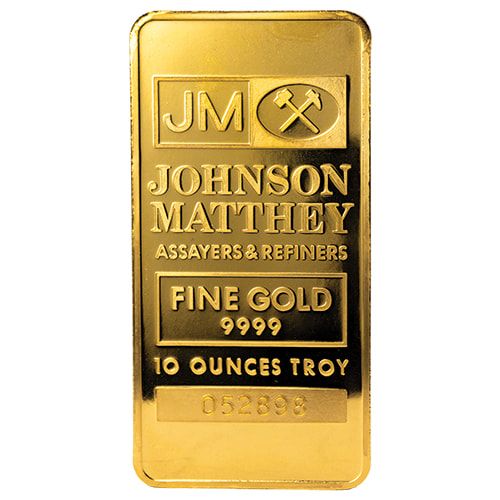
Johnson Matthey Gold Bars
Johnson Matthey is a historic name in the precious metals industry, and its branded gold bars remain recognized in the bullion market. SD Bullion offers different Johnson Matthey formats, including poured and assay-packaged bars. Designs, packaging, and condition can vary, particularly among secondary-market products, so buyers should review individual product specifications before purchasing.
What should you look for when buying gold bars?
When buying gold bars, consider their purity, manufacturer, authentication features, and packaging. These factors help you evaluate product specifications, assess authenticity, and compare options before making a purchase. Understanding these characteristics can help you choose gold bullion that aligns with your investment goals and purchasing budget.
Gold purity and fineness
Gold purity indicates the proportion of pure gold contained in a bar. Most investment-grade gold bars are .999 or .9999 fine, representing 99.9% and 99.99% pure gold, respectively. Higher-purity gold bars may offer better resale value due to their greater fine gold content, although manufacturer reputation, product condition, and market demand also influence resale prices. Always check the product specifications to confirm its fineness and gold content before purchasing.
Refinery reputation and authentication
Choose gold bars from recognized refineries and manufacturers with established reputations in the precious metals industry. Reputable producers typically identify their products with manufacturer marks, weight, and purity information. Many bars also feature unique serial numbers or additional security technologies, such as holographic elements and proprietary authentication systems. These features help identify individual products but should not replace proper verification.
Assay cards, Packaging, and Product condition
Many minted gold bars come sealed in protective assay cards that document their weight, purity, manufacturer, and sometimes serial number. Original packaging helps protect the bar and preserve its identifying information, which can be useful when reselling it.
However, secondary-market gold bars may be sold without their original packaging or assay cards. They can still retain their bullion value, provided their authenticity and specifications can be verified. Buyers should review individual product descriptions and purchase from reputable dealers.
How much do gold bars cost?
The price of gold bars depends primarily on the current gold spot price, the bar's weight and purity, and the dealer premium. The spot price establishes the market value of the gold content, while the premium accounts for additional costs such as refining, manufacturing, packaging, and distribution. Together, these factors determine the final purchase price.
Understanding the gold spot price
The gold spot price is the current market price for one troy ounce of gold. It fluctuates throughout the trading day in response to economic conditions, inflation expectations, currency movements, and global supply and demand. Dealers use this market benchmark to calculate the base value of physical gold products.
Gold bar premiums over spot
A gold bar premium is the amount charged above the spot value of its gold content. It accounts for refining, manufacturing, packaging, distribution, and dealer operating costs. Premiums vary according to the bar's manufacturer, weight, format, and market demand. Comparing premiums helps buyers evaluate the total cost of different gold bars.
How weight affects gold bar prices
Gold bar prices increase with weight because larger bars contain more gold. However, the premium per troy ounce generally decreases as bar size increases. This means larger bars can offer a lower relative acquisition cost, although they require a higher initial investment. Smaller bars, in contrast, provide more accessible purchase amounts.
Why do smaller gold bars typically carry higher premiums?
Smaller gold bars generally carry higher premiums per ounce because manufacturing, packaging, and distribution costs represent a larger share of their total value. For example, producing and packaging a 1-gram bar can cost proportionally more than producing a larger bar. Despite the higher relative premium, fractional sizes allow buyers to purchase physical gold with a lower upfront budget.
How do you buy and store gold bars securely?
Buying physical gold involves more than comparing prices. Choosing a reputable precious metals dealer, understanding delivery options, and planning secure storage can help protect your purchase. Buyers should also consider insurance coverage and resale conditions when deciding how to manage their gold holdings.
Choosing a reputable precious metals dealer
Purchase gold bars from established dealers that provide transparent pricing, detailed product specifications, and clear purchasing policies. Review customer feedback, business credentials, payment terms, and available buyback options before placing an order. A reputable dealer should also provide accurate information about each bar's manufacturer, weight, and purity.
Secure ordering and insured delivery
Before completing a purchase, review the dealer's shipping and delivery policies. Many precious metals dealers use discreet packaging and secure shipping methods to protect bullion during transit. Insured delivery can provide coverage against certain losses or damages, depending on the shipping method and policy terms. Check the coverage conditions and delivery requirements before ordering.
Secure storage and insurance for gold bars
Gold bars should be stored in a secure location that protects them against theft, loss, and damage. Options include home safes, bank safe deposit boxes, and professional precious metals storage facilities. Investors who also own silver bars can often store them alongside gold in the same secured arrangements. Professional depositories typically charge annual storage fees ranging from 0.5% to 1% of the value of the holdings. Insurance coverage varies depending on the storage method and policy, so review applicable limits, exclusions, and security requirements before choosing where to keep your bullion.
Selling gold bars and understanding liquidity
Gold bars from recognized manufacturers can be easier to resell because their weight, purity, and origin are generally identifiable. However, resale value depends on the current gold spot price, product condition, market demand, and the dealer's buyback policies. Keeping original assay cards, packaging, and purchase records can help support product identification during resale.
Are gold bars eligible for a precious metals IRA?
Certain gold bars can be held in a self-directed Individual Retirement Account (IRA), provided they meet applicable IRS requirements. Eligibility depends on the bar's purity, whether the specific product qualifies under IRS rules, and how the gold is held. Investors should verify these conditions before purchasing bullion for a retirement account.
What are the IRS purity requirements for gold bars?
Gold bullion generally must have a minimum fineness of .995 (99.5% pure gold) to qualify for a precious metals IRA. This threshold corresponds to the minimum fineness required for gold delivered under COMEX futures contracts. However, meeting the purity requirement alone does not guarantee eligibility. The specific product must also satisfy applicable IRS rules and custody requirements.
Where must IRA-eligible gold bars be stored?
Gold bars held in an IRA must remain in the physical possession of a qualifying bank or an IRS-approved nonbank trustee. Investors cannot store IRA-owned bullion at home or take personal possession of it while maintaining its IRA status. The account's trustee must oversee the required custody arrangements.
Gold Bars vs. Gold Coins: Which should you choose?
Gold bars and gold coins are popular options for investors seeking physical gold, but they differ in pricing, design, and potential collectible value.
Gold bars typically carry lower premiums over the spot price, while gold coins may offer greater recognition among collectors and buyers. The right choice depends on your budget, investment objectives, and preference for different bullion products.
|
Feature |
Gold Bars |
Gold Coins |
|---|---|---|
|
Premiums |
Typically lower premiums over spot |
Often higher premiums |
|
Purity |
Commonly .999 or .9999 fine gold |
Varies by coin and issuing mint |
|
Design |
Usually simpler manufacturer markings |
Detailed designs and recognizable motifs |
|
Collectibility |
Primarily valued for gold content |
May carry additional numismatic value |
|
Legal Tender |
Generally not legal tender |
Government-issued bullion coins typically have a face value |
|
Available Weights |
Fractional sizes to 1 kilo or more |
Commonly 1 oz and fractional sizes |
Why purchase gold bars from SD Bullion?
SD Bullion offers a wide selection of gold bars from recognized mints and refineries, including PAMP Suisse, Valcambi, Perth Mint, and other established manufacturers. With different weights, purities, and formats available, buyers can compare products and find physical gold suited to their budgets and ideal investment goals.
Explore our gold bullion selection to compare available products, review competitive pricing, and choose convenient ordering and delivery options for your purchase.

SD Bullion CEO Chase Turner's Overview
For thousands of years, gold bars have been used as a store of value and wealth for private citizens and countries. Today, gold bars still provide us protection against ravid inflation and economic uncertainties. When buying gold bars, I personally prefer Argor-Heraeus brand. Why? They're the largest processor of gold in the world. They're one of five referees for the LBMA that grade other's quality to make sure their fineness and purity meets very specific standards. I've been to their facility in Switzerland. They are the best at what they do, there is no comparision.
Chase Turner is the CEO of SD Bullion and has spent over a decade in the precious metals industry. He has personally visited major refineries including Argor-Heraeus in Switzerland.
FAQs
Are Gold Bars as pure as Gold Coins?
Most gold bars and gold coins are made from .999 or .9999 fine gold. The format itself does not determine purity. Instead, purity depends on how the gold is refined and whether alloys are added. In general, both meet strict investment-grade standards, making them equally reliable for investors seeking high-purity physical gold.
Why are gold bars less expensive than gold coins?
Gold bars are typically produced by private mints, whereas gold coins by sovereign mints. Therefore, gold coins enjoy legal tender status and a face value. Their purity and authenticity is certified by the issuing government. Additionally, counterfeiting legal tender coins usually comes with greater criminal punishment than regular gold bars. Finally, the minting process involved in the making of the intricate designs of gold coins tends to command higher premiums than gold bars.Is one gold bar better than another?
What determines the intrinsic value of a gold bar is its weight and purity. However, some brands are more recognizable than others. Thus, it might be easier to resell a gold bar from a prominent mint than from a less popular one.Why do Gold bars generally sell back for less than gold coins?
Gold coins carry legal tender status and are guaranteed by a sovereign government. As a result, they tend to be more liquid than gold bars. That translates to more affordable premiums for gold bars than for gold coins, including when selling them back.How do gold bars come packaged?
Gold bars come in different packaging types depending on the manufacturer. Many smaller bars are sealed in tamper-evident assay cards that list weight and purity. Larger bars may be shipped in protective plastic, boxes, or sleeves. Packaging helps protect the bar and verify authenticity, so always check the product details before purchasing.
What is an Assay?
An assay is a test or analysis performed to determine the purity, composition, and quality of precious metals such as gold and silver, or platinum. For bullion products like bars and coins, an assay certifies the metal's weight and purity, ensuring its authenticity. Often, gold bars come with an assay card, which includes details like the assayer's stamp, weight, and the purity of the metal, giving buyers the peace of mind that they are investing in an authentic product.How do you pronounce Assay?
In American English it is pronounced /æsˈeɪ/, with the stress in the first syllable, and the first “a” pronounced as in “apple”. In British English it is pronounced /əˈseɪ/. The stress is in the second syllable and the first “a” is pronounced like /uh/ (as in “again”).Are there any anti counterfeit properties in gold bars?
Gold bars often include anti-counterfeit features to ensure authenticity, such as holograms, unique serial numbers, tamper-evident assay cards, and micro-engraving. Some bars also come with QR codes for online verification. The best way to avoid buying counterfeit bars is to shop for prominent mints and from respectable dealers only.Do bars in Assay buy back at a higher premium than loose bars?
Yes, gold bars in assay often buy back at a higher premium than loose bars. The assay card certifies the bar’s authenticity, weight, and purity, serving as an anti-counterfeit measure. Bars in assay are generally considered more trustworthy and easier to resell. Consequently, buyers and dealers may be willing to pay a slight premium for bars that remain sealed in their original assay packaging.Is a troy oz the same as a regular oz?
No. A Troy oz is a unit of measure specifically used in the precious metals industry for centuries. It is approximately 10% heavier than a regular oz. The regular ounce, also called avoirdupois ounce, is equivalent to 28.35 grams, whereas a Troy ounce is equivalent to approximately 31.1 grams.What are the Pros/Cons to buying smaller or larger gold bars vs the standard 1 oz bar?
Larger gold bars tend to carry lower premium percentages than smaller bars. In other words, you are able to buy more pure gold bullion content per dollar invested. However, smaller bars are more affordable, easier to transport and store, and tend to be more liquid than larger ones. Nevertheless, bullion bars overall tend to carry lower premiums compared to bullion coins, such as the Silver American Eagle, or Gold American Eagle.Can you buy gold bars at a bank?
Yes, some banks, particularly in countries like Switzerland, Canada, and certain European nations, do sell gold bars. However, in the U.S., it is less common for banks to offer gold bars. Instead, most buyers purchase gold bars from specialized bullion dealers, precious metal exchanges, or online retailers, such as SD Bullion. Make sure to shop only from respectful dealers to assure you are purchasing authentic gold bars.Are gold bars worth buying?
Gold has been used as a store of value for generations. In this fiat currency era, many investors turn to gold in times of economic crisis to hedge against inflation and protect their purchasing power. Gold tends to perform opposite to fiat currencies. For instance, any time the US Dollar is underperforming, you can expect gold prices to rise.How much is a gold bar worth?
A gold bar is priced based on the current gold spot price plus a premium charged by dealers (a markup). The gold spot price fluctuates during the day based on live transactions occurring on mercantile markets, such as COMEX and NYMEX. Thus, a gold bar will be worth the live spot price.How do I verify the authenticity of a gold bar?
LBMA accredited refineries will stamp their gold bars with hallmarks, which are indications of weight, purity and usually a serial number. Additionally, most gold bars come with an assayer's mark, attesting to the product’s authenticity. Some gold bars may be accompanied by a Certificate of Authenticity or an Assay card as well. Ultimately, you can take your bars to a bullion expert for verification. However, the best way to guarantee you are purchasing authentic gold bars is to shop from respected dealers only, such as SD Bullion.What factors influence the price of gold bars?
Mainly two factors influence the price of gold bars: the gold spot price, which is a live index that fluctuates during the day according to deals occurring on mercantile markets, such as COMEX and NYMEX; and premiums, which are markup percentages that bullion dealers charge over the gold spot price to cover business costs and obtain a profit. In the long run, the spot gold price rises or falls according to supply and demand, which, in turn, is affected by several factors, including macroeconomic instability, geopolitical frictions, inflation, interest rates, the strength of the US Dollar, and others.Are gold bars a good hedge against inflation?
Yes. Gold bars are a store of value that help you protect your purchasing power against inflation and fiat currency devaluation. As a hard asset that has been valued by millennia, gold is also a portfolio diversifier.Can I add gold bars to my retirement account (IRA)?
Yes, you can. You need a self-directed retirement plan. Additionally, your gold bar must be held by an authorized custodian. To be approved in a precious metals IRA, gold bars must be 99.5% pure.What are the tax implications of buying or selling gold bars?
In the United States, the Internal Revenue Service (IRS) classifies gold bars as collectibles. When you sell gold bars that you’ve held for more than a year, the profit is subject to long-term capital gains tax, with a maximum rate of 28%. If you sell within a year, any gains are taxed as ordinary income, according to your income tax bracket. It is important to consult with a tax specialist to understand the specific tax implications of buying or selling gold bars in your country or region.What documentation should I receive when buying gold bars?
That depends on the gold bar. Some are shipped without certification, while others carry a Certificate of Authenticity, or an Assay Card. Please consult the description on the product’s page for more information, or contact our customer support at 1(800)294-8732.Can I buy fractional gold bars?
Yes, you can. There are different size options of gold bars available for purchase here at SD Bullion to accommodate any budget. You can buy from small 1 gram gold bars to larger bars. Fractional gold bars include gram gold bars, and any fractional weight of 1 oz, such as 1/2 oz, 1/4 oz and 1/10 oz.What happens if I lose the assay card or certification that comes with the gold bar?
Gold bars with an assay card or certification tend to sell back at slightly higher premiums than the ones without them. The authenticity of your gold bars can still be attested by different tests bullion dealers can take to make sure they are purchasing a legitimate gold bar. However, you might receive a smaller offer than you would if you still had the assay card or certification.What is the best size gold bar to buy for investment?
Gold bars with an assay card or certification tend to sell back at slightly higher premiums than the ones without them. The authenticity of your gold bars can still be attested by different tests bullion dealers can take to make sure they are purchasing a legitimate gold bar. However, you might receive a smaller offer than you would if you still had the assay card or certification.What is an assay card and why does it matter?
An assay card is a rigid, sealed blister-pack that encases a gold bar and carries the refiner's authentication details: weight, purity, serial number, and often a holographic security feature. It is the bar's verifiable chain of custody from refinery to buyer. It matters for three reasons: first, it deters counterfeiting — the tamper-evident seal shows immediately if someone has opened or swapped the bar; second, it increases resale value because dealers accept assay-sealed bars with less friction and often quote better buyback prices; third, it simplifies verification for any future buyer without requiring a third-party assay test.
Which gold bar refiners are most trusted worldwide?
The most universally trusted gold bar refiners hold LBMA (London Bullion Market Association) Good Delivery accreditation or are operated by sovereign governments. The leading names available at SD Bullion include: Argor-Heraeus (Switzerland) — the world's largest gold processor by volume and an LBMA referee assayer; Valcambi (Switzerland) — one of the world's highest-volume refiners, known for the innovative CombiBar; Perth Mint (Australia) — a government-owned refinery producing .9999 fine bars; Royal Canadian Mint (Canada) — a Crown corporation with .9999 to .99999 fine gold bars; and Sunshine Minting (USA) — a leading domestic refiner with proprietary Mintmark SI anti-counterfeiting technology. Bars from any of these refiners trade with minimal friction at dealers worldwide.
How do I sell gold bars back and what affects the buyback price?
To sell gold bars to SD Bullion, visit sdbullion.com/sell for a live quote based on the current spot price, then ship your bars using insured and tracked mail. Once received and verified, payment is processed promptly. The main factors that affect your buyback offer are: (1) the live gold spot price at the time of your sale — higher spot means a higher offer; (2) whether your bar is still in its original sealed assay packaging — intact assay bars consistently attract better offers; (3) refiner recognition — LBMA Good Delivery bars from PAMP, Valcambi, Argor-Heraeus, RCM, and Perth Mint receive the tightest spreads; (4) bar size — larger bars typically attract offers closer to spot; and (5) market conditions — demand surges during economic uncertainty tend to tighten dealer spreads in sellers' favor.
Is a 1 oz gold bar better than a 1 oz gold coin for resale?
Both formats are highly liquid at the 1 oz size, but they serve slightly different resale audiences. Gold coins — such as the American Gold Eagle or Canadian Gold Maple Leaf — carry sovereign government backing and legal tender status, which broadens their appeal to retail buyers and collectors who pay a premium for that guarantee. Gold bars from LBMA-recognized refiners are preferred by dealers, institutions, and experienced investors who prioritize gold content per dollar. In practice, a 1 oz LBMA-accredited bar in sealed assay (Argor-Heraeus, Valcambi, RCM) will sell back at a competitive price with minimal friction at any reputable dealer. If retail resale flexibility matters most, a coin has a slight edge. If minimizing the premium you pay going in — and getting a fair institutional quote going out — is the priority, a bar wins.
How should you store and insure gold bars at home?
If you keep gold bars at home, use a quality safe that is securely anchored and placed discreetly. Limit who knows about your holdings, and maintain an inventory with photographs, purchase records, weights, and serial numbers. Homeowners or renters insurance may restrict bullion coverage, so ask your insurer about policy limits, exclusions, security requirements, and documentation before relying on an existing policy.
What should you do if you suspect a gold bar is counterfeit?
If a gold bar appears suspicious, avoid cleaning, testing, altering, or attempting to sell it before obtaining professional advice. Compare its markings and serial number with the manufacturer's documentation, then contact the manufacturer or a reputable precious metals dealer for guidance. A qualified bullion professional may recommend appropriate testing. Do not rely on appearance or informal home tests alone to establish authenticity.
Are gold bars without original packaging still valuable?
Gold bars can retain their bullion value without their original packaging or assay card. However, missing packaging may make identification and authentication more difficult and can affect reliability, whether a dealer accepts the bar or the price offered. Resale policies vary by product and buyer, so confirm requirements before purchasing a secondary-market bar and keep any available purchase records before completing a purchase.
Can you sell gold bars to any precious metals dealer?
Many precious metals dealers buy gold bars, but acceptance policies differ. A dealer may consider the bar's manufacturer, weight, purity, condition, documentation, and ability to authenticate it. The buyback offer generally reflects the current gold market price and the dealer's pricing terms. Contact the buyer before visiting or shipping bullion to ensure accepted products, documentation, transaction requirements, and applicable fees.
Is it better to buy gold bars from a mint or a dealer?
Mints and refineries manufacture gold bars, while precious metals dealers sell bullion to investors and may also offer buyback services. Buying directly from a mint is not always available to individual customers, and product selection can vary. Established dealers often carry bars from multiple manufacturers, allowing buyers to compare weights, brands, premiums, payment methods, and delivery terms in one place.
Are gold bars a good option for first-time investors?
Gold bars can suit first-time investors seeking direct ownership of physical gold, but purchases should match their budget and objectives. Smaller fractional bars require less money upfront, although they typically carry higher premiums per ounce than larger bars. Before investing, compare the total price with the gold spot value, consider storage and resale options, and remember that gold prices can fluctuate.
You must be logged in to take advantage of this new customer offer. Login or sign up for an account now.