







Buy Large Gold Bars
Large gold bars offer buyers a practical way to acquire substantial amounts of physical gold in a single purchase. While one troy ounce is among the most familiar sizes in the gold bullion market, larger bars allow customers to purchase significantly more gold while often paying a lower premium per ounce.
For thousands of years, gold has served as a store of wealth, medium of exchange, and highly valued precious metal. Today, buyers continue to buy gold bars for portfolio diversification, long-term wealth preservation, and direct ownership of a tangible asset.
At SD Bullion, customers can shop large gold bars in multiple sizes and compare products based on weight, purity, refinery, premium, and current gold prices.
Why Buy Large Gold Bars?
When making a physical gold investment, investors have many sizes to consider. Fractional gold bars provide a lower entry price, while 1 oz gold bars are widely recognized and convenient to trade. Large gold bars can be particularly attractive to customers who want to buy greater quantities of gold efficiently.
Because manufacturing, packaging, and distribution expenses are spread across more troy ounces of gold, larger bars can sometimes carry lower premiums per ounce than smaller products. Actual premiums vary according to market conditions, product availability, refinery, bar size, and demand.
The total value of gold contained in a bar is primarily influenced by its precious metal content and the prevailing gold spot price. Customers can use current spot pricing and price charts to follow the gold market before placing an order.
What Sizes Are Considered Large Gold Bars?
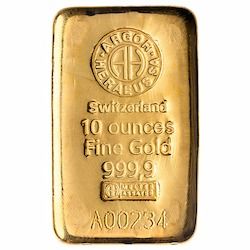
Large gold bars generally include products weighing substantially more than the standard 1 oz gold bar. Depending on inventory, customers may find sizes such as 50 gram, 100 gram, 5 oz, 10 oz, 250 gram, 500 gram, 1 kilogram, and other large-format bars.
Because these bars contain multiple troy ounces of gold, their total purchase price can be considerably higher than that of smaller bullion products. Buyers should consider both the initial cost and their future liquidity needs when selecting a weight.
For example, owning several smaller bars may provide greater flexibility when selling portions of a gold position, while one large bar consolidates more physical gold into a single product.
How Large Gold Bars Are Made
Gold bars are made using several production methods depending on their size and manufacturer. Minted bars are typically cut from sheets of refined gold before being precisely weighed, finished, and stamped with identifying information. Cast or poured bars are generally produced by pouring molten gold into molds and allowing the metal to cool before finishing and inspection.
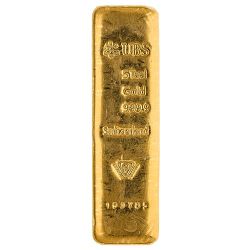
Large cast bars may have natural variations in their surfaces, edges, and appearance resulting from the production process. These characteristics do not necessarily affect the bar's stated weight or precious metal content.
Many recognized gold bars also feature important identifying information such as the manufacturer's name or hallmark, purity, weight, and, when applicable, an individual serial number.
Large Gold Bar Purity and Weight
Investment-grade gold bars are commonly produced from highly refined gold, with many products containing .9999 fine gold. Exact specifications depend on the refinery and individual product.
Gold bar sizes may be expressed in grams, kilograms, or troy ounces. A troy ounce contains approximately 31.103 grams, while a kilogram contains approximately 32.15 troy ounces.
Understanding these measurements can make comparing different large gold bars easier, particularly when evaluating premiums and the amount of physical gold received for the purchase price.
Large Gold Bars and the Gold Spot Price
The value of gold changes throughout the trading day as global precious metals markets move. The spot price represents the market price for gold before dealer premiums and other product-specific costs are considered.
Customers researching when to buy gold bars can follow live gold prices and historical price charts to better understand current and past market movements. However, historical performance does not guarantee future results.
The retail price of a large gold bar typically reflects the underlying gold spot price plus a premium. Premiums can change based on supply, demand, refinery, bar size, availability, and broader market conditions.
Gold Bars with Larger sizes
Gold bars are priced in bulk, and therefore, the more gold content you buy, the more you save on premiums. Thus, these larger bars usually carry lower premiums than smaller sizes.
5 oz and 10 oz gold bars can be minted or cast, whereas 1-kilo gold bars will most usually be cast. Minted bars undergo a more extensive printing process and, sometimes, can include symbolic designs. Casts are made by pouring molten gold into a mold and sometimes can be called gold ingots.
5 oz Gold Bars
5 oz gold bars could be a great midway option for those who are looking for a more substantial investment but are not willing to make as big of a purchase as the 10 oz or 1-kilo sizes.
Amongst the most regarded 5 oz gold bars manufacturers is PAMP Suisse. Their signature design, Lady Fortuna, beautifully adorns these bullion products with style and high-quality refining. The obverse of these gold bars portrays the Roman Goddess of Fortune with her cornucopia overflowing with richness. Their .9999 fine gold bars come in a protective assay with a certificate number for improved protection.
10 oz Gold Bars
PAMP is also responsible for producing some of the finest 10 oz gold bars in the precious metals market, along with the Royal Canadian Mint and the Australian Perth Mint. These last two, owned by a sovereign government.
Royal Canadian Mint gold bars carry their insignia on the obverse, half a maple leaf on top of the bottom half of the letter M, surrounded by the words “ROYAL CANADIAN MINT - MONNAIE ROYALE CANADIENNE”, both in English and in French.
The Australian Perth Mint Logo on the obverse of their gold bars is a majestic swan encircled by the word “THE PERTH MINT AUSTRALIA”. All these gold bars are refined with 99.99% pure gold.
1 Kilo Gold Bars
1-kilo gold bars are casts that are also produced with a .9999 fineness level. They carry more simplistic engravings than the 5 oz or 10 oz minted gold bars. For instance, the Royal Canadian Mint 1 kilo casts are only engraved with their logo, the weight, the purity level, and the serial number. Having no unique design means these gold bars are sold as close to the spot price of gold as possible.
All products listed above are IRA approved and, because they carry lower premiums over spot, they could be a wise way to fund your self-directed retirement account.
Generic Gold Bars
Buyers who are not interested in any specific brands or manufacturers could opt for the generic brand option in order to save slightly more on premiums. The buyer will receive a gold bar containing .9999 purity levels guaranteed from a brand that is available in our stocks at the moment of purchase.
Why Buy Large Gold Bars from SD Bullion?
SD Bullion offers customers a selection of physical gold products from recognized refiners and mints. Whether you're considering a standard 1 oz bar or a larger gold investment, you can compare available products by price, weight, purity, and premium.
Large gold bars can provide a straightforward way to own a substantial quantity of physical precious metal in a compact format. Customers looking to buy can review current inventory, compare premiums, follow live gold prices, and select the bar size that best aligns with their individual purchasing objectives.
Before making any investment decision, consider your individual financial circumstances, objectives, and risk tolerance, and consult a qualified financial professional when appropriate.
If you are considering purchasing products from the list above, either for personal investment or to fund an IRA, please contact our customer support in case you have any questions. Our staff is available over the phone at 1(800)294-8732 and a live agent will be ready to assist you through our live web chat feature.
What is considered a large gold bar?
Large gold bars generally refer to bullion bars larger than the standard 1 troy ounce size. Common options can include 50 gram, 100 gram, 5 oz, 10 oz, 250 gram, 500 gram, and 1 kilogram gold bars. Available sizes vary depending on manufacturer and inventory.
How is the value of a large gold bar determined?
The value of gold in a large bar is primarily based on its weight, purity, and the current gold spot price. The retail price also includes a dealer premium, which can vary based on the manufacturer, bar size, availability, demand, and market conditions. Buyers can follow live gold prices and price charts when comparing products.
Why do people buy large gold bars?
Buyers may choose large gold bars to acquire more physical gold in fewer individual pieces. Larger bars can also have lower premiums per troy ounce than smaller or fractional bars, potentially making them a cost-efficient option for a substantial gold investment.
Are large gold bars made of pure gold?
Many investment-grade large gold bars are made from .9999 fine gold, although specifications vary by product and refinery. Each product listing should identify the bar's exact weight, purity, and precious metal content before you buy.
Is it better to buy one large gold bar or several smaller bars?
The choice depends on your objectives. One large bar may offer a lower premium per ounce and make storing substantial amounts of gold more convenient. Several smaller bars can provide greater flexibility if you later want to sell only part of your holdings. Buyers should compare premiums, liquidity, storage needs, and overall costs before they buy gold bars.
What is the largest gold bar in the world?
The world's largest gold bar is a 521.2-kilogram (1,149-pound) gold bar created by The Perth Mint in Western Australia. It earned the Guinness World Records title on July 9, 2026.
The Perth Mint created the world's largest gold bar with the contributions of more than 35 specialists from its Refinery and Assay Laboratory, along with teams from elsewhere in the organization.