





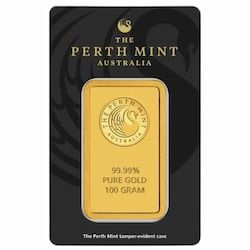
100 Gram Gold Bars
A 100 gram gold bar contains 100 grams (approximately 3.215 troy ounces) of investment-grade gold, typically refined to .9999 fine purity. This gold bar size is produced by internationally recognized mints and refiners, including PAMP Suisse, Umicore, and Scottsdale Mint, and is a common choice for buyers who want a larger, cost-efficient gold bar without stepping up to kilo-sized bars. 100 gram gold bars sit between 1 oz gold bars and kilo gold bars in size, offering a lower premium per gram than smaller bars while remaining more accessible in price than a full kilo bar.
Category Highlights
-
Metal and purity: Gold, typically .9999 fine (99.99% pure)
-
Weight: 100 grams, equal to approximately 3.215 troy ounces
-
Typical dimensions: Approximately 47 mm x 27 mm x 4.3 mm (dimensions vary slightly by mint)
-
Common producers: PAMP Suisse, Umicore, Scottsdale Mint, and other LBMA-recognized refiners
-
Formats available: Minted bars and cast bars, depending on the producer
-
Security features: Assay certification, refiner hallmarks, and in some cases individual serial numbers (for example, Scottsdale Mint bars feature a laser-etched serial number and a lion privy mark)
-
Pricing basis: Priced off the live gold spot price plus a manufacturing and dealer premium
-
Best suited for: Buyers seeking a lower premium per gram than 1 oz bars while still keeping cost per bar more accessible than a kilo bar
What Is a 100 Gram Gold Bar?
A 100 gram gold bar is a gold bullion bar containing precisely 100 grams of gold, most commonly refined to .9999 fine purity. This equals roughly 3.215 troy ounces, the unit used for pricing gold against the spot market. 100 gram gold bars are produced in two general formats: minted bars, which are struck from blank flats and often carry detailed designs, assay cards, and tamper-evident packaging; and cast bars, which are poured into molds and typically have a simpler, more rustic appearance with lower production costs.
Refiners commonly associated with the 100 gram gold bar size include PAMP Suisse, known for its Fortuna design and individually numbered assay cards, Umicore, a long-established Belgian refiner, and Scottsdale Mint, a U.S.-based mint known for its lion hallmark and laser-etched serial numbers. Each of these producers is recognized by bullion dealers and refiners' associations, which supports resale and verification. Typical dimensions for a 100 gram gold bar are approximately 47 mm x 27 mm x 4.3 mm, though exact measurements can vary slightly between mints and bar formats.
What to Consider Before Buying a 100 Gram Gold Bar
Buyers evaluating a 100 gram gold bar should weigh several practical factors beyond the metal content itself. Gold prices and the premium over spot price are primary considerations, as larger bars generally carry a lower premium per gram than smaller options such as 1 oz or 1/10 oz bars. This can make 100 gram bars a relatively cost-efficient choice for buyers looking to invest in gold and build their physical holdings over time.
Mint or refiner recognition can also affect resale potential, since gold bars from well-known producers with clear assay marks are generally easier to sell back to bullion dealers. Buyers can also use price alerts to follow changes in the gold market and identify opportunities when spot prices or dealer premiums move. Before purchasing, compare current pricing and any available gold bars offer to determine the total cost relative to the bar's underlying gold value.
Liquidity is another factor worth understanding. A single 100 gram bar represents a larger dollar value than smaller bars or coins, so it cannot be partially sold — the entire bar is typically bought or sold as one unit. Buyers who anticipate needing to liquidate small portions of their holdings over time may want to combine larger bars with smaller denominations for flexibility.
Storage and security also matter at this size and value. Physical gold does not generate income the way dividend-paying stocks or interest-bearing bonds do, and holding it at home generally calls for a secure safe and, in many cases, dedicated insurance coverage. Some buyers choose third-party depository storage instead. Finally, tax treatment of gold bullion purchases and sales — including potential sales tax or capital gains tax — varies by jurisdiction, so buyers should confirm current rules with a tax professional rather than assume a single nationwide standard.
100 Gram Gold Bar Specifications
|
Specification |
Details |
|---|---|
|
Metal |
Gold |
|
Weight |
100 grams |
|
Approx. Troy Ounces |
3.215 oz |
|
Purity |
.9999 fine (typical) |
|
Approx. Dimensions |
47 mm x 27 mm x 4.3 mm |
|
Common Formats |
Minted or cast |
|
Common Producers |
PAMP Suisse, Umicore, Scottsdale Mint |
|
Packaging |
Assay card or certificate (varies by mint) |
Exact dimensions, weight tolerance, and packaging can vary by producer. Refer to the specific product listing for the precise specifications of an individual bar.
100 Gram Gold Bars vs. 1 oz Gold Bars
Buyers choosing between a 100 gram gold bar and a 1 oz gold bar are primarily weighing premium efficiency against liquidity and budget flexibility.
|
Feature |
100 Gram Gold Bar |
1 oz Gold Bar |
|---|---|---|
|
Weight |
100 grams (~3.215 troy oz) |
1 troy oz (~31.1 grams) |
|
Premium per gram |
Generally lower |
Generally higher |
|
Cost per bar |
Higher upfront cost |
Lower upfront cost |
|
Divisibility |
Sold as a single unit |
Easier to buy incrementally |
|
Common use case |
Cost-efficient accumulation |
Flexible, smaller purchases |
Because premiums typically shrink as bar size increases, a 100 gram bar generally costs less per gram of gold than an equivalent amount purchased in 1 oz bars. The tradeoff is a higher single-purchase cost and less flexibility to sell in smaller increments.
Minted vs. Cast 100 Gram Gold Bars
100 gram gold bars are produced as either minted or cast bars, and the difference affects both appearance and, in some cases, premium. Minted bars are cut from rolled gold sheet, stamped with a design, and often packaged in tamper-evident assay cards — PAMP Suisse's Fortuna bar is a widely recognized example. Cast bars are poured directly into bar-shaped molds, giving them a simpler, often uneven surface texture; they are generally quicker and less costly to produce. Both formats contain the same purity and weight of gold and carry the same intrinsic value based on the current gold spot price, so the choice between them typically comes down to buyer preference for appearance and packaging rather than gold content.
Choosing a 100 Gram Gold Bar
When comparing 100 gram gold bars on this page, consider the producer, the bar format, and how the bar is packaged and certified. Bars from refiners such as PAMP Suisse, Umicore, and Scottsdale Mint are widely recognized among bullion dealers, which can support easier verification and resale. Features like a numbered assay card, a laser-etched serial number, or a hallmark specific to the refiner (such as Scottsdale Mint's lion privy mark) can add a layer of authentication that some buyers value.
Since the intrinsic value of any 100 gram gold bar is tied to the live gold spot price, differences between listed products on this page generally come down to producer reputation, premium, and packaging rather than the underlying gold content. Comparing the [Live Gold Spot Price] alongside each listed premium can help identify the most cost-efficient option available at checkout. Buyers interested in smaller denominations can also review 1 oz gold bars or 1 gram gold bars for more flexible purchase sizes, and those considering tax-advantaged accumulation may want to review the [Precious Metals IRA Guide] for IRA-eligible gold bullion.
SD Bullion publishes live pricing on 100 gram gold bars updated against the current spot price, and orders placed through SD Bullion lock in the quoted price at checkout, so later spot price movement does not change the confirmed order price.
Frequently Asked Questions
How much is a 100 gram gold bar worth right now?
The value of a 100 gram gold bar is based on the live gold spot price multiplied by 3.215 troy ounces, plus the dealer premium for that specific bar. Because spot prices change throughout each trading day, the exact price per gram and total cost fluctuate constantly. Buyers can compare the current [Live Gold Spot Price] with the listed premium on each 100 gram gold bar to see today's total price before checkout.
How big is a 100 gram gold bar in inches?
A typical 100 gram gold bar measures approximately 1.85 inches by 1.06 inches by 0.17 inches (about 47 mm x 27 mm x 4.3 mm). Exact dimensions vary slightly by producer and by whether the bar is minted or cast.
Is a 100 gram gold bar a good investment for beginners?
A 100 gram gold bar can appeal to buyers who already have some familiarity with bullion investing and want a lower premium per gram than smaller bars provide. Because it represents a larger single purchase than a 1 oz bar or a gold coin, some first-time buyers instead start with a smaller denomination to build experience before committing to a larger bar. The right starting size depends on individual budget and liquidity needs rather than a single universal answer.
What are the specifications of a 100 g gold bar, including purity, dimensions, and weight tolerance?
A 100 gram gold bar is typically refined to .9999 fine purity and measures approximately 47 mm x 27 mm x 4.3 mm. Manufacturers generally apply a small weight tolerance during production, though the exact allowance can vary by refiner, so buyers should check the specific product listing or assay documentation for a given bar's stated tolerance.
How do premiums on 100 gram gold bars compare to 1 oz gold bars?
100 gram gold bars generally carry a lower premium per gram than 1 oz gold bars because production and packaging costs are spread across more gold per bar. The tradeoff is a higher total cost per bar and less flexibility to buy or sell in smaller increments compared to purchasing several 1 oz bars over time.
How do PAMP Suisse and Valcambi 100 gram gold bars compare?
PAMP Suisse and Valcambi are both LBMA-recognized Swiss refiners that produce .9999 fine 100 gram gold bars with assay certification. Both are widely accepted by bullion dealers, and differences between them typically come down to design, packaging, and any premium variation at the time of purchase rather than gold purity or weight, which are standardized at this fineness.
Where can I buy a 100 gram gold bar online from a reputable dealer?
SD Bullion offers 100 gram gold bars from recognized refiners such as PAMP Suisse, Umicore, and Scottsdale Mint, with live pricing tied to the current gold spot price and an order price that locks in at checkout. Reputable dealers generally provide assay documentation, transparent premiums, and insured shipping on gold bar orders.
How does a PAMP 100 g gold bar compare to a Heraeus 100 g gold bar?
Both PAMP Suisse and Heraeus are established refiners producing .9999 fine 100 gram gold bars with assay certification recognized by bullion dealers. Reputation and buyback ease for both brands are generally strong given their LBMA recognition, and any premium difference between the two typically reflects design, packaging, and current market availability rather than a difference in underlying gold quality.
As a small investor, is buying a 100 gram gold bar a good way to get started with physical gold?
A 100 gram gold bar can work for a small investor who wants a lower premium per gram and is comfortable with a larger single purchase and reduced liquidity compared to smaller bars or coins. Investors prioritizing flexibility to buy or sell in smaller increments may instead consider starting with 1 oz bars or gold coins and scaling up to larger bars as their holdings grow.