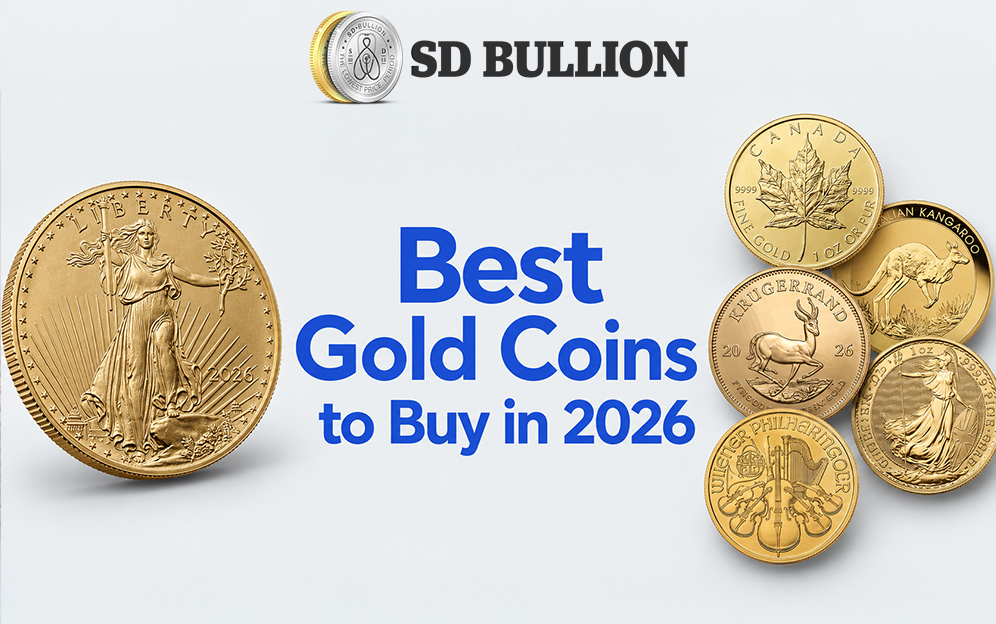
The American Gold Eagle Coin is the best gold coin to buy in 2026 for most U.S. investors — backed by the U.S. Mint, widely accepted by dealers worldwide, and available in sizes from 1/10 oz to 1 oz at premiums typically 4–8% above spot. For maximum purity, the Canadian Gold Maple Leaf offers .9999 fine gold at slightly lower premiums. The South African Krugerrand provides the lowest premiums of the three at roughly 2–4% above spot.
As gold prices continue to climb in an uncertain economic environment, more investors are turning to physical gold coins to protect and diversify their portfolios. But with premiums, liquidity, and affordability all playing a role, choosing between fractional and full-ounce coins can significantly impact your overall investment strategy.
Drawing on our experience working with precious metals investors, we've put together a curated list of standout gold coins for 2026, plus the full transactional picture: how to compare them, how to buy them, where to store them, and how to sell them when the time comes. Each ranking is based on factors like global recognition, liquidity, and overall investment efficiency:
-
American Gold Eagle
-
Canadian Gold Maple Leaf
-
American Gold Buffalo
-
South African Krugerrand
-
Austrian Gold Philharmonic
-
British Britannia
-
Chinese Gold Panda
-
Year of the Horse
-
Mexican Gold Libertad
Key Takeaways
-
Gold and silver coins derive their core value from their precious metal content, while government backing enhances their credibility, recognition, and market trust.
-
Key factors such as purity, premiums, and size — whether fractional or full ounce — directly impact how much metal you receive for your money and how efficiently you can build or adjust your position.
-
Highly recognized coins are typically easier to authenticate, price, and sell, offering greater liquidity compared to less common or obscure products.
-
IRA eligibility, purity requirements, and basic verification methods play an important role in ensuring that the gold you purchase maintains its intended value over time.
-
Buying and selling a gold coin are just as important as picking the right one — dealer selection, premium math, storage, and resale liquidity all directly affect your real-world return.
Jump to: Premiums | Gold Coins as a Store of Value | American Gold Eagle | American Gold Buffalo | South African Gold Krugerrand | Canadian Gold Maple Leaf | Austrian Gold Philharmonic | British Gold Britannia | Chinese Gold Panda | Mexican Gold Libertad | Fractional Gold Coins | Gold Coins vs Gold Bars | IRA Eligible Gold Coins | How to Spot Fake Gold Coins | How to Buy Gold Coins | Storing Gold Coins Safely | How to Sell Gold Coins | FAQs
Best Gold Coins at a Glance
Before diving into individual coin profiles, here's a scannable comparison of all nine coins on this list — purity, mint, typical premium tier, IRA eligibility, and who each coin is best suited for.
|
Coin |
Purity |
Mint |
Premium Tier* |
IRA Eligible |
Best For |
|
American Gold Eagle |
.9167 (22K) |
U.S. Mint |
High |
Yes |
Recognition & liquidity in the U.S. |
|
Canadian Gold Maple Leaf |
.9999 (24K) |
Royal Canadian Mint |
Low–Medium |
Yes |
Max purity + security features |
|
American Gold Buffalo |
.9999 (24K) |
U.S. Mint |
Medium–High |
Yes |
24K purity from the U.S. Mint |
|
South African Krugerrand |
.9167 (22K) |
South African Mint |
Low |
No |
Lowest cost per ounce of gold |
|
Austrian Gold Philharmonic |
.9999 (24K) |
Austrian Mint |
Low |
Yes |
Europe's top-selling low-premium coin |
|
British Britannia |
.9999 (24K) |
The Royal Mint |
Medium |
Yes (.9999 only) |
UK investors & CGT considerations |
|
Chinese Gold Panda |
.999 (24K) |
People's Bank of China |
Medium–High |
Yes |
Collectors + investors, new design yearly |
|
Year of the Horse (Lunar) |
.9999 (24K) |
Perth Mint |
Medium–High |
Yes |
Collectible crossover appeal |
|
Mexican Gold Libertad |
.999 (24K) |
Casa de Moneda de México |
Medium |
Yes |
Globally respected Latin American coin |
*Premium tiers are directional and change with market conditions and dealer inventory. See Understanding Gold Coin Premiums below for how to calculate an exact price.
Understanding Gold Coin Premiums
Every gold coin trades above the metal's melt value — that markup is the "premium," and it covers minting, distribution, dealer margin, and market demand. Knowing how it's calculated lets you compare deals across dealers and coin types on an apples-to-apples basis.
Total cost = (spot price × gold weight) + dealer premium
Example: if spot gold is $2,400/oz and an American Gold Eagle carries a 4% premium, you'd pay roughly $2,496 per coin. A Krugerrand at a 1–2% premium over the same spot price would cost closer to $2,424–$2,448 — meaningfully more gold per dollar spent.
Typical premium ranges vary by coin:
-
American Gold Eagle: often the highest premium of the major bullion coins, driven by U.S. Mint backing and domestic demand.
-
Canadian Gold Maple Leaf & Austrian Philharmonic: low-to-moderate premiums thanks to high mintage and strong wholesale liquidity.
-
South African Krugerrand: typically the most cost-efficient per ounce of gold.
-
Chinese Gold Panda & Year of the Horse: carry collector demand on top of bullion value, which can push premiums higher.
When comparing offers, always compare the all-in delivered price (coin cost + shipping + any payment surcharge) rather than the premium percentage alone — a low premium can be offset by high shipping fees or card processing charges.
Why Are Gold Coins a Reliable Store of Value?

Gold, just like silver, has intrinsic value as a precious metal. When combined with official government backing and legal tender status, gold coins may function as a hedge against inflation.
Legal Tender Status & Government Backing
When I say that something is legal tender, I mean, in very practical terms, that you could actually buy stuff with it. That is, an American Eagle could be used to purchase something that's worth 1 dollar (even though we doubt someone would do such a thing).
The government is usually the one who establishes what legal tender is, and you could get in trouble for passing a coin that is not a legal tender as one.
Historical Gold Coin Performance
Historically, gold coins have reflected the broader performance of gold during periods of geopolitical and economic stress, often attracting buyers seeking stability when markets become uncertain.
Across more than one country, rising tensions, financial crises, and inflationary cycles have consistently driven demand for physical gold higher. For those looking to invest, this pattern highlights how gold coins have remained relevant as a defensive asset amid changing global conditions.
Coins like the American Gold Eagle and the Canadian Maple Leaf enjoy a highly respected place in the gold bullion market.
Gold Coins vs. Gold ETFs
The main difference between a gold coin and an ETF is ownership. Gold coins are physical metal that require proper storage (especially if they are for an IRA account), while ETFs are an electronic way to own gold by gaining exposure to its price.
It works like this: you find an institution, open an account, and purchase your ETF just like you purchase a stock. That gold ETF corresponds to physical gold at the institution's facility, and you manage it (buy and sell) without ever touching the real thing.
This is a popular option for investors who want to gain exposure but feel that dealing with physical gold is too much to handle at first.
American Gold Eagle: Most Recognized Gold Coin
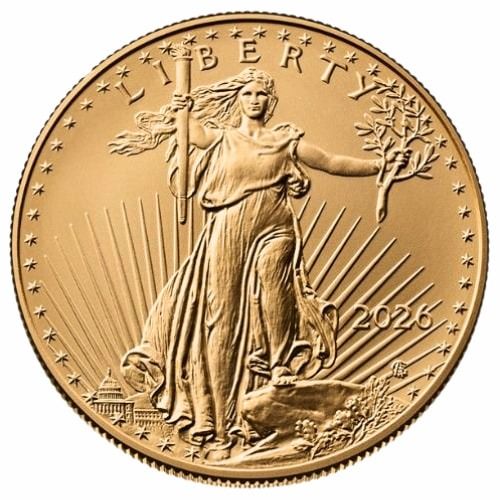
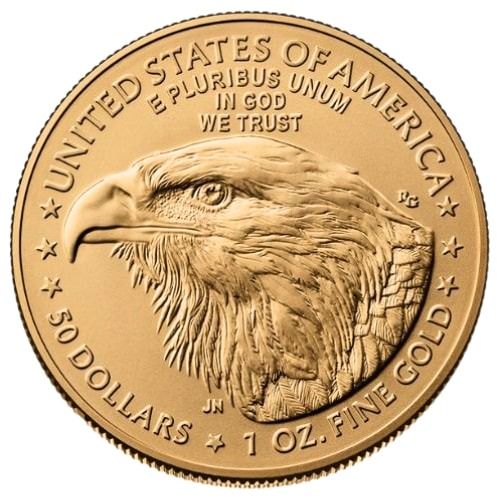
The American Eagle is the United States' official gold bullion coin. But the government backing is not its only appeal.
Gold Eagle Specs: Weight, Purity & Design
Every 1 oz Gold Eagle is 0.9167 fine gold and weighs about 31 grams (1 troy ounce). It also features an emblematic design depicting important elements of American heritage:
The obverse shows Lady Liberty, a symbol of freedom, striding forward with confidence, holding a torch for enlightenment in her right hand and an olive branch of peace in her left.
The reverse design brings the bald eagle, the national animal, representing courage and strength.
2026 American Gold Eagle Premiums
Premiums are not static. For widely recognized coins like the American Gold Eagle, market demand is also reflected in price, especially during periods of economic uncertainty when more investors seek physical gold.
In those moments, increased buying pressure can push premiums higher, even if underlying production costs remain unchanged.
Fractional Gold Eagles: Are They Worth It?
The American Gold Eagle is available in 1/2 oz, 1/4 oz, and 1/10 oz sizes.
The different sizes offer investment flexibility, enabling investors to gain exposure to smaller gold sizes without compromising much of their budget.
American Gold Buffalo: 24K Purity for Serious Investors
24K Gold Buffalo vs. 22K Gold Eagle: What's the Difference?
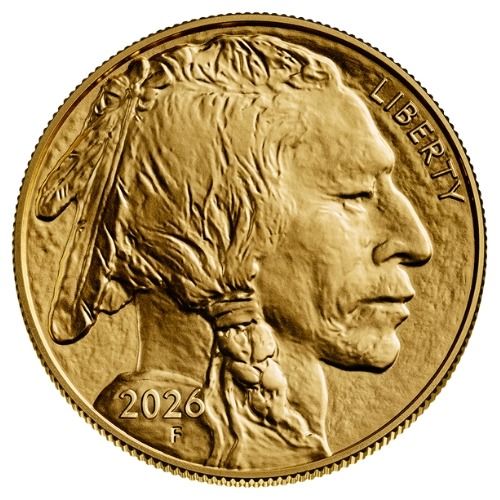
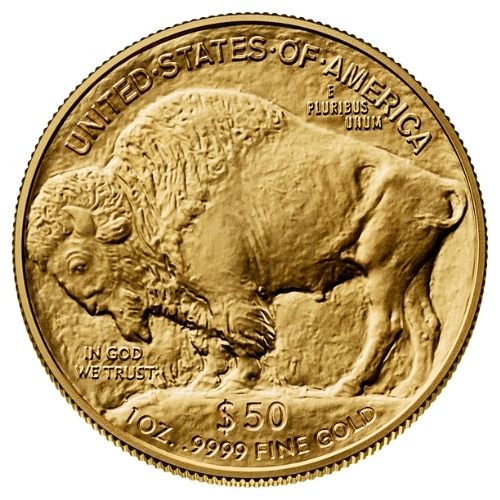
Let's start with the most obvious difference: the design. The Gold Buffalo coin depicts a Native American Chief on the obverse and an American Bison on the reverse.
If comparing the 1 oz coins, the Gold Buffalo has a purity of 0.9999, so it's a little more expensive than the Eagle, which is 0.9167.
Why Do Investors Choose the Gold Buffalo?
Their appeal comes mainly from purity. Struck in 24-karat gold, Gold Buffalo coins offer a straightforward way for investors to gain exposure to near-pure gold without alloying.
For those focused on metal content above all else, this makes them a compelling option within a long-term strategy.
Is the Gold Buffalo IRA-Eligible?
The Gold Buffalo is IRA-approved because it meets the high-purity requirement of 99.5% minimum fineness, is produced by a government mint, and is available in uncirculated or mint condition.
South African Gold Krugerrand: Low-Premium Classic

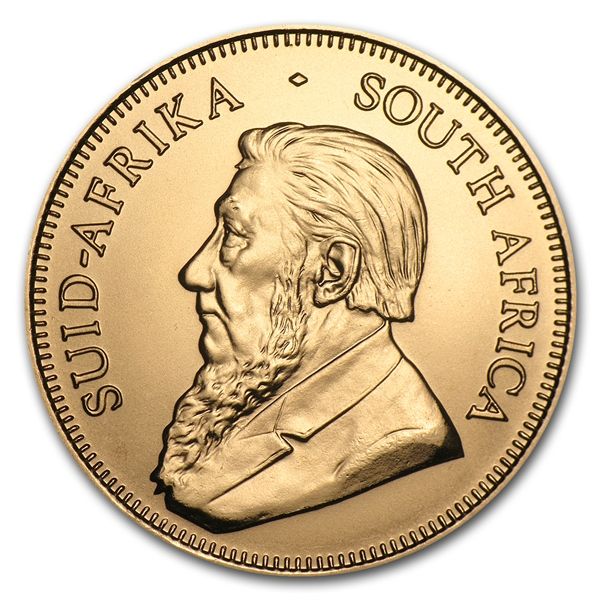
For over 50 years, Gold Krugerrands have remained a cornerstone of the global precious metals market. The South African Krugerrand, introduced in 1967 by the South African Mint, is the first modern gold bullion coin, marking a significant milestone in the evolution of gold bullion coins. This legacy starts with its history.
Krugerrand History & Significance
Gold Krugerrands were the first gold bullion coins intended for private ownership, introduced in 1967 and dominating up to 90% of the global market by 1980.
Struck in 22-karat gold (91.67% purity), the original bullion coin carries no face value but does have legal tender status under South African law.
Produced by the South African Mint for the South African Reserve Bank, these coins feature Paul Kruger on the obverse alongside "South Africa" and "Suid-Afrika." The reverse features the iconic springbok antelope, with inscriptions noting weight and purity.
Krugerrand Premium vs. Gold Eagle
The American Gold Eagle typically carries a higher premium than the Krugerrand due to stronger domestic demand, official U.S. Mint backing, and broader recognition among U.S. investors.
As legal tender backed by the U.S. government, it commands a consistent markup over spot. In contrast, the Gold Krugerrand is one of the most cost-efficient gold bullion coins available, trading closer to spot price — a preferred option for investors focused on maximizing gold weight per dollar.
Fractional Krugerrands: Worth Buying?
Fractional Krugerrands (1/2 oz, 1/4 oz, 1/10 oz) sit in a very specific niche: they trade efficiency for flexibility. Whether they're "worth it" depends entirely on what you're optimizing for.
Canadian Gold Maple Leaf: Trusted Global Coin
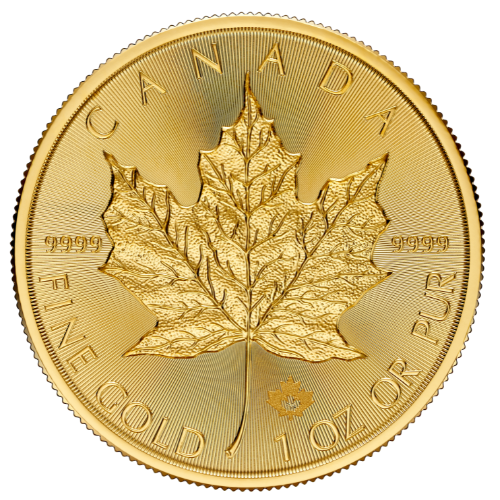
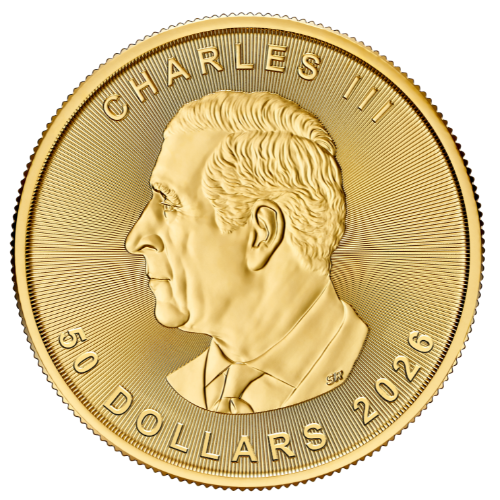
Gold Maple Leaf Coins embody Canada's proud heritage while showcasing its highly advanced minting technology.
As some of the longest-running gold bullion coins in the world, they are recognized for incorporating modern security measures that safeguard their authenticity and integrity.
Each year, the Royal Canadian Mint strikes Gold Maple Leafs in varied sizes, adding to the traditional one-ounce version, crafted from 99.99% pure gold.
Security Features & Authentication: RCM Bullion DNA
The Bullion DNA is an exclusive anti-counterfeiting technology. DNA stands for Digital Non-destructive Activation at the Royal Canadian Mint. Each coin receives an encrypted code during registration, which is stored in the RCM's database and can be read only by a specialized scanner.
Maple Leaf vs. Eagle vs. Krugerrand: Which to Buy?
If you strip away the branding, all three coins do the same core job: each contains 1 troy ounce of gold and tracks the spot price closely. The real differences come down to purity, premiums, durability, and regional preference.
|
Feature |
Maple Leaf |
American Eagle |
Krugerrand |
|
Purity |
.9999 (24K) |
.9167 (22K) |
.9167 (22K) |
|
Gold Content |
1 oz |
1 oz |
1 oz |
|
Durability |
Softer |
More durable |
Most durable |
|
Premiums |
Low–moderate |
Highest |
Often lowest |
|
Face Value |
Yes (CAD) |
Yes (USD) |
No face value |
|
Recognition |
Global |
Strong in U.S. |
Extremely global |
The Canadian Gold Maple Leaf stands out for its .9999 fine gold purity and advanced security features, making it a top choice for investors who prioritize maximum gold content. The American Gold Eagle, while slightly less pure due to its alloy, is the most recognized gold coin in the United States and typically commands higher premiums due to strong domestic demand and liquidity. Meanwhile, the South African Krugerrand, the original modern bullion coin, is known for its durability and is often available at more competitive premiums.
Ultimately, all three coins are highly liquid and widely trusted. The best choice depends on your priorities — purity, recognition, or cost efficiency.
Austrian Gold Philharmonic: Europe's Best-Selling Bullion Coin

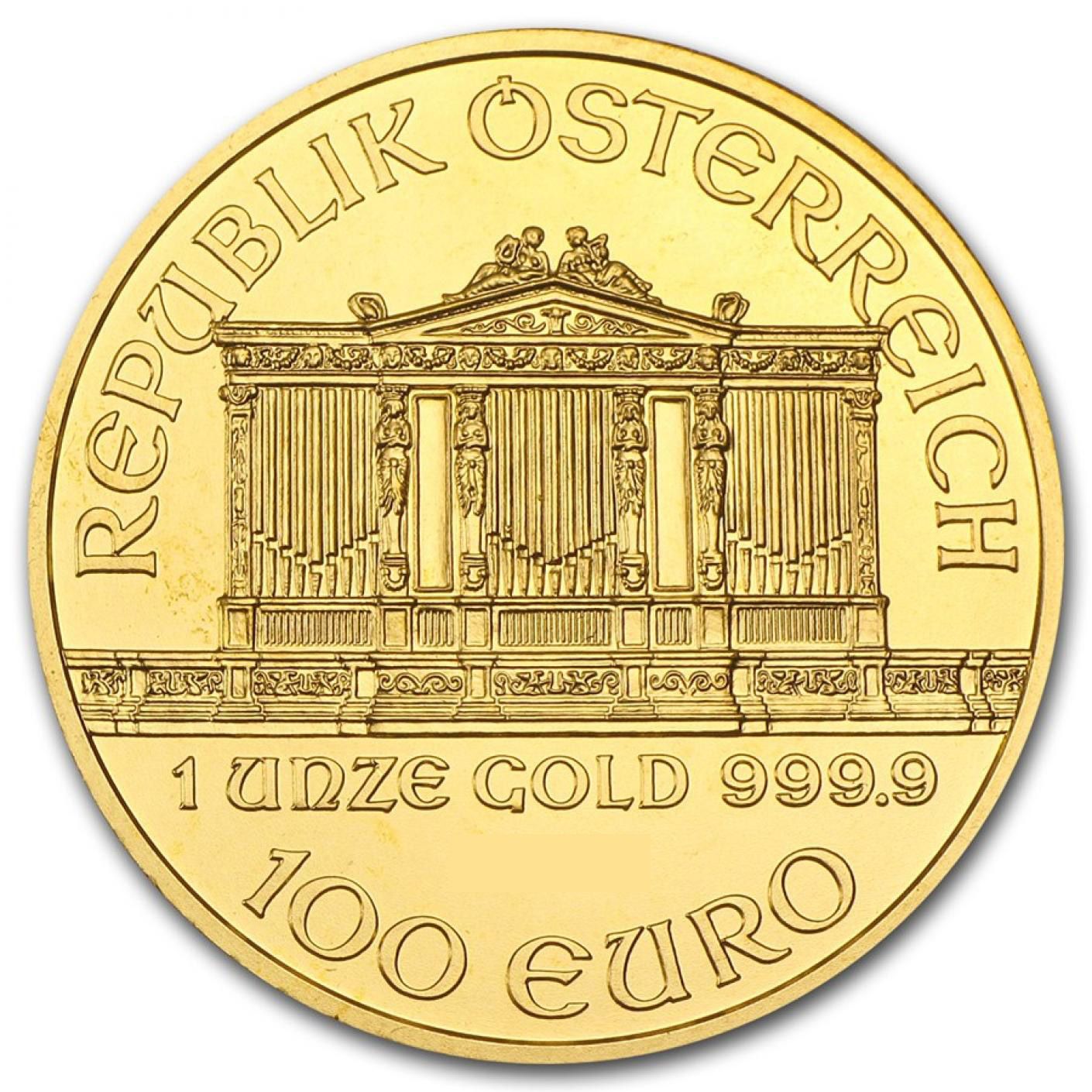
Struck at .9999 fine gold by the Austrian Mint, the Philharmonic is the largest-selling gold bullion coin in Europe and typically carries one of the lowest premiums of any major sovereign coin, making it a strong pick for investors focused on cost per ounce.
The obverse depicts instruments of the Vienna Philharmonic Orchestra, and the reverse shows the great organ of Vienna's Musikverein concert hall. It's available in 1 oz and several fractional sizes.
The Philharmonic is IRA-eligible, meeting the IRS's 0.995 minimum purity requirement, and its deep secondary-market liquidity in Europe makes it easy to resell internationally.
British Britannia: UK Investors' Top Pick
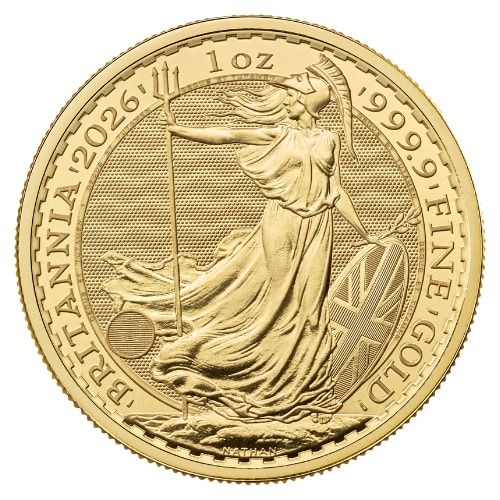
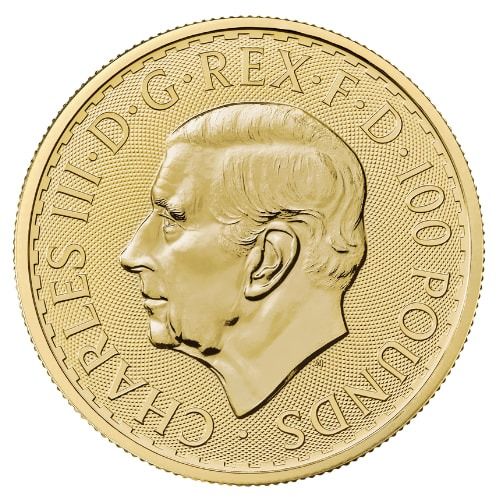
The Britannia is struck by The Royal Mint and, since 2013, has been minted in .9999 fine gold — a purity level that qualifies it for U.S. IRA accounts (earlier .9167 issues do not meet the IRA threshold).
The coin's obverse carries the current UK monarch's effigy, while the reverse features the classic Britannia figure. Modern Britannias also carry advanced Royal Mint security features, including micro-text and tincture-line technology, to deter counterfeiting.
For UK residents, Britannia coins carry a notable tax advantage: as legal tender in the United Kingdom, they're exempt from Capital Gains Tax — a distinguishing feature not shared by most other bullion coins.
Chinese Gold Panda: A New Design Every Year

Minted under the authority of the People's Bank of China at .999 fine gold, the Gold Panda is distinctive for one reason above all: the panda design on the reverse changes every year, which gives each year's coin its own collector following on top of its bullion value.
The Panda is IRA-eligible and available in a range of sizes. Because collector demand layers on top of investment demand, premiums can run higher than more standardized bullion coins like the Maple Leaf or Krugerrand, especially for recent-year releases.
Mexican Gold Libertad: Latin America's Global Bullion Coin
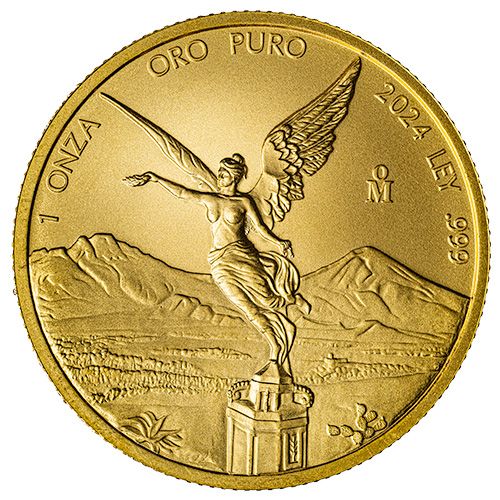
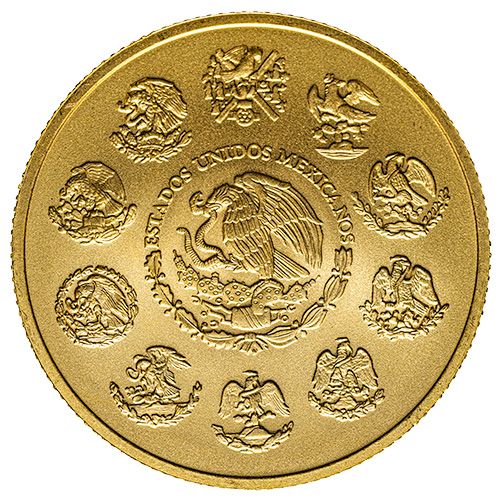
Produced by the Casa de Moneda de México (the Mexican Mint), the Libertad is struck in .999 fine gold and is one of the few Latin American sovereign bullion coins with genuine global recognition.
The obverse features Mexico's iconic Angel of Independence, while the reverse carries the national coat of arms. Unlike many other bullion coins, the Libertad has no stated face value, so its price is driven purely by metal content and market demand rather than a legal-tender minimum.
The Libertad is IRA-eligible and available in 1 oz and fractional sizes, though its secondary-market liquidity outside of Mexico and the U.S. Southwest tends to be thinner than the Eagle, Maple Leaf, or Krugerrand.
Best Fractional Gold Coins for Smaller Budgets
Fractional coins reduce entry cost while preserving metal-content exposure, making them useful for investors with different individual goals. The tradeoff: the smaller the coin, the more you pay per ounce of gold, because minting and distribution costs are spread over less metal.
Premium per ounce rises as size falls: a 1/10 oz Eagle may carry an 8–12% premium versus roughly 3–5% for a 1 oz Eagle.
|
Fractional Size |
Typical Premium Over Spot* |
Best For |
|
1 oz |
3–6% |
Core accumulation; lowest premium per ounce |
|
1/2 oz |
5–8% |
Balanced flexibility between cost and size |
|
1/4 oz |
6–9% |
Gifting and mid-size budget positions |
|
1/10 oz |
8–12% |
Entry-level buyers and dollar-cost averaging |
*Ranges are illustrative and vary by coin (Eagle, Maple Leaf, and Krugerrand) and current market conditions.
Popular fractional options include the American Gold Eagle, Canadian Gold Maple Leaf, and Gold Krugerrand at 1/10 oz for the lowest entry cost, and the Eagle, Britannia, and Maple Leaf at 1/4 oz for a more efficient middle-ground position.
Are fractional coins worth the higher premium? Yes, if flexibility aligns with your goals — smaller sizes make it easier to invest gradually, adjust a portfolio, and manage liquidity. And regardless of size, the coin's melt value — its gold content — always serves as the price floor.
Gold Coins vs. Gold Bars: Pros and Cons
Liquidity Comparison

Due to their government backing and standardized designs, gold coins are often more readily traded than privately minted gold bars. This makes them easier for buyers to recognize, verify, and resell, which tends to reflect stronger secondary-market demand.
Premium Comparison
Each gold coin typically trades at a premium above the gold spot price, which changes daily. Gold coins often carry higher premiums than gold bars due to greater production costs, strong market recognition, and detailed minting. These added premiums can reflect factors such as trusted authenticity, craftsmanship, collectability, and broader demand among buyers.
Portability & Divisibility
Gold coins are generally easier to transport and divide into smaller positions than larger bars, allowing buyers to sell or reallocate portions of their holdings without liquidating a full position.
|
Factor |
Gold Coins |
Gold Bars |
|
Liquidity |
Very high; widely recognized |
High, but depends on brand/refiner |
|
Premium over spot |
Higher, especially small sizes |
Generally lower, especially large bars |
|
Divisibility |
Easy to sell in small increments |
Limited once purchased at larger sizes |
|
Storage |
Compact; fits safes/depository boxes easily |
Compact; large bars need extra security |
|
Resale |
Fast, recognized by nearly any dealer |
Fast for major refiners; slower for obscure brands |
IRA-Eligible Gold Coins: Complete List
What Are the IRS Requirements for Gold IRA Coins?
Gold coins must meet a minimum purity of 0.995 (99.5%) and be produced by an approved government mint or accredited manufacturer. They also need to be in bullion (not collectible) condition and held by a qualified custodian.
An exception exists for the American Gold Eagle, which is allowed despite its 0.9167 purity because its gold content is guaranteed by the U.S. Mint.
Coins That Qualify for Gold IRAs
-
American Eagle Gold Coins — U.S. Mint (.9167)
-
American Buffalo Gold Coins — U.S. Mint (.9999)
-
Canadian Maple Leaf Gold Coins — Royal Canadian Mint (.9999)
-
Austrian Philharmonic Gold Coins — Austrian Mint (.9999)
-
Chinese Panda Gold Coins — People's Bank of China (.999)
-
British Britannia Gold Coins — The Royal Mint (.9999 issues only)
-
Mexican Libertad Gold Coins — Casa de Moneda de México (.999)
-
Australian Kangaroo Gold Coins — Perth Mint (.9999)
-
Australian Lunar Series Gold Coins — Perth Mint (.9999)
Approved Gold Proof Coins
-
American Eagle Gold Proof Coins
Coins That Do NOT Qualify
-
Gold South African Krugerrand Bullion Coins
-
Pre-1933 U.S. Gold Coins
-
The Sovereign British Gold Coin (nominal value of £1)
-
Other collectible or rare coins, even graded or certified
How to Spot Fake Gold Coins
Weight & Dimension Testing
Gold is denser than most metals, so it carries more weight for the same size. That difference becomes noticeable the moment you hold it. You can assess a gold product's weight relative to its size against other metals — real gold will generally feel heavier than other metals of similar dimensions.
Acid Testing & Magnetic Verifiers
Use a nitric acid test and a magnet for a quick check. Real gold does not react to nitric acid, while fake gold will typically change color, often turning green or milky at the test spot. For magnetism, gold is non-magnetic; if the piece is attracted to a magnet, it likely contains other metals or isn't genuine gold.
Fisch Device Testing
A Fisch tool is a calibrated mechanical gauge sized to a specific coin type — the coin has to pass through a precise slot and balance correctly on a scale bar. Because it checks diameter, thickness, and weight simultaneously against factory tolerances, it catches counterfeits that pass a simple weight check alone.
Ultrasound Testing
Ultrasonic thickness testers measure how quickly sound waves travel through the coin. Because different metals (like tungsten, sometimes used in sophisticated fakes) have different sound-wave speeds than gold, this method can detect a fake even when the coin is correctly weighted and sized on the outside.
Third-Party Grading (PCGS/NGC)
For higher-value purchases, coins independently authenticated and encapsulated by PCGS (Professional Coin Grading Service) or NGC (Numismatic Guaranty Company) — often called "slabbed" coins — provide the highest level of certainty for both buyers and future buyers, since authenticity has already been verified by a recognized third party.
How to Buy Gold Coins: Step-by-Step
Now you know the best options in the market and how to verify them. Here's how to actually complete a purchase, from choosing a dealer to what to expect on delivery.
Step 1: Choose a Reputable Dealer
You can buy from a mint-authorized dealer (an official distributor for a specific government mint) or the broader secondary market (other dealers, local coin shops, or private sellers). Mint-authorized dealers offer the most consistent sourcing and documentation; the secondary market can offer lower premiums but requires more diligence on the seller's reputation.
Reputable dealers reduce the risk of counterfeit or misrepresented gold. Look for: transparent pricing tied to the live spot market, detailed product specifications, secure shipping with tracking and insurance, established customer support, and a track record with clear reviews or Better Business Bureau standing.
Step 2: Check the Live Spot Price
Spot price is the current market price for one troy ounce of gold and is the baseline every dealer prices from. Check it immediately before ordering, since it moves throughout the trading day and directly determines your total cost.
Step 3: Calculate Total Cost With Premium
Apply the formula from Understanding Gold Coin Premiums above: total cost = (spot price × gold weight) + dealer premium. Compare this all-in number across dealers rather than comparing premiums alone.
Step 4: Choose a Payment Method
-
Wire transfer: typically the lowest fees and fastest ability to lock in a price on larger orders.
-
Credit or debit card: convenient and fast, but usually carries a processing surcharge.
-
Check or money order: often fee-free, but slower — pricing may not be locked until funds clear.
Step 5: Know What to Expect at Checkout
After you order, expect an order confirmation with your locked price, insured and tracked shipping, a signature requirement on delivery for higher-value orders, and documentation you should keep for your own records — especially important if the coins are going into an IRA. To start an order, browse SD Bullion's gold coin selection directly.
Storing Your Gold Coins Safely
How you store your coins affects both their security and, for IRA holdings, your compliance with IRS rules. The three main options:
|
Storage Option |
Pros |
Cons |
|
Home safe |
Immediate access; no ongoing fee |
Theft risk; typically needs a separate insurance rider |
|
Bank safety deposit box |
Reasonably secure; off-site from your home |
Limited access hours; contents generally not FDIC-insured |
|
Third-party depository |
Professionally audited, segregated, and insured storage |
Annual storage fee; access isn't instant |
IRA custodian storage requirement: if your gold coins are held inside an IRA, you cannot take personal physical possession of them. IRS rules require IRA-owned bullion to be held by a qualified custodian at an IRS-approved depository — storing IRA coins in a home safe or personal safety deposit box can jeopardize the account's tax-advantaged status.
How to Sell Gold Coins: Liquidity and Exit Options
Liquidity — how quickly and easily you can convert coins back to cash — is one of the biggest factors investors weigh when choosing which coins to buy in the first place. Here's how resale actually works.
Resale Channels
-
Dealer buyback programs: sell directly back to a bullion dealer, often the fastest and most straightforward channel, with pricing tied to the live spot market.
-
Local coin shops: convenient for smaller quantities and immediate cash, though pricing can vary more between shops.
-
Peer-to-peer and online marketplaces: potentially better pricing, but slower, with more counterparty and shipping risk.
-
Auction: can work well for rare or graded coins where collector demand may exceed bullion value, but timelines are longer and fees higher.
Bid-Ask Spread by Coin Type
Highly recognized coins — the American Gold Eagle, Canadian Gold Maple Leaf, and South African Krugerrand — tend to have the tightest bid-ask spreads, meaning less value lost between what you paid and what you'll get back. Less common coins, including some fractional and collector-driven pieces, often carry wider spreads.
Timing and Which Coins Sell Fastest
Because dealers price off the live spot market, timing your sale around spot price movement matters as much as choosing where to sell. In terms of speed, the Eagle and Maple Leaf typically resell fastest thanks to their broad recognition and deep dealer demand, while less common coins may take longer to place at a competitive price.
Disclaimer: This content is for informational purposes only and should not be considered financial or investment advice. Conduct thorough research or consult a financial advisor to ensure your gold investment fits your overall strategy.
What is the best gold coin to buy for investment?
American Gold Eagles from the United States Mint and Canadian Gold Maple Leafs are widely considered top choices. Their popularity among investors and collectors alike supports strong resale demand. The best option depends on whether you prioritize lower premiums or higher purity in specific coins.Are gold coins better than gold bars?
This depends on your objective. Gold coins are generally easier for sellers to move due to recognition and popularity, while gold bars typically offer lower premiums. Coins provide flexibility, while bars maximize gold weight per dollar.What gold coins are IRA-eligible?
IRA-eligible gold coins must meet at least 0.995 purity and come from approved mints like the United States Mint. Specific coins include the American Gold Eagle and Gold Buffalo. Eligibility depends on purity, origin, and whether the coin is classified as bullion rather than collectible.How much over spot should I pay for gold coins?
It depends on the coin. As a rough guide, expect roughly 3–6% over spot for 1 oz coins like the Eagle, Maple Leaf, or Philharmonic, and 1–2% for the Krugerrand. Fractional sizes carry higher premiums, often 8–12% at 1/10 oz. Use the total-cost formula above to compare offers precisely.How do I store gold coins safely?
Home safes, bank safety deposit boxes, and third-party depositories are the three main options, each with different tradeoffs on access, cost, and insurance. IRA-held coins must be stored at an IRS-approved depository through a qualified custodian — you can't hold them yourself.How do I sell gold coins?
You can sell through dealers, online platforms, or local sellers. Pricing is based on spot value and demand. Widely recognized coins tend to sell faster, as their popularity attracts both investors and collectors alike.