Executive Summary: Electric Vehicles and Demand for Silver
Silver is used in electric vehicles to improve electrical conductivity in batteries, power electronics, charging systems, connectors, relays, and other critical components.
According to the World Silver Survey 2026, industrial silver demand may ease in the short term but is expected to remain supported over the long term by battery electric vehicles (BEVs), power infrastructure, artificial intelligence, and other industrial applications.
As renewable energy, electric vehicles, and energy storage technologies continue to expand, silver is expected to remain a critical material in the global energy transition and an increasingly important source of industrial demand.
Key Takeaways:
-
Battery Electric Vehicles (BEVs) typically use 25-50 grams (0.8-1.6 oz) of silver, significantly more than comparable internal combustion engine vehicles because of their greater reliance on battery systems, power electronics, and charging components.
-
The automotive industry already consumes more than 70 million ounces of silver annually, with continued Electric Vehicles (EVs) adoption expected to make transportation an increasingly important driver of industrial silver demand.
-
Global industrial silver demand reached a record 680.5 million ounces in 2024 and remained strong in 2025, reflecting growing use of silver in electric vehicles, artificial intelligence, data centers, and power infrastructure.
-
Although silver recycling reached a 13-year high in 2025, ongoing market deficits and expanding industrial demand are expected to keep supply conditions relatively tight over the long term.
Jump to: Silver in the Electric Vehicle Industry | How much Silver is in Electric Cars | Key EV Components Using Silver | Silver Demand From Eletric Vehicles | Charging Infrastructure and Clean Energy Links | Data Centers, Artificial Intelligence, and Silver Demand | Supply, Recycling, and Substitution Challenges | Investment and Market Implications for Silver | Regional Outlook and Policy Drivers for the Energy Transition | Research Needs and Data Gaps in the Electric Vehicle Industry | Outlook for Silver Use in Electric Vehicles | FAQs
Why Silver Matters in the Electric Vehicle Industry
Silver plays a vital role in electric vehicles (EVs) because it has the highest electrical conductivity of any metal, allowing power and signals to move efficiently through increasingly complex electronic systems.
This performance makes silver the preferred material for electrical contacts used in switches, relays, connectors, breakers, and fuses. Its excellent conductivity, corrosion resistance, and durability help ensure reliable operation under the harsh conditions experienced by modern vehicles.
Although manufacturers continually seek to reduce costs, silver has few practical substitutes in critical automotive applications. Copper is the most common alternative because of its lower cost and widespread availability. However, its electrical conductivity, contact resistance, and long-term reliability are generally inferior to silver in critical automotive applications.
Silver's unique combination of conductivity, reliability, and long-term performance makes replacement difficult, especially as battery electric vehicles (BEVs) and advanced driver-assistance systems increase vehicle complexity and silver consumption.
How Much Silver Is Used Per Electric Car
Battery electric vehicles (BEVs) typically contain an estimated 0.8 to 1.6 ounces (25-50 grams) of silver, according to Metals Focus research for the Silver Institute.
This is approximately 1.6 to 2.2 times as much silver as is used in a comparable internal combustion engine vehicle, due to the additional electrical contacts and energy management systems required in EVs. The table below compares typical silver use across vehicle types:
|
Vehicle Type |
Typical Silver Content |
Relative Silver Consumption |
Main Drivers of Silver Use |
|
Internal Combustion Engine (ICE) Vehicle |
0.5-0.9 oz (15-28 g) |
Baseline |
Electrical contacts, sensors, safety systems |
|
Hybrid Vehicle |
0.6-1.1 oz (18-34 g) |
20-35% higher than ICE |
Additional power electronics and battery systems |
|
Battery Electric Vehicle (BEV) |
0.8-1.6 oz (25-50 g) |
1.6-2.2x higher than ICE |
Battery management, power electronics, charging systems |
Key EV Components Using Silver
Electric vehicles use significantly more electronic components than conventional vehicles, increasing demand for highly conductive materials such as silver. Because of its exceptional electrical conductivity and reliability, silver is used throughout critical EV systems.
Silver is found in battery management systems (BMS), power electronics such as inverters and converters, and electrical contacts and relays that regulate power flow and ensure reliable operation throughout the vehicle.
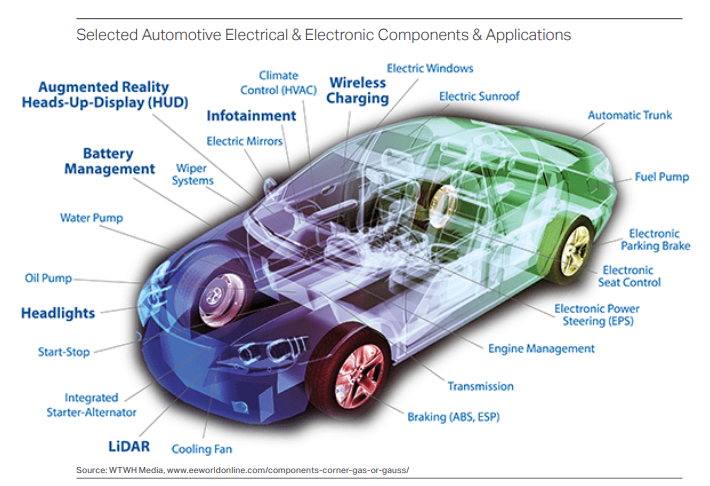

Charging connectors also use silver-plated contacts to reduce energy losses and heat generation during charging, while emerging technologies, including some solid-state battery designs, may further increase silver demand.
As EV adoption continues to grow, these applications are expected to make the automotive sector an increasingly important source of industrial silver demand.
Demand for Silver From Electric Vehicles and the Automotive Sector
|
Breakdown of Industrial Deman By Sector |
|||
|
Year |
Electrical/Electronics |
Brazing Alloys |
Other Industrial |
|
2016 |
309.0 |
49.1 |
132.9 |
|
2017 |
339.1 |
50.9 |
138.0 |
|
2018 |
330.4 |
52.0 |
143.5 |
|
2019 |
326.7 |
52.4 |
146.4 |
|
2020 |
321.4 |
47.5 |
142.9 |
|
2021 |
350.7 |
50.5 |
162.9 |
|
2022 |
370.7 |
49.2 |
172.4 |
|
2023 |
444.4 |
50.2 |
162.6 |
|
2024 |
460.9 |
49.7 |
168.4 |
|
2025 |
449.5 |
50.5 |
157.4 |
|
Source: Metal Focus |
|||
In 2023, electric vehicles accounted for approximately 18% of global new car sales, reflecting the rapid pace of vehicle electrification. Today, more than 70 million ounces of silver are already used annually in motor vehicles, reflecting silver's importance in electrical contacts, power electronics, sensors, and safety systems.
According to Oxford Economics, global automotive silver demand is forecast to grow at a 3.4% compound annual growth rate through 2031.
Electric vehicles are expected to become the largest source of automotive silver consumption by 2027, accounting for 59% of total automotive silver demand by 2031, driven by their greater reliance on high-voltage electronics, battery systems, and charging infrastructure.
As EV adoption is unlikely to decrease, silver demand from the EV industry alone could exceed 100 million ounces annually by 2030.
Beyond electrification, the growing adoption of advanced driver-assistance systems and autonomous driving technologies is expected to increase silver consumption. As long as global EV sales continue to grow, automotive silver demand is projected to outpace overall vehicle production.
Charging Infrastructure and Clean Energy Links
Charging stations rely on silver-containing electrical contacts, connectors, and charging cables because silver offers high electrical conductivity, excellent thermal performance, and strong corrosion resistance. Fast-charging equipment operates under high electrical loads and requires reliable conductive materials to support efficient power transfer and long-term durability.
The National Renewable Energy Laboratory estimates that supporting 33 million EVs in the United States by 2030 will require roughly 28 million charging ports.
Additionally, public and private charging networks may require more silver-containing connectors, electrical contacts, and power distribution equipment. This trend strengthens the connection between battery electric vehicles (BEVs), renewable energy deployment, and long-term silver industrial demand.
Data Centers, Artificial Intelligence, and Silver Demand
Artificial intelligence is emerging as a new driver of silver industrial demand because AI infrastructure relies on silver-rich servers, networking equipment, and power distribution systems.
Silver plays an important role in AI data centers due to its high electrical conductivity, which supports reliable power distribution, electrical contacts, semiconductors, and high-performance connectors.
As AI adoption accelerates the demand for servers, advanced processors, cloud computing infrastructure, and specialized hardware such as graphics processing units (GPUs), tensor processing units (TPUs), and neural processing units (NPUs), which is expected to increase significantly, driving greater silver consumption across critical electronic components.
But the impact of AI extends beyond data centers. Autonomous vehicles, robotics, industrial automation, and edge computing devices also require silver-rich components, including sensors, switches, fuses, and semiconductor packaging.
As data center capacity expands into emerging regions such as Latin America, South Asia, and Africa, additional facilities will require more servers, networking equipment, cooling systems, and silver-containing connectors.
According to The Silver Institute, record electronics and electrical demand linked to AI-related applications drove global silver industrial demand to a record 680.5 million ounces only in 2024, reinforcing silver's role as a foundational material in the AI-driven economy.
Supply, Recycling, and Substitution Challenges
Silver supply remains relatively constrained because approximately 70% of newly mined silver is produced as a byproduct of mining for metals such as copper, lead, zinc, and gold. As a result, higher silver prices alone do not necessarily lead to a rapid increase in mine production.
According to the World Silver Survey 2026, the market recorded a fifth consecutive annual deficit of 40.3 million ounces in 2025, even as recycling reached a 13-year high of 197.6 million ounces.
The chart below illustrates the silver market balance over the past decade: Positive values (above zero) indicate years in which total silver supply exceeded demand (a surplus), while negative values (below zero) represent market deficits, meaning demand outpaced available supply.
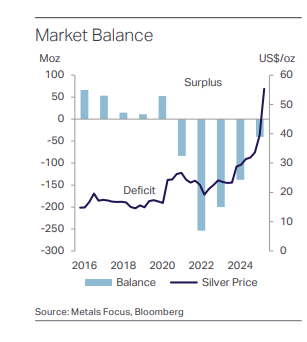

The bold line shows the average annual silver price. As consecutive deficits accumulated, the market became progressively tighter, contributing to greater price volatility.
At the same time, manufacturers continue pursuing silver thrifting by using less silver in individual components. Similar efforts are underway in the solar industry, where copper is being introduced into some photovoltaic cells to reduce costs.
However, many critical EV components, especially battery electric vehicles (BEVs), still require silver's superior electrical conductivity and reliability, making complete substitution unlikely.
Investment and Market Implications for Silver
While gold prices are driven primarily by investor sentiment and safe-haven demand, silver prices are influenced by both industrial demand and investor demand.
For investors conducting market analysis, key indicators include industrial demand, mine production, recycling supply, ETP inflows, and silver market deficits.
Geopolitical developments, including tensions in the Middle East, may also influence precious metals prices through changes in investor sentiment and broader commodity markets. Industrial demand is expected to reach 639.6 million ounces in 2026, while coin and net bar demand is forecast to grow by 18%.
Investors can gain exposure through physical silver bullion, silver-backed ETPs, silver mining companies, and futures products. The World Silver Survey 2026 notes strong ETP inflows and rising demand for physical investment.
For those who prefer to own physical precious metals, SD Bullion offers a wide selection of silver coins, rounds, and bars from leading sovereign mints and private refiners.
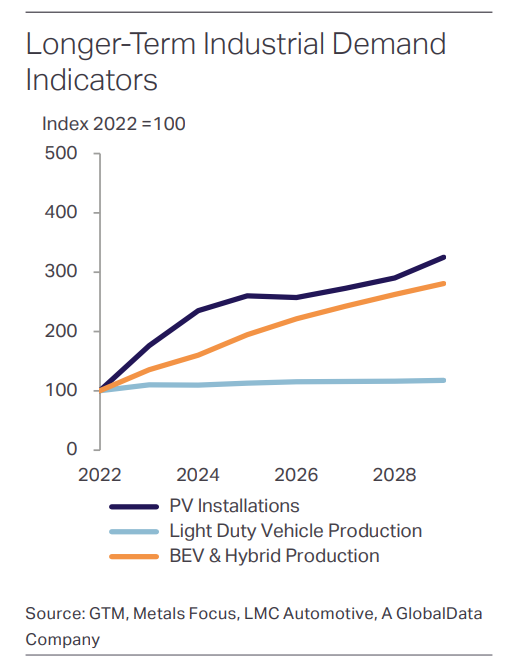

Long-term growth in demand from battery electric vehicles (BEVs), AI infrastructure, data centers, and power grids is expected to support silver consumption, while geopolitical risks and macroeconomic conditions continue to influence investors' interest.
Regional Outlook and Policy Drivers for the Energy Transition
The European Union, China, the United States, and other major markets are expected to drive EV demand, solar installations, and investments in green technologies.
According to the Silver Institute Report of 2026, this rising demand, especially for battery electric vehicles, is expected to support greater demand for silver because of its high conductivity and role in battery technology, solar panels, and advanced vehicle systems.
Although higher prices and new technologies may reduce the amount of silver required in some solar modules and light vehicle applications, growing industrial use and demand for critical minerals are expected to support even more silver consumption in the foreseeable future.
Research Needs and Data Gaps in the Electric Vehicle Industry
Although current research provides reasonable estimates of silver use in electric vehicles, important data gaps remain. The table below summarizes what is currently known and where additional research would improve long-term silver demand forecasts.
|
Vehicle Type |
Silver Content |
Source Insight |
|
Internal Combustion Engine (ICE) Vehicle |
Lower than EVs |
Uses silver in electrical contacts and electronics |
|
Electric Vehicle (EV) |
Approximately 25-50 grams |
Consumes 67-79% more silver than ICE vehicles |
|
Battery Electric Vehicle (BEV) |
Approximately 25-50 grams |
Largest contributor to future automotive silver demand |
|
Source: https://silverinstitute.org/silver-demand-forecast-to-expand-across-key-technology-sectors/ |
||
Most studies estimate that battery electric vehicles contain approximately 25-50 grams of silver, but manufacturers rarely disclose model-specific silver usage. Standardized reporting would improve estimates of automotive silver demand across different vehicle classes and technologies.
Silver recycling reached a 13-year high of 197.6 million ounces in 2025, with global recycling forecast to increase to 211.3 million ounces in 2026. However, limited public data exists on silver recovery from end-of-life battery electric vehicles, highlighting the need for lifecycle studies that quantify future recycling potential.
Outlook for Silver Use in Electric Vehicles
Silver is expected to remain an important industrial metal for the automotive sector as battery electric vehicle (BEV) adoption, charging infrastructure, data centers, artificial intelligence, and power grid investments continue to expand.
While near-term demand may face pressure from high silver prices, substitution in photovoltaic applications, and broader economic uncertainty, these factors are expected to be offset by long-term growth across multiple technology-driven industries.
As the electric vehicle market evolves, further research will help improve forecasts for future silver demand. Areas that would benefit from greater transparency include silver recovery from end-of-life EVs, silver use in charging infrastructure, standardized reporting of silver content by vehicle model, and the effects of material substitution on long-term silver consumption.
Investors who want to gain exposure to these long-term industrial trends may consider owning physical silver bullion. SD Bullion offers a broad selection of investment-grade silver products, including coins, rounds, and bars suitable for a variety of investment goals.
FAQs
How is silver used in electric vehicle components?
Silver is used throughout electric vehicles because of its high conductivity. It improves electrical contacts, connectors, relays, inverters, battery systems, sensors, automatic braking systems, and power electronics, helping vehicles operate efficiently and reliably.
What is the future demand outlook for silver in the EV market from 2025 to 2030?
According to the Silver Institute's research, continued electrification, supportive government policies, and expanding BEV (battery electric vehicles) production are expected to support long-term silver demand. The World Silver Survey 2026 also identifies automotive as one of the industrial sectors likely to remain an important driver of silver consumption beyond 2026.
Why is silver preferred over copper for EV electronics?
Silver is preferred over copper in critical EV electronics because it offers higher electrical conductivity, better corrosion resistance, and greater reliability in demanding operating conditions. Copper remains widely used, but silver is reserved for components where maximum performance is essential.
How does silver conductivity compare to aluminum in automotive wiring?
Silver has significantly higher electrical conductivity than aluminum, making it better suited for high-performance electrical contacts and electronic components. Aluminum is less expensive, but silver is used where maximum efficiency and reliability are required.
How is silver paste used in EV solar roofs and power electronics?
Silver paste is used in solar panels and solar modules to collect and conduct electricity efficiently. In EVs equipped with solar roofs, it helps maximize energy efficiency, while silver is also used in power electronics that manage electrical power throughout the vehicle.
How do silver prices affect electric vehicle manufacturing costs?
Higher prices can increase manufacturing costs because silver is used in batteries, electrical contacts, connectors, and power electronics. Manufacturers may reduce silver loadings where possible, but performance requirements limit substitution in many critical applications.
How many grams of silver are used in an electric vehicle compared to an internal combustion engine vehicle?
A modern electric vehicle typically contains about 25 to 50 grams of silver, while an internal combustion engine vehicle generally uses about 15 to 30 grams. Electric vehicles require significantly more silver because of their larger electrical systems and advanced electronics.
Why is silver chosen for electrical contacts and connectors in electric vehicles?
Silver is chosen for electrical contacts and connectors because its high conductivity, low contact resistance, and corrosion resistance improve reliability, reduce energy losses, and support the high-current demands of modern electric vehicles.
How does silver plating affect battery, inverter, and motor performance in EVs?
Silver plating improves the performance of batteries, inverters, and electric motors by increasing electrical conductivity, reducing contact resistance, and minimizing heat generation during high-current operation. These properties improve power transfer, increase energy efficiency, and enhance the long-term reliability of critical electrical connections in electric vehicles.
What are the main silver supply chain risks facing electric vehicle production?
Major risks include disruptions in mining, geopolitical tensions, shortages of critical minerals, trade restrictions, and increasing industrial demand. These factors may affect silver availability, pricing, and manufacturing costs across the EV industry.
What are the pros and cons of silver-plated versus gold-plated contacts in EV connectors?
Silver-plated contacts provide excellent conductivity and are more cost-effective for high-current applications. Gold-plated contacts offer superior corrosion resistance in harsh environments but are typically more expensive and used in specialized electronic applications.
What role does silver play in lithium-ion battery components such as current collectors, tabs, and busbars?
Silver supports lithium battery technology by improving electrical connections and, in some next-generation solid-state battery designs, enhancing the durability of solid electrolytes. Researchers have found that ultrathin silver coatings can help reduce cracking, improve lithium plating, and potentially increase the safety and lifespan of future solid-state batteries.
Are there viable alternatives to silver for EV electrical contacts?
Copper, aluminum, and other conductive materials can replace silver in some applications. However, because of its superior conductivity and reliability, silver remains the preferred material for many high-performance electrical contacts and connectors.
How much silver is typically used in a modern passenger electric vehicle?
A modern passenger electric vehicle typically contains 25 to 50 grams of silver, depending on its size, electrical architecture, and features. Vehicles with more advanced electronics and power systems generally require more silver than conventional vehicles.
How is silver used in electric vehicle components?
Silver is used throughout electric vehicles because of its high conductivity. It improves electrical contacts, connectors, relays, inverters, battery systems, sensors, automatic braking systems, and power electronics, helping vehicles operate efficiently and reliably.
What is the future demand outlook for silver in the EV market from 2025 to 2030?
According to the Silver Institute's research, continued electrification, supportive government policies, and expanding BEV (battery electric vehicles) production are expected to support long-term silver demand. The World Silver Survey 2026 also identifies automotive as one of the industrial sectors likely to remain an important driver of silver consumption beyond 2026.
Why is silver preferred over copper for EV electronics?
Silver is preferred over copper in critical EV electronics because it offers higher electrical conductivity, better corrosion resistance, and greater reliability in demanding operating conditions. Copper remains widely used, but silver is reserved for components where maximum performance is essential.
How does silver conductivity compare to aluminum in automotive wiring?
Silver has significantly higher electrical conductivity than aluminum, making it better suited for high-performance electrical contacts and electronic components. Aluminum is less expensive, but silver is used where maximum efficiency and reliability are required.
How is silver paste used in EV solar roofs and power electronics?
Silver paste is used in solar panels and solar modules to collect and conduct electricity efficiently. In EVs equipped with solar roofs, it helps maximize energy efficiency, while silver is also used in power electronics that manage electrical power throughout the vehicle.
How do silver prices affect electric vehicle manufacturing costs?
Higher prices can increase manufacturing costs because silver is used in batteries, electrical contacts, connectors, and power electronics. Manufacturers may reduce silver loadings where possible, but performance requirements limit substitution in many critical applications.
How many grams of silver are used in an electric vehicle compared to an internal combustion engine vehicle?
A modern electric vehicle typically contains about 25 to 50 grams of silver, while an internal combustion engine vehicle generally uses about 15 to 30 grams. Electric vehicles require significantly more silver because of their larger electrical systems and advanced electronics.
Why is silver chosen for electrical contacts and connectors in electric vehicles?
Silver is chosen for electrical contacts and connectors because its high conductivity, low contact resistance, and corrosion resistance improve reliability, reduce energy losses, and support the high-current demands of modern electric vehicles.
How does silver plating affect battery, inverter, and motor performance in EVs?
Silver plating improves the performance of batteries, inverters, and electric motors by increasing electrical conductivity, reducing contact resistance, and minimizing heat generation during high-current operation. These properties improve power transfer, increase energy efficiency, and enhance the long-term reliability of critical electrical connections in electric vehicles.
What are the main silver supply chain risks facing electric vehicle production?
Major risks include disruptions in mining, geopolitical tensions, shortages of critical minerals, trade restrictions, and increasing industrial demand. These factors may affect silver availability, pricing, and manufacturing costs across the EV industry.
What are the pros and cons of silver-plated versus gold-plated contacts in EV connectors?
Silver-plated contacts provide excellent conductivity and are more cost-effective for high-current applications. Gold-plated contacts offer superior corrosion resistance in harsh environments but are typically more expensive and used in specialized electronic applications.
What role does silver play in lithium-ion battery components such as current collectors, tabs, and busbars?
Silver supports lithium battery technology by improving electrical connections and, in some next-generation solid-state battery designs, enhancing the durability of solid electrolytes. Researchers have found that ultrathin silver coatings can help reduce cracking, improve lithium plating, and potentially increase the safety and lifespan of future solid-state batteries.
Are there viable alternatives to silver for EV electrical contacts?
Copper, aluminum, and other conductive materials can replace silver in some applications. However, because of its superior conductivity and reliability, silver remains the preferred material for many high-performance electrical contacts and connectors.
How much silver is typically used in a modern passenger electric vehicle?
A modern passenger electric vehicle typically contains 25 to 50 grams of silver, depending on its size, electrical architecture, and features. Vehicles with more advanced electronics and power systems generally require more silver than conventional vehicles.