Treasury Secretary's Comments Spark Fort Knox Firestorm Debate as Gold and Silver Pulls Back
- Gold and silver extended their summer correction, with spot silver price closing the week at $55.96 per ounce, gold ending at $4,018 per ounce, and the gold-to-silver ratio rising to 71:1, reflecting continued relative weakness in silver.
- Treasury Secretary Scott Bessent sparked controversy after comments suggesting outstanding silver certificates remain backed by silver stored at Fort Knox, drawing criticism from precious metals analysts who note the U.S. ended silver redemption in 1968 and no longer maintains official silver reserves.
- The discussion renewed attention on the long-term decline in the dollar's purchasing power, with comparisons showing that one dollar today buys only a fraction of the silver it could purchase when silver certificates were still redeemable nearly six decades ago.
- Debate over U.S. gold reserves also resurfaced, as questions surrounding Fort Knox audits and comparisons with European Union official gold holdings reignited investor interest in sovereign reserve transparency.
- The U.S. Treasury announced plans for a commemorative $1 coin honoring America's 250th anniversary, featuring President Trump's likeness despite the coin containing no gold, underscoring the distinction between commemorative coinage and precious metals bullion.
- America's national debt surpassed $39.5 trillion, providing another macroeconomic backdrop that many precious metals investors cite as supportive of long-term demand for hard assets.
- Contrarian investors continued accumulating gold and silver bullion despite lower prices, with buying interest remaining active while both gold and silver trade below their 200-day moving averages.
- East-West investment flows remain sharply divided, as Western investors have continued reducing gold ETF exposure while Eastern buyers have been adding both physical gold bullion and gold-backed investment products during the recent pullback.
- Silver futures activity has quieted considerably, with COMEX trading volumes well below levels seen earlier this year, suggesting that a sustained price recovery may require renewed participation from leveraged speculative traders.
- Long-term bullion investors remain focused on steady accumulation rather than market timing, arguing that today's prices continue to offer an opportunity to build physical gold and silver holdings as long-term stores of value despite ongoing short-term volatility.
Silver closed at $55.96, gold finished at $4,018, and the U.S. debt surpassed $39.5 trillion as renewed debate over America's precious metals reserves and continued Eastern demand kept long-term investors focused on bullion.
Gold and Silver Retreat as Summer Correction Continues While Long-Term Bullion Buyers Stay Active
Gold and silver extended their recent pullback this week as precious metals markets continued their summer correction. Silver closed the week at $55.96 per ounce, while gold price settled at $4,018 per ounce, pushing the gold-to-silver ratio higher to 71:1. Despite softer prices, many long-term investors continue viewing the current environment as an opportunity to accumulate physical bullion rather than a reason to exit the market.
Gold and Silver Prices Move Lower
The week's price action reflected continued weakness across both precious metals after an exceptionally strong first half of the year. While silver has experienced greater volatility than gold, both metals remain well below their recent highs as investors digest shifting macroeconomic expectations and lighter summer trading activity. Investors tracking the live gold price can follow how gold responds to changes in interest rates, the U.S. dollar, inflation expectations, and broader market sentiment.
The higher gold-to-silver ratio suggests gold has once again outperformed silver during the correction, a common occurrence during periods of reduced investor risk appetite. Following the live gold price alongside silver prices and the gold-to-silver ratio can provide additional context on the relative performance of the two precious metals as market conditions change.
Treasury Secretary Scott Bessent's Comments Ignite Precious Metals Debate
One of the week's biggest talking points came from Treasury Secretary Scott Bessent during a televised interview discussing U.S. currency and Fort Knox.
His remarks suggested that outstanding silver certificates remain backed by silver held by the U.S. government—a statement that immediately drew criticism from precious metals commentators. Analysts pointed out that the United States ended silver certificate redemption in 1968 and no longer maintains official silver reserves after decades of industrial consumption and coinage use.
The exchange quickly became a widely discussed topic across the precious metals community, renewing broader conversations about monetary history and the role of precious metals in the U.S. financial system.
The Dollar's Lost Purchasing Power
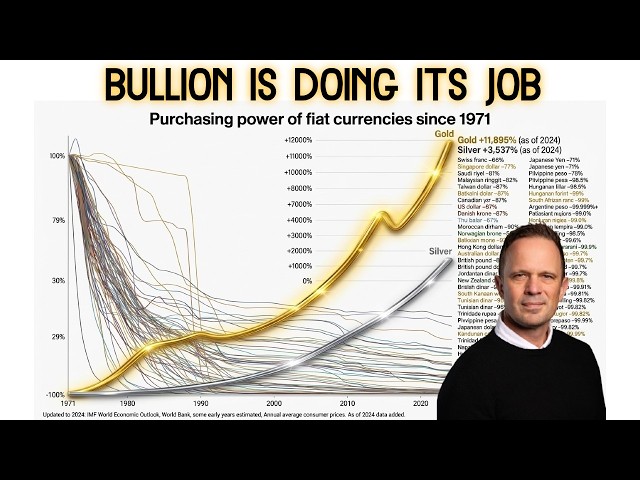
The discussion also highlighted the dramatic decline in the purchasing power of the U.S. dollar over the past half-century.
When silver certificates were still redeemable in 1968, one dollar could be exchanged for a significantly larger amount of physical silver than today. That comparison continues to reinforce why many investors view physical bullion as a long-term store of value rather than simply another financial asset.
Questions Around Fort Knox Gold Reserves Continue
The interview also revived debate surrounding America's official gold reserves at Fort Knox.
Although government officials continue to state that U.S. gold reserves remain fully accounted for, discussions surrounding reserve transparency and the absence of comprehensive modern audits continue to generate interest within the precious metals community. Comparisons were also made to the combined gold reserves reported by European Union member nations.
Commemorative Coin Announcement Draws Attention
The Treasury also announced plans for a new commemorative $1 coin featuring President Donald Trump as part of America's upcoming 250th anniversary celebration.
While the coin carries a gold-colored appearance, officials clarified that it contains no actual gold and instead uses standard circulating coin materials. The announcement served as a reminder that commemorative currency should not be confused with investment-grade precious metals bullion.
US National Debt Continues to Climb
Another major macroeconomic milestone arrived this week as the U.S. national debt surpassed $39.5 trillion.
Rising government debt levels remain one of the long-term themes frequently cited by precious metals investors, alongside inflation, currency debasement, and central bank demand, as reasons for maintaining exposure to physical gold and silver.
Eastern Buyers Continue Accumulating Gold
While Western investors have continued reducing gold ETF holdings during the recent correction, buying activity remains considerably stronger across Eastern markets.
This divergence between Western investment flows and Eastern physical demand has become an increasingly important trend in recent years, with many investors outside North America continuing to view price declines as accumulation opportunities rather than reasons to sell.
Silver Futures Activity Slows
Trading activity in COMEX silver futures has cooled substantially compared with the elevated volumes seen earlier this year.
Lower participation from leveraged traders has coincided with the recent correction, suggesting that stronger speculative interest could play an important role in the timing and magnitude of silver's next advance.
Long-Term Bullion Investors Remain Focused on Accumulation
Despite ongoing volatility, many physical bullion buyers continue emphasizing consistency over market timing.
Rather than attempting to identify the exact bottom, long-term investors are steadily adding to their gold and silver holdings during periods of price weakness, viewing today's prices as attractive from a multi-year perspective.
Outlook
Although precious metals remain in a short-term corrective phase, the broader investment themes supporting gold and silver—including rising sovereign debt, ongoing physical demand, and long-term purchasing power preservation—remain firmly in place. As market volatility continues through the summer, investors will be watching whether renewed institutional participation and stronger futures market activity can provide the catalyst for the next leg higher in both gold and silver.
Sources:
Treasury Secretary Scott Bessent treats Fox News host Jesse Watters to an exclusive tour of the Treasury Department
https://www.youtube.com/watch?v=m9WKhg7ILfI
Treasury Secretary Scott Bessent treats Fox News host Jesse Watters to an exclusive tour of the new fiat $100 USD bill
https://x.com/USTreasury/status/2077048127400378853
US debt +$39.5 trillion on July 16, 2026 (further tens of trillions growing in unfunded liabilities ignored in this figure)
https://fiscaldata.treasury.gov/datasets/debt-to-the-penny/debt-to-the-penny