How Much Silver Is Used in Solar Panels? Demand, Supply, and Investment Impact
A typical solar panel contains up to 20 grams (0.64 troy ounces) of silver. In 2025, solar panel manufacturing consumed 186.6 million ounces of silver, accounting for approximately 16.5% of global silver demand and 22% of global mine production.
Key Takeaways
-
A typical solar panel contains up to 20 grams (0.64 troy ounces) of silver.
-
Solar panel manufacturing consumed 186.6 million ounces of silver in 2025.
-
Photovoltaics accounted for approximately 16.5% of total global silver demand in 2025.
-
Solar panel production accounted for roughly 22% of global silver mine supply.
-
Silver remains essential to photovoltaic technology due to its unmatched electrical conductivity.
Jump to: How Much Silver in Solar Panels? | Why is Silver in Solar Panels? | How PV Cells Work | Annual Demand | Supply Impact | Silver vs. Copper | China's Role | Price Impact | For Investors | FAQs
Silver is used in solar panels because it has the highest electrical conductivity of any metal, allowing photovoltaic (PV) cells to efficiently collect and transfer electricity generated by sunlight.
As global solar installations continue to grow, photovoltaic demand has become one of the largest sources of industrial silver consumption and an important factor influencing the silver market.
As solar demand continues to influence the silver market, SD Bullion regularly tracks developments in silver supply, industrial demand, and precious metals investing.
Below, we'll examine how much silver is contained in solar panels, how solar cells use silver to generate electricity, and why growing photovoltaic demand matters for the future of the silver market.
How Much Silver Is in the Average Solar Panel?
A typical solar panel contains up to 0.64 troy ounces of silver. Smaller residential panels may contain less silver paste, while larger or higher-efficiency panels may require more silver paste to maintain conductivity.
|
Solar Product |
Typical Silver Content |
|---|---|
|
Average Solar Panel |
Up to 20 g (0.64 oz) |
|
400W Solar Panel |
3.8-6 g (0.12-0.19 oz) |
|
Recycled Solar Panel Recovery |
3.8-20 g |
How Silver Usage Varies by Solar Panel Type and Manufacturer
Silver usage varies by solar technology. Traditional PERC panels generally require less silver than newer TOPCon and heterojunction (HJT) designs, which use additional silver paste to improve efficiency. Manufacturers also continue reducing silver content through ongoing thrifting efforts.
In solar cells, electrical contacts are conductive pathways that collect electrons and transfer electricity out of the cell. The amount of silver required depends on how these contacts are designed.
|
Solar Technology |
Approximate Silver Usage in Milligrams per Watt (mg/W) |
|
|---|---|---|
|
PERC |
10 mg/W |
Traditional solar cell design uses silver primarily on the front contact, while the rear contact is typically aluminum. |
|
TOPCon |
13 mg/W |
Higher efficiency: increased use of silver paste; silver is applied to the rear n-type contact and mixed with aluminum at the front contact to improve efficiency. |
|
HJT |
22 mg/W |
In high-efficiency designs with greater silver requirements, silver paste is used for both front and rear contacts, increasing silver consumption per watt. |
Why Is Silver Used in Solar Panels?

Silver ore sample. Source: U.S. Geological Survey (USGS), Public Domain.
Silver's usage in photovoltaics is supported by three main characteristics: exceptional electrical conductivity, excellent thermal conductivity, and high corrosion resistance.
Although silver accounts for only about 0.14% of a solar panel's total weight, it can account for 10% to 14% of manufacturing costs due to its critical role in photovoltaic cells.
Silver's High Electrical Conductivity and Energy Efficiency
Silver has the highest electrical conductivity of any metal (63.0 × 10⁶ S/m at 20°C), making it essential for solar cells, electronics, and power applications where efficiency matters.
Its ability to conduct electricity with minimal energy loss helps maximize solar panel performance, which is why silver remains a critical material in photovoltaic technology despite its higher cost than copper.
|
Property |
Silver |
Copper |
|---|---|---|
|
Electrical Conductivity |
63.0 × 10⁶ S/m |
59.6 × 10⁶ S/m |
|
Thermal Conductivity |
429 W/(m·K) |
401 W/(m·K) |
|
Corrosion Resistance |
Excellent |
Moderate |
|
Relative Cost |
Much Higher |
Much Lower |
|
Solar Industry Usage |
Current standard for PV cells |
Emerging alternative |
Silver's Resistance to Corrosion, Moisture, and Heat
Silver has the highest thermal conductivity of any metal, allowing solar cells to dissipate heat efficiently. This helps reduce performance losses caused by high temperatures and supports long-term solar panel efficiency.
Why Silver Performs Better During Thermal Cycling
Thermal cycling occurs when solar panels repeatedly heat up during the day and cool down at night. Silver's excellent thermal conductivity and corrosion resistance help maintain electrical performance during these temperature fluctuations, supporting long-term solar panel reliability.
How Solar Photovoltaic Cells Use Silver to Generate Electricity
Solar photovoltaic cells use silver paste to create conductive pathways that collect electrons generated by sunlight. These pathways efficiently transport electricity from the solar panel into the electrical system with minimal energy loss.
What Is Silver Paste?
Silver paste is a conductive material composed primarily of silver powder. In photovoltaic solar cells, it forms the conductive pathways that collect and transport electricity, making it an essential component of modern solar panel production.
What Happens When Sunlight Hits a Solar Cell?
When sunlight hits a solar cell, photons excite electrons within the silicon layer, generating an electric current. Silver paste printed on the front and back of the cell collects these electrons and transports the electricity through the solar panel and into the electrical system. Because silver has the highest electrical conductivity of any metal, it helps minimize energy loss and maximize power output.
How Silver Collects and Transfers Electrons
Silver collects electrons generated by sunlight via conductive pathways printed on the surfaces of solar cells. These silver contacts transfer electricity with minimal resistance, helping photovoltaic panels deliver more power with less energy loss.
How Much Silver Does the Solar Industry Use Each Year?
Solar Industry Silver Demand
Photovoltaic silver demand has grown significantly in recent years. It remains one of the largest sources of industrial silver demand, consuming hundreds of millions of ounces over the past decade. The sector consumed approximately 142 million ounces of silver in 2023, compared to 186.6 million ounces in 2025, reflecting the continued expansion of global solar installations.
|
Year |
Photovoltaic Silver Demand (Moz) |
Share of Global Silver Demand |
|---|---|---|
|
2023 |
142.0 |
13.8% |
|
2025 |
186.6 |
16.5% |
Despite supply constraints caused by a fifth consecutive annual silver market deficit and tightening above-ground inventories, solar energy remains a major driver of long-term silver consumption due to continued growth in global solar installations.
As shown below, the silver market has recorded several consecutive years of deficits, meaning total demand exceeded available supply. In the chart, the blue bars show annual market balance: positive values indicate a surplus, while negative values indicate a deficit. The black line tracks the silver price.
Solar Panel Production and Total Silver Consumption
Solar panel manufacturing consumed 186.6 million ounces of silver in 2025, making photovoltaics the largest single source of industrial silver demand. Despite a 6% year-over-year decline due to silver thrifting and substitution efforts by manufacturers, solar panels still accounted for approximately 28% of global industrial silver consumption.
Continued global solar capacity expansion, particularly in China and the United States, keeps the solar industry one of the most important long-term drivers of physical silver demand.
Solar Demand as a Percentage of Global Silver Demand
Solar panels accounted for 13.8% of global silver demand in 2023. By 2025, that share had increased to approximately 16.5%, highlighting the key role of photovoltaic demand. With photovoltaic demand reaching 186.6 million ounces and total silver demand totaling 1,130.6 million ounces, roughly one out of every six ounces of silver consumed worldwide was used in solar energy applications.

How Solar Energy Is Affecting Global Silver Supply
The rapid growth of solar installations has increased industrial silver consumption and placed additional pressure on global silver supplies. As photovoltaic demand expands, a larger share of annual mine production is being directed toward solar panel manufacturing.
Solar Global Demand vs Global Silver Production
Solar panel manufacturing consumed 186.6 million ounces of silver in 2025, while global silver mine production totaled 846.6 million ounces.
This means the photovoltaic industry alone used approximately 22% of all silver mined worldwide, highlighting how solar energy has become one of the largest end-use markets for physical silver.
|
Category |
Moz |
|---|---|
|
Solar Demand |
186.6 |
|
Global Mine Production |
846.6 |
As solar installations continue to expand globally, photovoltaic demand remains a major factor influencing long-term silver supply-and-demand fundamentals.
Pressure on Global Silver Supply
According to the latest Silver Institute annual report, silver's volatility in 2026 is much higher than it was last year.
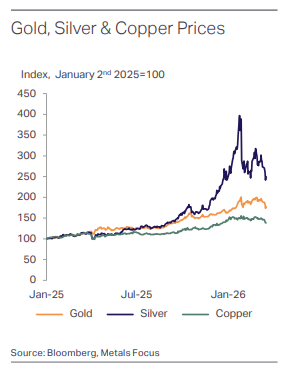

Silver prices also increased after the U.S. classified silver as a critical mineral, and reports suggested China could restrict silver exports, though those reports were later found to be false.
Especially at the beginning of 2026, demand for silver coins and bars was strong in most major markets. Product shortages became common, premiums increased, and physical silver demand strengthened across major markets. At the same time, investment demand surged across silver ETFs, futures, and options.
Can Silver Production Keep Up With Solar Growth?
Silver supply is expected to remain tight in 2026, with global mine production projected to decline slightly while industrial demand, particularly from solar panels, remains strong. Higher prices are expected to boost recycling, helping offset some of the supply shortfall.
Can Solar Manufacturers Replace Silver With Copper?
Why Copper Is Being Considered
The solar industry is increasingly exploring copper as a substitute for silver because copper is significantly less expensive. According to Reuters, replacing silver with copper-based metallization could save solar manufacturers an estimated $15 billion annually at 500 gigawatts of solar panel production.
Technical Challenges of Replacing Silver
Perovskite solar cells have the potential to also eventually reduce or eliminate the use of silver in some solar panels by replacing the silver-based conductive layers found in traditional silicon PV technology, although the technology is still in the early stages of commercial deployment.
With that being said, silver remains more efficient due to its superior electrical conductivity, making it difficult to fully replace in high-performance solar power applications.
As a result, while copper usage is expected to grow and other technologies emerge, silver is likely to remain an essential material in photovoltaic technology for the foreseeable future.
Why Leading Manufacturers Still Depend on Silver
Leading solar manufacturers continue to rely on silver because no alternative material currently matches its combination of electrical conductivity, corrosion resistance, and long-term reliability. Although copper substitution is increasing, silver remains the preferred material for many high-efficiency solar cells.
How China Influences Solar Panel Production and Silver Demand
China's Role in Global Solar Installations
China remains the world's largest solar market and solar panel manufacturer, accounting for approximately 51% of global solar capacity growth over the past decade, according to The Silver Institute. Its dominant position in the solar supply chain gives it significant influence over photovoltaic silver demand.
China's Impact on Future Silver Consumption
China is expected to remain a major driver of future silver demand because it leads global solar panel manufacturing. As solar capacity continues to expand through 2030, photovoltaic production is likely to require significant amounts of silver, which could support silver prices if mine supply and recycling growth fail to keep pace with demand.
Will Solar Demand Increase Silver Prices?
Rising solar demand can support higher silver prices by increasing competition for available supply. However, silver prices are also influenced by investment demand, mine production, recycling activity, and broader economic conditions.
How Industrial Demand Affects Silver Prices
According to the World Survey of 2026, industrial demand can significantly impact silver prices because many industries rely on silver's unique electrical and thermal conductivity.
When demand rises in sectors such as solar energy, electronics, electric vehicles, and power infrastructure, manufacturers compete for a limited supply of silver, which can drive up prices.
Unlike gold, whose demand primarily comes from bullion products and jewelry, silver prices are equally influenced by both industrial consumption and investor activity.
In 2025, industrial demand totaled 657.4 million ounces, representing more than half of global silver demand and underscoring the metal's importance as both an industrial commodity and a precious metal; investors often study historical silver price data to understand how these trends affect long-term pricing.
Investors track silver prices via the live silver price chart on SD Bullion.
Solar Demand and Investment Demand Combined
Silver demand continues to benefit from expanding industrial applications and renewed investor interest, both of which can influence the silver price today. While the solar industry remains a major source of silver consumption, the World Silver Survey 2026 highlighted strong investment demand across silver ETFs, physical silver coins and bars, futures, and options markets.
Coin and bar demand rose 14% in 2025, while silver ETP inflows reached their second-highest level on record. Combined with a fifth consecutive market deficit and tighter physical inventories, these trends highlight silver's unique position as both an essential industrial metal and a precious metal investment.
Investors seeking exposure to these trends often choose physical silver bullion, including low-premium silver bars and silver coins.
Future Silver Demand Outlook for the Coming Years
The long-term outlook for silver demand remains supported by industrial growth in AI infrastructure, data centers, power grids, and automotive applications. While higher prices are driving silver thrifting in solar panels and reducing jewelry demand, the World Silver Survey 2026 expects the market to remain broadly tight rather than move into a sustained surplus.
The report still mentions that silver offtake from data centers alone is expected to exceed 10% of electrical and electronics demand next year (2027).
What Does Solar Silver Demand Mean for Investors?
Silver occupies a unique position in the market because it serves as both an industrial metal and a precious-metal investment. Growing demand from solar panels, electronics, and other industrial applications can tighten supply, while investor demand for silver coins, bars, and ETFs can further support the market.
As solar installations expand worldwide, many investors monitor photovoltaic demand as a long-term driver of silver consumption and silver market fundamentals, and some add silver gram bars to their portfolios to gain scalable exposure to the metal.
Investors seeking exposure to these trends often choose physical silver bullion. 1 oz silver bars typically offer lower premiums, while larger-format 100 oz silver bars and versatile 10 oz silver bars appeal to investors building substantial positions, while sovereign coins such as the 1oz American Silver Eagle provide greater liquidity.
Investors can compare silver bars and coins at SD Bullion using live silver spot pricing.
FAQs
How many grams of silver are used in one solar panel?
An average solar panel contains about 20 grams of silver, or roughly 0.64 troy ounces. Most of this silver is used in conductive paste in photovoltaic (PV) cells, where it helps collect and transfer electricity generated by sunlight.
Why is silver used in photovoltaic cells?
Silver is used in photovoltaic cells because it has the highest electrical conductivity of any metal. This allows solar cells to collect and transfer electricity generated by sunlight with minimal energy loss, helping maximize solar panel efficiency and power output.
How Does Silver Use in Solar Panels Compare to Electronics?
Solar panels have become one of the largest industrial consumers of silver due to the large amount of silver paste required in photovoltaic cells. While silver is also essential in electronics such as smartphones, computers, and semiconductors, the rapid growth of solar installations has significantly increased the solar industry's share of global silver demand.
How Much Silver Is in a 400-Watt Solar Panel?
A typical 400-watt solar panel contains approximately 3.8 to 6 grams of silver (0.12 to 0.19 troy ounces), depending on the solar cell technology used. Some solar panels generally require more silver than older designs due to their higher efficiency and performance.
What Percentage of Global Silver Demand Comes From the Solar Industry?
According to the World Silver Survey 2026, solar panel manufacturing consumed approximately 186.6 million ounces of silver in 2025, representing about 16.5% of global silver demand. As a result, growth in solar installations has become an increasingly important driver of the silver market, alongside demand for investment, jewelry, and electronics.
How Much Silver Does the Solar Industry Need by 2030?
According to CRU Group, the solar industry is expected to consume approximately 70-80 million ounces of silver annually by 2030. Although manufacturers continue reducing the amount of silver used per photovoltaic cell, growing solar panel installations are expected to offset much of this decline and keep silver demand at substantial levels.
What Is the Solar Panel Silver Demand Forecast for 2030?
According to CRU Group, solar panel silver demand is expected to remain between 70 and 80 million ounces per year through 2030, keeping the photovoltaic sector a major consumer of silver.
Why Is Silver Paste Used in PERC Solar Cell Manufacturing?
Silver paste is used in PERC (Passivated Emitter Rear Cell) solar cell manufacturing because it forms conductive pathways that collect and transfer electricity generated by sunlight. Its high electrical conductivity helps reduce energy losses, while its durability supports the long-term efficiency and performance of photovoltaic cells.
Can Copper Replace Silver in Solar Panel Manufacturing?
Copper can replace some silver in solar panel manufacturing, but it has not fully matched silver's performance. Silver offers higher electrical conductivity and better corrosion resistance, while copper is cheaper and more abundant. As a result, manufacturers are increasingly using copper to reduce costs, but silver remains essential in many high-efficiency solar cells.
Silver vs. Copper in Solar Panels: Which Metal Is More Efficient?
Silver is generally more efficient than copper in solar panels because it has higher electrical conductivity and greater corrosion resistance. Copper is less expensive and more abundant, making it attractive for reducing manufacturing costs, but silver remains the preferred choice for maximizing solar cell performance and long-term reliability.
Is It Profitable to Recycle Silver From Old Solar Panels?
Yes, recycling silver from old solar panels can be profitable, especially when silver prices are high and recovery technology is efficient. However, profitability depends on the amount of silver recovered, processing costs, and the scale of the recycling operation. As more solar panels reach the end of their lifespan, silver recycling is expected to become increasingly important.
How Much Silver Can Be Recovered From Recycled Solar Panels?
The amount of silver recovered from a recycled solar panel varies by technology and age, but a typical panel contains between 3.8 and 20 grams of silver. Recovery rates depend on the recycling process used, with modern techniques designed to recover a significant portion of the silver and other valuable materials.
How has the amount of silver in solar panels changed over the last decade?
According to the Silver Institute, installed photovoltaic (PV) capacity has grown more than tenfold over the past decade, while silver demand from solar panels has increased roughly threefold. The slower growth in silver demand reflects technological improvements that reduced the amount of silver required per solar cell, a process known as silver thrifting.
As solar installations continue to expand worldwide, photovoltaic demand is expected to remain an important driver of silver consumption. Investors can follow live silver prices and explore silver bars and silver coins at SD Bullion.