Gold and Silver Fall on Fed Fears, But Long-Term Bulls Stay Confident
- Gold and silver ended the week under pressure as markets reacted negatively to hawkish commentary surrounding Federal Reserve policy. Spot gold closed near $4,159 per ounce, while spot silver finished around $64.86 per ounce, with the gold-to-silver ratio rising to 64:1.
- Investor sentiment has turned noticeably bearish, but many long-term precious metals advocates see the pullback as a buying opportunity rather than a trend reversal. Both metals are now trading below their 200-day moving averages, a development that has increased caution among short-term traders while attracting value-focused bullion buyers.
- The fundamental bull case for gold and silver remains intact, according to market commentators. The argument centers on growing U.S. debt burdens, projected to exceed $40 trillion, alongside mounting unfunded liabilities that many believe will require continued monetary expansion and currency debasement over time.
- Central bank gold buying continues to provide major support for the market. Countries such as Poland remain aggressive buyers, with plans to significantly increase gold's share of national reserves. Surveys of global central banks also indicate that a majority expect to hold more gold on their balance sheets by the end of the decade.
- The global monetary system continues to evolve away from exclusive U.S. dollar dominance. Growing use of China's yuan in international trade settlements, combined with expanding gold reserve accumulation, points toward a more multipolar financial system where bullion plays a larger strategic role.
- Dollar strength remains largely a relative story. Although the U.S. Dollar Index climbed back above 100, precious metals advocates argue that the dollar's long-term purchasing power continues to erode when measured against real-world goods and services, reinforcing gold's role as a store of value.
- Fund manager sentiment toward gold remains surprisingly constructive. Bank of America survey data cited in the update suggests only a small minority of professional investors believe gold is currently overvalued, even after the metal's strong multi-year advance.
- Volatility is becoming the new normal in precious metals markets. Gold and especially silver have experienced price swings far larger than historical averages this year. Analysts increasingly view these sharp moves as characteristic of a maturing bull market rather than signs of instability alone.
- Silver's supply-demand outlook continues to attract bullish attention. Banking analyst Christopher Whalen highlighted what he sees as a structural imbalance between silver supply and demand, noting strong Chinese buying activity and production levels that may struggle to keep pace with consumption trends.
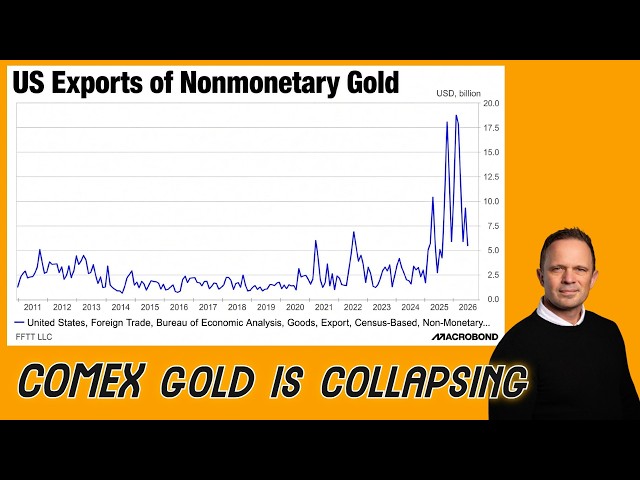
- Speculative money appears to be leaving precious metals derivatives markets. Open interest and trading activity in COMEX gold and silver futures have fallen sharply from early-2026 highs, suggesting many momentum traders have exited. At the same time, CME Group's move toward 24-hour futures trading underscores growing interest in the sector, even as long-term investors continue to favor physical bullion ownership over leveraged paper products.
As precious metals retreat from recent highs, Fed-driven selling pushed precious metals lower, central bank gold buying, mounting government debt, and tightening silver fundamentals continue to support the long-term case for bullion ownership.
Last week's selloff reflected shifting Fed expectations and weaker short-term sentiment, but the longer-term themes driving precious metals—central bank accumulation, rising sovereign debt, currency diversification, and tight silver fundamentals—remain very much in place. For many bullion investors, the recent weakness is being viewed as a correction within a broader secular bull market rather than the end of the trend.
Last Week's Gold and Silver Market Update
- The precious metals market sold off on the week's hawkish fiat Fed headlines.
- The spot silver price closed down at $64.86 oz bid.
- The spot gold price fell over all to close the week at $4,159 oz bid.
- The spot gold silver ratio bumped two ounces higher to close the week at 64.
Bearish Silver Gold Sentiment Got Me More Bullion
Another week of precious metals price action weakness coinciding with the new Federal Reserve Chair Kevin Warsh's first public FOMC appearance.
Both silver and gold are now trading below their respective 200 day moving averages, and buying more bullion is what I did today.
Nothing has substantially changed in the underlying fundamentals of this secular bullion bull market.
Our US debt is headed to $40 trillion and higher with increasing unfunded liabilities coming due through this decade and beyond. Further currency debasement is the main release valve for such unpayable sums of debt.
Tough talking financial narratives won't change the record debt arithmetic. Real rates of return on US debt are near break even if you believe the rigged inflation data the US government regularly reports (4.2% in last month's CPI report). The reality is we're going to continue seeing negative real rates of interest paid on US debt loads for decades to come.
The Fed and US Treasury are likely going to have to change existing bank regulation rules so US banks can begin taking on ballooning US debt refinancing to come as foreigner nations are increasingly moving from owning UST to instead buying more Gold Bullion Reserves outright.
What used to be a blue colored question of confusion to some has morphed into nearly half of central bank respondents stating they are buying more gold bullion reserves.
Poland continues its buying on course for targets designed to have nearly 40% of its saving in gold bullion by later this decade.
The majority of emerging market central banks confirm they are planning to buy more gold bullion.
And when asked 71 central banks are asked what the world looks like in 2031, they state more Gold Reserves on their balance sheet. And more fiat Chinese renminbi yuan as well.
After all, China is the largest trade partner with almost all countries now. Why wouldn't countries want to have more of their currency in order to directly settle trade with China?
The new digital yuan direct settlement trade born from the BIS project mBridge started in 2022 appears ready to spring out of the payment sandbox into a system that requires no US dollar demand as an intermediary in settling much potential future trade.
If Asia is the largest segment of future growth for the world, it stands to reason that the Chinese yuan and a lot of gold will increasingly become involved with growing global trade coming.
In the next five years and beyond, it will be no surprise see trillions increasingly trade settled by this emerging e-cny system with both existing and coming bilateral trade agreements.
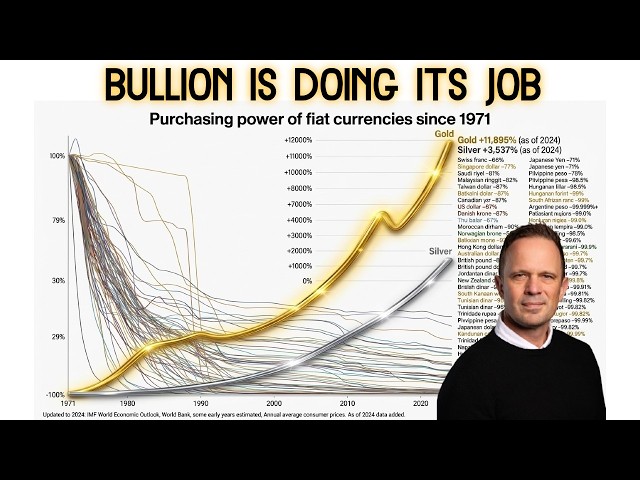
As our new multilateral world comes further into fruition, witnessing decades of cherry picked US inflation data and cherry picked US corporate stocks unravel in real value terms to bullion.
It is not a coincident that these two supposedly unrelated charts have mirrored one another for so long.
There is a similar shape for Silver using pre-1980 inflation metrics on the left, and the high coming potential for silver to outperform the DJIA as we move through this decade into next.
Look at the long road by central banks increasingly being laid by gold reserves. They to know promises that cannot be kept ultimately bow to bullion.
Fiat US Dollar bulls celebrated this week as the US dollar index mostly measured against the fiat euro and fiat Japanese yen, bumped above 100. The number 100 was where that same index was way back in 1973, the fiat US dollar hasn't preserved purchasing power in mere french fries, filet-o-fish, or a cup of coffee.
On the bright side, at least we can still buy bullion in the land of free relatively easily versus the rest of the world at large.
BofA Fund manager surveys from this June 2026 reveal only a tiny minority see gold at these levels being overvalued.
Current sentiment judged by unsecured ETF fund flows also suggest oversold conditions in the Western world paper gold market.
Almost half way through this year, you can see how wildly volatile gold has been versus it's multi-decade averages. We've entered a new phase of the bullion bull market, wild price swings are going to become much more normalized.
Of course silver is the more exceptional in price volatility, and thus far this year versus say the black 50 year percentage price movement average, has been multiple standard deviations up and down from the norm. We're not in Kansas anymore in price discovery terms.
US bank analyst Christopher Whalen had some related insights worth considering both now in the short and further out in the longer run.
And so the hot momentum capital that flowed into gold and silver derivative markets to in Q4 2025 and Q1 2026 has almost been fully rinsed out.
For instance there is only about 1/5th the cash currently trading in Comex gold futures now vs in late Jan 2026.
And only about 1/10th the cash trading Comex silver futures now vs in late Jan 2026.
Most of those often greedy, price shoving tourists up'd and went elsewhere.
In further evidence we're heading into a commodity super cycle for the ages. CME Group aka Comex gold and silver futures exchange announced plans to move into 24 hour futures trading schedules.
This news combined with micro paper only contracts illustrates they want retail gamblers levered up and down in volatile precious metals day trading.
No thanks, give me more bullion ounces for the long term instead.
Source:
Chris Whalen clip by the Wall Street Bullion channel:
https://youtu.be/r_h_VQdDNr8?si=6NlNIboeJERB-3HF