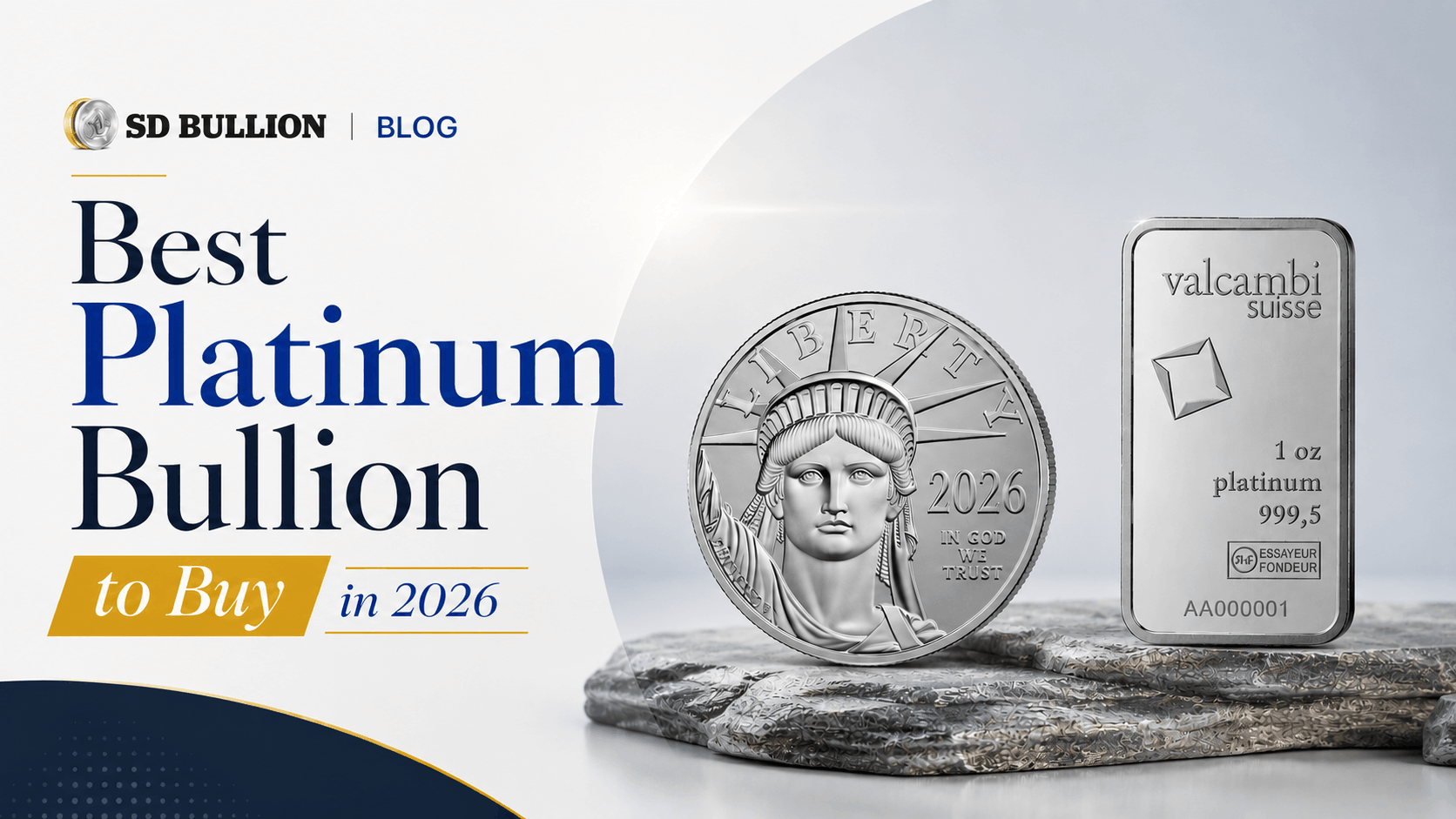
The best platinum bullion to buy in 2026 includes 1 oz. 9995 fine platinum coins, such as the American Platinum Eagle and Canadian Platinum Maple Leaf. These sovereign coins are prized for their liquidity and recognition. Top platinum bars include the 1 oz Valcambi, Credit Suisse, and Argor-Heraeus, which are favored for their low premiums and high purity.
Key Takeaways:
- The best platinum bullion products for 2026 combine .9995 purity, strong liquidity, and market recognition, with the American Platinum Eagle and the 1oz Valcambi Platinum Bar among the top choices.
- Platinum is often viewed as undervalued because it is rarer than gold, yet it frequently trades at a lower price than gold does.
- Industrial demand is a major driver of platinum consumption, particularly in automotive catalytic converters and electronics.
- Platinum supply remains constrained by declining mine output, limited new mining projects, and South Africa's dominance in global production, leaving the market vulnerable to disruptions.
- Investors can choose between platinum coins and bars based on their goals: coins generally offer greater liquidity and recognition, while bars typically provide lower premiums and more platinum per dollar invested.
Jump to: Why Is Platinum? | Platinum Coins vs. Platinum Bars | American Platinum Eagle | Best Platinum Bars by Size | Platinum vs. Gold vs. Silver | Platinum Industrial Demand | IRA-Eligible Platinum Products | Where to Buy Platinum Online? | How to Store Platinum? | FAQs
Why Is Platinum an Undervalued Precious Metal?
Platinum is often considered undervalued because it trades at a lower price than many investors believe its fundamentals justify. Although it is rarer than gold, has significant industrial demand, and faces persistent supply constraints, platinum has frequently sold for less than gold. As a result, some investors see platinum as a precious metal with the potential for price appreciation if the market begins to better reflect its scarcity and utility.
Understanding Platinum Value
Platinum is considered a noble metal because it doesn't corrode, even in high temperatures, and it is extremely rare. Its stability makes it suitable for technology applications, and its resistance to time makes it perfect for jewelry.
For investors, this combination of rarity, industrial utility, and historically lower valuations is one reason platinum is often viewed as an overlooked precious metal.
Platinum vs. Gold Historical Price Ratio
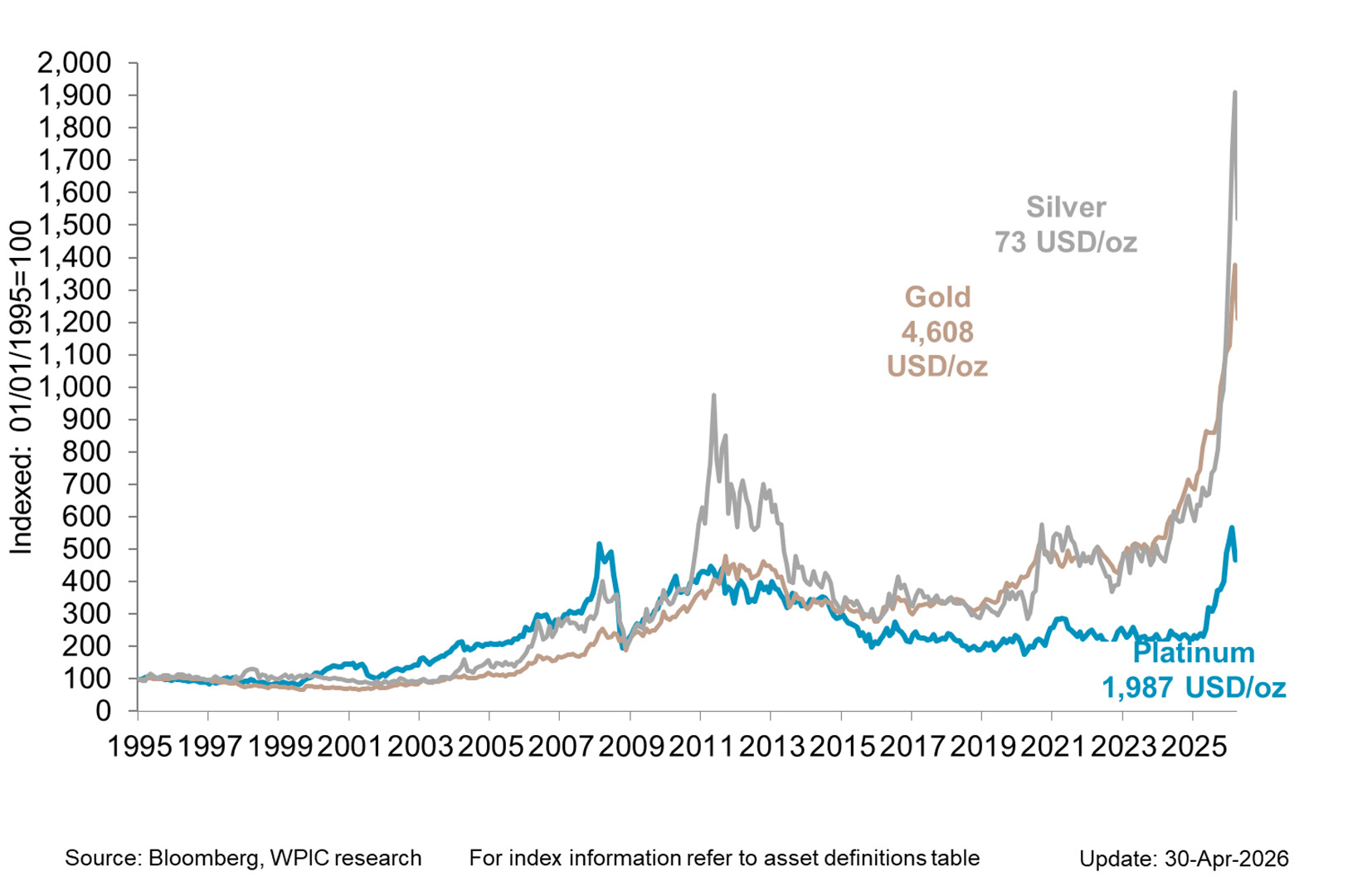
The gold-platinum ratio measures how many ounces of platinum equal the value of one ounce of gold.
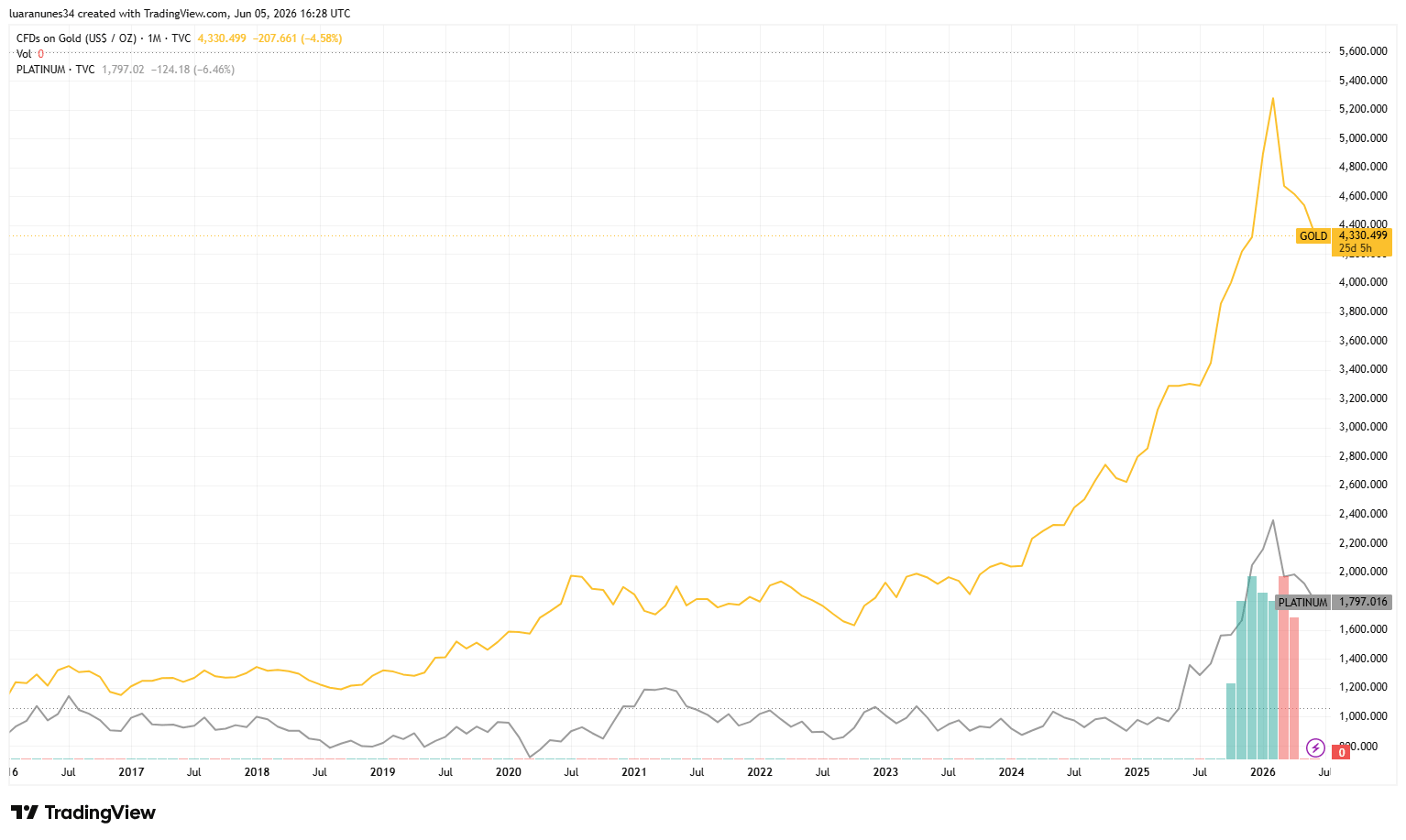
The divergence between gold and platinum has become particularly pronounced in recent decades. As of mid-2026, gold trades at approximately $4,169.62 per ounce, while platinum trades near $1,684.30 per ounce.
Historically, platinum often commanded a premium over gold, making the current pricing relationship one reason some investors view platinum as relatively undervalued.
Industrial Demand Driving Platinum Value
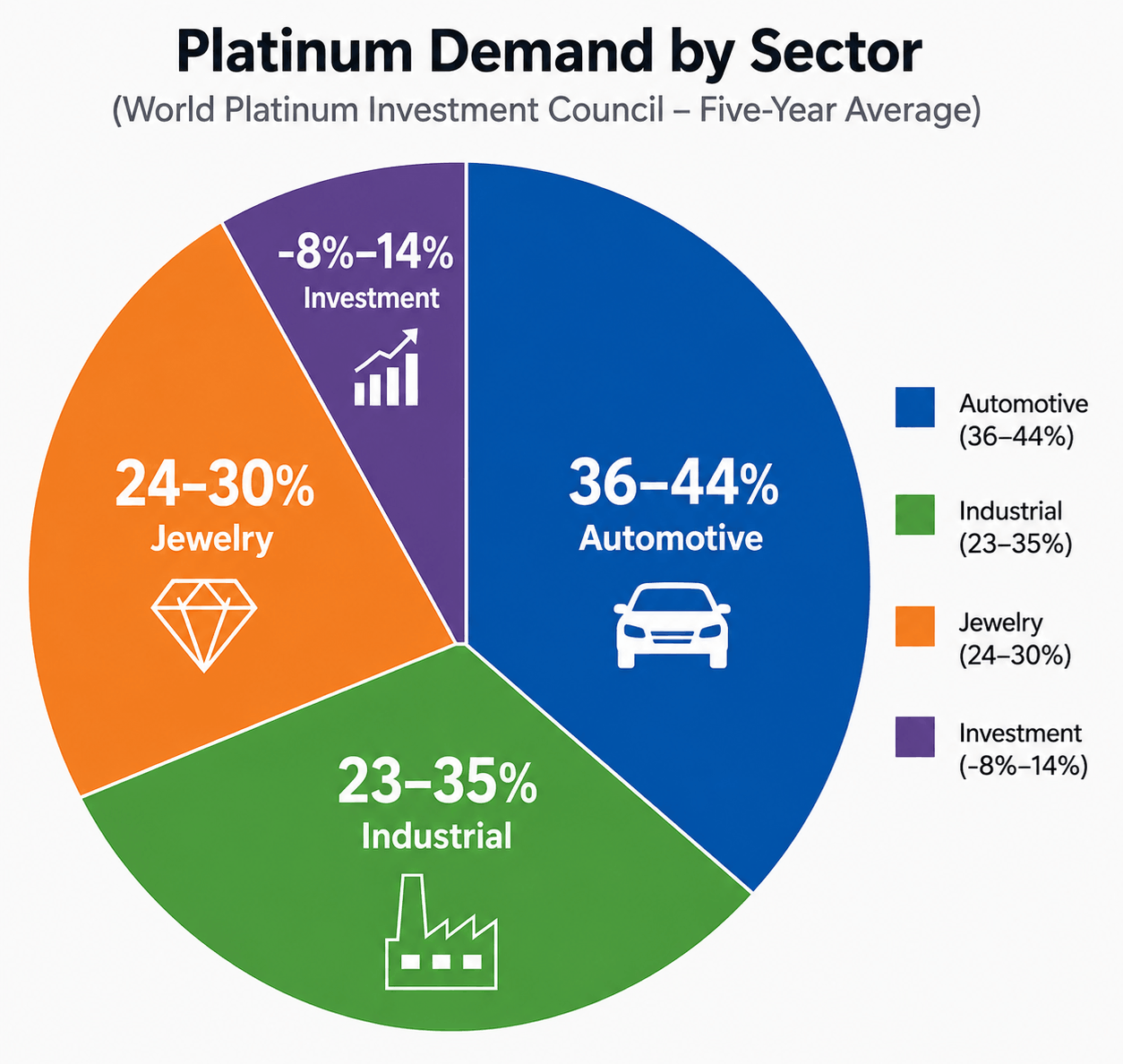
Industrial demand is one of the primary drivers of platinum consumption. According to the World Platinum Investment Council, automotive applications accounted for 36-44% of platinum demand over the last five years, followed by industrial uses (23-35%), jewelry (24-30%), and investment demand (-8% to 14%).
Platinum is widely used in catalytic converters, chemical production, electronics, medical equipment, and hydrogen fuel cell technology due to its exceptional catalytic efficiency, durability, and corrosion resistance.
Because much of the demand comes from industry, changes in manufacturing activity can significantly impact platinum prices.
At the same time, platinum supply is highly concentrated. South Africa accounts for more than 70% of global mine production, meaning that even regional issues, such as difficulties in South African mining operations, can already have an outsized effect on the global platinum market.
This concentration leaves the platinum market especially vulnerable to supply constraints, as a significant portion of global production depends on a relatively small geographic area.
Platinum Supply Constraints
According to the World Platinum Investment Council, platinum supply has been declining since 2023 and is expected to remain under pressure through 2030. One reason is that mine production has struggled to grow despite higher prices.
New platinum mining projects are rare, expensive, and often require years of development, limiting the industry's ability to quickly increase output. Tight market conditions have also been reinforced by changes in how industrial users access platinum.
As leasing costs rose sharply in 2025, some end users shifted from borrowing metal to purchasing and owning it outright.
While this did not significantly increase total demand, it reduced the amount of platinum available in the leasing market, further tightening supply and contributing to the price increases seen since 2025.
Platinum Coins vs. Platinum Bars: Which Is Better?
Liquidity of Platinum Coins vs Platinum Bars
Platinum coins are generally more liquid than platinum bars because they are issued in intrinsic designs by recognized sovereign mints, have higher collective appeal, and are more familiar to retail buyers.
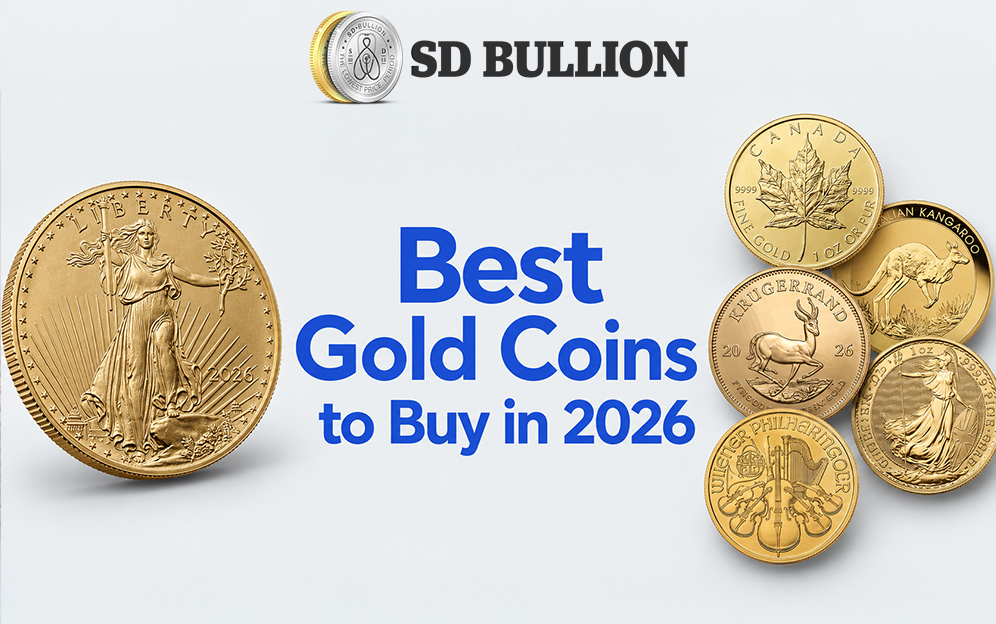
Popular coins such as the American Platinum Eagle 1oz and Canadian Platinum Maple Leaf 1oz are widely recognized, making them easier to authenticate and trade.
Their broad market acceptance can also help investors receive more competitive buyback offers when it comes time to sell. Many investors choose to sell through major bullion dealers such as SD Bullion, whose buyback program provides a straightforward resale option for eligible platinum products.
Lower Premiums on Platinum Bars vs Platinum Coins
Platinum bars generally carry lower premiums than platinum coins because their production costs (compared to coins) are lower, so they are valued primarily for their metal content rather than their design, collectibility, or legal-tender status.
As a result, investors can often acquire more platinum ounces for the same amount of money when purchasing bars. Larger platinum bars may offer even lower premiums per ounce, making them a popular choice for cost-conscious, long-term investors.
Which to Choose Based on Your Goals?
Coins are a primary choice for investors seeking easy trading and collectible value, while bars generally offer lower prices per ounce and are preferred by those focused on long-term wealth preservation.
Investors can compare current premiums on the American Platinum Eagle and top platinum bars side by side at SD Bullion, where live pricing is updated in real time against the spot price of platinum.
American Platinum Eagle: The Top Platinum Coin
The American Platinum Eagle is widely regarded as one of the most recognized platinum bullion coins in the world.
Produced by the United States Mint, it combines government backing, .9995 fine platinum purity, strong liquidity, and IRA eligibility, making it a popular choice among both investors and collectors.
Platinum Eagle Specs & Design History
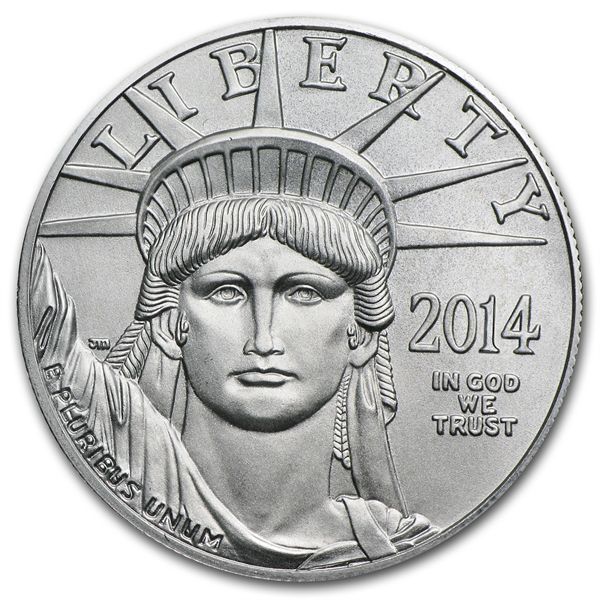

1 oz Platinum American Eagle - Random Year
The platinum eagles were minted from 1997 through 2008, then in 2014, and again in 2016, and have been minted to the present.
The obverse of the coin features John Mercanti's depiction of the Statue of Liberty, one of the most recognizable symbols of the United States, with the inscriptions “LIBERTY,” the year, and the traditional motto “IN GOD WE TRUST”.
The reverse depicts a bald eagle, representing national strength and freedom. The inscriptions read “UNITED STATES OF AMERICA,” the purity “.9995 PLATINUM”, the weight “1OZ.” It also holds a face value of USD 100 and legal tender status.
These patriotic motifs are a recurring theme across the American Eagle bullion programs, helping make the series instantly recognizable to investors and collectors worldwide.
2026 American Platinum Eagle Premium
With platinum trading around $1,800 per ounce in June 2026 and American Platinum Eagles selling for approximately $1,900, investors are paying a premium of roughly 5.6% above the underlying metal value. For a sovereign bullion coin, this represents a relatively modest premium.
The Premium reflects the costs of minting, distribution, and dealer operations, as well as the coin's government backing and strong market recognition.
While platinum bars often carry lower premiums, many investors are willing to pay slightly more for Platinum Eagles because of their liquidity, IRA eligibility, and widespread acceptance in the precious metals market.
Is the Platinum Eagle IRA-Eligible?
The American Platinum Eagle is IRA-eligible because it meets the IRS requirements for precious metals held in retirement accounts. Each coin contains .9995 fine platinum, is produced by the United States Mint, qualifying it as a government-issued bullion coin recognized under IRS guidelines.
These characteristics allow it to be held in a self-directed Precious Metals IRA when stored through an approved custodian and depository.
Other IRA-approved platinum coins include the Canadian Platinum Maple Leaf, Australian Platinum Kangaroo, and British Platinum Britannia.
Investors can compare current American Platinum Eagle premiums against the live platinum spot price at SD Bullion and explore other eligible platinum products for retirement investing.
Check other platinum IRA-approved products here.
Best Platinum Bars by Size
1 oz Platinum Bars Top Picks
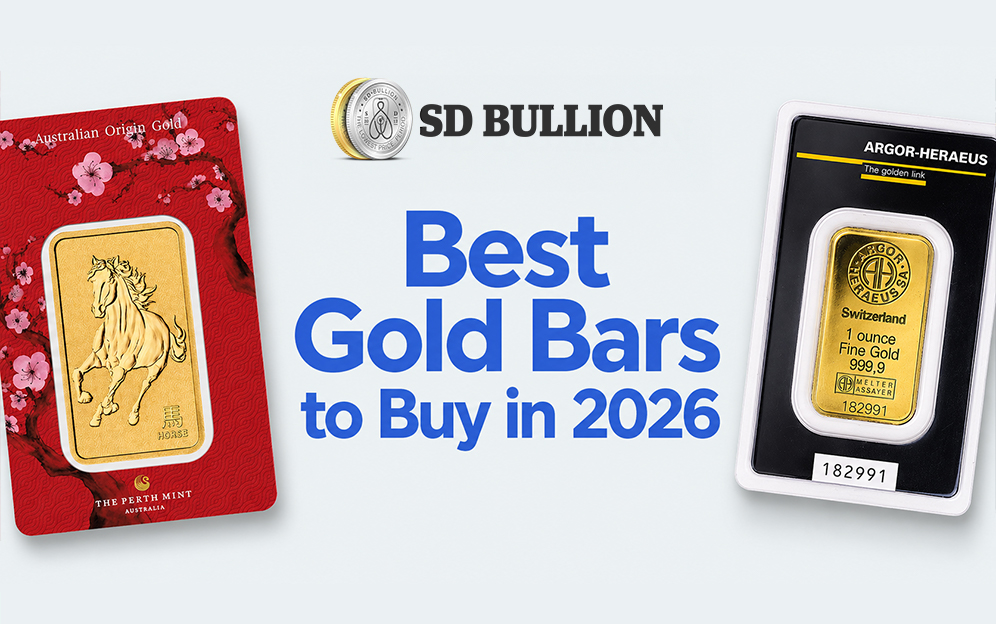
The best picks for platinum bars are the 1 oz Valcambi Platinum Bar, the Credit Suisse Platinum Bar, the 1 oz Argor-Heraeus Platinum Bar, and the 1 oz Johnson Matthey Platinum Bar.
These are among the most respected names in the bullion industry and are often preferred by investors who prioritize liquidity, recognition, and ease of resale.
Compared to larger 10 oz and kilo platinum bars, 1 oz bars require a lower upfront investment and offer greater flexibility when it comes time to sell. The 1 oz size is also the most widely traded platinum bar format, making it a practical choice for first-time platinum buyers and long-term investors alike.

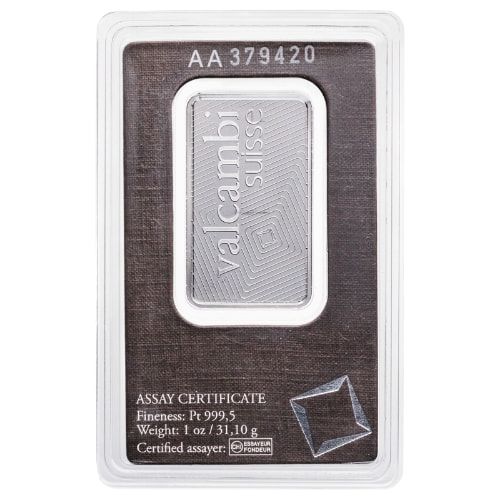
1 oz Valcambi Platinum Bar - In Assay
10 oz Platinum Bars Best Value
The average price for 10-ounce platinum bars of .9995 fineness is around $18,500 as of mid 2026.
The secondary-market 10 oz Credit Suisse Platinum Bar is one of the best 10 oz platinum bars available, combining a respected global brand with the potential for lower premiums than newly minted alternatives.
Compared to 1 oz platinum bars, 10 oz bars typically carry lower premiums per ounce, allowing investors to acquire more platinum for the same amount of money. While they require a larger upfront investment and offer less flexibility when selling, they can provide a more cost-efficient way to accumulate platinum.
For investors focused primarily on maximizing metal ownership rather than transaction flexibility, the 10 oz format often represents an attractive balance between liquidity, affordability, and premium efficiency.
Kilo Platinum Bars For Serious Investors
Kilo Bars are at around $60,000 with 9995 fineness as of mid 2026. The 1 kg Valcambi Platinum Bar stands out as the best kilo platinum bar for investors seeking maximum platinum exposure, strong market recognition, and lower per-ounce costs than both 1 oz and 10 oz platinum bars.
As a result, they are generally favored by high-net-worth investors and those managing substantial precious metals portfolios.
However, their higher purchase price and larger size can make them less liquid than smaller bars. Investors seeking maximum premium efficiency may find kilo bars attractive, while those prioritizing flexibility often prefer 1 oz or 10 oz formats. Secondary-market kilo bars may offer additional savings through lower premiums than newly minted products.
Platinum vs. Gold vs. Silver: Which Should You Buy?
Risk-Return Profile of Each Metal
Gold is generally viewed as the most stable precious metal because its value is driven largely by investment demand, central bank purchases, and its long history as a store of wealth. A more conservative investor often chooses gold when prioritizing stability.
Silver tends to be more volatile than gold because it combines investment demand with significant industrial use in sectors such as electronics and solar energy. Usually the first choice for beginners, silver’s lower cost per ounce allows gradual accumulation with less capital.
Now, Platinum occupies a middle ground between gold and silver, with prices influenced by both industrial demand and supply constraints, particularly because production is concentrated in a small number of mining regions. Investors with a diversifying approach use multiple precious metals to spread risk across different demand drivers.
Which Metal Should You Buy First?
Gold is often considered the best precious metal to buy first, rather than silver or platinum, because it offers the greatest stability, liquidity, and recognition.
Silver may be more suitable for investors seeking affordability, while platinum may appeal to those seeking exposure to industrial demand and supply-driven price movements.
The right choice ultimately depends on an investor's goals and risk tolerance.
How to Allocate Across Metals in Your Portfolio?
Once you have established a budget for precious metals, a 75% Gold, 20% Silver, and 5% Platinum allocation can serve as a conservative starting framework.
Gold provides stability and wealth preservation, silver adds growth potential through industrial demand, and platinum offers additional diversification through its exposure to supply constraints and specialized industrial applications.
|
Investor Goal |
Product |
|
Best Overall |
1oz American Platinum Eagle |
|
Lowest Premium |
1 oz Platinum Bar |
|
IRA Investing |
1oz Platinum Eagle or 1oz Valcambi Bar |
|
Easy Trading |
1oz American Platinum Eagle |
|
Large Investment |
10 oz or Kilo Platinum Bar |
Industrial Demand for Platinum: Why Does It Matter?
Industrial demand matters because it represents one of the largest sources of platinum consumption worldwide. Unlike gold, whose value is driven primarily by investment demand, platinum relies heavily on industrial applications, making manufacturing activity, technological adoption, and automotive production important drivers of platinum prices.
Platinum in Catalytic Converters
Platinum plays a critical role in catalytic converters, where it helps transform harmful vehicle emissions into less toxic gases before they are released into the atmosphere. Without platinum-group metals, modern vehicles would produce significantly higher levels of air pollution.
Although electric vehicles continue to grow in popularity, gasoline and diesel-powered vehicles are expected to remain a meaningful part of the global transportation fleet for years to come.
As a result, platinum is likely to remain an essential component in reducing vehicle emissions and supporting cleaner air worldwide.
Platinum in Hydrogen Fuel Cells
According to the World Platinum Investment Council, in fuel cell electric vehicles (FCEVs), platinum helps convert hydrogen into electricity, with water as the only byproduct.
These vehicles produce zero emissions, can be refueled in about three minutes, and typically offer a driving range of around 600 km.
Demand for platinum in the automotive sector is expected to grow as FCEV adoption increases.
How Does Industrial Demand Affect Spot Price?
Industrial demand is one of the primary drivers of platinum prices because a large share of global consumption is used in manufacturing applications.
As industrial demand grows or remains stable while mine supply struggles to increase, the platinum market can move into a deficit.
This dynamic has become increasingly important in recent years, as constrained supply and continued industrial consumption have contributed to tighter market conditions and upward pressure on platinum prices.
IRA-Eligible Platinum Products
What Are the IRS Rules for Platinum IRAs?
IRA-approved platinum must be at least .9995 fine platinum (99.95% pure). It also must be stored in the continuous custody of an IRS-approved trustee. It also must be produced by a national government mint or by a refiner, assayer, or manufacturer accredited by a recognized commodities exchange or bullion market association, such as COMEX or the London Bullion Market Association (LBMA).
Bars must carry a manufacturer's assay mark and meet exact weight standards. Proof coins must remain in their original mint packaging with a certificate of authenticity. Tampering, cleaning, or third-party re-assaying can disqualify a product from IRA eligibility, even if its purity remains above .9995.
Storage for platinum IRA: Platinum held in an IRA must be stored at an IRS-approved depository under the custody of the account trustee. Home storage and personal safe deposit boxes are not permitted.
And if you insist, your account might be disqualified, and become subject to the full value to tax and penalties.
Approved Platinum Coins & Bars
|
IRA-Eligible Platinum Coins |
Purity |
IRA-Eligible Platinum Bars & Rounds |
Purity |
|
American Platinum Eagle |
.9995 |
Credit Suisse Platinum Bars |
.9995 |
|
Australian Platinum Koala |
.9995 |
PAMP Suisse Platinum Bars |
.9995 |
|
Canadian Platinum Maple Leaf |
.9995 |
Valcambi Platinum Bars |
.9995 |
|
Isle of Man Noble |
.9995 |
Argor-Heraeus Platinum Bars |
.9995 |
|
American Platinum Eagle Proof |
.9995 |
Johnson Matthey Platinum Bars |
.9995 |
|
Engelhard Platinum Bars |
.9995 |
||
|
Approved Platinum Rounds* |
.9995+ |
Note: Most platinum rounds are not IRA-eligible.
SD Bullion carries the full range of IRS-approved platinum coins and bars listed above, with purity documentation and custodian-ready packaging available at the time of purchase.
How to Set Up a Platinum IRA?
Setting up a Platinum IRA typically involves four steps:
First, open a self-directed IRA with a qualified custodian that permits precious metals investments. Next, fund the account through a contribution, transfer, or rollover from an existing retirement account. Then, select IRS-approved platinum bullion products that meet the minimum .9995 purity requirement.
Finally, the metals are purchased and stored in an IRS-approved depository, where they remain under the custodian's supervision until they are sold or distributed.
Investors ready to fund a Platinum IRA can browse SD Bullion's full selection of IRA-eligible platinum products and filter by coin or bar to find the right fit for their retirement account.
Where to Buy Platinum Bullion Online?
Platinum bullion can be purchased from reputable online precious metals dealers, authorized distributors, and bullion exchanges.
The best dealers offer authentic products from recognized mints, transparent pricing tied to the live platinum spot price, insured shipping, and reliable buyback programs.
Comparing these factors before making a purchase can help investors find the best value and long-term liquidity for their platinum holdings.
What to Look For in a Platinum Dealer?
When comparing platinum dealers, focus on product authenticity, pricing transparency, customer reviews, shipping policies, and buyback options. Dealers that display live platinum spot prices and clearly separate premiums from metal value make it easier to evaluate costs before purchasing.
How to Avoid Overpriced Platinum?
The easiest way to avoid overpaying is to compare the product's premium to the current platinum spot price. Government-issued platinum coins typically carry higher premiums than platinum bars, while larger bars often offer a lower cost per ounce.
Why SD Bullion for Platinum?
SD Bullion offers platinum coins and bars from recognized mints, live pricing based on the current platinum spot price, fully insured shipping, and a stable buyback program to simplify future resale. Investors can compare multiple platinum products in one place and lock in pricing at the time of purchase.
How to Store Platinum Bullion?
Platinum bullion can be stored either at home or through a third-party storage provider, depending on your security needs and investment goals. Home storage offers immediate access and eliminates ongoing storage fees, but it typically requires a high-quality safe and appropriate insurance coverage.
Home Storage Best Practices
When storing platinum bullion at home, keep it in a secure, dry environment and protect it from unnecessary handling to minimize scratches and surface wear.
Avoid discussing your holdings publicly, as limiting knowledge of your bullion ownership can improve security. Many investors also ensure that a trusted family member knows how to access their holdings in case of an emergency.
Finally, review your intended insurance coverage carefully, as standard homeowners or contents insurance policies may not fully cover precious metals, making specialized bullion insurance worth considering.
Vault Storage for Larger Holdings
Third-party storage, such as a professional depository, provides enhanced security, insurance protection, and, in some cases, IRA eligibility for retirement accounts. Many investors choose home storage for smaller holdings and professional vault storage for larger platinum positions or long-term investments.
Do You Need Insurance for Precious Metals?
Many homeowners' insurance policies cover only up to $250 for coins, bullion, and similar valuables, while total precious metals coverage may be limited to around $2,500. Although additional coverage may be available, it often requires a special rider or separate insurance policy.
FAQs: Best Platinum Bullion to Buy
Is platinum a good investment in 2026?
Many investors consider platinum a valuable addition to a diversified portfolio due to its rarity, industrial demand, and role as a tangible asset. Growing use in automotive, technology, and industrial applications may also support long-term demand.
Why is platinum cheaper than gold?
Platinum is often cheaper than gold because its price is more closely tied to industrial demand, particularly from the automotive sector. Gold benefits from stronger investment and central bank demand, which can support higher prices.
What platinum products are IRA-eligible?
Common IRA-eligible platinum products include the American Platinum Eagle, Canadian Platinum Maple Leaf, Australian Platinum Kangaroo, Platinum Britannia, and platinum bars from approved refiners such as PAMP Suisse and Valcambi Suisse. Products must generally meet the IRS minimum purity requirement of .9995.
Where is the best place to buy platinum?
The best place to buy platinum is through a reputable bullion dealer offering transparent pricing, authentic products, and strong liquidity. SD Bullion is a popular choice because it offers recognized platinum coins and bars, live pricing, insured shipping, and a buyback program for future resale.