Gold Falls to 14-Month Lows, Silver Approaches $40, and the U.S. Dollar Surges as Analysts Warn of Growing Financial Instability and a Potential Sovereign Debt Crisis
- Gold Prices Plunge to 14-Month Lows Amid Broad Market Selloff. Gold suffered its worst weekly decline in eight months, falling to approximately $3,521 per ounce near Friday's close. The sharp correction pushed gold to its lowest levels since September 2025, as widespread financial market liquidations and a strengthening U.S. dollar pressured precious metals.
- Silver Prices Sink Toward $40 as Industrial Demand Concerns Intensify. Silver declined more sharply than gold, with silver spot prices approaching $40.77 per ounce. As a more volatile precious metal with significant industrial applications, silver faced additional selling pressure from concerns about slowing economic growth, weakening industrial demand, and broader commodity market weakness.
- Gold-to-Silver Ratio Climbs to 86 as Silver Underperforms. The gold-to-silver ratio surged to approximately 86:1, reflecting silver's substantial underperformance relative to gold. The widening ratio illustrates how investors have reduced exposure to higher-volatility assets during the latest market downturn, reversing much of the momentum that propelled precious metals to record highs earlier in 2026.
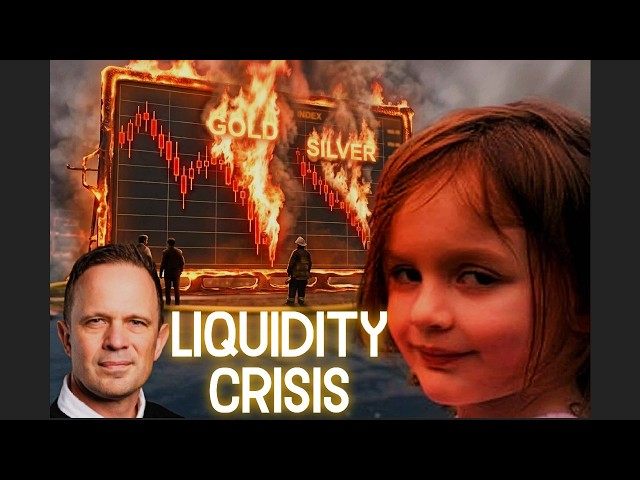
- Global Liquidity Squeeze Triggers Forced Selling Across Financial Markets. A widespread liquidity crunch has accelerated selling across equities, commodities, and precious metals. As leveraged investors face margin calls and scramble to raise cash, even traditionally defensive assets such as gold are being liquidated. The central question facing markets is how much additional forced selling remains before downward pressure begins to subside.
- U.S. Dollar Surges Toward 19-Month Highs, Adding Pressure to Gold and Silver. The U.S. Dollar Index approached 104, positioning the currency for its fourth consecutive weekly advance and its strongest levels in approximately 19 months. A stronger dollar, combined with tight financial conditions and expectations for elevated interest rates, has created substantial near-term headwinds for dollar-denominated precious metals.
- Jeff Currie Explains Why Gold Can Fall During a Financial Crisis. Former Goldman Sachs commodities executive Jeff Currie distinguished between short-term liquidity crises and longer-term sovereign solvency risks. During liquidity shortages, investors frequently sell gold to obtain cash, pushing prices lower alongside other financial assets. However, Currie maintains that gold's longer-term appeal is tied to government debt sustainability, currency debasement, and the possibility of future monetary expansion.
- Bank of America Survey Signals Extreme Undervaluation as Institutional Investors Reassess Gold. The latest Bank of America Global Fund Manager Survey reportedly registered its most extreme undervaluation reading on record. Meanwhile, filings referenced in the report indicate billionaire investor Paul Tudor Jones had previously increased his fund's silver exposure. These developments highlight the contrasting forces of near-term market pessimism and longer-term institutional interest in precious metals.
- Central Banks and Asian Investors Continue to Support the Long-Term Gold Narrative. Despite the recent correction, the broader movement toward physical gold reserves remains an important structural market theme. According to the report's cited 2025 industry data, more than 70% of U.S. gold demand came through gold-backed ETFs, while Chinese and Indian buyers demonstrated substantially stronger preferences for physical bullion. Central bank diversification away from fiat-denominated reserve assets continues to underpin arguments for gold's longer-term relevance.
- Luke Gromen Warns That Falling Gold Prices Could Signal a Larger Financial Crisis. Macroeconomic researcher Luke Gromen argues that gold's sharp decline may be an early warning of a broader deflationary liquidity shock. During a recent BNN Bloomberg interview, he claimed that U.S. entitlement obligations, interest expenses, and veterans' benefits collectively reached approximately 106% of federal receipts in fiscal 2026, based on his expanded definition of government obligations. Gromen believes mounting fiscal pressures could eventually force policymakers to inject additional liquidity into financial markets, potentially weakening the dollar and supporting gold prices over time.
- Could Gold Eventually Reach $8,000 to $10,000 per Ounce Despite Today's Selloff? Gromen maintains a longer-term gold price scenario of $8,000 to $10,000 per ounce, with $18,000 representing a more extreme sovereign debt crisis scenario rather than his central forecast. His argument centers on the relatively low market value of U.S. official gold reserves compared with foreign-held Treasury debt, alongside the possibility of major changes in the global monetary system. While these projections remain speculative, the broader debate underscores a central market question: Will today's liquidity-driven gold and silver selloff eventually give way to another precious metals bull market fueled by government debt, monetary expansion, and declining confidence in fiat currencies?
The gold and silver markets experienced another turbulent week as widespread financial market liquidations, a strengthening U.S. dollar, and mounting concerns about global liquidity pushed precious metals sharply lower. Gold suffered its worst weekly decline in eight months, while silver experienced even greater selling pressure as investors reduced exposure to commodities and other volatile assets.
Despite the dramatic downturn, several prominent financial analysts argue that the forces driving precious metals lower today could eventually create conditions for another significant gold bull market. Growing government debt, concerns about sovereign solvency, and the possibility of future monetary expansion remain central to the longer-term outlook.
The question facing investors is whether the latest selloff represents a temporary liquidity crisis or an early warning of deeper financial instability.
Gold Prices Fall to 14-Month Lows Following Worst Weekly Decline in Eight Months
Gold experienced one of its most difficult trading weeks of 2026, with the spot gold price trading near $3,521 per ounce shortly before Friday's market close.
The decline marked gold's worst weekly performance in eight months and pushed prices to their lowest levels since early September 2025, approximately 14 months earlier.
The correction represents a dramatic reversal from the powerful precious metals rally that carried gold, silver, and platinum to record highs earlier this year.
During that rally, strong investment demand, momentum trading, and leveraged positions helped accelerate prices higher. Now, many of those same forces are operating in reverse.
As investors unwind leveraged positions and raise cash to meet financial obligations, gold has become a source of liquidity rather than a destination for defensive investment capital.
This distinction is particularly important because gold does not necessarily rise during every period of financial market instability.
During severe liquidity shortages, investors may sell profitable or easily traded assets to obtain cash, even when their longer-term outlook for those assets remains favorable.
Silver Prices Approach $40 as Industrial Demand Concerns Amplify the Selloff
Silver experienced an even sharper decline, with the spot silver price approaching $40.77 per ounce near the end of the trading week.
Unlike gold, which is primarily influenced by investment demand, monetary conditions, and central bank activity, silver also has substantial industrial applications.
This dual role makes silver particularly sensitive to changes in economic expectations.
When investors become concerned about slowing economic growth, weakening manufacturing activity, or declining industrial demand, silver can experience greater price volatility than gold.
The latest selloff reflects these concerns alongside broader liquidations across commodity markets.
Silver's higher sensitivity to market movements helped drive its outperformance during the earlier precious metals rally, but that same characteristic has contributed to larger losses during the current correction.
For investors following the silver price today, the most important near-term developments include the direction of the U.S. dollar, changes in industrial demand expectations, and whether financial markets experience additional forced liquidations.
Gold-to-Silver Ratio Surges to 86 as Silver Underperforms Gold
The gold-to-silver ratio climbed to approximately 86:1, highlighting the magnitude of silver's recent underperformance.
The ratio measures how many ounces of silver are required to purchase one ounce of gold.
When the ratio rises, gold is outperforming silver. When it declines, silver is gaining relative strength.
Earlier in 2026, silver's extraordinary rally helped compress the ratio as investors increasingly favored the higher-volatility metal.
The latest market correction has reversed that trend.
With silver declining more sharply than gold, the ratio has widened considerably, reflecting a shift away from assets that are more sensitive to industrial activity and speculative investment flows.
Historically, changes in the gold-to-silver ratio have provided insight into market sentiment, although the ratio alone cannot reliably predict future prices or identify market bottoms.
The latest reading illustrates the extent to which financial market conditions have changed since precious metals reached their record highs earlier this year.
Global Liquidity Squeeze Triggers Forced Selling Across Financial Markets
One of the most important developments behind the latest precious metals correction is the emergence of a broad financial market liquidity squeeze.
Liquidity refers to the availability of cash and the ability of market participants to buy or sell assets without causing significant price disruptions.
When liquidity becomes scarce, investors and financial institutions may be forced to sell assets to meet margin requirements, repay borrowed funds, or cover losses elsewhere in their portfolios.
This process can create a chain reaction.
Falling asset prices trigger margin calls, which force additional selling, creating further downward pressure across multiple markets.
Gold, silver, equities, and other commodities can consequently decline together, even when their underlying supply-and-demand fundamentals differ.
The current environment illustrates how rapidly market sentiment can change when leveraged investors prioritize access to cash.
An important question is how much additional liquidation remains before selling pressure begins to exhaust itself.
Until liquidity conditions stabilize, precious metals could remain vulnerable to sharp price movements in either direction.
U.S. Dollar Strengthens to Near 19-Month Highs, Pressuring Precious Metals
Adding to the pressure on gold and silver, the U.S. Dollar Index approached 104, putting the currency on course for its fourth consecutive weekly gain.
The dollar was also trading near its strongest levels in approximately 19 months.
A stronger dollar often creates challenges for precious metals because gold and silver are internationally priced in U.S. dollars.
As the dollar appreciates, precious metals become more expensive for buyers using other currencies, potentially weighing on international demand.
Higher interest rates and tighter financial conditions can also increase the relative attractiveness of interest-bearing dollar assets compared with physical bullion.
The combination of a strengthening dollar, elevated borrowing costs, and widespread deleveraging has created a particularly challenging environment for precious metals.
However, the dollar's strength also reflects investors' immediate demand for liquidity.
Whether that demand continues or begins to ease could play an important role in determining the next direction of gold and silver prices.
Jeff Currie Explains Why Gold Can Fall During a Liquidity Crisis
Former Goldman Sachs commodities executive Jeff Currie offered an important explanation for the recent market behavior.
Currie distinguishes between two types of financial stress: a liquidity crisis and a solvency crisis.
During a liquidity crisis, investors and institutions may possess valuable assets but lack sufficient cash to meet immediate financial obligations.
Because gold is widely traded and can be liquidated relatively quickly, investors may sell gold holdings or gold-related financial positions to raise dollars.
This can cause gold prices to decline alongside equities and other financial assets.
A solvency crisis, however, involves deeper concerns about whether governments or financial institutions can meet their long-term financial obligations.
In such circumstances, investors may become increasingly concerned about government borrowing, currency depreciation, and the purchasing power of fiat money.
Currie argues that gold's longer-term monetary role is more closely connected to these solvency concerns than to immediate liquidity shortages.
His analysis suggests that the current decline does not necessarily invalidate the longer-term case for gold.
Instead, the selloff may reflect a temporary period in which investors prioritize cash over nearly every other financial asset.
Currie has also pointed to the possibility that future central bank liquidity injections could eventually reverse some of the pressures currently weighing on precious metals.
Bank of America Survey Highlights Extreme Market Valuations as Institutional Investors Reassess Gold
The latest Bank of America Global Fund Manager Survey, conducted approximately two weeks before the market update, reportedly recorded its most extreme undervaluation reading in the survey's history.
The reading highlights the unusual market conditions confronting institutional investors as financial assets experience significant price adjustments.
Meanwhile, filings referenced in the market report indicate that billionaire investor Paul Tudor Jones had previously increased his fund's exposure to silver.
Although those positions were established before the latest correction, they illustrate the continued interest in precious metals among prominent institutional investors.
These developments also highlight the difference between short-term market positioning and longer-term investment expectations.
Some investors may reduce exposure to precious metals during periods of financial stress while maintaining a favorable longer-term outlook.
Others may interpret substantial price corrections as evidence that market conditions have become increasingly unstable.
The challenge is determining whether current valuations reflect temporary selling pressure or a more fundamental change in the economic environment.
Central Banks and Asian Investors Continue to Favor Physical Gold
Beyond the immediate market volatility, one of the most important structural developments in the gold market is the growing role of central banks and international physical bullion demand.
Central banks have increasingly emphasized gold as a reserve asset that does not represent the liability of another government or financial institution.
This distinction becomes particularly relevant when sovereign debt levels rise and confidence in traditional reserve assets comes under pressure.
The market report also highlights significant differences between American and Asian gold buyers.
According to the cited 2025 industry data, more than 70% of U.S. gold demand was associated with gold-backed exchange-traded funds, while investors in China and India demonstrated a substantially greater preference for physical bullion.
The report indicates that Chinese and Indian markets each purchased approximately 12 times as much physical gold bullion as U.S. investors during that period.
These figures illustrate the importance of understanding how investors in different regions participate in the gold market.
Physical bullion ownership, exchange-traded products, and leveraged derivatives can respond differently during periods of financial stress.
The broader movement toward gold as a monetary reserve asset remains a central theme in discussions about the future of the international financial system.
Billionaire investor Ray Dalio has repeatedly highlighted the importance of government debt sustainability and diversification beyond traditional fiat-denominated assets.
Luke Gromen Warns That Gold's Selloff Could Signal a Larger Financial Crisis
Macroeconomic researcher Luke Gromen, founder of Forest for the Trees, has offered a more alarming interpretation of the recent decline in gold prices.
During an appearance on BNN Bloomberg, Gromen argued that gold's weakness could be an early warning of a significant deflationary shock affecting the broader financial system.
His concern centers on the relationship between rising government obligations, interest rates, and the availability of U.S. dollar liquidity.
Gromen claims that an expanded measure of U.S. federal obligations, including entitlement spending, interest expenses, and veterans' benefits, reached approximately 106% of federal receipts during fiscal 2026.
This is Gromen's own fiscal framework, rather than a conventional measure of federal interest expense alone.
His argument is that rising borrowing costs place additional pressure on an already heavily indebted federal government.
When interest rates remain elevated, the cost of servicing government debt increases, potentially creating additional financial instability.
Gromen believes this creates a difficult choice for policymakers.
They can maintain restrictive monetary conditions and risk further financial market disruptions, or eventually provide additional liquidity to support the financial system.
In his view, the current combination of falling gold prices, a strengthening dollar, and rising financial stress resembles conditions that have historically preceded major monetary policy interventions.
While such an outcome is not inevitable, his analysis raises questions about the sustainability of elevated interest rates alongside growing government obligations.
Could Gold Reach $8,000 to $10,000 per Ounce in a Future Monetary Crisis?
Despite the recent decline in gold prices, Gromen maintains an exceptionally bullish longer-term outlook.
During his BNN Bloomberg discussion, he outlined a potential gold price range of $8,000 to $10,000 per ounce, while describing $18,000 as a more extreme scenario associated with a major sovereign debt or currency crisis.
These projections are based partly on his analysis of the relationship between official U.S. gold reserves and foreign-held U.S. Treasury debt.
The United States holds approximately 261 million troy ounces of official gold reserves.
Gromen estimates that the market value of those reserves currently represents approximately 11% to 12% of foreign-held Treasury obligations.
He compares that figure with historical periods when the value of U.S. gold reserves represented a substantially larger share of foreign-held debt.
According to his analysis, that relationship has historically ranged around 40% to 60% over certain periods, with much higher readings during the monetary turmoil of the late 1970s and early 1980s.
Gromen argues that a significant repricing of gold could occur if international investors increasingly demand neutral reserve assets rather than government-issued debt.
However, these historical comparisons do not establish that gold must return to previous valuation relationships.
His price targets remain speculative scenarios dependent on major changes in fiscal policy, monetary conditions, international capital flows, and the global financial system.
Nevertheless, the analysis illustrates why some macroeconomic researchers continue to maintain bullish long-term gold forecasts despite substantial near-term price declines.
Global Monetary System Faces Growing Pressure as Sovereign Debt Expands
The longer-term outlook for gold increasingly intersects with questions about the structure of the international monetary system.
For decades, U.S. Treasury securities have played a central role in global reserves, international trade, and financial market liquidity.
However, growing government debt obligations and geopolitical tensions have encouraged debate about whether foreign governments will continue accumulating dollar-denominated assets at historical rates.
Some countries have already increased their emphasis on physical gold reserves as part of broader reserve diversification strategies.
Gromen argues that gold could become increasingly important as a neutral monetary asset if international trade and reserve management gradually shift away from their traditional dependence on U.S. government debt.
Under such a scenario, a higher gold price could change the relative value of official gold reserves compared with outstanding sovereign obligations.
These potential developments remain uncertain and would likely unfold over years rather than weeks.
Nevertheless, they provide an important backdrop for understanding why gold continues to attract attention even during periods of significant market weakness.
Gold and Silver Market Outlook: Will Liquidity Pressure Continue or Give Way to Another Bull Market?
The latest weekly performance illustrates the extraordinary volatility that has characterized precious metals markets throughout 2026.
Gold has retreated to approximately $3,521 per ounce, silver has approached $40.77, and the gold-to-silver ratio has climbed toward 86.
At the same time, the U.S. dollar has strengthened considerably as investors prioritize liquidity and reduce leveraged financial positions.
These conditions suggest that near-term precious metals prices may remain highly sensitive to changes in financial market liquidity, interest rate expectations, and broader economic sentiment.
Yet the longer-term questions surrounding government debt, central bank reserve diversification, and the future purchasing power of fiat currencies remain unresolved.
Analysts such as Jeff Currie and Luke Gromen argue that the same financial pressures currently driving gold lower could eventually contribute to renewed demand for the metal if policymakers respond with monetary expansion.
Whether that scenario develops remains uncertain.
For now, the most important question is whether the current liquidity squeeze will stabilize before creating additional disruptions across global financial markets.
Gold and silver may be experiencing one of their most difficult corrections of the year, but the broader debate over sovereign debt, monetary stability, and the future role of precious metals is far from over.
Source:
Gold ‘could hit’ US $18,000 oz in a debt crisis: Luke Gromen
https://youtu.be/i_yNeQsih4c?si=p6F-xZ-hBNCidcER
Disclaimer: This article is provided for educational and informational purposes only and does not constitute financial, investment, or trading advice. Precious metals prices can fluctuate significantly, and past performance does not guarantee future results. Analyst forecasts, including projections for gold prices, represent speculative scenarios rather than assured outcomes. Investors should carefully evaluate their financial circumstances, risk tolerance, and investment objectives before purchasing precious metals.