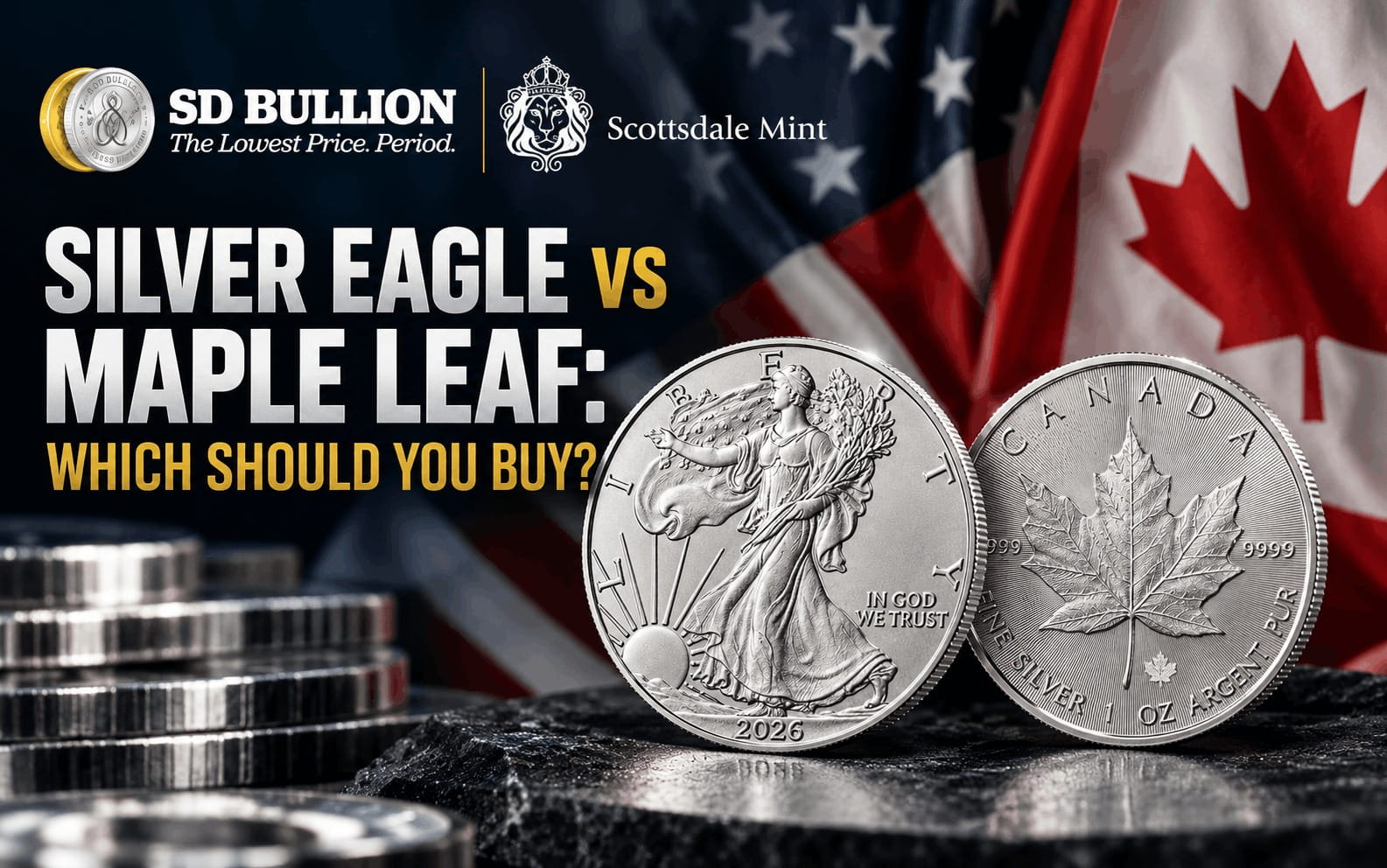
For most U.S. buyers, the American Silver Eagle is the better default choice for recognition and resale, while the Canadian Silver Maple Leaf may suit buyers focused on lower premiums and .9999 purity. This comparison covers cost, purity, liquidity, and security features to help investors choose the coin that best fits their buying priorities.
Short Answer: Silver Eagle vs Maple Leaf
For most U.S. buyers, the American Silver Eagle is the better default for recognition and resale in the country, while the Canadian Silver Maple Leaf is better for lower premiums, .9999 purity, and advanced security features. Both contain one troy ounce of silver and are IRA-eligible.
|
Buyer Priority |
Better Choice |
Why |
|---|---|---|
|
U.S. recognition and resale |
American Silver Eagle |
Strong domestic recognition and resale demand |
|
Lower premiums and higher purity |
Canadian Silver Maple Leaf |
Typically lower premiums and .9999 fine silver |
Jump to:
American Silver Eagle Overview
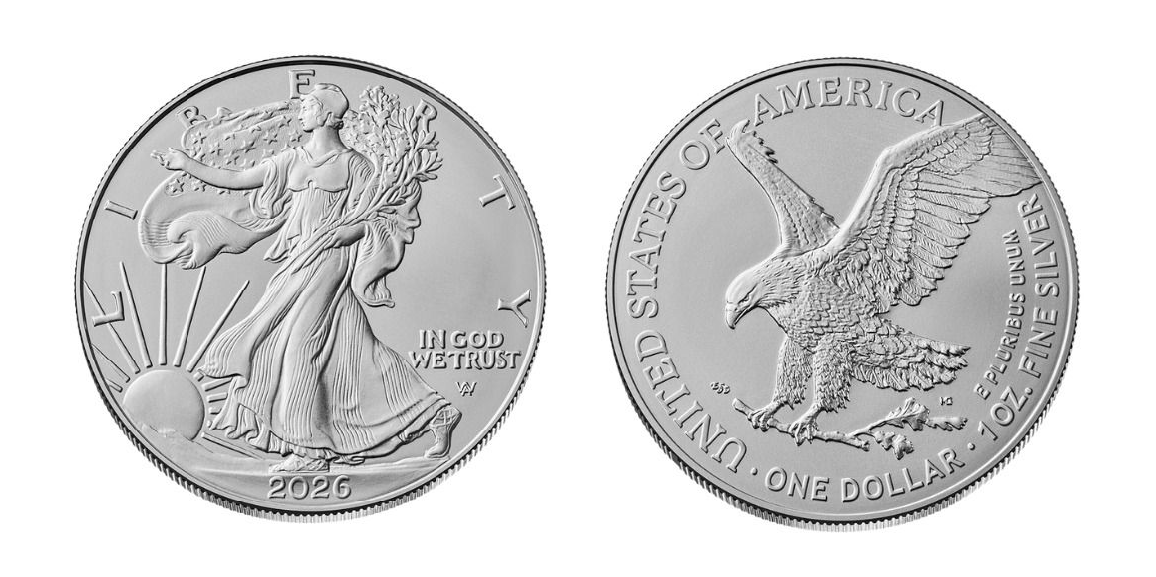
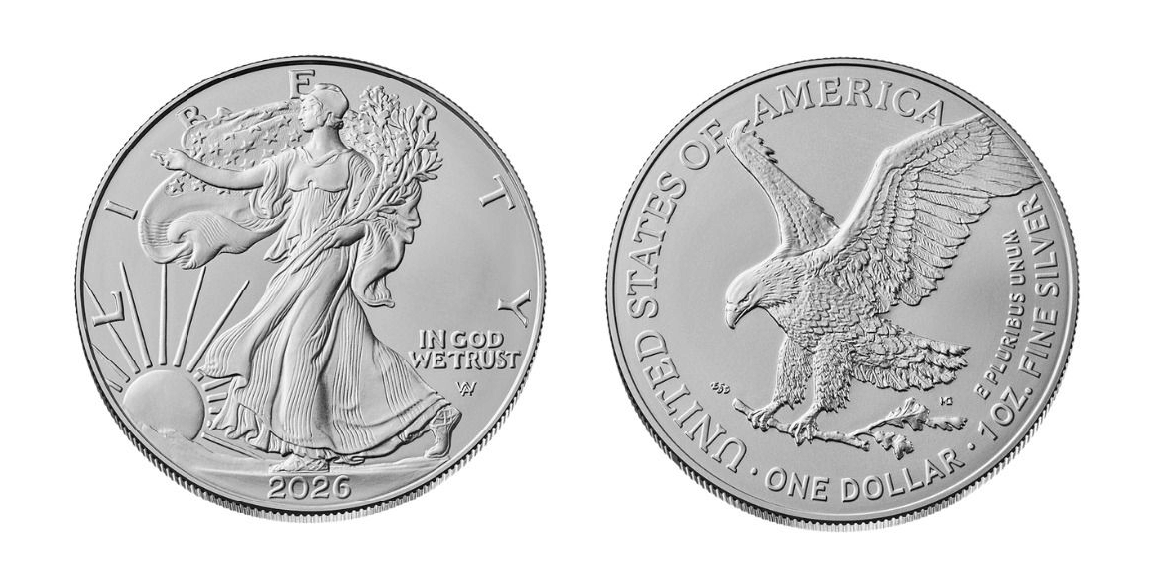
The American Silver Eagle is the U.S. Mint’s official silver bullion coin, issued since 1986, containing 1 troy ounce of .999 fine silver. Its government-backed specifications, traditional Walking Liberty design, and strong market recognition make it popular with both investors and collectors.
-
Recognition and liquidity: Silver Eagles (gold and silver) maintain strong demand and liquidity across the precious metals market.
-
Government-backed silver content: Each coin contains 1 troy ounce of .999 fine silver, guaranteed by the U.S. government, and is IRA-eligible.
-
Iconic design and security: The coin pairs Adolph A. Weinman’s Walking Liberty obverse with a modern eagle reverse and an anti-counterfeit reeded-edge variation.
Canadian Silver Maple Leaf Overview
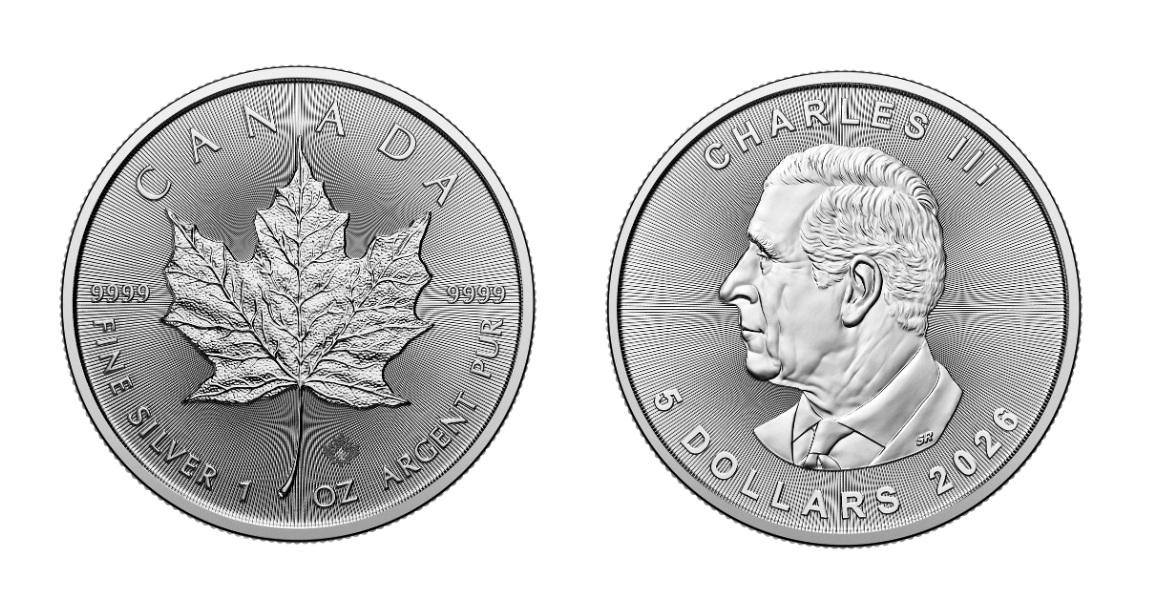
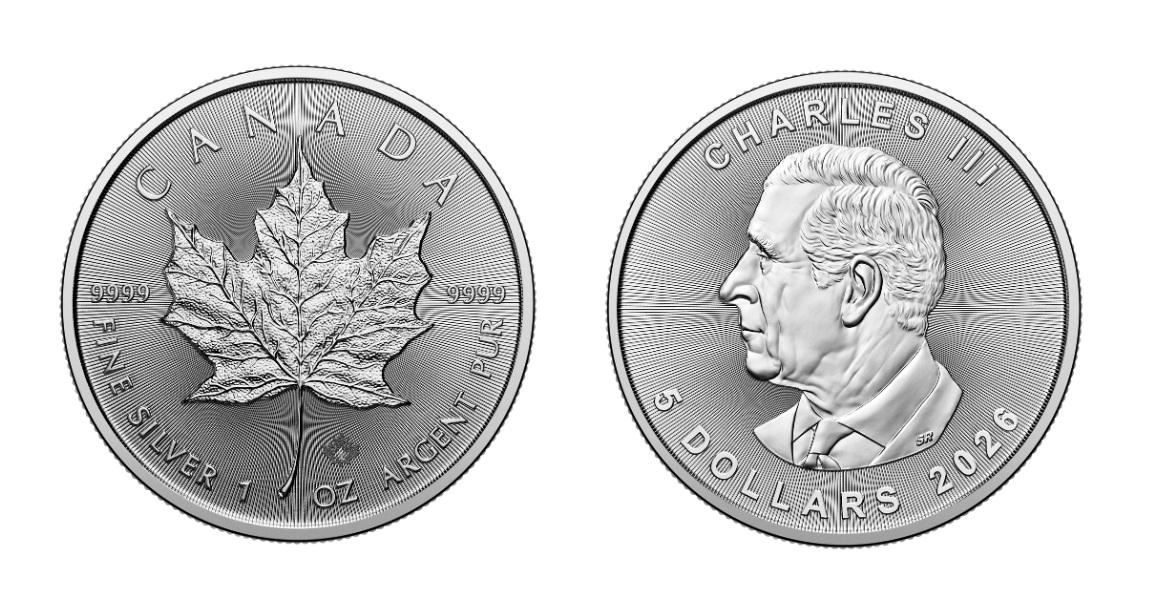
The Canadian Silver Maple Leaf is a Royal Canadian Mint bullion coin containing one troy ounce of .9999 fine silver and carrying a CAD $5 face value. Introduced in 1988, it combines high purity with some of the most advanced authentication features used on modern silver bullion.
-
Higher purity in the market for less: Each Maple Leaf contains one troy ounce of .9999 fine silver, and usually costs less per ounce than Eagles.
-
Advanced security: Radial lines, a micro-engraved maple leaf security mark, and Bullion DNA technology help authenticate the coin.
-
Government-backed bullion: The coin is produced by the Royal Canadian Mint, carries CAD $5 legal tender status, and is IRA-approved.
At a Glance: American Silver Eagles vs Maple Leafs
|
Feature |
1 oz 2026 American Silver Eagle |
1 oz 2026 Canadian Silver Maple Leaf |
|---|---|---|
|
Price Range for the 1oz at SD Bullion |
$70-$200 (including the exclusive U.S. Navy privy mark edition) |
$60-$80 |
|
PCGS Price Guide (MS65-70) |
$68–$101 for the general Silver Eagle type; the 2026 standard issue currently lists MS70 at $125 |
- |
|
NGC Price Guide (MS65-70) |
Standard 2026 issue: no current price-guide values; 2026(W):$175 MS69–$200 MS70 |
- |
|
Purity |
.999 fine silver |
.9999 fine silver |
|
Face Value |
$1 USD |
$5 CAD |
|
Diameter |
40.6 mm |
38 mm |
|
IRA Eligible |
Yes |
Yes |
SD Bullion check/wire price for one coin at the time of comparison; prices change with the silver spot price and market conditions.
Both coins contain one troy ounce of IRA-eligible silver. The Maple Leaf currently costs less and offers higher .9999 purity, while the Silver Eagle has stronger U.S. recognition and a larger 40.6 mm diameter.
Premium and Cost Per Ounce (silver coin)
At recent mid 2026 SD Bullion prices, a 1 oz American Silver Eagle may trade roughly $8–$12 over spot, while a 1 oz Canadian Silver Maple Leaf may be closer to $6–$10 over spot, depending on market conditions and quantity.
Premium matters for accumulation buyers because every dollar paid above the silver spot price reduces how much silver they can acquire for the same budget.
Security Features, Radial Lines, and Privy Mark
The Canadian Silver Maple Leaf has the more extensive security system than Silver Eagles: precision radial lines, Bullion DNA authentication, and a micro-engraved maple leaf security mark containing “26” for the 2026 issue.
The American Silver Eagle instead uses an anti-counterfeit reeded-edge variation introduced with its updated design.
Security features can reduce counterfeit risk and can make resale easier by helping dealers verify that the underlying metal and coin are authentic.
American Silver Eagles: Authentication Notes
Basic authentication starts by checking the coin’s weight, dimensions, and design against official U.S. Mint specifications. A genuine American Silver Eagle should contain one troy ounce of .999 fine silver, weigh about 31.103 grams, and measure 40.60 mm in diameter.
-
Check the weight and diameter: noticeable differences can indicate that the underlying metal or planchet is incorrect.
-
Inspect the design: compare the Walking Liberty obverse, eagle reverse, lettering, and fine details with a known genuine coin; counterfeit examples may show fuzzy or poorly defined features.
-
Check the edge: modern Silver Eagles use a reeded edge, including an anti-counterfeit edge variation on newer issues.
These checks can identify obvious problems, but if authenticity is still uncertain, the coin can be submitted to a professional grading and authentication service such as PCGS or NGC for expert verification.
Canadian Maple Leafs: Radial Lines and Privy Mark
The Canadian Silver Maple Leaf radial lines, micro-engraved security mark, and Bullion DNA technology provide more dedicated anti-counterfeiting features than the American Silver Eagle.
Buyers can visually inspect the precision-cut radial lines for the coin’s distinctive light-diffracting pattern. Under magnification, the micro-engraved maple leaf on the reverse should also show the last two digits of the issue year, such as “26” on a 2026 coin.
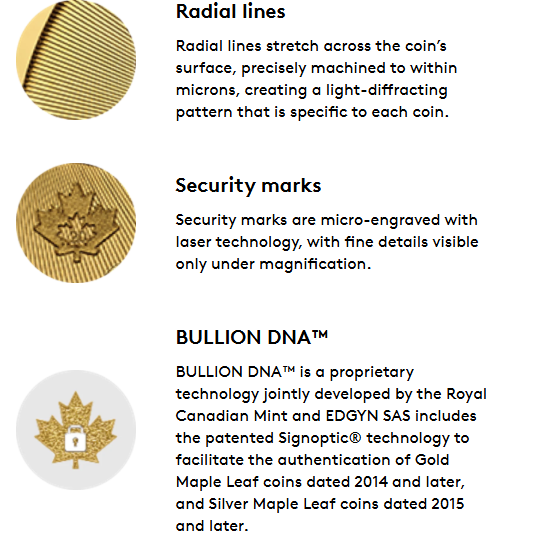
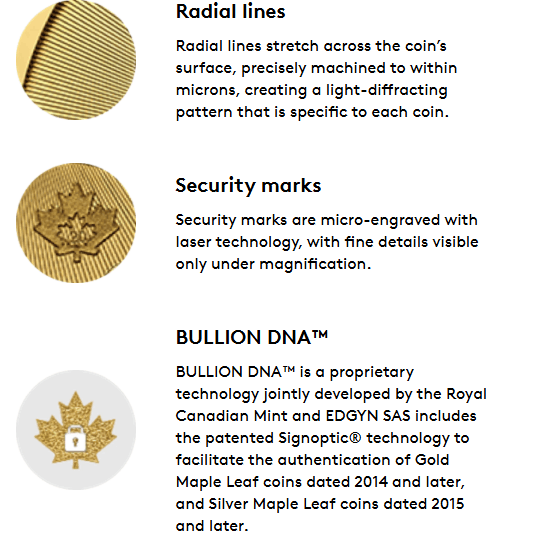
For stronger verification, Silver Maple Leafs dated 2015 and later can be authenticated through an authorized Bullion DNA dealer, which uses a specialized reader to compare the coin with data stored by the Royal Canadian Mint.
Liquidity, Resale, and Face Value
The American Silver Eagle benefits from broad U.S. dealer availability and an established two-way resale market, while the Canadian Silver Maple Leaf has the natural domestic-market edge in Canada and is also widely recognized internationally.
The Silver Eagle carries a $1 USD face value, while the Silver Maple Leaf carries a $5 CAD face value. These legal-tender denominations are established by their respective American and Canadian governments, but do not represent the coins’ bullion value, which is driven primarily by their silver content, spot price, and market premium.
SD Bullion provides a live silver spot price page where buyers can track current market prices and compare them with the premiums charged on Silver Eagles, Maple Leafs, and other bullion products.
Durability, Milk Spots, and Handling
The 2018 Canadian Silver Maple Leaf bullion coins (including 30th anniversary commemorative coins) use the Royal Canadian Mint’s MINTSHIELD technology, which is proven to significantly reduce white spots.
Milk spots can develop on both Silver Maple Leafs and American Silver Eagles. NGC links them to the minting process and notes that residual planchet-cleaning solution is a suspected cause, rather than silver purity alone.
To protect silver held for an investment or collection:
-
Keep individual coins in capsules or original mint tubes or rolls.
-
Handle coins by the edges and avoid touching the obverse or reverse.
-
Store them in a dry, stable environment away from moisture and PVC-containing materials.
-
Never polish or attempt to remove milk spots yourself, as improper cleaning can permanently damage the surface.
Proper storage can reduce handling and environmental damage, but it cannot guarantee that milk spots will never develop.
IRA Eligibility and Precious Metals Accounts
Silver bullion held in a Precious Metals IRA generally must be at least .999 fine, so both the .999 American Silver Eagle and .9999 Canadian Silver Maple Leaf are IRA eligible. The IRS also requires qualifying bullion to remain in the physical possession of an approved trustee rather than the account owner.
For an IRA purchase, the buyer typically needs to:
-
Open a self-directed IRA with a qualified custodian.
-
Fund the account through an eligible contribution, transfer, or rollover.
-
Purchase approved silver, gold coins, or other qualifying precious metals through a bullion dealer.
-
Have the metals sent to and held by an approved depository or trustee rather than taking personal possession.
SD Bullion lists both the 2026 Silver Eagle and 2026 Silver Maple Leaf as IRA-Approved silver.
Which Silver Coin Should You Choose?
The best all-around pick is the American Silver Eagle. For most U.S. buyers, its combination of recognition, liquidity, historical significance, and resale demand makes it the more versatile choice.
-
For higher purity: Canadian Silver Maple Leaf, which contains one troy ounce of .9999 fine silver compared with the Silver Eagle’s .999 purity.
-
For U.S. recognition and resale: American Silver Eagle, the official silver bullion coin of the United States and one of the most recognizable silver coins in the U.S. market.
-
For security features: Canadian Silver Maple Leaf for its radial lines, micro-engraved security mark, and Bullion DNA authentication technology.
Physical precious metals as a form of long-term wealth storage, so buying both can also make sense for someone building a broader bullion portfolio. Silver Eagles provide strong U.S. recognition and demand, while Maple Leafs add higher purity, advanced security features, and typically lower premiums.
Sources and Data Notes
-
Prices and premiums can change daily with the silver spot price, inventory, and market demand. Before publishing or updating this comparison, check SD Bullion’s live silver prices and the current American Silver Eagle and Canadian Silver Maple Leaf product pages for the latest retail prices and premiums.
-
For coin specifications, use primary mint sources whenever possible. The U.S. Mint provides official American Silver Eagle specifications, while the Royal Canadian Mint provides official Silver Maple Leaf specifications and security-feature details.
What is the difference between American Silver Eagle and Canadian Maple Leaf coins?
The American Silver Eagle contains one troy ounce of .999 fine silver and has a $1 U.S. face value. The Canadian Silver Maple Leaf contains one troy ounce of .9999 fine silver and has a $5 CAD face value. The Maple also adds radial lines, a micro-engraved security mark, and Bullion DNA.
Why are Silver Eagle premiums higher than Maple Leafs?
Silver Eagle premiums are usually higher because U.S. demand, recognition, and dealer liquidity are stronger. SD Bullion’s 10-year data shows Silver Eagles averaging about 22% over spot versus roughly 15% for Maple Leafs, although the premium gap changes with supply, demand, and market conditions.
What is the purity difference between the American Silver Eagle and Canadian Silver Maple Leaf?
The American Silver Eagle is .999 fine silver (or 99.9% pure), while the Canadian Silver Maple Leaf is .9999 fine ( 99.99% pure). That is a 0.09-percentage-point purity difference. Both coins still contain one troy ounce of silver.
Which has better security features: the Canadian Silver Maple Leaf or American Silver Eagle?
The Canadian Silver Maple Leaf has stronger dedicated security features. It combines precision radial lines, a micro-engraved maple leaf showing the issue year, and Bullion DNA authentication. The Silver Eagle uses an anti-counterfeit reeded-edge variation, but the Maple provides more separate authentication features.
Which coin typically commands higher resale value: Silver Eagle or Maple Leaf?
For U.S. resale, the American Silver Eagle typically commands the higher premiums and dealer bid. SD Bullion currently lists about $60.95 for a random-year Eagle versus $58.95 for a Maple Leaf, a roughly $2 difference. Buyback prices change with silver spot prices, inventory needs, and dealer demand.
What's better for silver investors: American Silver Eagle or Canadian Silver Maple Leaf?
For most U.S. investors, the American Silver Eagle is the stronger all-around choice because of its recognition and resale market. The Maple Leaf may be better for a buyer prioritizing .9999 purity, advanced security, and typically lower premiums. The choice depends on whether liquidity or cost efficiency matters more.
Why might collectors prefer Silver Eagles or Maple Leafs over each other?
Collectors may prefer Silver Eagles for U.S. historical significance, Walking Liberty, proofs, mint marks, and key dates. Maple Leaf collectors often focus on .9999 purity, privy issues, anniversary releases, and changing monarch portraits; the 2026 obverse features King Charles III.
How do tax rules affect selling American Silver Eagles versus Canadian Maple Leafs for a U.S. resident?
For U.S. residents, the two coins are generally taxed the same: only the gain is taxable. Long-term gains are subject to the collectibles rate, capped at 28%, while short-term gains are ordinary income. Neither coin typically triggers dealer Form 1099-B reporting (used for bonds and stocks, etc.), but taxable gains must still be reported.
As a coin collector, which Silver Eagle or Maple Leaf variants are most sought after?
For Silver Eagles, the 1995-W Proof is the standout key date, with a mintage of only 30,125. The 1997 Canadian Silver Maple Leaf is the main sought-after key date of all, with the lowest mintage reported, at only 100,970 coins.
How should Silver Eagles and Maple Leafs be stored and insured?
Store both coins in capsules, original tubes, or non-PVC holders in a dry, temperature-stable location, and handle them only by the edges. Keep receipts, photographs, and an inventory for insurance. For larger holdings, consider a fully insured depository; SD Depository states that stored bullion is insured through Lloyd’s of London.