Gold and Silver Navigate Rising Yields, Strong China Demand and Falling COMEX Inventories
- Gold and silver ended the week under pressure, with silver closing essentially flat at $64.29 per oz, while gold slipped to approximately $4,285 per oz. The gold-to-silver ratio finished near 66.
- Rising bond yields remain a major macroeconomic theme, with CNBC’s Rick Santelli highlighting an unusually sharp 18-basis-point single-session rise in the 5-year Treasury yield. Higher borrowing costs are becoming increasingly important as global debt approaches $350 trillion.
- U.S. government interest expenses are climbing rapidly, with annual interest payments already exceeding $1 trillion. The report notes that if 5-year Treasury yields remain elevated, annual debt-service costs could move toward $2 trillion within the next several years.
- Higher rates continue to squeeze U.S. households, with 30-year mortgage rates approaching 7.5%. The report estimates that financing a median-priced home now carries nearly $1,200 more in monthly interest costs compared with the beginning of the decade.
- China's gold demand remains a major force in the physical market. Based on imports through roughly two-thirds of the year, China is reportedly on pace to import more than 1,500 metric tons of gold, while Chinese gold ETF holdings have also expanded significantly during the past three years.
- Eligible gold inventories in COMEX warehouses have fallen sharply, with the report estimating that roughly 4 million ounces have left eligible inventories in recent weeks. Rising U.S. gold exports are cited as another indication that physical metal may be moving toward strong Asian and other international demand centers.
- Precious metals remain a relatively small share of overall ETF assets. The report cites data showing precious-metals ETFs at approximately 3.7% of total ETF assets, compared with about 14.5% at the 2011 peak, suggesting institutional allocations remain well below that previous cycle.
- Stock-market concentration and AI spending are raising valuation concerns. According to the report, technology represents more than half of the S&P 500, while the 10 largest companies account for more than 40% of the index, creating heightened sensitivity to changes in sentiment toward mega-cap technology and AI-related spending.
- David McAlvany presented a bullish long-term case for physical precious metals, arguing in a Charles Schwab interview that elevated equity valuations, sovereign debt pressures, persistent inflation and tighter bond markets could create one of gold's strongest setups in decades. He also warned that U.S. equities could experience a 30% to 50% decline, which represents his forecast rather than an established market outcome.
- Silver could offer greater upside volatility but faces different demand dynamics than gold. McAlvany characterized silver as more dependent on investor and industrial demand because it lacks gold's central-bank buying support. He noted potential industrial substitution at higher prices while describing silver as roughly two to two-and-a-half times more volatile than gold.
Gold and silver markets faced another eventful week as rising bond yields, mounting debt costs, and shifting global demand kept investors focused on precious metals. Silver finished the week near $64.29 per oz, while gold price closed around $4,285 per oz as higher interest rates continued to pressure financial markets.
Meanwhile, China remains a major source of physical gold bullion demand, with imports reportedly on pace to exceed 1,500 metric tons this year. At the same time, eligible gold inventories in COMEX warehouses have fallen sharply, with roughly 4 million ounces reportedly leaving in recent weeks.
What could rising yields, strong Chinese demand, and declining COMEX inventories mean for gold and silver markets? Here are some of the major developments shaping the precious metals market.
Gold and Silver Finish the Week Under Pressure
Gold and silver traded lower during portions of the week as bond yields climbed and the U.S. dollar strengthened.
Silver spot price ultimately finished essentially flat at approximately $64.29 per oz. Gold ended the week modestly lower at roughly $4,285 per oz. The gold-to-silver ratio remained near 66.
The relatively stable weekly silver close came despite considerable pressure from the bond market. Higher Treasury yields can create competition for precious metals because investors can receive greater income from interest-bearing assets.
Bond Yields Move Higher
One of the week's biggest developments came from the Treasury market. CNBC's Rick Santelli highlighted an unusually large 18-basis-point move higher in the 5-year Treasury yield during a single trading session.
Santelli also placed today's rates into a longer historical perspective, noting that the average 10-year Treasury yield since 1980 has been roughly 5.2% to 5.6%. The recent rise in borrowing costs comes after an extended period when interest rates were historically low across much of the developed world.
For precious metals investors, the bond market remains important because changes in yields can influence the dollar, financing conditions, government borrowing costs, and demand for non-interest-bearing assets such as gold bars.
Government Debt Becomes More Expensive
Higher interest rates are also increasing the cost of servicing government debt.
The United States is already paying more than $1 trillion annually in interest on its debt, according to the market update. If 5-year Treasury yields remain above approximately 3.25%, the report argues that annual interest expenses could move toward $2 trillion within the next several years.
This challenge extends beyond the United States. Governments around the world accumulated substantial debt during the era of extremely low interest rates. Refinancing that debt at higher rates can place additional pressure on government budgets.
Mortgage Rates Add Pressure on U.S. Households
Consumers are also feeling the effects of higher borrowing costs.
The 30-year U.S. mortgage rate has climbed toward 7.5%, according to the report. Comparable levels were reached in May 2024, while similar borrowing costs before then require looking back toward the early 2000s.
Housing affordability remains particularly challenging because buyers are dealing with both elevated home prices and higher financing costs. The report estimates that interest expenses on a median-priced home have increased by nearly $1,200 per month compared with the beginning of the decade.
China's Gold Demand Remains Strong
While Western financial markets focus heavily on interest rates, China continues to play a significant role in physical gold demand.
Based on imports through approximately two-thirds of the year, China is reportedly on pace to import more than 1,500 metric tons of gold this year. The report also points to the growing amount of capital Chinese investors are directing toward gold compared with the previous decade.
Chinese gold ETF holdings have also expanded significantly. According to the report, gold held by Chinese ETFs has increased nearly fivefold during the past three years. Chinese authorities and financial institutions have also continued promoting physical gold accumulation and bullion purchasing services to retail investors.
Eligible Gold in COMEX is Collapsing
Another development worth watching is the decline in eligible gold inventories held in COMEX warehouses.
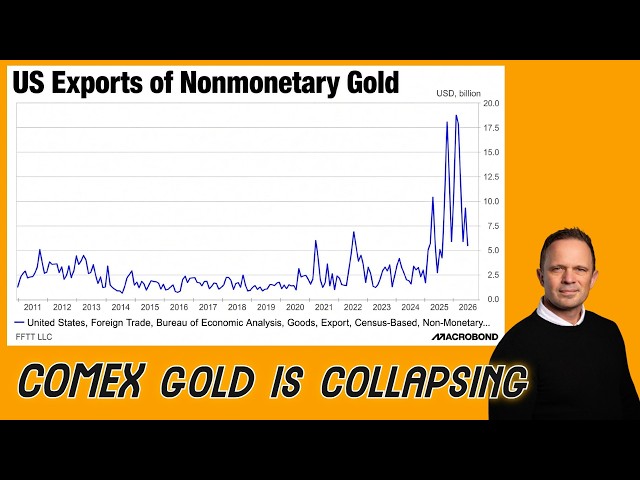
The report estimates that approximately 4 million ounces of eligible gold have left COMEX warehouses in recent weeks. At the same time, U.S. gold exports have increased.
The market update suggests some of this metal may be moving overseas to satisfy demand from China and other Eastern markets. While the ultimate destination of individual bars cannot be determined from the inventory figures alone, the combination of declining eligible inventories and stronger exports makes physical gold flows an important trend to monitor.
Precious Metals Remain a Small Share of ETF Assets
Despite gold's substantial gains over the broader bull market, precious metals remain a relatively small portion of total ETF holdings.
The report cites historical data showing precious metals ETFs represented approximately 14.5% of total ETF assets around the 2011 peak. Today, that figure is approximately 3.7%.
That comparison suggests institutional and retail portfolio allocations to precious metals remain considerably below the relative levels seen during the previous major precious metals cycle.
AI Spending and Stock Market Concentration Draw Attention
The report also highlights increasing concentration within the U.S. stock market.
Technology companies now represent more than half of the S&P 500 by the measure cited in the update, while the 10 largest companies account for more than 40% of the index. The report connects this concentration with historically large spending surrounding artificial intelligence.
High concentration does not necessarily mean stocks must decline. However, it means the performance of a relatively small group of companies can have an outsized influence on major market indexes.
David McAlvany Discusses Gold's Long-Term Setup
David McAlvany appeared on the Charles Schwab channel during the week and presented a cautious view of U.S. equities alongside a bullish long-term outlook for gold.
McAlvany argued that several long-term valuation measures show the S&P 500 trading at historically elevated levels. He suggested that a future stock market decline of 30% to 50% is possible, although this represents his market outlook rather than a certain outcome.
He identified the bond market as particularly important and pointed toward the combination of inflation, high sovereign debt levels, rising interest expenses, and tighter financial conditions.
McAlvany described the current environment as one of the strongest fundamental setups for gold his firm has observed over several decades, citing changing attitudes toward sovereign debt and continued demand for physical precious metals.
Silver Offers Different Risks and Opportunities
Silver shares many of gold's monetary characteristics, but its market structure is different.
McAlvany noted that silver does not receive the same central-bank demand that supports gold. Instead, silver depends more heavily on investor buying and industrial consumption. At sufficiently high prices, manufacturers may also attempt to reduce silver usage or substitute other materials where possible.
Silver's smaller market can also produce considerably larger price swings. McAlvany described silver as roughly two to two-and-a-half times more volatile than gold, meaning strong precious metals markets can potentially produce amplified silver moves in either direction.
What Gold and Silver Investors Should Watch Next
The coming weeks could provide important signals for both precious metals.
Treasury yields and the bond market remain central to the outlook as governments, businesses, and consumers adjust to higher borrowing costs. At the same time, China's physical gold demand and declining eligible COMEX gold inventories provide another side of the story that extends beyond Western financial markets.
Gold and silver are therefore navigating two powerful forces: tighter financial conditions in the West and continued demand for physical precious metals, particularly from Asian markets. How those forces develop could help determine the next major move in the bullion markets.
Source:
McAlvany: Market Seeing "Best Set Up for Gold Ever," Silver Offers More Torque
https://www.youtube.com/watch?v=Hdt0gAz3DUo