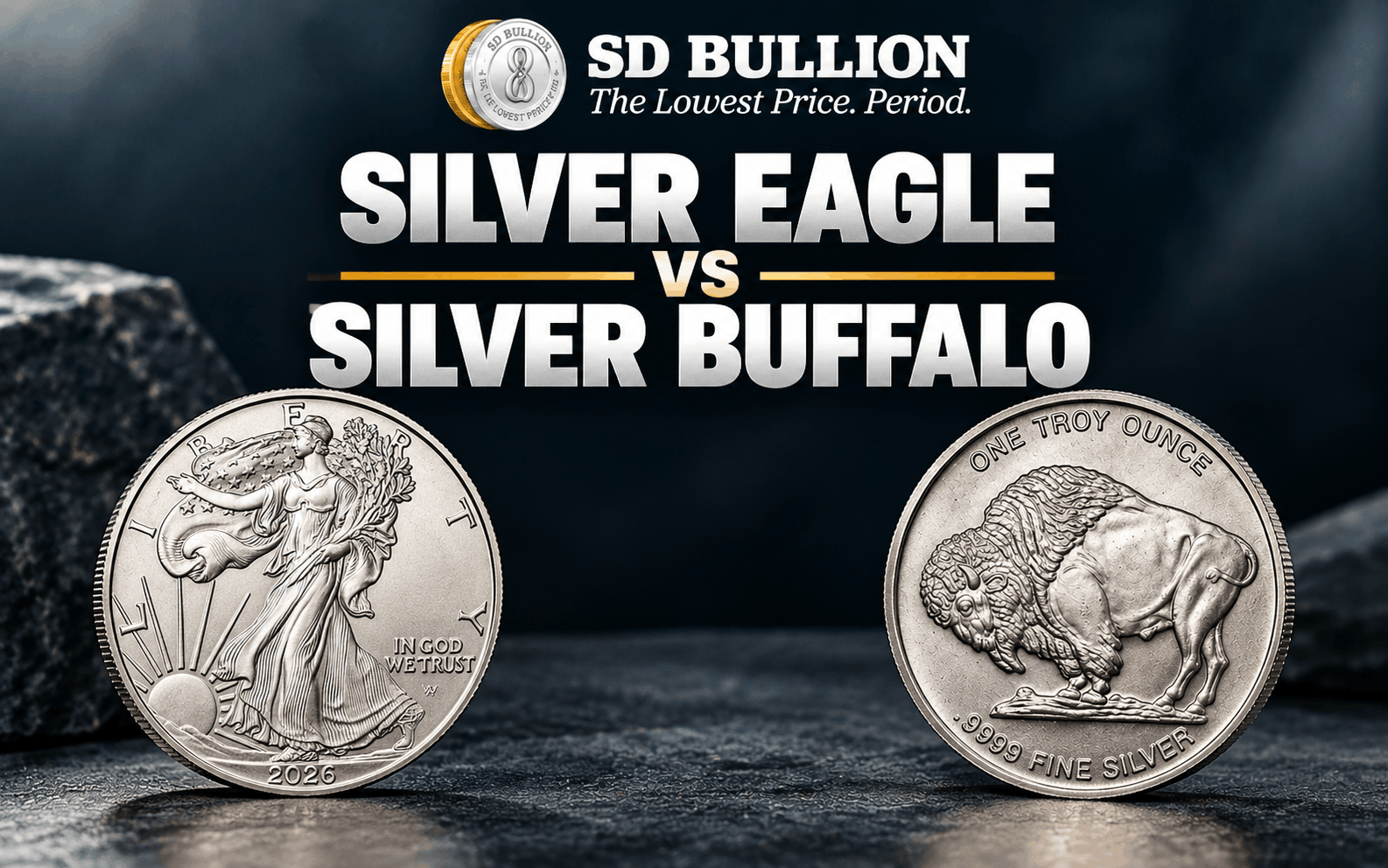
Silver Buffalo rounds generally cost less per ounce, while American Silver Eagles offer U.S. Mint backing and broader recognition.
For silver buyers and collectors, this guide compares premiums, resale potential, and collectibility to help you decide whether the Eagle’s higher premium fits your goals or the Buffalo’s lower cost better suits your budget.
Key Takeaways:
-
Same silver content: Silver Eagles and standard Buffalo rounds each contain 1 troy ounce of .999 fine silver; however, only the Eagle carries a $1 legal tender denomination and U.S. government backing.
-
Buffalo rounds generally cost less: SD Bullion’s October 2026 listings implied premiums of approximately $3–$5 for Buffalo rounds versus $6–$8 for 2026 Silver Eagles, depending on quantity and using check/wire pricing. (These are dated examples, not market-wide averages).
-
The American Silver Eagle is the best-selling silver bullion coin in the world. The U.S. Mint series dates to 1986 and generally has an advantage in resale liquidity. Higher purchase premiums, however, are not guaranteed to hold in periods of market volatility.
-
Silver Eagles have established collector appeal: The 1995-W Proof had a mintage of 30,125; PCGS records an exceptional $86,655 auction sale in 2013 for a PR70 Deep Cameo example, not a typical bullion value.
Clear Recommendation Up Front
The American Silver Eagle is the stronger all-around pick for most buyers who value broad recognition, U.S. Mint backing, and collector appeal.
Budget-focused buyers should consider Silver Buffalo Rounds, which generally offer the same one troy ounce of .999 fine silver at a lower premium.
What Is the Silver Buffalo?
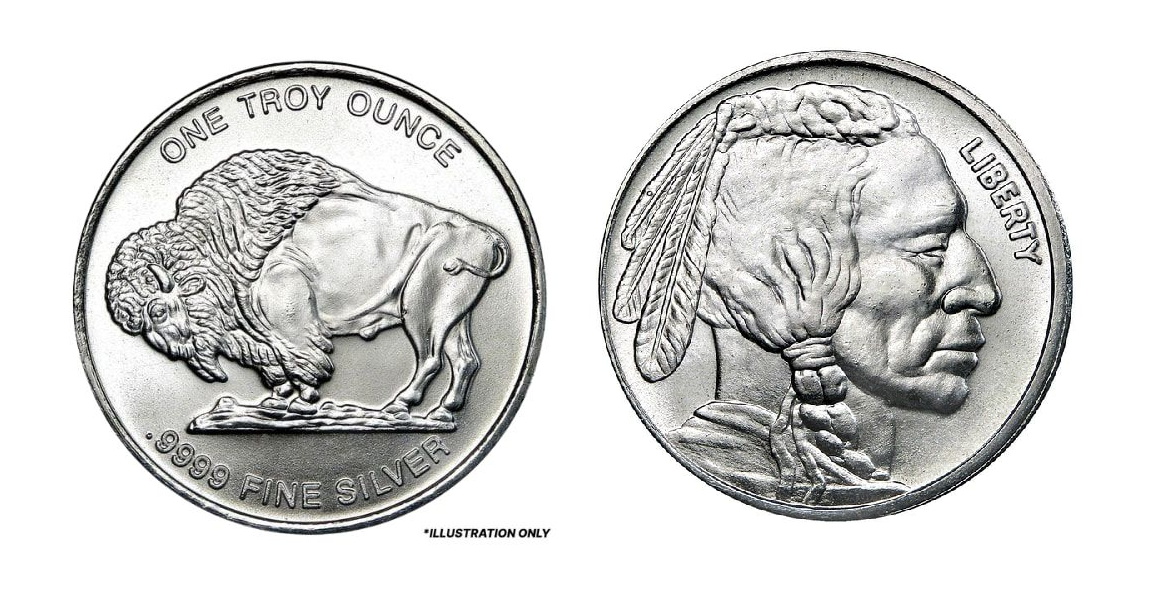
The Silver Buffalo is a privately minted round that typically contains one troy ounce of .999 fine silver and features a design inspired by James Earle Fraser’s 1913 Buffalo Nickel. Although Buffalo rounds resemble coins, they have no face value or legal tender status because they are issued by private mints rather than a government.

-
Lower premiums: Stackers can generally buy more silver for the same budget than with Silver Eagles.
-
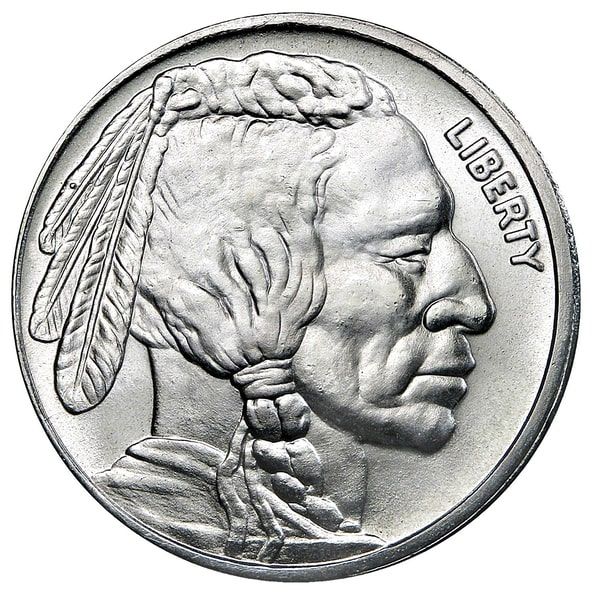
Recognizable design: Buffalo rounds typically feature a Native American profile on the obverse and an American bison on the reverse, preserving the American West imagery of Fraser’s Buffalo Nickel.
-
Variety: Private mints produce Buffalo silver rounds, with design details and features that may vary by manufacturer.
What Is the Silver Eagle?
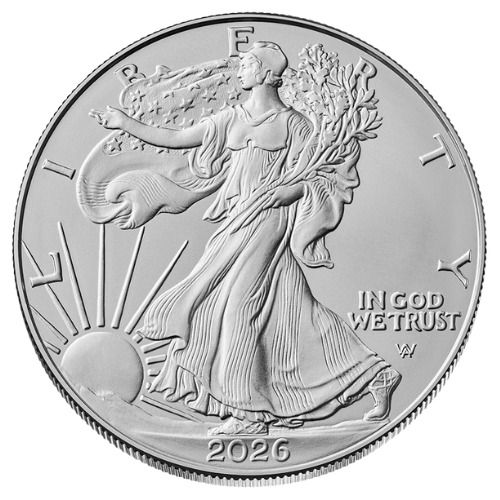
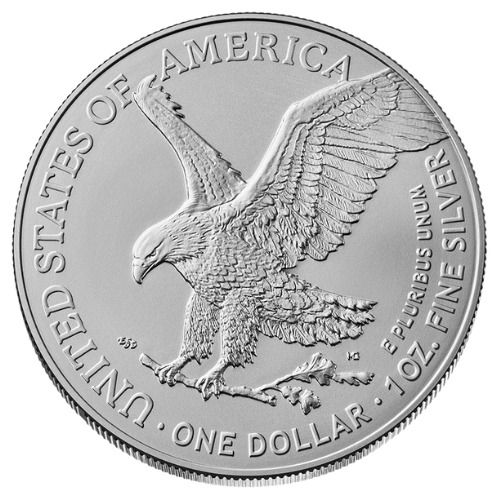
The American Silver Eagle is a U.S. Mint coin introduced in 1986, containing one troy ounce of .999 fine silver. Its $1 face value gives it legal tender status, although its silver content alone is worth more than one dollar.
-
Government backing: The U.S. government guarantees its weight and silver purity. The U.S. Mint reports more than 500 million troy ounces of American Eagle silver bullion sold since 1986.
-
Broad recognition: Decades of production have established a familiar coin for buyers and dealers.
-
Collector appeal: The 1995-W Proof American Silver Eagle had a mintage of just 30,125 coins. PCGS records a PR70 Deep Cameo (PR70DCAM) example selling for $86,655 in 2013, demonstrating how scarcity and exceptional condition can command prices far above silver content. This historical auction record, however, does not represent typical Silver Eagle values.
At-A-Glance Comparison: Silver Buffalo Versus Silver Eagle
|
Feature |
Silver Buffalo Round |
American Silver Eagle |
|---|---|---|
|
Issuer |
Various private mints |
U.S. Mint |
|
Face value |
None; not legal tender |
$1 U.S. legal tender |
|
Silver content |
1 troy oz |
1 troy oz |
|
Purity |
Typically .999; SD Bullion guarantees at least .999 |
.999 fine silver |
|
Bullion premium over spot |
Generally lower; varies by mint, quantity, and payment method |
Generally higher; varies by year, quantity, and payment method |
|
Common finish |
Brilliant uncirculated; appearance varies by mint |
Brilliant uncirculated bullion; proof and burnished collector editions |
|
Collectible variants |
Mint-specific designs; no single official series |
Reverse proofs, special sets, and scarce issues such as the 1995-W Proof |
|
Main appeal |
More silver for the same budget |
Government backing, recognition, and numismatic potential |
|
IRA eligibility |
Eligible when minimum .999 purity and custodian requirements are met. |
Yes |
Takeaway: Silver Buffalo rounds generally offer lower purchase premiums, while Silver Eagles add a $1 denomination, government backing, and an established collector series.
SD Bullion’s Buffalo round listing provides prices by quantity and payment method; its Silver Eagle selection lets buyers compare bullion coins, proofs, and graded examples.
Price and Premiums
Silver Buffalo rounds generally cost less because buyers pay a smaller premium for the same silver content. In October 2026, SD Bullion displayed silver spot near $54 per ounce, with check/wire prices implying premiums of approximately $3–$5 for Buffalo rounds versus $6–$8 for 2026 bullion Silver Eagles, depending on quantity. These are listing snapshots, not market-wide averages.
For Buffalo rounds, smaller orders and card payments increase the price per ounce. Silver Eagles become more expensive when buyers select proofs, scarce dates, or highly graded examples.
SD Bullion’s Buffalo listing shows quantity and payment discounts, while its Silver Eagle selection helps buyers compare standard bullion with collector editions. Lower Buffalo premiums generally let stackers grow their silver holdings for less.
Purity, Weight, and The One Troy Ounce Standard
Silver Buffalo rounds and American Silver Eagles each contain one troy ounce of silver, approximately 31.1035 grams. Silver Eagles have an official .999 fineness; SD Bullion’s Buffalo rounds meet at least .999 fineness, depending on the private mint.
|
Aspect |
Silver Buffalo Round |
American Silver Eagle |
|---|---|---|
|
Silver content |
1 troy oz (31.1035 g) |
1 troy oz (31.1035 g) |
|
Purity |
.999 minimum (SD Bullion-supplied) |
.999 |
|
Diameter |
39 mm, but dimensions may vary by manufacturer |
40.6 mm |
|
Thickness |
2.8 mm, but it may vary by manufacturer |
2.98 mm |
|
Legal tender |
No legal tender value |
Yes, $1 |
The troy ounce is the pricing standard for silver and gold, making it easy to compare metal content with spot prices.
A Buffalo round’s higher fineness, when available, does not increase melt value if both Silver Buffalo rounds and American Silver Eagles contain the same fine-silver weight. For investors who hold silver as part of their wealth, the purity-and-weight comparison is therefore a tie: Silver Eagles cost more for government backing and recognition, not more silver.
Recognition, Liquidity, and Resale Potential
American Silver Eagles generally have the liquidity advantage because their U.S. Mint origin and global recognition attract a broader buyer base. Buffalo rounds are familiar to bullion dealers, and both Silver Buffalo rounds and American Silver Eagles can be sold through local coin shops or online dealers.
Standard Buffalo rounds typically trade closer to their silver value, while Silver Eagles can command higher resale premiums. However, a higher resale price does not guarantee recovery of the premium originally paid.
Before selling either product, compare dealer offers; SD Bullion’s Sell to Us page explains its buyback process and how to request a quote.
Design, Collectibility, and Series Appeal
American Silver Eagles are the stronger collector choice because their dated series includes proofs, reverse proofs, and burnished editions, and dedicated Silver Eagle value guides by date and condition help collectors understand how mintage and grading affect prices.
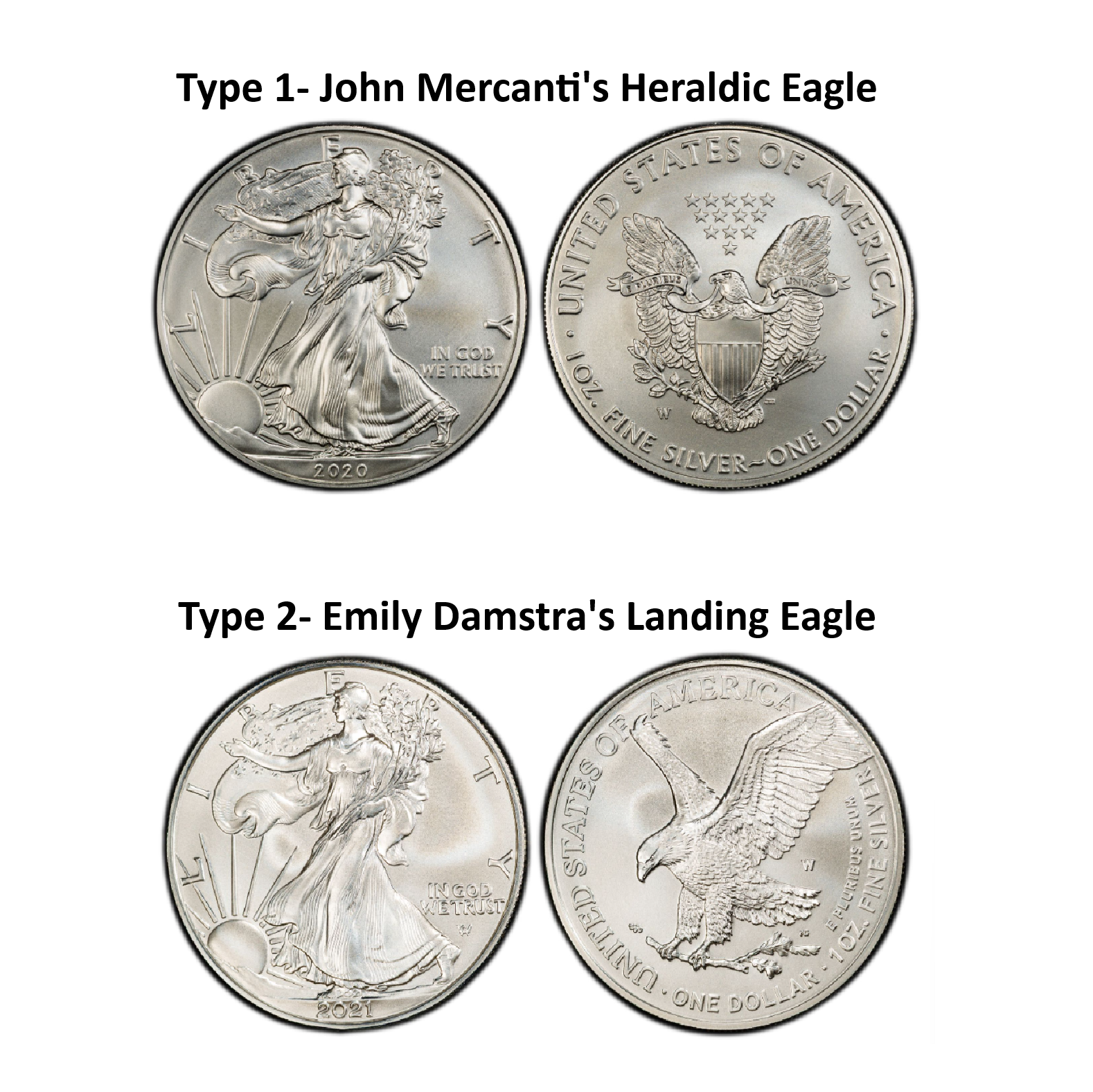
Buffalo rounds reproduce the Native American profile and bison of Fraser’s Buffalo Nickel; Silver Eagles feature Walking Liberty paired with a heraldic eagle or, since mid-2021, a landing eagle designed by Emily Damstra.

The PCGS Price Guide illustrates how condition affects value: in October, 2026, it listed the 1986 Silver Eagle at $73 in MS69 versus $1,000 in MS70. These are guide estimates, not guaranteed selling prices.
For rarity, the 1995-W Proof had a mintage of 30,125. PCGS CoinFacts records an $86,655 auction result for a PR70 Deep Cameo example on March 31, 2013, at GreatCollections. That exceptional historical record does not represent today’s typical value.
Limited-edition rounds can also gain numismatic value when collector demand develops, but Silver Eagles offer a more established collecting market.
Minting Standards and Durability
American Silver Eagles offer more uniform specifications and government-backed assurance of weight and purity, while Buffalo round dimensions and production standards vary by private mint.
SD Bullion’s Silver Eagle guide lists a consistent 40.6 mm diameter and .999 fineness; its Buffalo listing guarantees at least .999 silver across its supplied mints.
Silver Buffalo rounds and American Silver Eagles require careful handling because fine silver scratches easily. Handle bullion by the edges and use fitted capsules or protective tubes. Proof Eagles’ mirrored fields and burnished Eagles’ satin surfaces deserve particular care, and SD Bullion’s American Silver Eagle coin selection highlights the range of bullion, proof, and graded options that may warrant extra protection.
For valuable collector editions, grading services such as NGC (Numismatic Guaranty Company) and PCGS (Professional Coin Grading Service) authenticate, grade, and encapsulate coins in protective holders.
Standard bullion rounds and coins generally need protective storage rather than professional grading. Silver Eagles lead in standardized assurance, but government backing does not make their surfaces more durable.
How Silver Rounds Fit With These Silver Dollars
Silver rounds, including Buffalo rounds, suit buyers prioritizing ounces per dollar. Their generally lower premiums make purchasing silver over time less expensive, although rounds often resell closer to spot and lack Silver Eagles’ broader recognition; broader silver bullion options such as coins, bars, and rounds let investors tailor their approach to budget and storage preferences.
Buffalo rounds generally carry lower premiums than Silver Eagles and can be resold through local coin shops or online dealers. SD Bullion’s 1 oz Silver Buffalo round page lists prices by quantity and payment method.
A mixed stack can combine lower-cost Buffalo rounds for accumulating silver with Silver Eagles for resale flexibility. Compare similar quantities and payment methods before purchasing a tube or box. Favor rounds when maximizing silver weight matters most; choose Eagles when recognition justifies the extra premium.
Which Should You Choose
Choose American Silver Eagles if liquidity, recognizability, and an established collectible series matter most. Choose Silver Buffalo rounds if lower premiums help you reach your silver-weight goal within budget. Investors who primarily want government-issued bullion may focus on buying silver coins for investment and collecting. Purity-focused buyers should check individual specifications: standard Buffalo rounds and Silver Eagles both offer .999 fine silver, so neither has an automatic purity advantage.
Silver Eagles are the stronger all-around choice for buyers balancing resale flexibility and collectibility; Buffalo rounds better suit buyers prioritizing ounces per dollar. Knowing the premium you pay and the dealer’s buyback offer helps you compare the full cost of ownership.
Since 2012, SD Bullion has served more than 600,000 customers and shipped over 2 million orders. Our About page details the company’s history and milestones, while our Silver Eagle selection and Buffalo round listing provide product specifications and pricing for comparison.
Frequently Asked Questions To Answer
Is the Silver Eagle or Silver Buffalo better as legal tender?
Only the American Silver Eagle has U.S. legal tender status, with a $1 face value. Buffalo rounds have no denomination. In fact, spending a Silver Eagle for one dollar would sacrifice its much higher bullion value.
Are silver sales taxable or reportable?
For U.S. taxpayers, profits from selling either product are generally taxable. Dealer Form 1099-B requirements depend on the product and transaction; not receiving a form does not make a gain tax-free. Keep purchase and sale records and consult a tax professional about your circumstances.
Can I sell Silver Eagles and Buffalo rounds locally?
Both can be sold to local coin shops or online bullion dealers; online selling is optional. Compare offers before choosing. SD Bullion’s Buffalo round FAQs explain resale options and how to request a buyback quote.
SD Bullion reports serving more than 600,000 customers and shipping over 2 million orders since 2012, with company history and milestones documented on our About page.
Evidence and Sources
-
Weight and purity: The U.S. Mint’s Silver Eagle specifications confirm one troy ounce of .999 fine silver and a $1 denomination. Buffalo rounds are privately minted; SD Bullion’s product specifications confirm one troy ounce and at least .999 purity.
-
Prices and premiums: SD Bullion’s Buffalo round listing and Silver Eagle listings provide prices by product and quantity. The October 28, 2026 comparison uses check/wire pricing for Buffalo rounds and 2026 bullion Eagles, not market-wide average premiums.
-
Spot-price reference: SD Bullion displayed silver spot near $54 per troy ounce when checked in October 2026. Against that reference, the listed premiums were approximately $3–$5 for Buffalo rounds and $6–$8 for 2026 Silver Eagles, depending on quantity. Prices fluctuate.
FAQs
What Are the Main Differences Between Silver Buffalo Rounds and Silver Eagles?
Silver Buffalo rounds are privately minted and have no face value, meaning they are not legal tender. American Silver Eagles are U.S. Mint coins with a $1 denomination and government-guaranteed weight and purity. Both contain one troy ounce of silver, typically at .999 fineness, but Buffalo rounds generally carry lower premiums over the silver spot price.
Why Is the Silver Eagle Premium Higher Than the Silver Buffalo Premium?
Silver Eagle premiums partly reflect higher wholesale costs: the U.S. Mint charges authorized purchasers $3.05 per coin above the LBMA Silver Price, before distributor and dealer markups. Retail premiums also respond to supply and demand. Privately minted Buffalo rounds generally reach buyers at lower premiums, despite containing the same one troy ounce of silver.
How Do Silver Eagles and Buffalo Rounds Compare in Resale Value and Liquidity?
Silver Eagles generally command higher resale premiums because dealers and collectors recognize the U.S. Mint series. Buffalo rounds usually trade closer to spot, with value driven mainly by silver content. Both can be sold locally or online. Compare actual buyback quotes: a higher Eagle offer may not offset its higher purchase premium. SD Bullion’s Buffalo FAQs explain resale options.
Is the Silver Buffalo Round Legal Tender in the United States?
No. Silver Buffalo rounds are privately issued bullion with no denomination or U.S. legal tender status. Their value primarily reflects their silver content.
Which Is Better: Silver Buffalo or Silver Eagle for Investment and Collecting?
Buffalo rounds generally offer lower purchase premiums, while Silver Eagles provide more collecting options. The 1995-W Proof Silver Eagle had just 30,125 minted. In October 2026, the PCGS Price Guide listed estimated $3,500 in PR69 Deep Cameo to $16,750 in PR70 Deep Cameo, illustrating how condition affects collector value.
Why Might Investors Prefer Silver Eagles Over Buffalo Rounds, or Vice Versa?
Investors may prefer Silver Eagles for government-guaranteed weight and purity and an established dealer market. Buffalo rounds appeal to buyers who prioritize silver content: lower premiums mean less spent above the metal’s value. Comparing purchase prices with dealer buyback quotes helps reveal whether an Eagle’s higher resale offer offsets its higher initial cost.
Are Silver Eagles and Silver Buffalo Rounds IRA-Eligible?
Silver Eagles qualify, and Silver Buffalo rounds can qualify. Silver Eagles are expressly permitted under 26 U.S.C. § 408(m)(3). Buffalo rounds can qualify under the law’s bullion exception when they meet the required fineness standard. The IRS explains that qualifying bullion must remain in a bank’s or approved nonbank trustee’s physical possession. Confirm the specific round’s acceptance with your IRA custodian.
Which Is Better for Beginners and Long-Term Stacking?
Buffalo rounds generally suit beginners prioritizing more silver per dollar, while Silver Eagles suit buyers who value government-guaranteed weight and purity. For long-term stacking, compare purchase premiums and dealer buyback offers: a higher purchase premium does not guarantee a higher return.
How Do You Spot a Counterfeit Silver Eagle or Buffalo Round?
Compare weight, dimensions, lettering, and design with the issuing mint’s specifications. NGC’s counterfeit analysis shows how excessive thickness and poor details exposed a fake Silver Eagle. For certified coins, use PCGS or NGC verification tools to check certification records. Matching weight or a valid certification number alone does not prove authenticity.