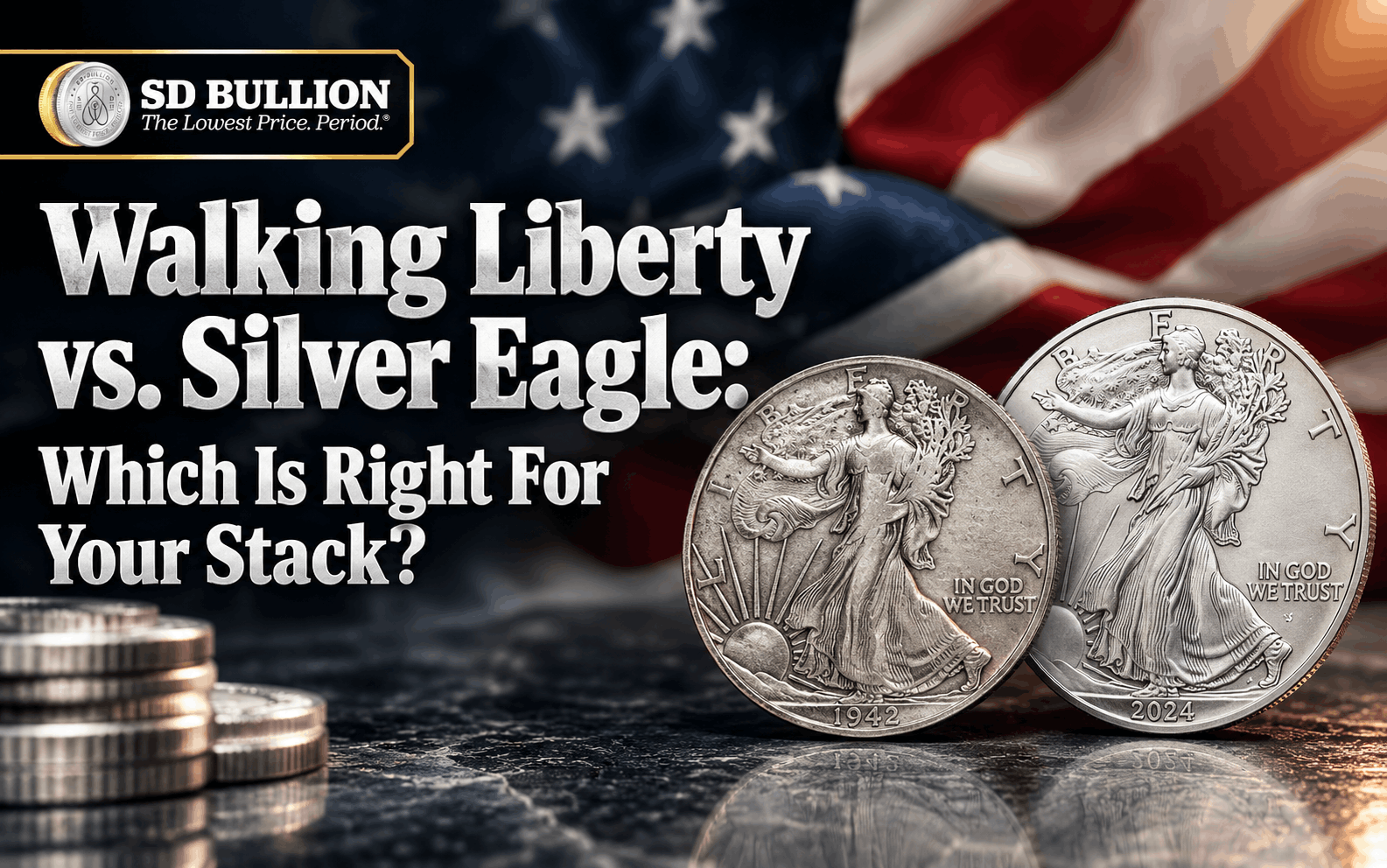
For most bullion investors, the American Silver Eagle is the better all-around choice because it offers one troy ounce of .999 fine silver, U.S. Mint backing, and strong liquidity. Walking Liberty Half Dollars are better suited to collectors and fractional-silver stackers seeking 90% silver with historical appeal.
This guide compares their silver content, premiums, liquidity, collectibility, and best uses for different buyers.
Key Takeaways:
-
American Silver Eagles offer more silver per coin: each contains 1 troy ounce of .999 fine silver, versus about 0.3617 troy ounces in a 90% silver Walking Liberty Half Dollar.
-
Walking Liberty Half Dollars can cost less per ounce, roughly $63 per troy ounce for a $10 face-value lot, versus about $65–$75/oz for random-year Silver Eagles depending on quantity.
-
Walking Liberty rarity can be extreme: the 1921-D had a mintage of just 208,000, while the 1921-S had 548,000, helping explain why top-grade examples command major premiums.
-
Silver Eagle collector values can also reach five figures: the 1995-W Proof had a mintage of 30,125 and an auction record of $86,655 in PR70DCAM.
Jump to: Quick Verdict | What Is Walking Liberty? | Walking Liberty Key Dates and Rarity Chart | What is The American Silver Eagle? | Silver Eagle Key Dates and Rarity Chart | At-a-Glance Comparison Table | Premiums and Cost | Design, Collector Appeal, And Numismatic Value | Specifications for Quality | Resale Potential and Market Conditions | Which should you choose? | Quick FAQ | Closing notes and Evidence Anchors | FAQs
Quick Verdict
For most bullion investors, the American Silver Eagle is the better fit because of its one-ounce silver content, strong recognition, and potential liquidity. It is especially well suited to investors who prioritize straightforward bullion exposure and easier resale.
What Is Walking Liberty?
The Walking Liberty is Adolph A. Weinman’s 1916 design of Liberty walking toward a rising sun, symbolizing hope and progress. Draped in the American flag, she carries laurel and oak branches representing civil and military glory, while the original reverse features an eagle symbolizing strength and courage.
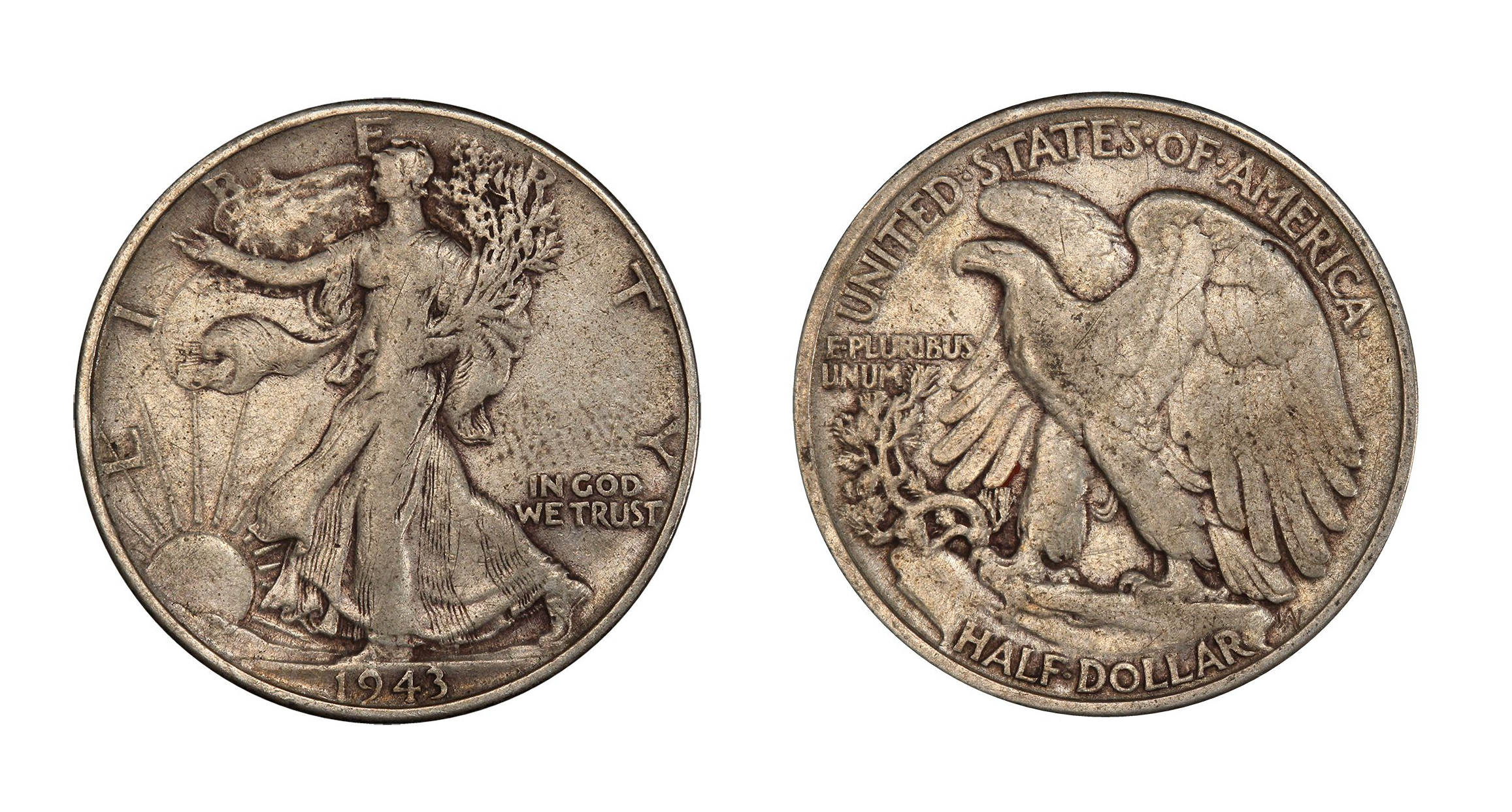
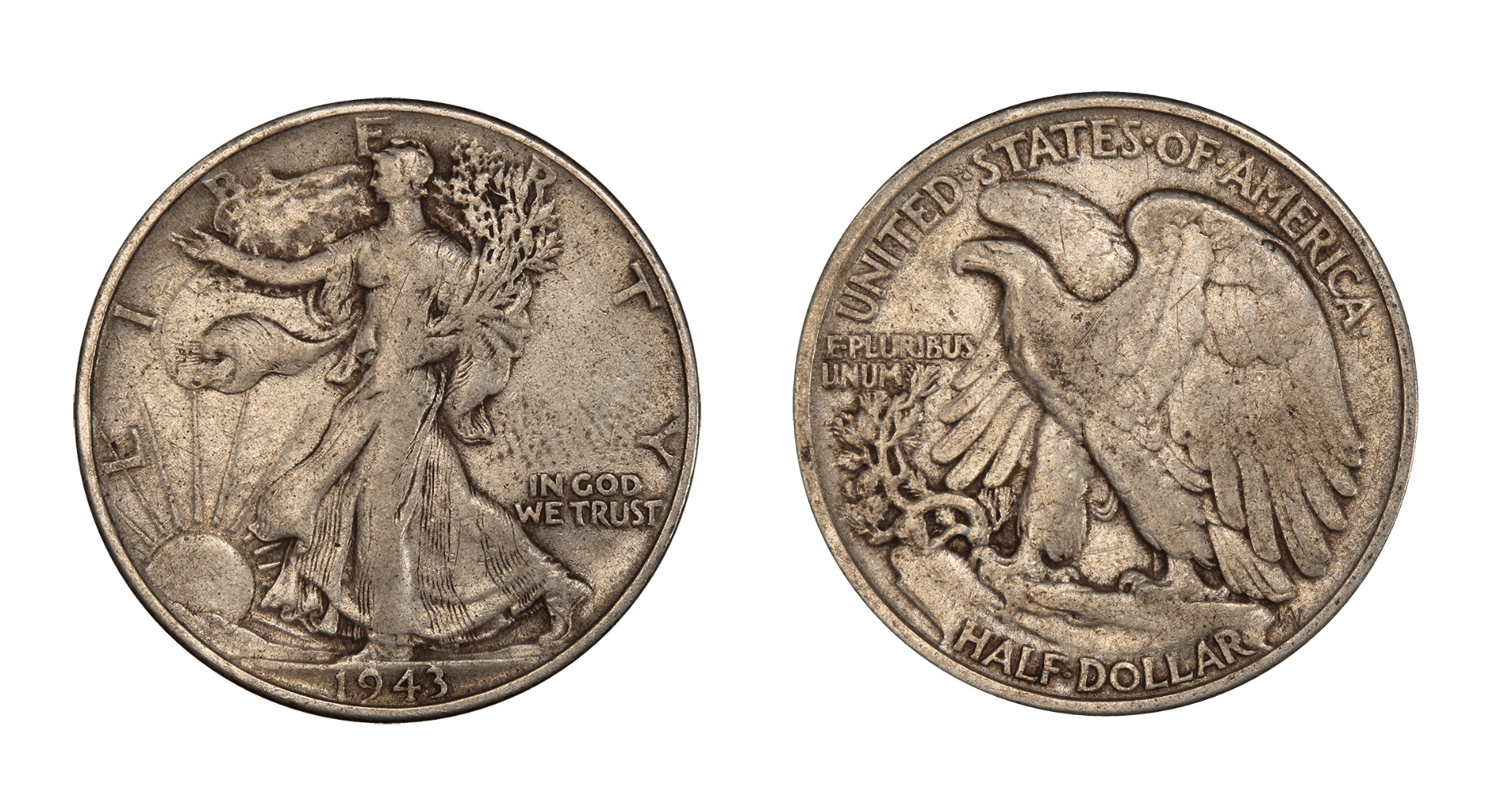
The design first appeared on the 90% silver Walking Liberty Half Dollar, minted from 1916 to 1947, and was later revived on the American Silver Eagle in 1986.
The design also appears on modern silver rounds and replicas. Collectors value original Walking Liberty Half Dollars for:
-
Historic significance: they circulated during a period of major U.S. social and economic change.
-
Design appeal: Weinman’s artwork is widely regarded as one of the most beautiful designs in American coinage.
-
Silver and numismatic value: each coin contains about 0.3617 troy ounces of silver, with additional value influenced by condition, year, mint mark, and rarity.
Walking Liberty Half Dollar Key Dates and Rarity Chart
|
Walking Liberty Half Dollar Key Date |
Auction Grade |
PCGS Price Guide |
Auction Record |
SD's Take |
|---|---|---|---|---|
|
1918-D |
MS66+ |
up to $375,000 |
$340,750 |
Gem Mint State coins are exceptionally scarce despite a mintage of more than 3.8 million. |
|
1919-D |
MS66 |
up to $350,000 |
$270,250 |
Only 1,165,000 were minted, and most entered circulation and became heavily worn, making fully struck Gem examples exceptionally rare. |
|
1921-S |
MS66 |
up to $275,000 |
$188,000 |
Only 548,000 were minted, and extensive circulation has left fewer than 200 certified Mint State survivors, making high-grade examples exceptionally rare. |
|
1921-D |
MS66 |
up to $175,000 |
$168,000 |
Only 208,000 were minted, and top-grade survivors are extraordinarily scarce, with just a handful certified in MS66 and none finer. |
|
1917-S Obverse Mint Mark |
MS67 |
up to $175,000 |
$152,750 |
Fewer than 1 million were minted, and high-grade survivors are exceptionally rare, with the featured MS67 example recognized by Heritage Auctions as the sole finest known. |
The values shown combine the PCGS Price Guide, which provides estimated market values by date and grade as of October 2026, with PCGS Auction Prices, which record actual realized sales.
What Is The American Silver Eagle?
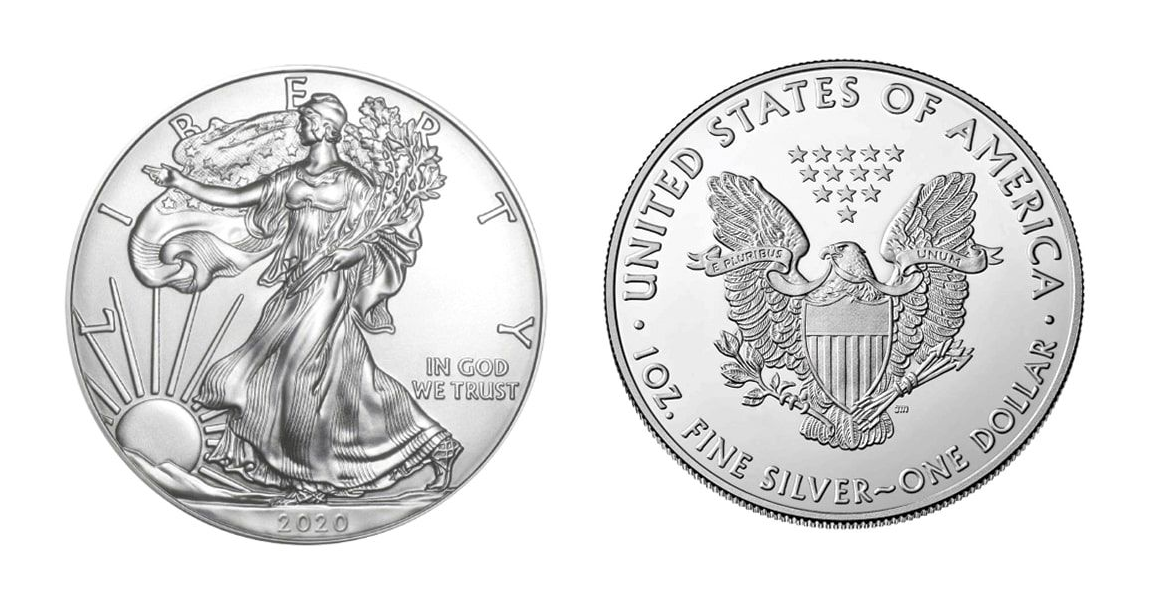
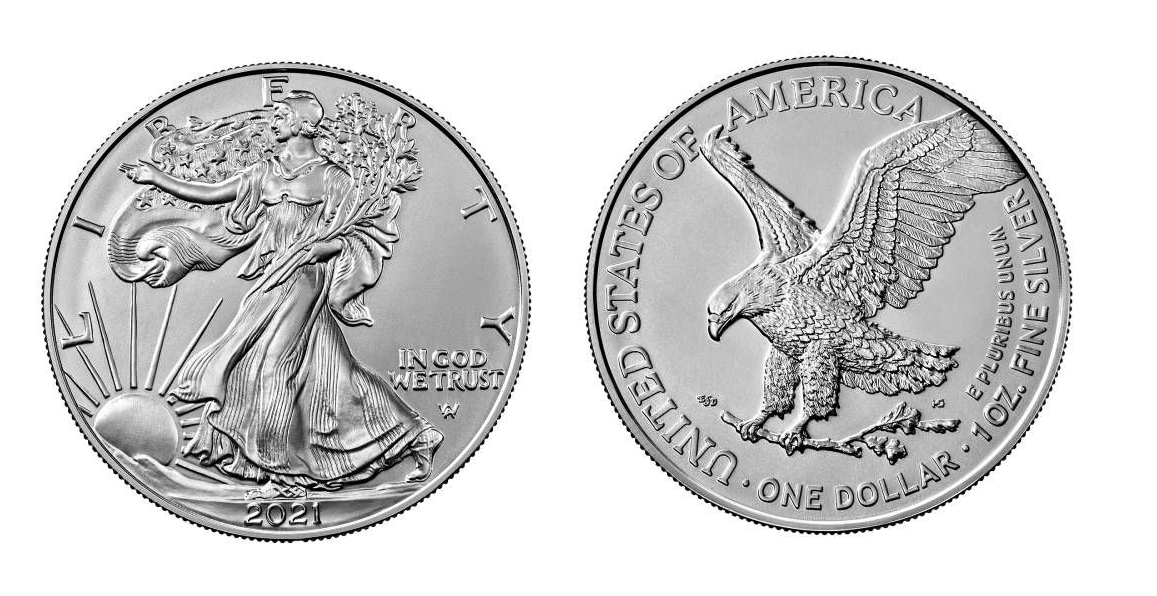
The American Silver Eagle is the official U.S. silver bullion coin, with a $1 face value, introduced in 1986 and containing one troy ounce of .999 fine silver. Weinman’s Walking Liberty design, first created in 1916, was revived for the Silver Eagle decades later and remains on the obverse.
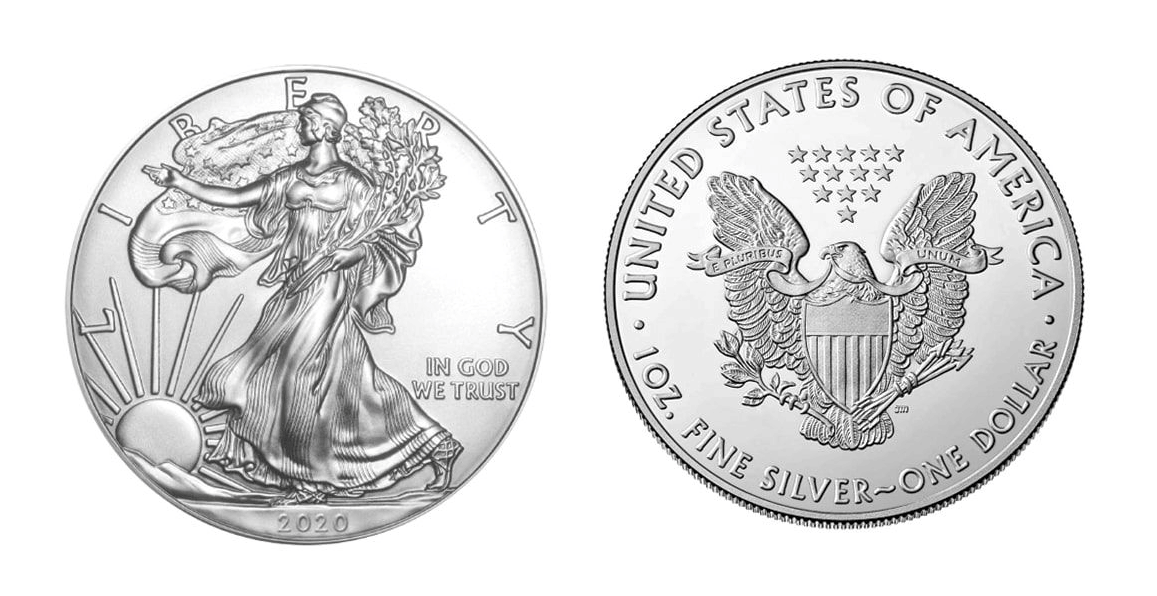
The original reverse was used through 2020, before a redesigned eagle reverse, known as Type 2, debuted in 2021.
Compare Type 1 and Type 2, respectively:
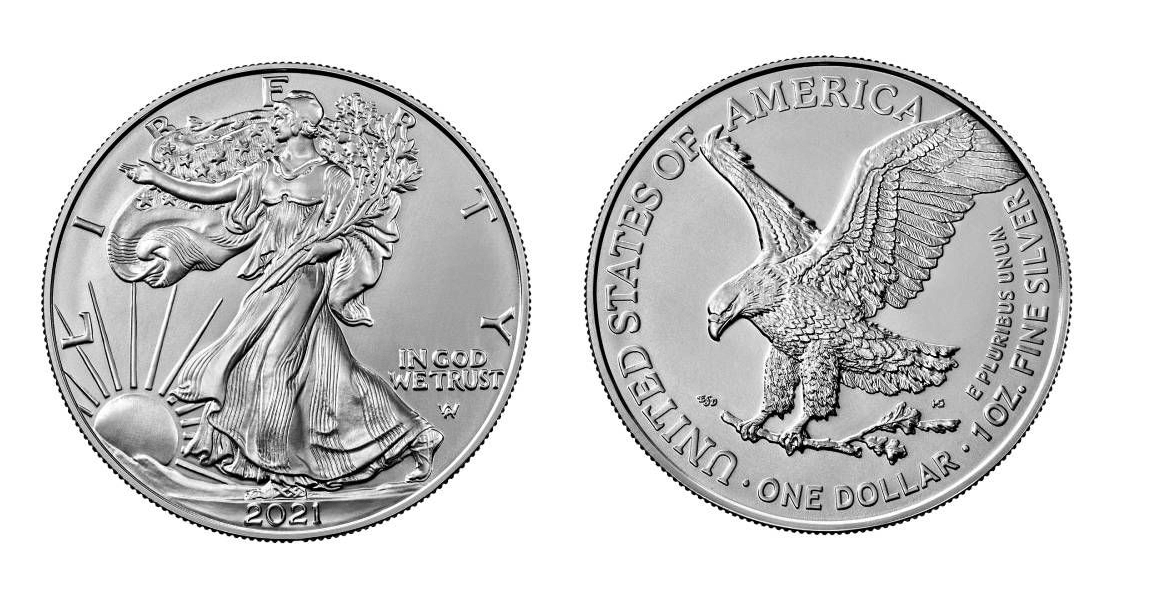
Investors value the Silver Eagle Bullion coin mainly because:
-
Recognizability and liquidity: US Mint distribution supports a broad two-way bullion market.
-
Government guarantee: the US government guarantees each coin’s weight, content, and purity.
-
IRA eligibility: one-ounce U.S. Treasury silver coins can qualify for IRAs when held according to IRS custody requirements.
The United States Mint began the American Silver Eagle program after Senator McClure introduced the Liberty Coin Act in 1985, with the first coin struck on October 29, 1986. Its original reverse featured a heraldic eagle beneath thirteen five-pointed stars, while the 1995-W Proof was struck at the West Point Mint.
The program initially relied on stockpiled silver from the National Defense Stockpile and U.S. domestic production. In 2002, legislation allowed the Mint to purchase silver on the open market.
Silver American Eagle key dates and rarity chart
|
American Silver Eagle |
Grade |
PCGS Price Guide |
Auction Record |
SD's take |
|---|---|---|---|---|
|
1995-W Proof Silver Eagle |
PR70DCAM |
$16,750 |
$86,655 |
Only 30,125 Proofs were minted, and perfect PR70DCAM examples are exceptionally rare, with just eight graded at that level by PCGS in the cited auction listing. |
|
1991 Silver Eagle |
MS70 |
$1,550 |
$34,500 |
The 1991 Silver Eagle is valuable in MS70 because early-date Silver Eagles rarely survive in perfect condition, creating a sharp premium over more common MS69 examples despite a mintage of more than 7.1 million coins. |
|
2000 Silver Eagle |
MS70 |
$3,250 |
$33,275 |
Most examples grade around MS68–MS69, while flawless MS70 coins are much harder to find despite the issue’s relatively high overall mintage. |
|
1999 Silver Eagle |
MS70 |
$8,000 |
$33,110 |
Perfect examples are a small fraction of certified coins, even though the year had the highest Silver Eagle mintage of the 1990s. |
|
1988 Silver Eagle |
MS70 |
$2,350 |
$27,500 |
Top-grade examples are far scarcer than MS69 coins, while 1988 also marked the first year production was split between San Francisco and West Point, with hundreds of thousands struck at West Point. |
We personally selected these coins by comparing PCGS auction records, Price Guide values, and top-grade scarcity.
At-a-Glance Comparison Table: Walking Liberty vs Silver Eagle
|
Factor |
Walking Liberty Half Dollar |
American Silver Eagle |
|---|---|---|
|
Best for |
Collectors and fractional silver stackers |
Bullion investors prioritizing liquidity |
|
Silver content |
90% silver, about 0.3617 troy oz |
.999 fine silver, 1 troy oz |
|
Typical premium |
Varies by date, condition, and numismatic value |
Generally carries a higher bullion premium |
|
Weight |
12.5 g total weight |
1 troy oz of silver |
|
Liquidity potential |
Strong, especially for recognizable common dates |
Very high due to broad market recognition |
|
Face value |
$0.50 |
$1 |
|
Legal tender |
Issued as circulating U.S. legal tender |
U.S. government-backed legal-tender bullion coin |
|
Coin type |
Historic circulating silver coin |
Modern American Eagle coin |
Table Takeaway: Walking Liberty Half Dollars offer fractional silver and greater historical appeal, while American Silver Eagles provide more silver per coin, standardized purity, and stronger bullion-market liquidity.
Buyers can compare current pricing and availability on SD Bullion’s Walking Liberty Half Dollar and American Silver Eagle product pages before deciding which format better fits their stacking or collecting goals.
Premiums And Cost: Walking Liberty Versus American Silver Eagle Coins
Walking Liberty Half Dollars can provide more silver per dollar at lower premiums, while Silver Eagles cost more per ounce in exchange for standardized one-ounce sizing, U.S. government-guaranteed purity, and stronger bullion-market recognition.
Dealer premiums determine how much above silver’s melt value buyers must pay to purchase silver. Walking Liberty Half Dollars contain 90% silver, while American Silver Eagles contain one full troy ounce of .999 fine silver.
Recent 2026 dealer data shows Walking Liberty Half Dollar lots trading around spot to roughly a 1% premium, while random-year Silver Eagles have commonly carried premiums of about 3% to 7%, with current-year coins sometimes higher.
|
Purchase |
Approx. Silver |
Recent SD Bullion Price |
Approx. Cost per Oz* |
|---|---|---|---|
|
$10 Face Walking Liberty Half Dollars |
7.15 oz |
$450 |
$63/oz |
|
1 Random-Year Silver Eagle |
1 oz |
$65 |
$65/oz |
|
20 Random-Year Silver Eagles |
20 oz |
$1,500 |
$75/oz |
|
100 Random-Year Silver Eagles |
100 oz |
$7,500 |
$75/oz |
*The last column, Approx. Cost/Oz, show how much you are paying for each ounce of silver after accounting for the total purchase price. The formula is:
Cost per oz = Total price ÷ Total ounces of silver
Prices are examples from recent SD Bullion listings and are subject to change with the silver spot price and inventory.
Design, Collector Appeal, And Numismatic Value
Walking Liberty Half Dollars with their longer series, historic circulation, key dates, mint-mark varieties, and proof issues generally offer more traditional numismatic depth. Silver Eagles are the stronger alternative for collectors who prefer modern U.S. coins, special finishes, and limited-edition releases.
Adolph A. Weinman’s Walking Liberty design debuted on the half dollar in 1916 and later became the obverse of the American Silver Eagle, linking two major chapters of U.S. coin history. Key Walking Liberty collectibles highlighted here include the 1918-D, which sold for $340,750 in 2021; the 1919-D, at $270,250 in 2004; the 1921-S, at $188,000 in 2016; the 1921-D, at $168,000 in 2018; and the 1917-S Obverse Mint Mark, at $152,750 in 2015.
Silver Eagle collectibles highlighted here include the 1995-W Proof, which sold for $86,655 in 2013; the 1991 Silver Eagle, at $34,500 in 2009; the 2000 Silver Eagle, at $33,275 in 2013; the 1999 Silver Eagle, at $33,110 in 2013; and the 1988 Silver Eagle, at $27,500 in 2013.
Specifications And Silver Bullion Quality
Both one-ounce Walking Liberty silver rounds and American Silver Eagles can contain 1 troy ounce of .999 fine silver, but Silver Eagles add U.S. Mint specifications, government-guaranteed weight and purity, and standardized production.
Modern Silver Eagles also include anti-counterfeiting features introduced with the 2021 redesign, including a variation in the reeded-edge pattern. The coin weighs 1 troy ounce, measures 40.6 mm in diameter, and has a reeded edge.
Private Walking Liberty rounds can offer the same silver weight and fineness, often at lower premiums, but minting standards, finish, and security features depend on the private mint that produced them. Silver Eagles therefore offer greater consistency and authentication features, while rounds may be preferable when lower acquisition cost is the priority.
Resale Potential And Market Conditions
The American Silver Eagle generally has stronger resale potential because of its global recognition and established secondary market, especially during periods of economic uncertainty. The U.S. Mint distributes American Eagle bullion coins through Authorized Purchasers to support a two-way market for buying and selling bullion.
Market stress can increase both demand and premiums. In 2008, demand for Silver Eagles surged during the recession, contributing to supply pressure; sales were temporarily suspended in February as demand outpaced availability. Similar pressure later led the U.S. Mint to use allocation programs, while demand remained exceptionally strong into 2009 and 2010.
Silver Eagles can retain substantial premiums during volatile markets because of their recognition and liquidity. Walking Liberty-style silver rounds may perform better on a percentage basis when purchased at much lower premiums, making them more cost-efficient when maximizing silver exposure per dollar is the priority.
Which Should You Choose? Recommendations By Buyer Type
Walking Liberty rounds can win on price and design variety, but Silver Eagles offer the broader combination of liquidity, standardized specifications, government backing, and collector demand.
-
IRA buyers: American Silver Eagles are the better fit because qualifying bullion American Silver Eagles can be held in precious metals IRAs when IRS custody requirements are met.
-
Liquidity-focused stackers: Silver Eagles generally offer stronger recognition in the U.S. and global bullion market, which can make resale easier.
-
Budget stackers: Walking Liberty-style silver rounds may provide lower premiums and more silver per dollar while still offering the familiar Weinman design.
-
Design-focused buyers: Private Walking Liberty rounds offer greater variety in finishes, formats, and interpretations than standard American Eagle bullion coins.
-
Collectors: Holding both can provide exposure to classic Walking Liberty designs and modern Silver Eagle proof, burnished, graded, and special-issue coins.
How To Buy And Authenticate Walking Liberty Or Silver Eagle Coins
Buy Walking Liberty Half Dollars and American Silver Eagles from established authorized dealers, reputable coin shops, or trusted secondary-market sellers. When checking a coin at home, compare its measurements with the expected specifications:
|
Coin |
Weight |
Diameter |
Thickness |
Composition |
|---|---|---|---|---|
|
Walking Liberty Half Dollar |
12.50 g |
about 30.0 mm |
about 2.15 mm |
90% silver, 10% copper |
|
American Silver Eagle |
31.103 g / 1 troy oz silver |
40.60 mm |
about 2.98 mm |
99.9% silver |
PCGS lists Walking Liberty Half Dollars at 12.50 grams with a reeded edge and a diameter of roughly 30 mm, while the U.S. Mint specifies Silver Eagles at 31.103 grams and 40.60 mm in diameter.
Use a precise scale for weight and digital calipers for diameter and thickness. Also inspect lettering, design details, mint marks, and edge reeding for inconsistencies. Normal circulation wear can slightly reduce the weight of older Walking Liberty Half Dollars, so measurements alone should not determine authenticity.
For rare dates, proof coins, graded coins, or other high-value pieces, third-party authentication from PCGS or NGC provides stronger verification than home testing alone.
Do Walking Liberty coins and Silver Eagles both contain one troy ounce of silver?
No. Original Walking Liberty Half Dollars contain about 0.3617 troy ounces of silver and are 90% silver and 10% copper. American Silver Eagles contain one full troy ounce of .999 fine silver. Private Walking Liberty-style rounds may also contain one troy ounce, depending on the product.
Does face value affect the resale value of Walking Liberty or Silver Eagle coins?
Usually not directly. Walking Liberty Half Dollars have a $0.50 face value, and Silver Eagles have a $1 face value, but both commonly trade for substantially more due to their silver content, premiums, condition, scarcity, and collector demand. Their legal-tender denomination is generally not the primary factor determining bullion resale value.
Are Walking Liberty silver rounds legal tender?
No. Privately minted Walking Liberty rounds are not U.S. legal tender, even when they reproduce or reinterpret Weinman’s famous design. Original Walking Liberty Half Dollars, however, were issued by the United States Mint as $0.50 legal-tender coins. American Silver Eagles are also U.S. legal tender with a $1 face value.
Closing Notes And Evidence Anchors
Premiums and resale conditions change with the silver market. In September 2026, tracked Walking Liberty Half Dollar premiums averaged about 0.86% over melt, while Silver Eagle premiums varied by dealer and market conditions. The U.S. Mint’s Authorized Purchaser network also supports an active two-way market for American Eagle bullion.
Before buying, compare live premiums and melt values through third-party price trackers, and verify coins with a precise scale, digital calipers, or PCGS/NGC authentication for higher-value pieces.
Choose based on your priority: Walking Liberty Half Dollars favor lower-cost fractional silver, while Silver Eagles favor standardized one-ounce bullion and liquidity. SD Bullion offers both, allowing buyers to compare current pricing and availability before purchasing.
What are the main differences between Walking Liberty half dollars and American Silver Eagles?
Walking Liberty Half Dollars are 90% silver circulating coins minted from 1916 to 1947, while American Silver Eagles are modern one-ounce .999 fine bullion coins introduced in 1986. Half dollars carry a $0.50 face value and stronger historical appeal; Silver Eagles carry a one-dollar face value, U.S. government backing, and broader bullion-market recognition.
Why does the American Silver Eagle use the Walking Liberty design?
The American Silver Eagle uses Adolph A. Weinman’s Walking Liberty design because it is one of the most admired designs in U.S. silver coinage. The U.S. Mint revived the 1916 design when the American Silver Eagle program began in 1986. The obverse includes the word LIBERTY, while the reverse design was replaced in 2021.
How to tell if a Walking Liberty coin is a half dollar or a Silver Eagle?
Check the size, denomination, and silver content. A Walking Liberty Half Dollar weighs 12.5 grams, measures about 30 mm, and is marked HALF DOLLAR. A Silver Eagle contains one troy ounce of .999 silver, measures 40.6 mm, and carries a one-dollar denomination. Proof and collector Silver Eagles may also display mint marks identifying the production facility (S-San Francisco, W- West Point, Philadelphia mint).
Why do Walking Liberty halves often trade at higher/lower prices than Silver Eagles for similar silver weight?
Their prices reflect more than intrinsic value. Common Walking Liberty Half Dollars may trade near melt, while rare dates, mint marks, and higher grades can carry substantial numismatic premiums. Silver Eagles usually carry stronger standardized bullion premiums because of U.S. Mint recognition, one-ounce sizing, and resale demand, especially during periods of high demand.
How does coin grading (MS, AU, PR, details) impact the value of Walking Liberties compared with graded Silver Eagles?
Grading can affect Walking Liberty Half Dollars more dramatically because date, mint mark, scarcity, and condition drive numismatic value. MS and AU examples can command large premiums over worn coins, while PR identifies proof coins. Graded Silver Eagles also gain premiums for high grades, special finishes, and West Point coins, but common bullion issues are generally less date-sensitive.
What typical premiums over spot do collectors pay for Walking Liberty halves compared to Silver Eagles?
Premiums vary with silver prices, condition, and availability. Common Walking Liberty Half Dollars can trade close to melt, while scarce dates may command numismatic premiums far above spot. Silver Eagles typically carry a higher standardized bullion premium; the U.S. Mint currently charges Authorized Purchasers the silver benchmark plus a per-coin premium before dealer markups.
Which is more liquid internationally, Walking Liberty halves or American Silver Eagles, and why?
American Silver Eagles generally have greater international liquidity because they are standardized one-ounce bullion coins backed by the U.S. government and distributed through the U.S. Mint’s Authorized Purchaser network. The Mint describes that network as supporting a two-way market for buying and selling bullion. Walking Liberty Half Dollars remain recognizable, but their resale value depends more on condition and numismatic factors.