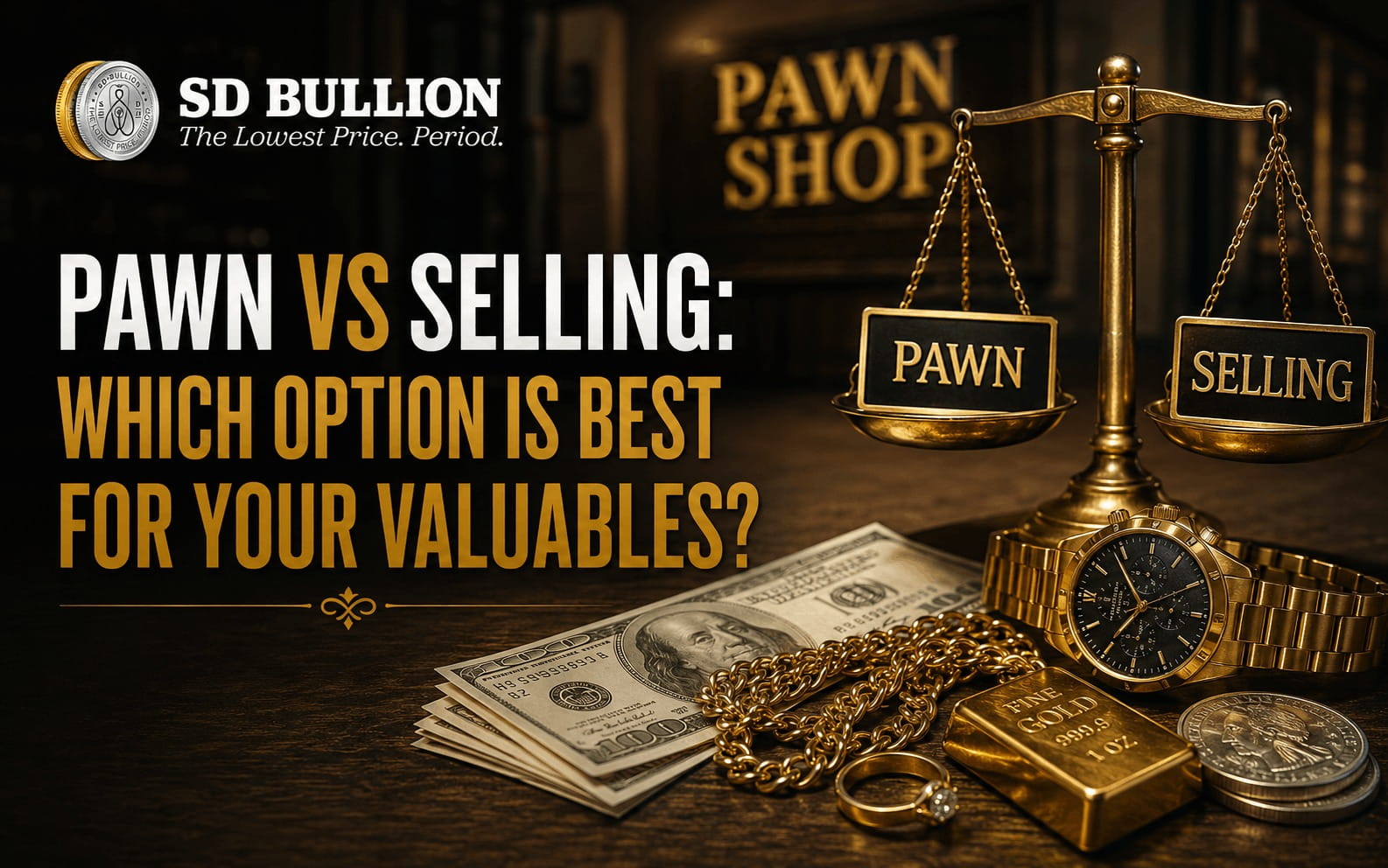
Pawn shops typically lend about 25% to 60% of an item's estimated resale value, while selling generally provides a higher upfront payment because ownership transfers to the buyer. Pawning is often the better choice if you want temporary access to cash, can meet the repayment terms, and want the option to retrieve your valuables later.
This guide compares how both options work, what affects the amount you receive, and the advantages of each approach.
Key Takeaways
-
The main difference between pawning and selling is ownership. Selling transfers ownership permanently in exchange for immediate payment, while pawning lets you retrieve your item after you pay back the loan and any applicable interest and fees.
-
A pawn shop can provide quick cash without a credit check. Pawn loans are based on an item's estimated resale value rather than the borrower's credit history, and many transactions are completed in just minutes.
-
Selling generally provides more money because the buyer acquires full ownership. Pawn loans provide a cash loan based on the item's estimated resale value, while selling typically offers a higher upfront payment with no repayment obligation.
-
Most pawn customers retrieve their valuables. According to the National Pawnbrokers Association, approximately 85% of pawn customers redeem their collateral, showing that most pawn loans end with borrowers recovering their pledged property.
Jump to: What Is a Pawn Loan | How to Pawn Items | Selling items for more money | Pawning vs Selling | How to Recover a Pawned Item | Can you Pawn Gold? | Is it Better to Pawn or Sell Gold? | Pawning or Selling?
What Is a Pawn Loan?
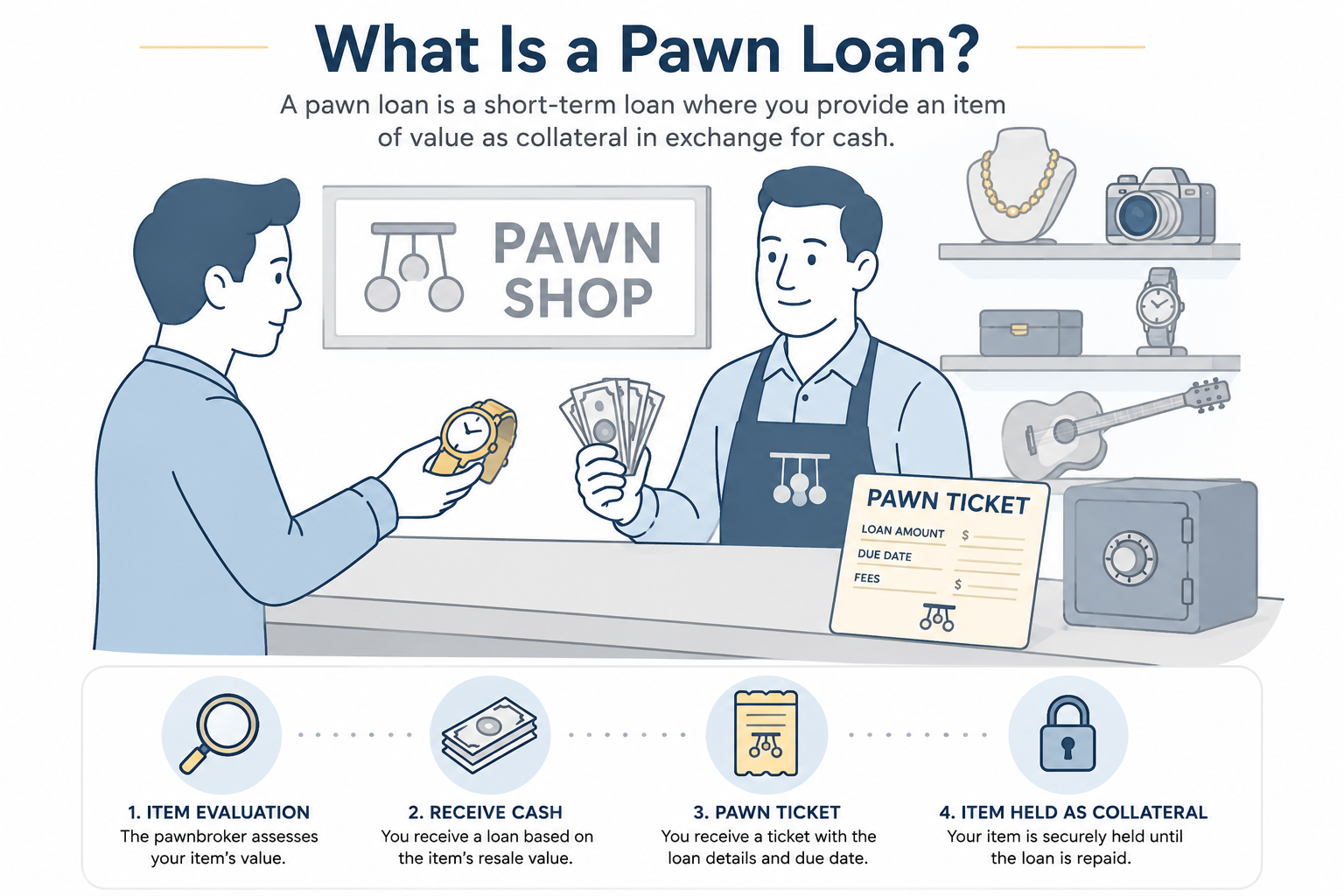
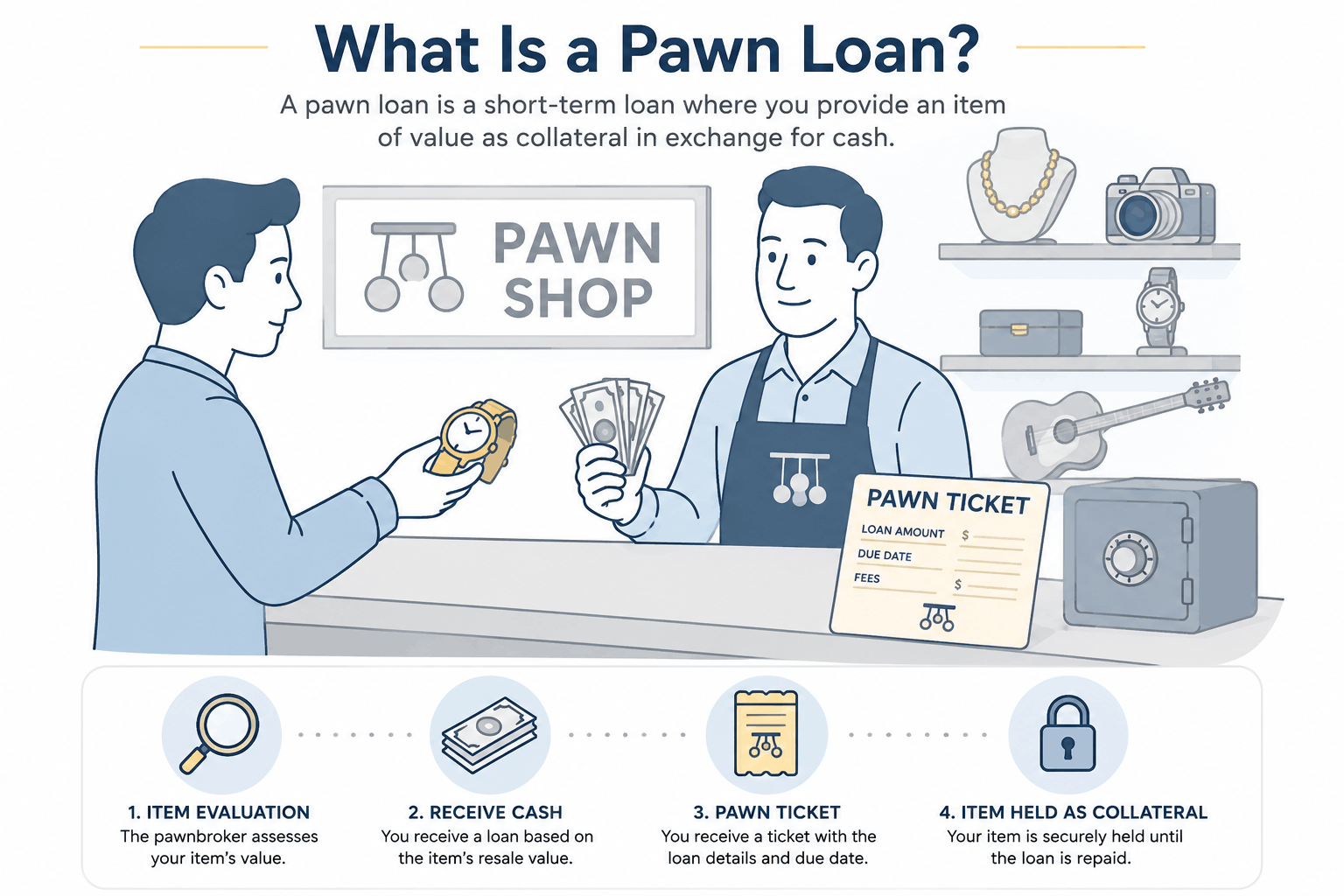
A pawn loan is a secured loan in which you simply bring a valuable item to a pawnshop as collateral in exchange for short-term funds. These loans are non-recourse, collateral-based loans, meaning the pledged item secures the loan rather than the borrower's credit history.
Pawn transactions are often completed in just minutes because the loan is based on the value of personal property rather than the borrower's income or credit qualifications. Common items accepted include gold, jewelry, watches, electronics, and other valuables with established market demand.
The average pawn loan nationwide is less than $180, according to the National Pawnbrokers Association, and pawnbrokers make thousands of loans every day for less than $50, although loan amounts vary based on the item's resale value and local market conditions.
Do Pawn Loans Require a Credit Check?
No. Pawn loans are collateral-based rather than credit-based, so pawnshops do not perform credit checks or report loans to consumer credit agencies.
The National Pawnbrokers Association also notes that pawn loans have no effect on a consumer's credit history because they are secured by the pledged item rather than the borrower.
How Long Does a Pawn Loan Last?
Pawn loan periods vary by state and pawn shop. For example, Florida law sets a 30-day maturity date, while California requires pawn loan contracts to provide a minimum loan period of four months. Some states also provide additional redemption periods or allow loan extensions.
If you pay back the loan, plus any applicable interest and fees, before the applicable redemption period expires, you can retrieve your item and retain ownership.
Check your state’s pawn laws and the specific terms on your pawn ticket to confirm the loan period, redemption deadline, fees, and extension options that apply to you.
How Much Interest Do Pawn Shops Charge?
Pawn shop interest rates and fees vary by state, so the cost of pawning can depend on where the transaction takes place. In Florida, for example, the maximum combined interest and pawn service charge is 25% per month, according to the Florida Department of Agriculture and Consumer Services. Florida consumers also have 60 days from the pawn date to redeem their merchandise by paying the principal and finance charge.
What Happens If You Don't Repay the Loan?
The item may then be offered for sale to recover the loan amount and related costs. Because pawn loans are non-recourse, borrowers typically do not owe additional money after forfeiting the pledged collateral.
According to the National Pawnbrokers Association, approximately 85% of pawn customers redeem their collateral, showing that most pawn loans end with customers recovering their pledged property.
How to Pawn Items at a Pawn Shop
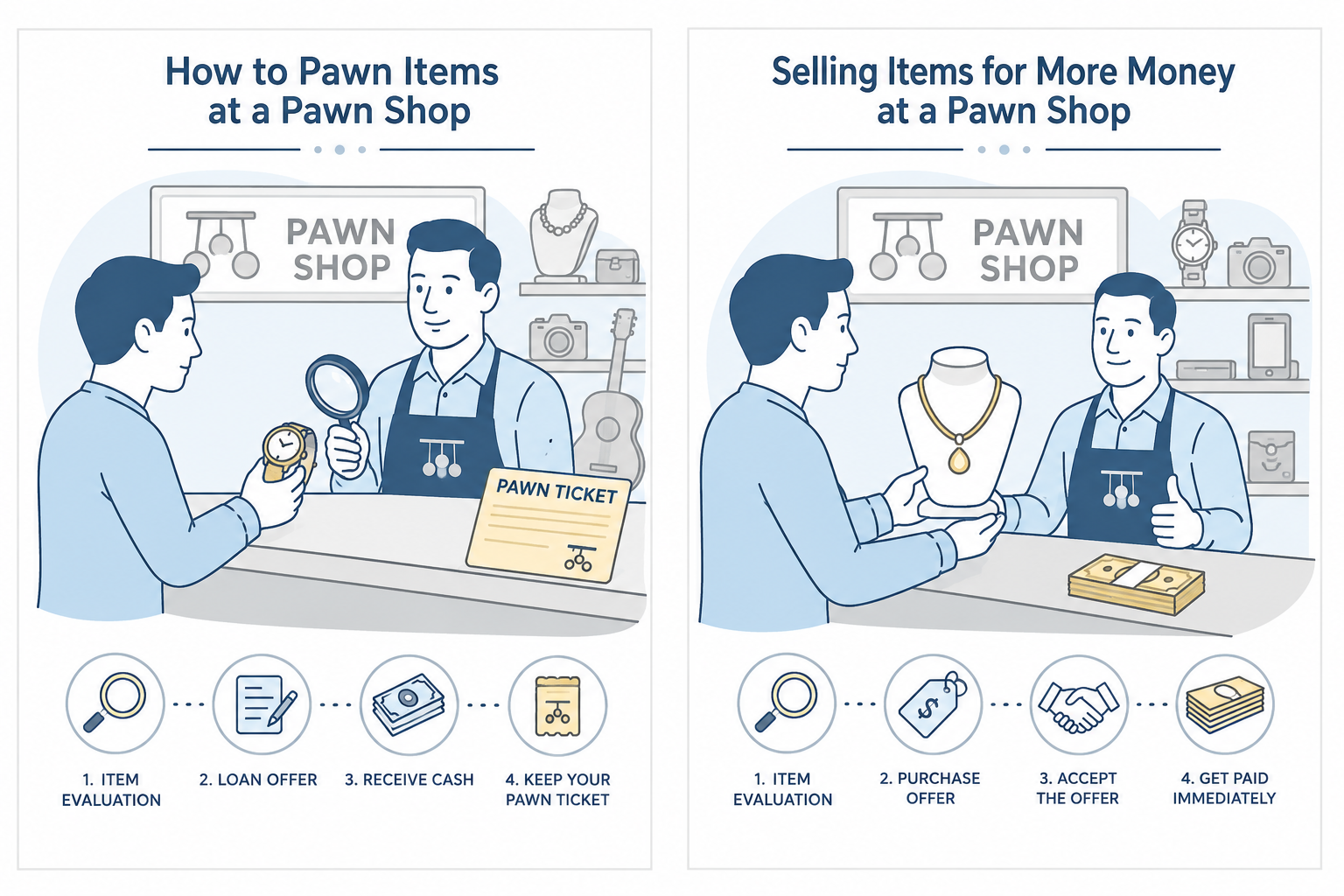
To pawn an item, you have to bring a valuable such as gold, jewelry, electronics, or bullion and a valid government-issued photo ID to a pawn shop. The pawnbroker evaluates the item's condition, authenticity, resale value, and current market demand before making a loan offer.
If you accept the offer, you'll receive payment and a pawn ticket listing the loan amount, repayment terms, deadline, interest, and applicable fees. If you decline, you can take the item back with no obligation to complete the transaction. Many pawn shops complete the entire evaluation and payment process during a single visit.
What ID Do You Need to Pawn an Item?
Pawn shops generally require a valid government-issued photo ID to complete a pawn transaction. Identification requirements vary by state and pawn shop, so additional information or proof of ownership may be required depending on the item and local regulations.
How Are Pawn Transactions Regulated?
Selling Items for More Money at a Pawn Shop
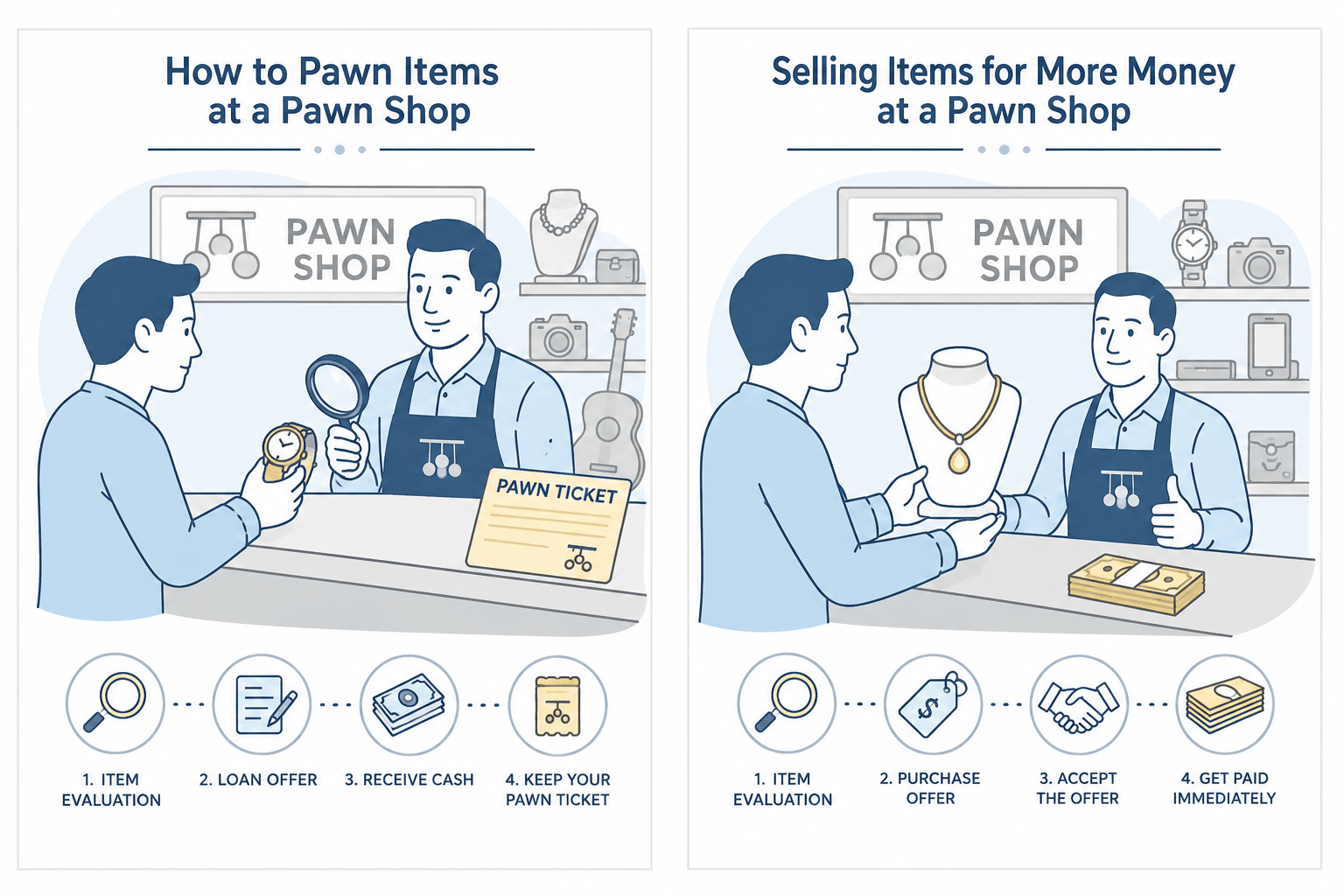
Selling generally results in a higher upfront payment than a pawn loan because the buyer assumes full ownership and the pawnshop can immediately prepare the item for resale. The final offer depends on the item's condition, authenticity, and current market demand.
Unlike a pawn loan, selling does not involve repayment, interest, or redemption periods. Once the sale is complete, ownership permanently transfers to the buyer.
Pawning vs Selling: Key Differences
|
Feature |
Pawning |
Selling |
|---|---|---|
|
Purpose |
Receive a cash loan using the item as collateral while keeping the option to retrieve it later, unlike selling. |
Receive more money by transferring ownership to the buyer permanently. |
|
Ownership |
You keep ownership if you repay the loan within the agreed loan period. |
Ownership transfers to the buyer once the sale is complete. |
|
Payment |
Loan amount is based on the item's estimated resale value and local market conditions. (typically 30-60% of the item's resale value) |
Selling an item often provides a higher upfront payment because the buyer acquires full ownership. (usually provides 60-80% of the item's value.) |
|
Future Obligation |
You must repay the loan, plus applicable interest and fees, to redeem the item. |
No repayment, interest, or future financial obligations. |
|
Best For |
Makes sense if you need fast cash but want to keep the item. |
It makes sense if you no longer need the item and want to maximize its total value. |
|
Typical Process |
A local pawn shop evaluates the item, and many customers receive money in just minutes if they accept the loan offer, without extensive negotiations. Pawn shops, in most cases, do not require credit checks for pawning items, making this option accessible to many borrowers. |
The buyer evaluates the item and makes a purchase offer. If you accept the deal, ownership transfers immediately. Neither pawning nor selling usually requires a credit check. Instead, both transactions are based on the value of the item, allowing borrowers and sellers to access quick cash without affecting their credit scores. |
|
Transaction Speed |
Many pawn shops complete the evaluation and loan offer during the same visit. |
Selling to a pawn shop is typically quicker than selling through online marketplaces because payment is made once the offer is accepted. |
|
Key Considerations |
Loan amount depends on the item's resale value, condition, and other factors, including local market demand. |
Payment depends on the item's condition, authenticity, demand, and other market factors. |
How To Recover a Pawned Item
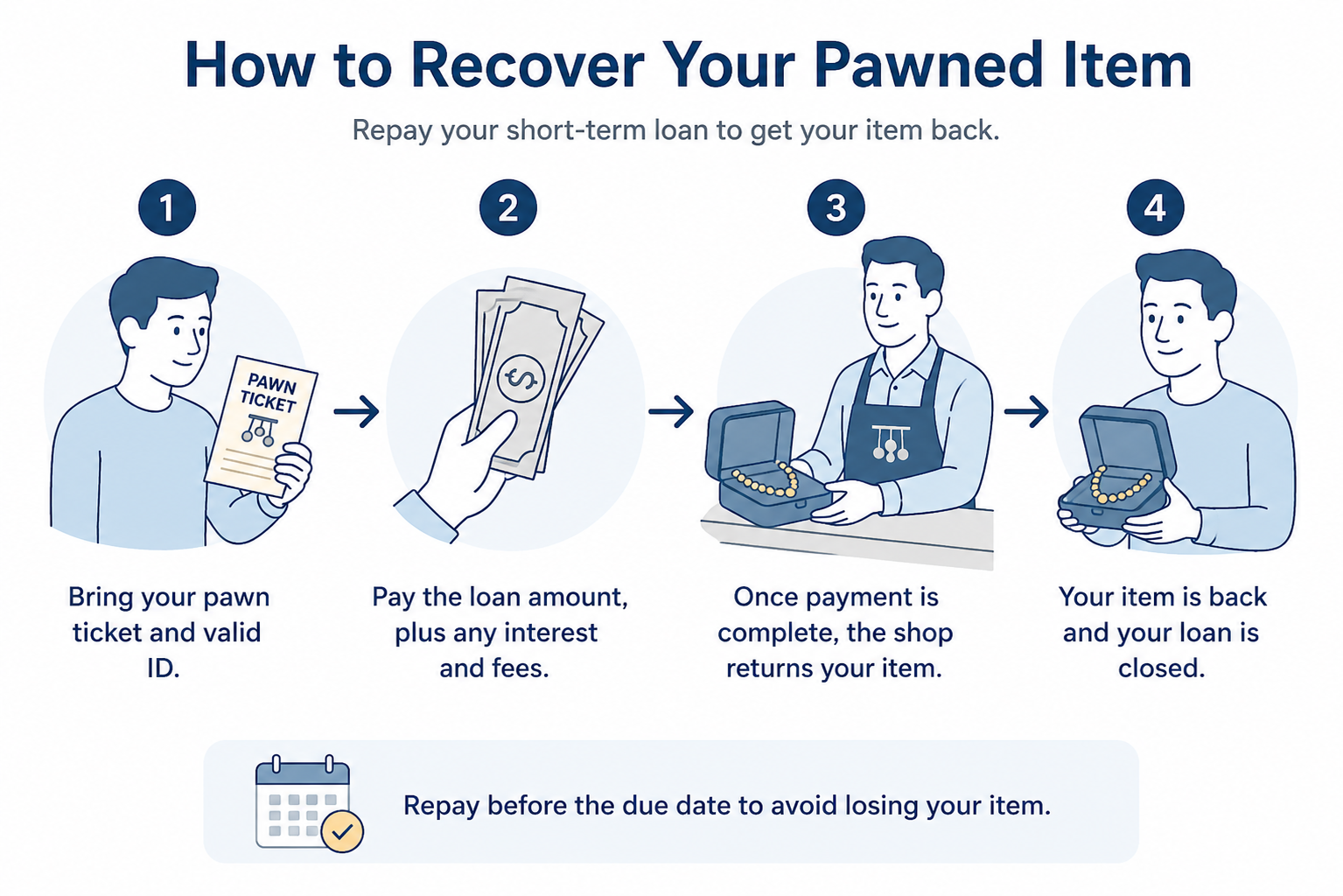
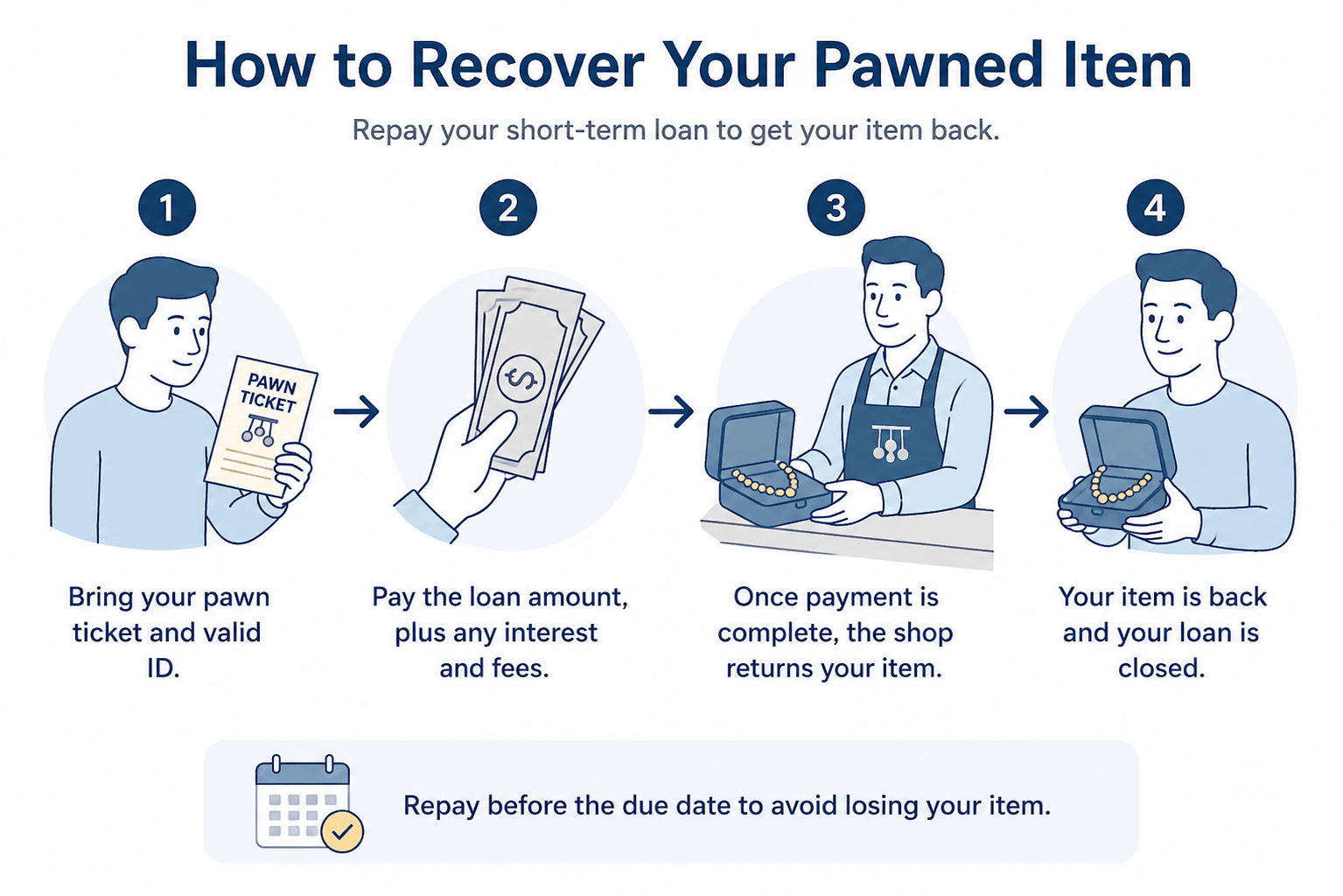
To recover a pawned item, you must pay back the loan before the agreed loan period expires. The repayment amount includes the original short-term loan, plus any applicable interest and fees.
Once payment is complete, the pawn shop returns your item, and the transaction ends.
Unlike selling items, redeeming a pawned item allows you to regain ownership after using it to access temporary funds or quick cash. If you cannot repay the loan by the deadline, many pawn shops may offer a renewal or extension, although policies vary by location and applicable state law.
Can You Pawn Gold Jewelry and Gold Bullion?
Yes. Pawn shops may accept both gold jewelry and investment-grade gold bullion, but they are evaluated differently. Jewelry offers can depend on gold purity, weight, condition, craftsmanship, and resale demand, while bullion coins and bars are more closely evaluated according to metal content, purity, weight, authenticity, and the current gold price.
For bullion, current spot prices provide an important reference point when evaluating an offer. As of August 2026, gold prices trade at approximately $4,400 per ounce and silver price at $66 per ounce, although actual pawn and buyback offers vary based on the product, purity, weight, condition, and dealer spread.
What Types of Bullion Can You Pawn or Sell?
Gold, silver, platinum, and palladium bullion can commonly be pawned or sold in the form of coins, bars, and rounds.
Recognized bullion products can also be easier for buyers to authenticate and resell. Popular examples include 1oz American Gold Eagles, 1oz American Silver Eagles, Gold Canadian Maple Leafs, and investment-grade bullion bars produced by refiners such as 1oz Gold Valcambi, and the 1oz gold Argor-Heraeus.
Unlike many local pawn shops that evaluate a broad range of secondhand goods, specialized precious metals dealers focus specifically on bullion.
For example, SD Bullion's buyback program purchases a wide range of investment-grade products, including gold, silver, platinum, and palladium coins and bars, while publishing transparent buyback pricing for many of its most commonly traded products.
Is It Better to Pawn or Sell Gold?
Selling gold is the better choice if you want to permanently convert the metal into cash, while pawning may be more suitable if you want temporary funds and intend to recover the gold after repayment.
For investment-grade bullion, comparing a local pawn shop offer with a specialized precious metals dealer can also help establish how the offer relates to the current spot price.
For bullion owners comparing selling options, SD Bullion has operated in the precious metals market since 2012 and is currently BBB Accredited with an A+ rating. Its buyback program purchases investment-grade gold, silver, platinum, and palladium products and publishes buyback pricing for commonly traded bullion.
Pawning or Selling: Which Is the Best Option?
If you need immediate cash and no longer want the item, selling typically provides a higher payment because the buyer can purchase it for resale and earn a profit. The main advantage of a pawn loan is the ability to retrieve the item after you pay back the loan.
Understanding the key differences between these options helps you choose the right approach. Compare the benefits, costs, and any applicable fees before making a decision, since these factors directly affect how much money you receive and the overall value of the transaction.
Selling gold or silver bullion? Compare SD Bullion's current buyback prices for gold, silver, platinum, and palladium coins and bars before accepting an offer. SD Bullion's buyback process lets sellers lock in a price, ship their metals for verification, and receive payment after the products are inspected and approved.
Disclaimer: This article is for informational and educational purposes only and does not constitute financial or legal advice. Pawn loan terms, repayment periods, interest rates, fees, and state regulations vary by pawn shop and jurisdiction. Always review the terms of any transaction before pawning or selling your valuables.