Gold and Silver Fall After Jackson Hole as Warsh, Bessent and McAlvany Shape the Precious Metals Outlook
- Gold and silver reversed late-week gains after Fed Chair Kevin Warsh’s Jackson Hole speech, with hawkish references to potential rate hikes helping trigger a Friday selloff. Silver ended the week at $66.22 per ounce, while gold price finished at $4,456 per ounce.
- The gold-to-silver ratio closed near 67, essentially flat for the week after briefly dipping below the key 66 level. The ratio remains an important indicator for whether silver can begin outperforming gold again.
- Warsh struck a hawkish tone at Jackson Hole, highlighting persistent inflation risks and suggesting rates could need to move higher if inflation fails to improve. The comments strengthened the U.S. dollar and pressured precious metals in the immediate market reaction.
- U.S. Treasury policy and geopolitical risks are becoming increasingly important drivers for bullion. Treasury Secretary Scott Bessent announced an aggressive sanctions campaign targeting Iran, including nearly 60 entities, individuals and vessels connected to oil, nuclear, missile, cyber and other networks.
- Institutional attitudes toward U.S. government debt and gold continue to shift. The update highlights reports of a major European pension fund sharply reducing its Treasury exposure while Fidelity International considers increasing its gold allocation beyond a previous 5% limit.
- Ray Dalio has renewed warnings about U.S. sovereign debt risks, recently discussing an allocation of as much as 15% to gold as a hedge against the possibility of a U.S. debt crisis within roughly three years. His broader argument centers on governments ultimately managing excessive debt through currency devaluation, money creation and artificially low real interest rates.
- Gold bullion investment demand remains an important pillar of the market, with the update pointing to increased ETF buying and continued heavy Chinese gold imports through July despite historically elevated domestic prices.
- India could emerge as a major catalyst for silver demand. Precious-metals import-duty increases have weighed heavily on Indian silver imports, but reports that those taxes could be reduced ahead of the country’s festival and wedding seasons could change the demand picture.
- Analyst David McAlvany remains bullish on gold despite the prospect of higher interest rates, arguing that concerns surrounding U.S. deficits and Treasury financing could increasingly outweigh the traditional headwind of higher yields. He expects gold could retest its January highs by late 2026 or the first quarter of 2027 and cites a year-end 2027 target around $6,875.
- Silver’s longer-term upside case may depend on renewed investor participation and a falling gold-to-silver ratio. McAlvany discusses a potential 40:1 ratio and $200 silver target over the next three years, while acknowledging the technical damage caused by silver’s correction from roughly $120. His thesis is that gold could lead the next precious-metals advance before investors increasingly turn toward lower-priced silver.
Gold and silver fall after Kevin Warsh strikes a hawkish tone at Jackson Hole, warning inflation risks could require higher rates and triggering a selloff.
Gold and silver markets ended a volatile week under pressure as Federal Reserve Chair Kevin Warsh’s Jackson Hole speech triggered a late-week selloff following gains through much of the week. Spot gold finished at approximately $4,456 per ounce bid, while spot silver price closed at $66.22 per ounce bid, leaving the gold-to-silver ratio near 67.
Beyond the immediate price action, investors were given plenty to consider. Warsh’s hawkish comments on inflation and interest rates, Treasury Secretary Scott Bessent’s escalating economic pressure against Iran, and David McAlvany’s bullish longer-term outlook for precious metals each highlighted different forces that could influence gold and silver prices moving forward.
Kevin Warsh’s Jackson Hole Speech Pressures Gold and Silver
Federal Reserve Chair Kevin Warsh took center stage Friday at the annual Jackson Hole Economic Policy Symposium, where central bankers, policymakers, economists and financial-market participants gathered to discuss the economic outlook.
Warsh avoided committing to specific forward guidance for monetary policy but expressed concern about elevated inflation. His comments also suggested interest rates could need to move higher if sufficient progress is not made in bringing inflation under control.
Fed Chair Kevin Warsh speech: https://www.federalreserve.gov/newsevents/speech/warsh20260828a.htm
Markets quickly interpreted the message as hawkish. References to rate hikes contributed to selling across perceived risk assets, while the U.S. dollar strengthened and gold and silver moved lower into the end of the week.
For precious metals, the immediate question is whether markets believe the Federal Reserve can maintain higher interest rates for an extended period. Higher yields and a stronger dollar can create short-term pressure on gold and silver, but the longer-term picture may become more complicated if elevated borrowing costs further increase the federal government's interest expense.
U.S. Treasury Policy Takes a Larger Role
While monetary policy remains important, the market update argues that investors should increasingly watch the U.S. Treasury and its response to government financing requirements.
The relationship between interest rates, federal borrowing costs and the enormous U.S. debt burden has become an increasingly important part of the gold market discussion. If rates remain elevated, refinancing government debt can become progressively more expensive, potentially putting additional pressure on federal finances.
That tension between fighting inflation and managing the government's borrowing costs could become an important macroeconomic theme for precious metals investors.
Scott Bessent Escalates Economic Pressure on Iran
Treasury Secretary Scott Bessent added another major variable to the precious metals outlook with a new sanctions campaign against Iran described in the market update as Operation Economic Outcast.
The Treasury campaign seeks to further isolate Iran from the international financial system, targeting nearly 60 entities, individuals and vessels associated with the country's oil revenues and nuclear, missile and cyber activities. The measures also raise the possibility of secondary penalties against foreign institutions conducting certain business with Iran.
Treasury also issued determinations covering five sectors—digital assets, technology, gold, aviation and shipping—that it says Iran uses to support its economy.
The potential consequences extend beyond Iran. More aggressive enforcement involving institutions in countries such as China could increase geopolitical and financial-market uncertainty.
For gold, heightened geopolitical tensions have historically been closely watched because periods of uncertainty can increase demand for perceived safe-haven assets. Silver may also react, although its dual role as both a precious and industrial metal means its price can respond differently to changes in economic expectations.
Institutional Investors Reconsider Gold and U.S. Treasuries
Another theme highlighted this week was the changing relationship between institutional investors, government debt and gold.
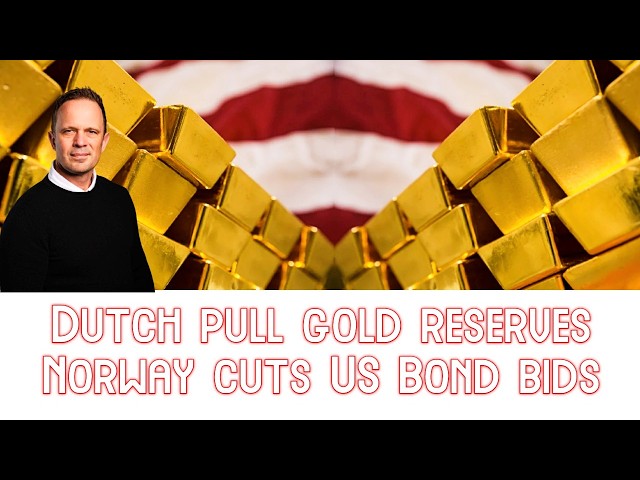
The market update points to reports that a major European pension fund has sharply reduced its exposure to U.S. Treasuries. Fidelity International is also reportedly increasing its exposure to gold and considering raising a previous 5% bullion allocation limit.
Ray Dalio has separately drawn attention for discussing an allocation of as much as 15% to gold in the context of hedging against the possibility of a U.S. debt crisis within roughly three years.
The update also notes increasing gold ETF buying and continued heavy Chinese gold imports through July despite historically elevated local gold prices.
Together, these developments reinforce one of the central questions facing precious metals markets: whether investors increasingly choose gold and silver bullion as concerns about sovereign debt, currencies and government finances grow.
India Could Become an Important Silver Catalyst
Silver investors are also closely watching developments in India.
Recent precious-metals import-duty increases have weighed on Indian silver imports, making the country a drag on physical demand. However, the market update points to reports that those tax increases could potentially be repealed or reduced ahead of India's important festival and wedding seasons.
A policy reversal could be significant because India has historically represented an important source of physical precious-metals demand.
For silver, renewed Indian buying could provide another source of demand at a time when investors are watching closely for evidence that the metal can regain momentum following its substantial correction.
David McAlvany Sees Gold Retesting Its Highs
Against the short-term pressure created by Warsh's Jackson Hole comments, analyst David McAlvany presented a much more bullish longer-term outlook during an interview discussed in this week's market update.
McAlvany questioned how aggressively the Federal Reserve can ultimately raise interest rates because higher rates also increase the Treasury's interest burden. He argued that growing concerns about the sustainability of U.S. deficits could eventually shift bond-market sentiment in favor of gold.
Following gold's substantial correction, McAlvany believes the metal could retest its January highs toward the end of 2026 or during the first quarter of 2027.
His longer-term projection is even more bullish, with a year-end 2027 gold estimate around $6,875 per ounce.
Could Silver Eventually Reach $200?
McAlvany also discussed an aggressive longer-term scenario for silver.
His outlook uses a potential 40-to-1 gold-to-silver ratio to arrive at a silver price around $200 per ounce over the next three years, compared with a ratio of approximately 67 at the end of this week.
Getting there would likely require considerably stronger investor participation.
McAlvany acknowledged the technical damage created by silver's correction after its previous surge. However, he believes gold could lead the next precious-metals advance before silver begins attracting investors looking for an alternative to increasingly expensive gold.
That rotation would be critical if the gold-to-silver ratio is going to compress toward the levels contemplated in his forecast.
What Comes Next for Gold and Silver?
The precious metals market is confronting competing forces as investors head into a new week.
Warsh's hawkish Jackson Hole message raises the possibility of higher interest rates and a stronger dollar, potentially creating near-term pressure for gold and silver. At the same time, Bessent's escalating sanctions campaign against Iran adds another layer of geopolitical uncertainty, while questions surrounding U.S. deficits, Treasury financing and institutional demand continue to support the longer-term debate surrounding gold.
Silver has additional catalysts to watch, particularly the possibility of renewed Indian demand and whether the gold-to-silver ratio begins moving lower.
David McAlvany's forecasts of approximately $6,875 gold by the end of 2027 and potentially $200 silver over the next three years are projections, not guarantees, but they illustrate just how dramatically the precious metals outlook could change if sovereign-debt concerns intensify and investor demand accelerates.
Watch this week's full SD Bullion Market Update for a closer examination of Kevin Warsh's Jackson Hole speech, Treasury Secretary Scott Bessent's escalating economic campaign against Iran, institutional gold demand, India's potential return to the silver market, and David McAlvany's outlook for where gold and silver prices could go next.
Sources:
David McAlvany, CEO and portfolio manager at McAlvany Financial Companies on BNN Bloomberg
https://www.youtube.com/watch?v=iHmIf1ScrtU
Treasury Secretary Scott Bessent announced a new round of sanctions aimed at Iran on Monday
https://apnews.com/article/iran-rial-currency-bessent-trade-august-24-2026-e367634d8853c8fa4a341132cd577f31