Paper gold and physical gold are both tied to the price of gold, but differ in control and structure: one offers financial exposure, while the other provides direct ownership of a tangible asset.
I will clarify these distinctions throughout this article to show how each could fit different investment strategies.
Key Takeaways
-
Gold’s long-standing role as a store of wealth is rooted in its intrinsic value and tangible nature, which continue to attract investors seeking stability and the ability to hold physical gold with more control.
-
Instruments like exchange-traded funds (ETFs) can offer convenient and potentially liquid exposure to gold prices, but unlike physical gold, they do not provide full control or direct ownership, introducing additional layers of risk.
-
Among physical gold investment options, the key differences lie in liquidity, pricing, and purpose. Coins can offer higher liquidity and collectible appeal, while bars are more cost-efficient and suited for bulk buying.
-
Paper gold depends on intermediaries and may bring concerns like price manipulation, while owning a precious metal physically removes that layer, showing how you buy gold affects control and exposure.
Jump to: Comparison Chart | Gold as an Investment | Spot Price vs Premium | Paper Gold | Physical Gold | Risks and Costs | Other Investments
Paper Gold vs Physical Gold: Comparison Chart
For most investors, understanding these differences is less about choosing one over the other and more about recognizing the trade-offs that influence investment decisions.
|
What matters to Investors |
Paper Gold Refers to: |
Physical Gold Refers to: |
|---|---|---|
|
Prices |
Influenced by fund structure, market trading, or company performance. |
Closely follows the global gold spot price. |
|
Ownership/Storage |
Financial asset linked to gold prices, Held electronically in brokerage accounts. |
Direct ownership of the metal, must be stored securely. |
|
Liquidity |
Easily traded on financial markets. |
Requires selling through dealers. |
|
Risk |
Depends on the financial institutions' performance. |
No counterparty risk. |
Gold as an investment
Gold has long been viewed as a reliable store of value, not only by individuals but also by central banks, which continue to hold it as part of their reserves. Its role across evolving financial systems reinforces its position among tangible assets, particularly in its physical form.
Its value has endured time, and today, perhaps more than ever amid wars and uncertainty, it continues to embody trust and reliability.
It is precisely this enduring trust that leads many investors to consider how they gain exposure to gold, which is why comparing paper gold and physical gold has become an important part of the investment conversation.
Gold’s enduring value leads naturally to how it is priced today, where the relationship between the spot price and physical premiums reflects how gold is traded in modern markets.
Spot Price vs Premium
The spot price is the benchmark value of gold in the global gold market, reflecting real-time trading conditions historically rooted in systems such as the gold standard.
The premium is the additional cost added to physical products, covering fabrication, distribution, and dealer margins. This is why coins typically carry higher premiums than bars, due to minting complexity and demand.
In practice, physical gold depends not only on the spot price but also on these premiums, which can vary by product and market conditions. When selling physical gold, premiums may not be fully recovered, as resale prices are often closer to spot.
Ultimately, the difference between spot and premium reflects market structure rather than value itself, and how it plays out can vary based on personal preference and the form of gold held.
Let me start with the paper gold.
Understanding Paper Gold
The term "paper gold" refers to abstract ways of investing in gold, that is, investments that track the price of gold without requiring physical ownership; they are ETFs, future contracts, mining company stocks, etc.
Paper gold assets are often backed by physical gold reserves, but they do not provide direct ownership or control over the metal. Paper gold investments can be more convenient and liquid than physical gold, but they also carry counterparty risk and may be subject to market manipulation.
Paper gold can provide a convenient way to gain exposure to gold prices, but it may not offer the same level of psychological security as physical gold.
Even though all paper gold is similar in principle as a financial instrument, let me go briefly through each one.
Gold Stocks: Gold Exchange Traded Funds
The Gold Stocks refer specifically to shares in companies that explore and/or extract gold.


Investing in gold stocks means profiting from mining companies’ performance rather than owning gold itself. Their value depends on gold prices, costs, supply, and demand.
Types of Gold stocks are:
-
Mining companies: they extract and sell gold, and you leverage based on their profits.
-
ETFs are exchange-traded funds that track the price of gold. Some are backed by physical gold held in a vault, while others are composed of ETF shares, managed by a fund manager, and traded during standard market hours. While they provide efficient exposure to gold prices, their structure introduces layers between the investor and the underlying asset.
Gold Futures
Gold futures are contracts to buy or sell gold at a set date in the future, allowing investors to trade large amounts quickly without physical storage. They’re typically used for short-term speculation rather than long-term value or aligning with traditional financial goals tied to owning physical gold.
Physical Gold Investments
Now, physical gold investments involve owning actual gold bullion, coins, or bars, providing direct ownership and control over the metal.
Popular options among investors can be Gold Bars and Gold Coins. The main difference some consider is the liquidity of those assets.
Gold Coins
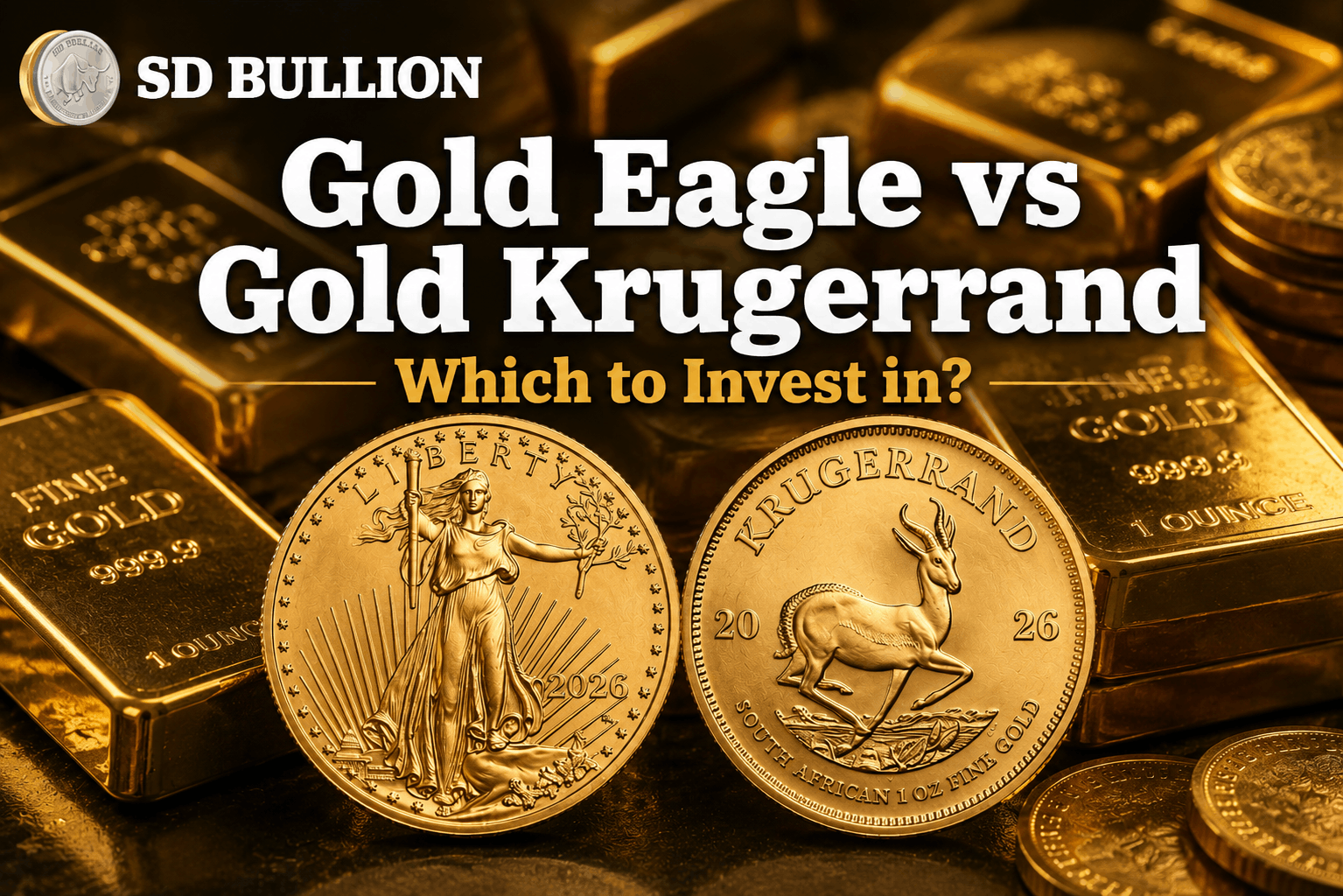
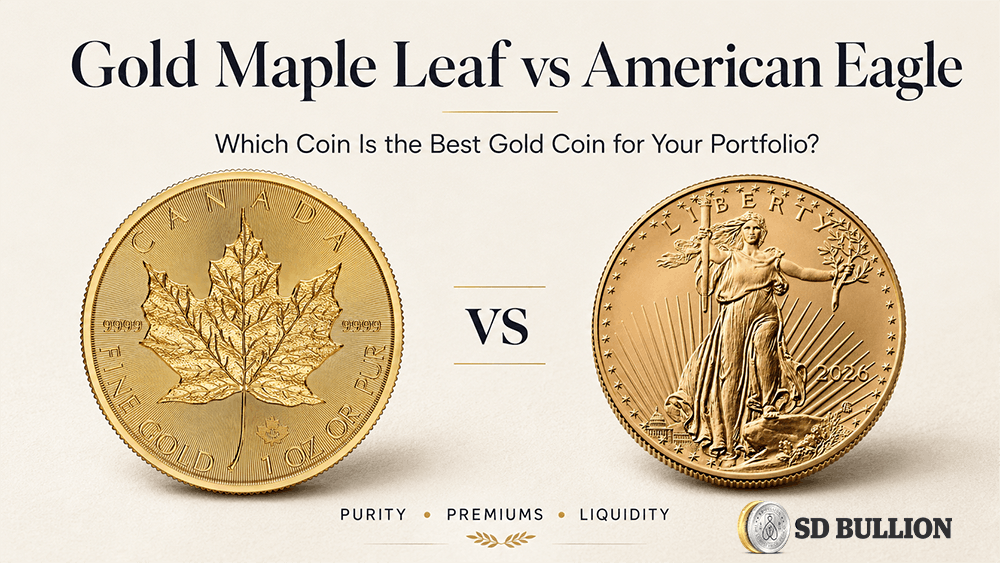
For simplicity, let me use the American Eagle as a widely recognized, standardized example of a gold coin.
They have a distinguished design, and each American Gold Eagle contains 1 full troy ounce of .9167 fine gold (22-karat) alloyed with small amounts of silver and copper for added durability, and a $50 face value fully backed by the U.S. Government.



Gold Bars
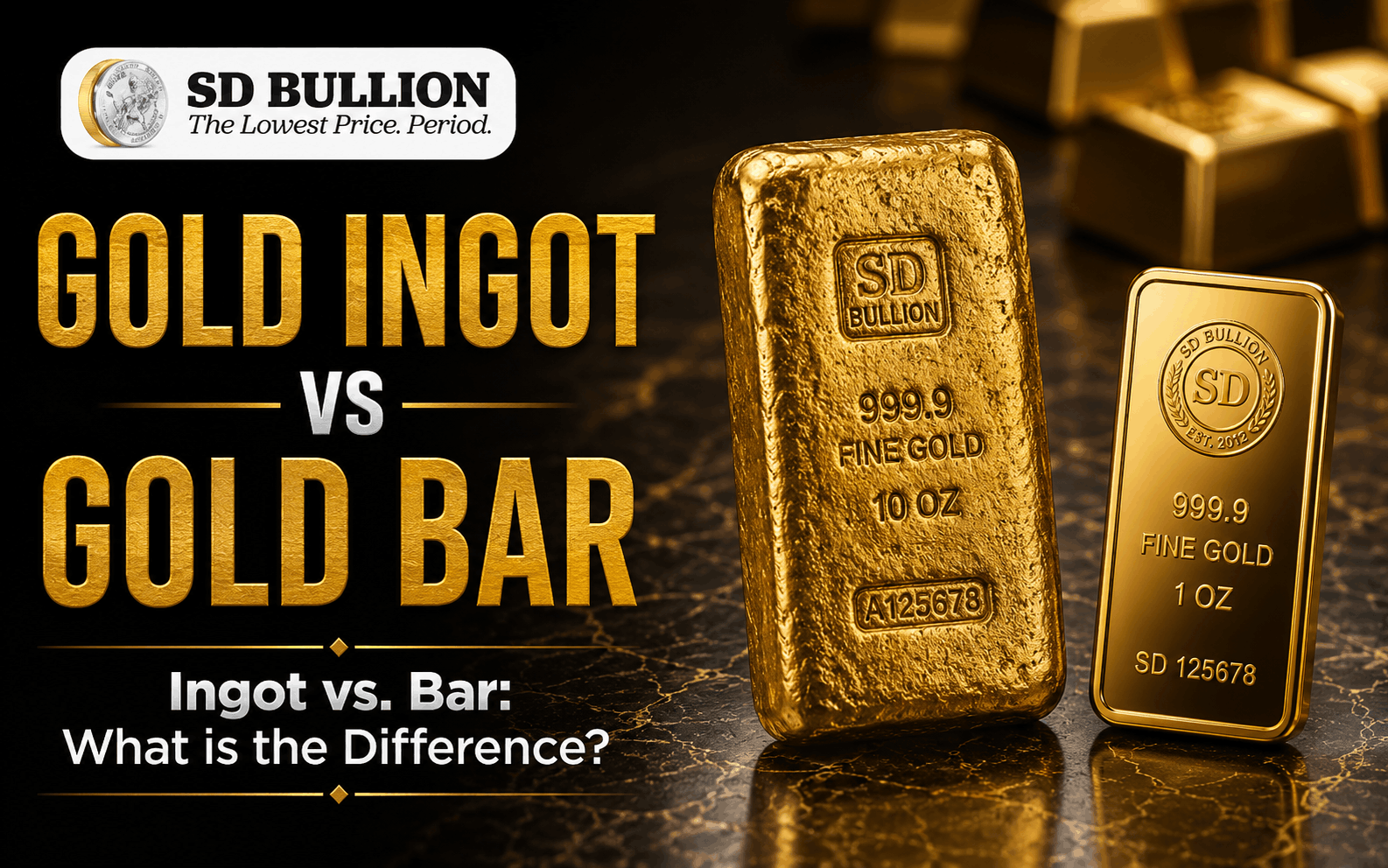
Gold bars, on the other hand, are typically more cost-efficient but can be less liquid than coins.
They lack the same collectible appeal and intricate detailing, as they are cheaper to produce. As a result, their pricing tends to stay closer to the spot price within the gold market.

This makes them a practical option for investors focused on physical bullion ownership through tangible assets, particularly for bulk purchasing, institutional portfolios, and long-term wealth preservation.
Physical gold can be stored in a safe or vault, or held in a gold storage account, such as a gold IRA. Besides, investors should consider the costs and logistics of storing physical gold, including the costs of secure storage and insurance.
Risks and Costs
The most obvious risk of paper gold investments, such as gold ETFs, is reliance on an intermediary. Unlike owning and managing physical metal, the paper market is more sensitive to financial crises than physical gold held in a vault or storage facility.
Investors concerned about urgent events prefer buying physical gold, prioritizing barter and the possibility of selling it if they need money fast.
Gold vs Other Investments
Unlike physical gold, paper gold behaves differently in terms of risk and market exposure. Physical precious metals are typically viewed as a safe haven during volatility and can help diversify a portfolio.
While financial instruments provide accessibility, physical gold remains distinct due to its independence from financial intermediaries and its tangible form outside digital systems and other assets.
Ultimately, investors can align their choice with their investment goals and risk tolerance, weighing the role of gold ownership within their broader strategy.
Disclaimer: This content is provided for informational and educational purposes only and does not constitute financial, investment, or legal advice. Nothing in this material should be interpreted as a recommendation to buy or sell any asset. Readers should conduct their own research and consult with a qualified professional before making any financial decisions.