World's Largest Fund cuts US Debt Holdings after Dutch Relocated 86 Tons of Gold Bullion Out of US
- Gold and silver ended a volatile week relatively resilient. Spot silver price finished essentially flat at $66.22 per ounce, while gold slipped modestly to approximately $4,430 per ounce. The gold-to-silver ratio ended near 67.
- The Netherlands is repositioning a significant portion of its sovereign gold reserves. The Dutch central bank transferred approximately 86 metric tons of gold previously stored in New York and Ottawa to London, citing improved tradability and the need for greater resilience and preparedness amid geopolitical uncertainty.
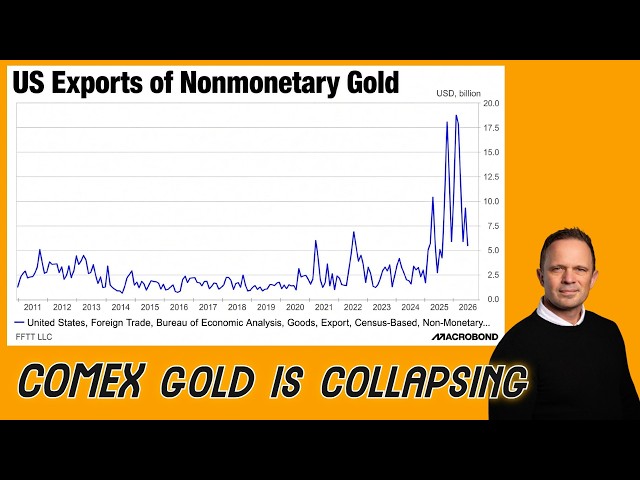
- Where countries store their gold is becoming increasingly important. The report highlights a broader decline in the share of foreign official gold reserves held on U.S. soil, framing the trend as evidence that geopolitical and counterparty risks are influencing how sovereign institutions manage physical bullion.
- Rising U.S. Treasury yields remain a major variable for precious metals. The benchmark 10-year Treasury yield is approaching 5%, while longer-duration U.S. government bonds have faced substantial pressure. Higher yields can create near-term competition for non-yielding gold and silver, while persistent fiscal concerns may strengthen their longer-term diversification case.
- U.S. debt and interest expenses are becoming central to the bullish gold narrative. The report argues that large amounts of federal debt requiring refinancing at comparatively elevated interest rates could increase government interest expenses and contribute to declining confidence in sovereign debt over time.
- UBS sees fiscal uncertainty supporting gold despite short-term volatility. UBS strategist Joni Teves said gold is currently caught between Federal Reserve policy expectations and concerns surrounding U.S. fiscal and debt sustainability, but believes the underlying drivers of investor diversification into gold remain intact.
- Central banks remain an important source of gold demand. According to Teves, central-bank purchases slowed early in the year but accelerated when gold prices declined during the second quarter. China notably increased purchases at lower gold prices, helping reinforce investor confidence in continued official-sector demand.
- UBS maintains a $5,000 gold target. The bank expects gold to potentially reach $5,000 by year-end and sees a roughly $4,000-to-$5,000 range through 2027, with risks increasingly tilted higher if fiscal concerns, currency diversification and what UBS describes as “defiatization” become more entrenched.
- Physical gold demand could receive a seasonal boost. India typically enters a stronger buying period from late Q3 into Q4, followed by China later in the year. However, historically high gold prices could constrain the volume of physical purchases even if seasonal demand improves.
- Silver could outperform gold into year-end, according to UBS. Teves sees silver benefiting from its historically higher sensitivity to gold alongside supportive supply-and-demand fundamentals. Slower economic growth remains a risk to industrial consumption, but longer-term demand tied to AI and vehicle electrification could provide additional fundamental support.
Rising U.S. Treasury yields, mounting debt concerns and shifting sovereign gold reserves are reshaping the precious metals outlook as UBS sees gold reaching $5,000 and silver potentially outperforming through year-end.
Gold and silver investors navigated another volatile week as precious metals reacted to the latest U.S. employment data, rising Treasury yields, concerns surrounding government debt, and changing sovereign attitudes toward gold and U.S. government bonds.
Silver ultimately held its ground, with the spot price closing the week essentially flat at $66.22 per ounce bid. Gold experienced modest pressure and finished around $4,430 per ounce bid, while the gold-to-silver ratio remained relatively unchanged near 67.
The Dutch Central Bank Relocate 86 Metric Tons of Gold
One of the week's most notable precious metals developments came from the Dutch central bank, which relocated approximately 86 metric tons of gold previously stored in New York and Ottawa to London.
According to the report cited in this week's market update, approximately 86 tons of the nearly 313 tons held in the United States and Canada were transferred between March and August. Following the move, London now holds the largest portion of the Netherlands' gold reserves.
Dutch Central Bank Governor Olaf Sleijpen said the relocation was intended to improve the tradability of the country's reserves while strengthening its resilience and preparedness.
The development highlights an increasingly important question for sovereign gold holders: not simply how much physical gold they own, but where that gold is stored.
The market update points to political and geopolitical risk as one potential factor encouraging governments to reconsider the geographic distribution of their reserves. It also notes that other European countries have taken steps in recent years to relocate gold previously stored in the United States.
Rising U.S. Treasury Yields Put Bonds in Focus
While sovereign gold reserves attracted attention, developments in the U.S. Treasury market could prove equally important for American precious metals investors.
According to the market update, the benchmark 10-year Treasury yield has been climbing and is threatening the 5% level, while the 30-year Treasury has experienced some of its weakest performance in roughly two decades.
Rising yields can present a complicated environment for precious metals. Higher interest rates can increase the relative appeal of yield-producing assets compared with gold, which produces no interest income.
At the same time, persistently elevated borrowing costs can increase the government's cost of servicing and refinancing its enormous outstanding debt load. That longer-term fiscal concern is increasingly becoming part of the investment case for gold.
The market update characterizes this broader shift as a potential "bullion over bonds" trade, as investors and institutions weigh physical gold bullion against the counterparty and currency risks associated with sovereign debt.
U.S. Debt and Interest Costs Remain Major Risks
America's fiscal position remains another major theme for gold investors.
With enormous amounts of federal debt requiring refinancing, today's higher interest-rate environment could translate into substantially larger government interest expenses than the United States experienced during the era of zero and near-zero interest rates.
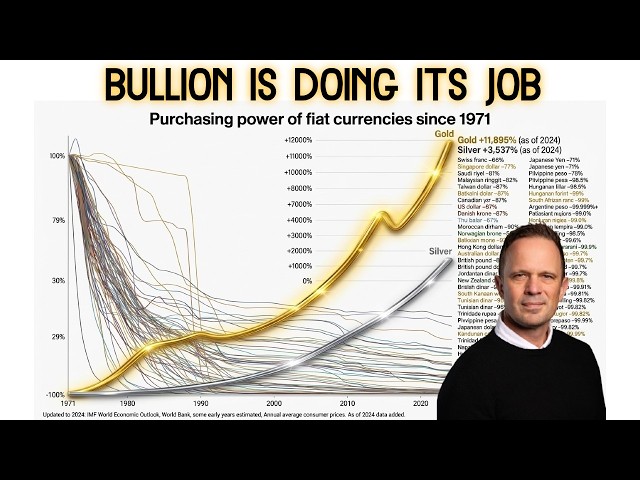
The report also points to the continuing expansion of global fiat currency supplies, which it estimates at approximately $150 trillion. Its longer-term thesis is that heavily indebted governments may ultimately respond to their obligations through continued currency creation and inflation rather than reducing the overall supply of money.
For precious metals investors, the important question is whether concerns surrounding debt sustainability, inflation and fiat currencies continue encouraging individuals and institutions to diversify into physical gold and silver.
UBS Sees Gold Potentially Reaching $5,000
Against that macroeconomic backdrop, UBS strategist Joni Teves offered a bullish longer-term outlook for gold.
Teves described gold as currently caught between expectations surrounding Federal Reserve monetary policy and growing concerns about U.S. fiscal and debt sustainability.
Despite recent volatility, UBS believes many of the underlying forces that have driven gold price higher remain intact. In particular, Teves pointed to growing investor diversification and an expanding group of investors seeking gold exposure as protection against fiscal risks and broader macroeconomic uncertainty.
UBS has a $5,000 gold price target for year-end. Looking further ahead, its core expectation is for gold to trade within approximately $4,000 to $5,000 over the next year, with another $5,000 year-end target for 2027.
Importantly, Teves believes risks to that outlook are increasingly tilted to the upside if concerns surrounding government finances, currency debasement and diversification away from fiat currencies become more deeply embedded in investor behavior.
"Defiatization" Could Become a Long-Term Gold Driver
Rather than focusing exclusively on "de-dollarization," Teves described the larger trend as "defiatization."
The distinction is significant.
Under this thesis, investors are not necessarily abandoning the U.S. dollar specifically. Instead, some are increasingly viewing gold as an alternative to fiat currencies more broadly.
Gold can therefore serve as a strategic portfolio diversifier during periods when investors become concerned about government debt, currency purchasing power or the sustainability of fiscal policy.
Teves characterized these as long-term themes that may move in and out of the market's immediate attention but continue to underpin strategic investor demand for gold.
Central Banks Continue Buying Gold
Central-bank demand remains another important pillar supporting the gold market.
According to Teves, official-sector gold purchases initially slowed at the beginning of the year. However, when gold prices declined during the second quarter, central banks increased their purchasing volumes.
China was specifically highlighted as a buyer.
Teves noted that Chinese gold purchases increased when prices moved lower, which UBS views as an encouraging signal that central-bank buying programs remain active and that official institutions may use price weakness as an opportunity to accumulate additional reserves.
For U.S. investors, continued central-bank accumulation is worth watching because these institutions can represent a large, strategically motivated source of physical demand.
India and China Enter a Seasonally Stronger Period
Physical demand from Asia could also become increasingly important through the remainder of the year.
India typically enters a seasonally stronger period for physical gold demand beginning in late Q3 and continuing into Q4, followed by stronger seasonal demand from China later in the year.
However, high prices remain a significant obstacle.
UBS expects seasonal buying to provide additional fundamental support for gold through year-end but cautions that overall volumes could remain constrained because gold prices are substantially higher for consumers in these major markets.
That creates an important dynamic to watch: whether seasonal and strategic demand can remain resilient despite historically elevated prices.
Could Silver Outperform Gold?
Silver investors also received an encouraging outlook from UBS.
Teves believes silver has the potential to outperform gold into year-end, supported both by its historically higher sensitivity to moves in gold and by underlying supply-and-demand fundamentals.
Unlike gold, however, silver has substantial industrial exposure. That means slowing economic growth could weaken some sources of industrial consumption and become a headwind for prices.
At the same time, UBS sees longer-term structural trends providing support. Teves specifically highlighted artificial intelligence and vehicle electrification as areas that could underpin silver demand over the long run.
Those trends alone may not determine the direction of silver prices, but UBS believes they provide a stronger fundamental base for the metal.
What Gold and Silver Investors Should Watch Next
For U.S. precious metals investors, several competing forces are now converging.
Higher Treasury yields and uncertainty surrounding Federal Reserve policy could continue creating short-term volatility for gold and silver. At the same time, growing U.S. debt-servicing costs, sovereign gold accumulation, concerns surrounding fiat currencies, changing reserve-storage strategies and continued central-bank buying could reinforce the longer-term case for precious metals diversification.
Silver adds another dimension through its exposure to both monetary investment demand and industrial growth trends.
With UBS forecasting the possibility of $5,000 gold and silver outperforming gold through year-end, the coming months could prove especially important for precious metals markets.
Investors should continue watching Treasury yields, Federal Reserve policy, central-bank purchases, Asian physical demand, U.S. fiscal conditions and the gold-to-silver ratio for signals about where the next major move in precious metals could develop.
Sources:
Joni Teves of UBS on Gold Silver Platinum Palladium | Insight with Haslinda Amin
9/3/2026 Bloomberg Television https://youtu.be/F-Kkxs9HD9M?si=-h1BLTaJJtCNXkUr&t=1723
Dutch Central Bank Shifts Gold From US on ‘Geopolitical Unrest’
https://www.bloomberg.com/news/articles/2026-09-02/dutch-central-bank-shifts-gold-from-us-on-geopolitical-unrest