What Does an Ounce of Gold Look Like?
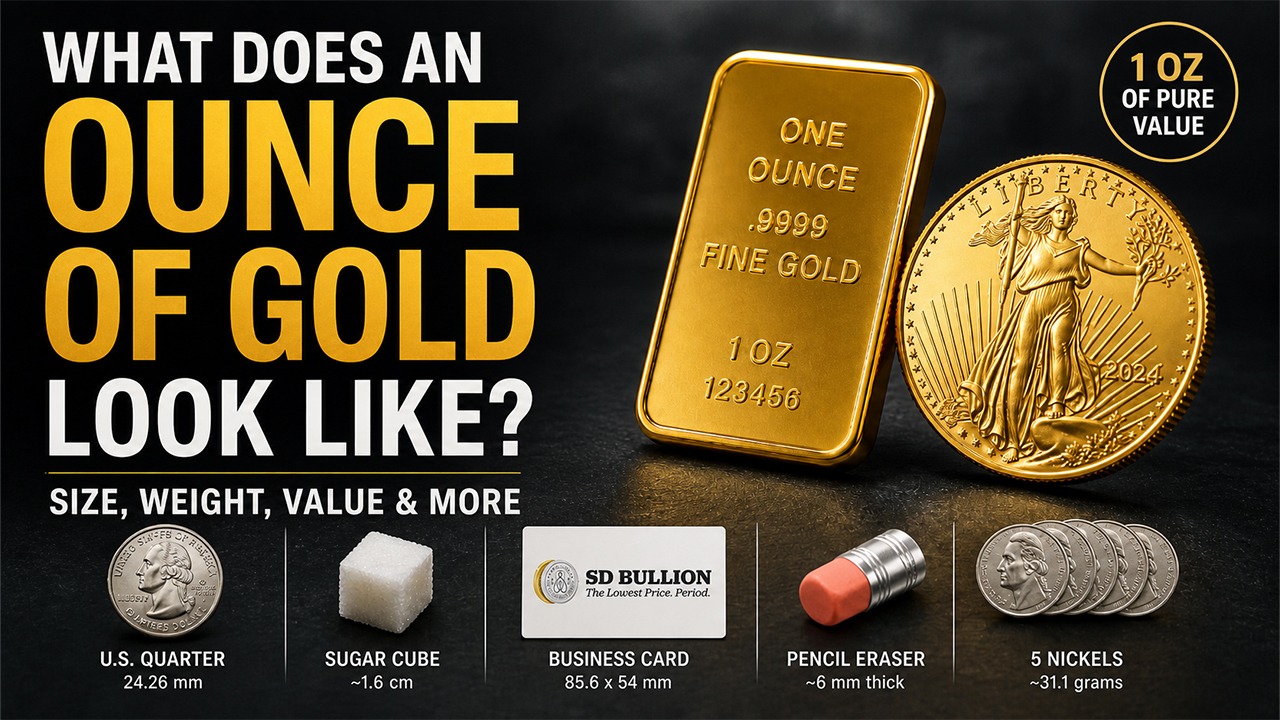
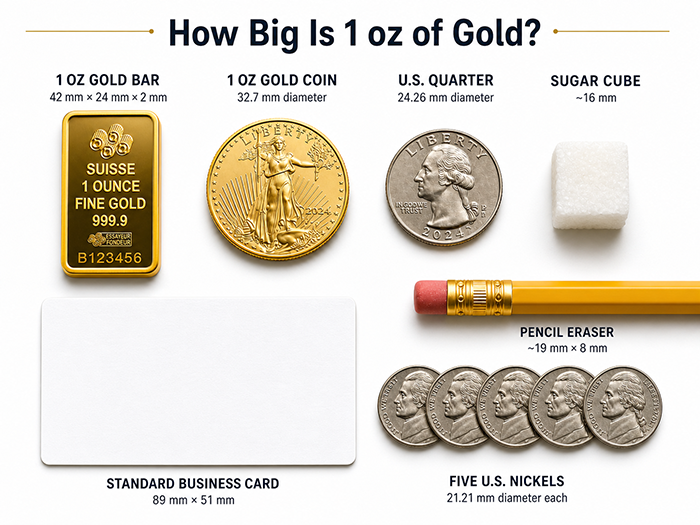
One troy ounce of gold (31.1 grams) is a compact piece of dense, bright yellow metal roughly the diameter of a U.S. quarter and worth about $4,700 USD as of April 2026. In bar form, it typically measures 42 mm × 24 mm × 2 mm; in coin form, 30–33 mm in diameter.
Despite its value, it often looks surprisingly modest. Gold’s high density (19.3 g/cm³) compresses a full ounce into about 1.6 cubic centimeters—roughly the size of a sugar cube. What stands out most is the weight. It feels much heavier than it looks, which is a key sign of authenticity.
This guide explains the size, appearance, color, and physical properties of 1 oz gold across bars, coins, and rounds, along with purity comparisons, sizing analogies, authentication tips, and pricing.
Key Takeaways
- A 1 oz gold piece is small but heavy: One troy ounce of gold weighs 31.1 grams, fits into about 1.6 cubic centimeters, and looks roughly comparable to a sugar cube or quarter-sized coin, but feels unusually dense because gold has a density of 19.3 g/cm³.
- A 1 oz gold bar looks different from a 1 oz gold coin: A typical 1 oz gold bar is a thin rectangle around 42 mm × 24 mm × 2 mm, while most 1 oz gold coins are round, about 30–33 mm wide, and often easier to recognize or resell because they are issued by government mints.
- Gold purity affects color, durability, and bullion value: 24K gold has a deep yellow color and high purity, 22K gold includes alloy metals for added durability, and lower-karat gold such as 18K, 14K, or 10K is generally treated as jewelry rather than investment-grade bullion.
- Authenticating 1 oz gold requires more than appearance: Buyers should verify weight, dimensions, magnet response, ping sound, assay card details, serial numbers, and professional XRF or ultrasound testing, especially because counterfeit gold can mimic the look of real bullion.
Why Does an Ounce of Gold Feel Heavier Than It Looks?
A 1 oz gold piece feels heavier than it looks due to its high density (19.3 g/cm³). Gold atoms pack tightly, concentrating mass into a small volume. Despite its size, its value closely follows the gold spot price.
For comparison, a similarly sized piece of aluminum would weigh under 5 grams, while gold weighs 31.1 grams—over six times more. This contrast is often the first thing new buyers notice.
That distinct heaviness is a key authenticity signal. Experienced dealers treat unexpected lightness as a warning sign of potential counterfeits.
What Does a 1 oz Gold Bar Look Like?
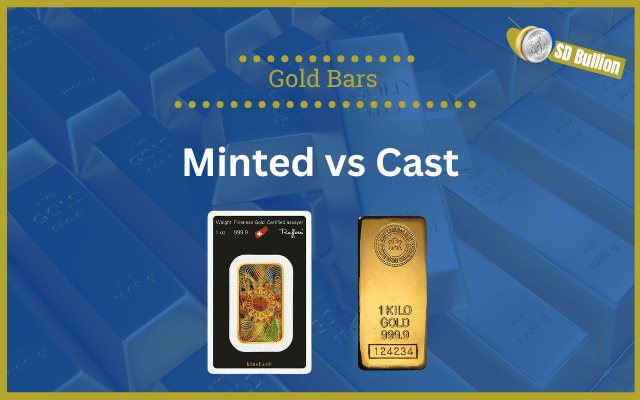
A 1 oz gold bar is a flat, rectangular piece weighing 31.1 grams. It typically measures around 42 mm × 24 mm × 2 mm, with only slight variation by refinery. For example, PAMP Suisse and Valcambi bars differ by less than a millimeter.
Most bars have a smooth, polished or lightly brushed finish and include standard identifying marks:
- Weight (1 oz or 31.1 g)
- Purity (.9999 fine gold)
- Mint or refinery name and logo
- Unique serial number (on most modern bars)
Many bars come sealed in tamper-evident assay cards from mints like PAMP Suisse, Valcambi, or the Perth Mint. The serial number on the bar matches the certificate on the packaging.
Visually, it appears as a small, dense plate with sharp edges and a rich yellow color that reflects light more deeply than gold-plated metal.
Common 1 oz gold bar brands available at SD Bullion: Valcambi CombiBar, Perth Mint cast bars, Royal Canadian Mint bars, Argos Heraeus gold bars, and SD Bullion's own exclusive Cross and Flag gold bars.




What Does a 1 oz Gold Coin Look Like?
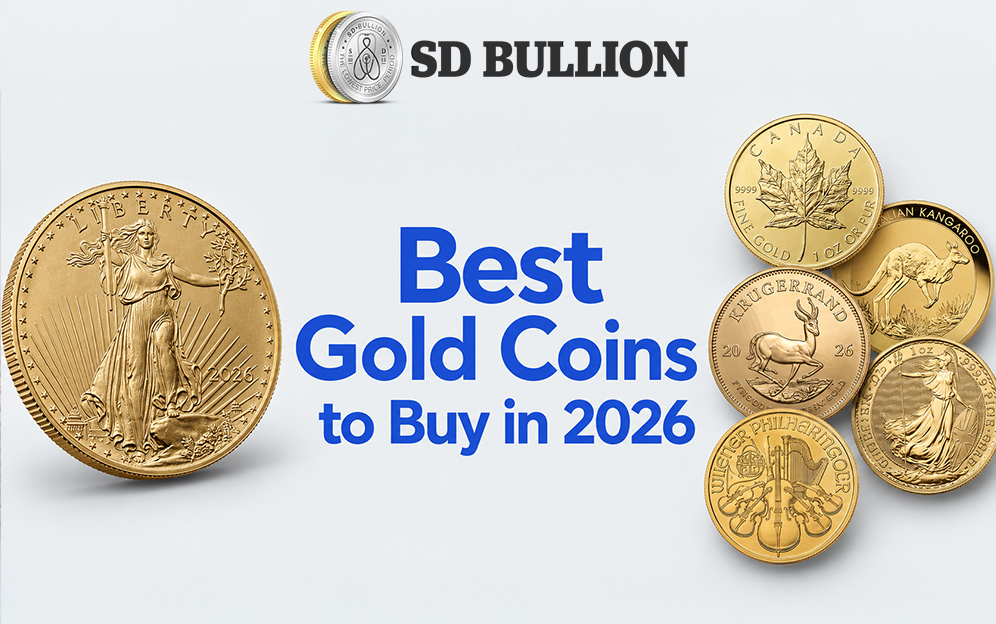
A 1 oz gold coin is a round, precisely struck piece with detailed designs and a ridged edge. It’s issued by a government mint, carries legal tender status, and is guaranteed for weight and purity.
Most well-known 1 oz gold coins share similar specs:
- Diameter: ~30–33 mm
- Thickness: ~2.8–3 mm
- Gold content: 1 troy ounce
- Purity: .9999 (24K) or 91.67% (22K)
Dimensions of the Most Recognized 1 oz Gold Coins
| Coin | Issuing Mint | Diameter | Thickness | Purity | Gold Content |
| American Gold Eagle | U.S Mint | 32.7 mm | 2.87 mm | 91.67% (22K) | 1 troy oz |
| American Gold Buffalo | U.S Mint | 32.7 mm | 2.95 mm | 99.99% (24K) | 1 troy oz |
| Canadian Gold Maple Leaf | Royal Canadian Mint | 30 mm | 2.87 mm | 99.99% (24K) | 1 troy oz |
| South African Krugerrand | South African Mint | 32.77 mm | 2.84 mm | 91.67% (22K) | 1 troy oz |
Coins with 22K purity, like the American Gold Eagle and Krugerrand, include small amounts of copper or silver for durability but still contain a full ounce of gold.
Designs vary by country. The American Gold Eagle shows Lady Liberty, the Canadian Maple Leaf features a detailed leaf with security markings, and the Krugerrand depicts Paul Kruger and a springbok antelope.
Is a 1 oz gold bar or coin better for beginners?
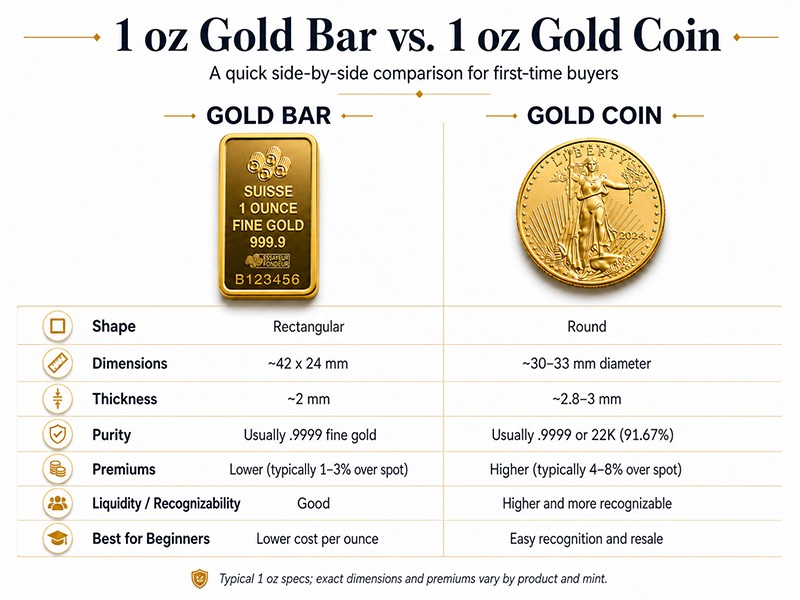
Both a 1 oz gold bar and a 1 oz gold coin contain the same amount of gold, but they look and feel distinct. Understanding the differences between gold coins vs. gold bars can help beginners choose the format that best fits their budget, storage preferences, and resale goals.
1 oz gold bars are:
- Rectangular with crisp, uniform edges
- Minimally designed — focused on markings, not artwork
- Thinner and flatter for efficient storage and stacking
- More industrial in appearance
1 oz gold coins are:
- Round with detailed relief artwork
- Thicker relative to their width
- Feature reeded edges and government mint markings
- More visually distinctive and recognizable to a general audience
From an investment standpoint, bars typically carry lower premiums (1–3% over spot vs. 4–8% for coins), while coins offer higher liquidity and broader recognition during resale. Neither form is superior in terms of gold content. The choice depends on storage priorities, budget, and intended use.
What Does Gold Look Like at Different Purities?
Gold purity affects color, hardness, and value. Higher purity means a deeper yellow color but a softer metal. Pure gold (24K) is highly malleable and often alloyed to improve durability.
| Purity | Karat | Approx. Color | Appearance | Common Use |
| 99.99% | 24K | Deep yellow | Vivid, saturated; slightly soft surface | Bullion bars and coins (Buffalo, Maple Leaf) |
| 91.67% | 22K | Rich warm yellow | Slightly orange tone from copper alloy | American Gold Eagle, Krugerrand |
| 75% | 18K | Medium yellow | Lighter; rose or white variants with alloys | Fine jewelry |
| 58.3% | 14K | Pale yellow | Often indistinguishable from lower alloys | Common U.S jewelry |
| 41.7% | 10K | Very pale yellow | Near-beige; minimum legal "gold" in the U.S | Budget jewelry |
For investment and bullion purposes, only 22K and 24K gold is accepted at or near spot price. Lower-karat gold carries a significant per-gram discount and is not considered bullion.
What Everyday Objects Help Visualize an Ounce of Gold?
A 1 oz gold bar is smaller than a business card and thinner than a pencil eraser, yet weighs 31.1 grams about the same as five U.S. nickels. A 1 oz gold coin is slightly wider than a quarter but several times heavier due to gold’s density.
In volume, a full ounce fits into about 1.6 cubic centimeters—roughly the size of a sugar cube.
These comparisons highlight how much value gold packs into a small space. Just a few ounces can be worth tens of thousands of dollars while fitting easily in your pocket.
What Does Different Dollar Amounts of Gold Look Like?
| Dollar Amount | Approx. Gold Weight | Physical Size |
| $1,000 | ~6.7 grams | About the size of a small paper clip |
| $5,000 | ~33.7 grams | Slightly over 1 troy ounce -- one coin or bar |
| $10,000 | ~67.4 grams | Just over 2 troy ounces -- two coins dide by side |
| $50,000 | ~337 grams | Roughly the size of a thick deck of cards |
| $100,000 | ~674 grams | About the size and weight of a smartphone |
These comparisons show how much value gold packs into a small space. Even large dollar amounts take up very little room, making secure storage essential.
How to Authenticate a 1 oz Gold Bar or Coin
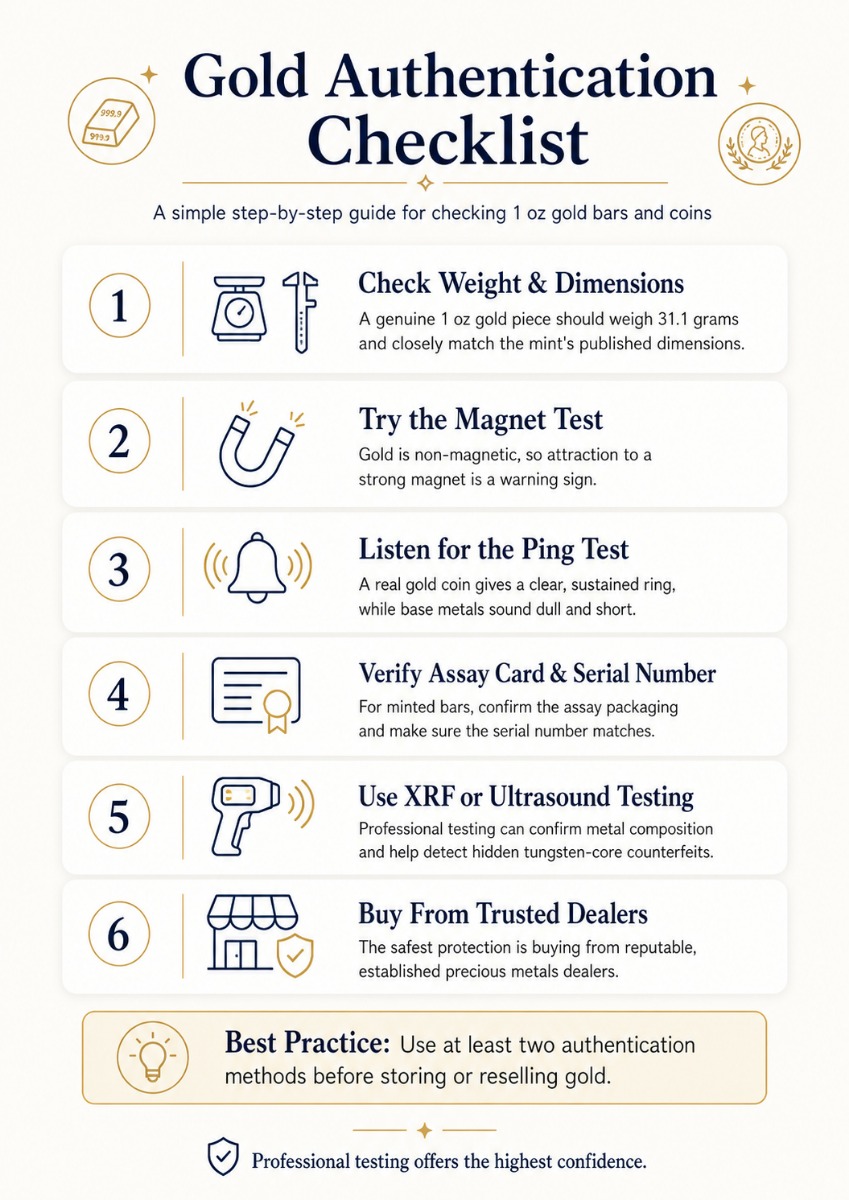
Counterfeit gold is a real risk. Before storing or reselling any gold purchase, verify it using at least two of the following methods.
- Weight and dimensions A genuine 1 oz gold piece weighs exactly 31.1 grams and matches published mint dimensions. Use a digital scale calibrated to 0.01g and precision calipers. Any deviation of 0.5 grams or more warrants immediate further testing.
- Magnet test Gold is non-magnetic. Hold a strong neodymium magnet near the piece — any attraction confirms non-gold metals are present. Note: this test rules out iron-based counterfeits but not tungsten, which is also non-magnetic and close to gold in density.
- Ping test Strike a genuine gold coin lightly — it produces a clear, sustained ringing tone lasting one to two seconds. Base metals produce a dull, short thud. This test works especially well for coins with a concave shape.
- Professional XRF or ultrasound testing X-ray fluorescence (XRF) analyzers read elemental composition instantly without damaging the piece. The Sigma Metalytics Precious Metal Verifier uses ultrasound to detect tungsten-core counterfeits that pass the magnet test. Many reputable dealers offer verification on-site.
- Assay card and serial number verification Most premium minted bars come sealed in assay packaging with a unique serial number. Verify the number against the mint's public registry or contact the issuing mint directly.
- Buy from accredited dealers The most reliable protection is provenance. SD Bullion is a BBB-accredited precious metals dealer. All products ship in tamper-evident packaging directly from our warehouse, with a verified product guarantee.
Where to Buy 1 oz Gold at Competitive Prices
SD Bullion carries a full selection of 1 oz gold products with live pricing updated to spot:
- 1 oz Gold Bars — Generic and premium minted (PAMP, Valcambi, Perth Mint, and more)
- 1 oz American Gold Eagle Coins — Legal tender, struck by the U.S. Mint
- 1 oz American Gold Buffalo Coins — 24K / 99.99% pure
- 1 oz Canadian Gold Maple Leaf Coins — 99.99% purity with micro-engraved security
- 1 oz South African Krugerrands — The original modern gold bullion coin
Free shipping on orders over $199. Low-price guarantee. BBB-accredited with hundreds of thousands of verified customers.
Gold prices in this article reflect approximate spot market data as of April 2026. Prices change continuously during market hours. Visit SD Bullion's live gold price page for the current spot price.