Below Gold 200 Day Moving Average Support Levels Week Over Week
- Precious metals endured a sharp selloff this week, with gold falling to roughly $4,329 per ounce and silver sliding toward its 200-day moving average, reflecting a broader risk-off move across financial markets.
- The market downturn was largely attributed to a stronger-than-expected May jobs report, which reignited speculation that the Federal Reserve could maintain a tighter monetary stance for longer.
- Bitcoin suffered the steepest losses among major assets, dropping nearly 20% and falling below the $60,000 level for the first time since September 2024, highlighting the shift away from risk assets.
- Despite the recent weakness in gold and silver prices, the longer-term bullish case remains centered on growing government debt burdens, persistent deficits, and the potential for inflation-driven debt devaluation in major economies.
- Central banks continue to strengthen their gold positions, with the European Central Bank acknowledging that gold is increasingly replacing U.S. debt securities as a preferred reserve asset amid geopolitical and financial risks.
- Russia reported annual gold production approaching 500 metric tons, reinforcing its status as one of the world's leading gold producers and underscoring the strategic importance many nations place on bullion reserves.
- Historically, pullbacks below gold's 200-day moving average have been common during major bull markets, including the 1970s and 2000s, suggesting that periodic corrections are a normal part of long-term upward trends.
- Relative asset valuations continue to favor precious metals over traditional investments, with long-term charts showing gold and silver outperforming housing and equities during previous secular bull markets.
- Strong physical demand remains evident in Asia, where Chinese silver exchanges have reportedly been paying premiums above Western benchmarks, while India has adjusted precious metals policies to manage currency pressures and import demand.
- Veteran precious-metals investor Ned Naylor-Leyland argues that the current gold bull market remains intact, pointing to ongoing monetary debasement, limited institutional participation, and declining silver inventories in Shanghai as factors that could support future gains in both gold and silver.
Gold and Silver tumble toward key technical levels while central banks, Asian demand, and long-term debt concerns continue to support the broader bullish outlook.
Last Week's Gold and Silver Market Update
- The precious metals market sold off big to end this week's trading.
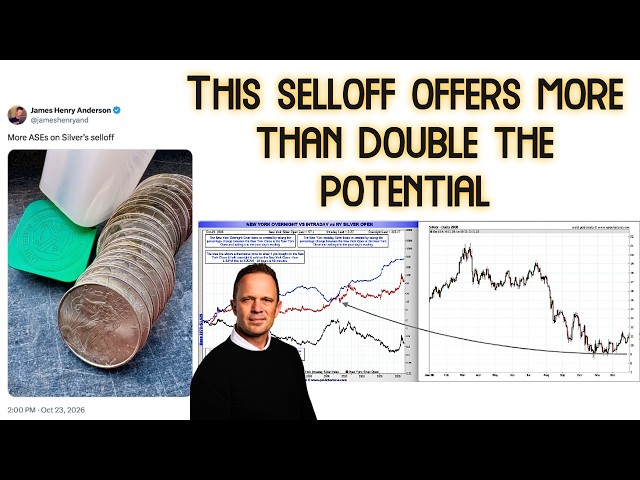
- The spot silver price fell to close at $67.84 oz bid, now hover near its 200 day moving average.
- The spot gold price fell to close the week at $4,329 oz bid.
- The spot gold silver ratio popped higher to close the week at 63.
Large selloffs in precious metals and financial markets to close this past week.
Much of the selling kicked off with the surprisingly high May jobs report data which will surely be adjusted lower later per usual.
Largest loser on the week was Bitcoin falling nearly -20% and breaking below $60k for the first time since Sep 2024.
Gold bears and bulls were out many making falling knife price call prognostications.
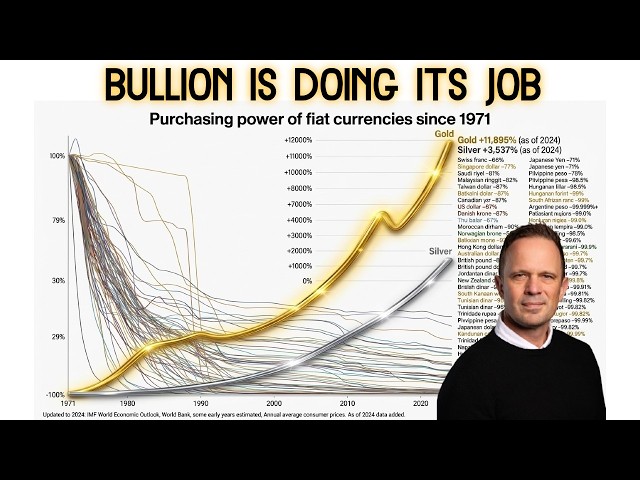
Financial headlines continue pumping the idea that the fiat Federal Reserve is going to go into a rate hike cycle while our current record debt to GDP loads of around 130% are already blowing US budget deficits towards $2 trillion this year, as long term US bond yields track towards 5% of late.
Let me remind you what the largest release valve is for when governments pass the 130% debt to GDP level that last century and a half. In every case, including Japan increasingly now and ahead, they default via high inflation eras where bonds cannot keep up with real inflation and debasement of the underlying national currency units.
Our debt and unfunded liability quagmire in the Western world is no exception.
You might recall late autumn of last year, the Financial Times admitted with this chart that the world central banks are moving back to gold reserves as their bedrock risk free asset of choice. They too, know the math on the US treasury market's future.
This week the European Central Bank admitted that gold reserves are indeed replacing US debts as the top asset holding looking ahead.
Specifically citing the freezing of Russia's $300 billion in US debt assets as the moment this trend increased to another level. It is forecasted to continue.
This week Russia issued an update on their annual gold mining production output stating they are now a world leading miner of newly mined gold producing nearly 500 tons per year now.
This gold production data from 2024, illustrating that Russian gold mining output has substantially grown in the last few years since official output updates.
Looking in on Gold's 200 day moving average history. Closing this week below gold's 200 day moving average should have been expected to occur at some point especially after late last and early this year's breakout move to nominal record price highs.
You can look back to the 1970s bull and the gold bull market of the 2000s to see how even during secular gold bull markets, an eventual return and fall below the 200 day moving average is a common phenomenon. Bull markets always try and buck the lowest conviction and wrong footed bulls from the trade.
In terms of past gold price breakout corrections, this chart syncs up this current price drawdown in comparison to the 1973 and 2006 version. Just over $4300 oz now, we are nearing the average historic drawdowns of those prior two gold price breakout pullbacks in relative percentage terms.
This is not new. If you have been a silver bull in the 21st Century you have endured these kinds of large spot price shake offs before. The 2008 GFC correction is the one I cut my teeth on in this industry.
Buying silver or gold bullion during large price corrections, that is a historical good way to add holdings during secular gold and silver bullion bull markets.
As well, we'll hear a larger bull market perspective from one of biggest silver bulls in the UK, on the other side of the pond.
In terms of bounces from their early year lows, the median or middle US priced home versus gold and silver are also seeing a bounce from the lows they ticked earlier in the year.
The spot gold silver ratio is currently about twice as large as its 2011 low, still digesting the fall to a low near 46 in late January of this year. My longer term conviction remains as the boomers pass away, median priced US homes are going to continue devaluing versus gold and silver bullion respectively.
Similar story in the US stock market versus silver and gold. The S&P 500 / Silver ratio enjoying a large bounce from its low near 60 oz in late Jan.
When the alleged productivity savior industry is coming to the White House for cash infusions, that has to be bailout bullish. Right? Capitalism, right?
Turning to the S&P 500 / Gold Ratio. The bounce since late Jan 2026 low of 1.27 oz is now near 1.71 oz of gold to buy the nominal S&P 500. You can see how low this ratio got back in 2011, that about $25 trillion in additional US Federal debt ago.
On a long term roadmap of the S&P 500 Gold ratio, given all factors now and coming.
The highest percent chance is our revisiting another 4th trough era lower on this chart into next decade. A world in which bullion and other real assets outperform bonds and stocks.
It won't be a straight line, it will be a wall of worry climb as it always is in a bullion bull market outperforming bonds and stocks in a secular sea change in investing eras.
And so the hot money momentum trade crowd came and left the gold and silver markets earlier this year. They have since moved on to the crowded semiconductor trade now convulsing with Space X IPO hopium to come. Surely there won't be more haircuts with greed piling into triple leveraged ETFs and options galore.
We'll close this week with my long time industry colleague and fellow silver bull, Ned Naylor Leyland.
Ned Naylor-Leyland of Jupiter Asset Management remains firmly bullish on both gold and silver despite the recent correction in precious metals prices. Speaking with Bloomberg, he argued that the current selloff is primarily the result of speculative traders unwinding leveraged positions rather than any deterioration in the metals' long-term fundamentals. According to Naylor-Leyland, gold has only recently emerged from a 44-year bear market relative to U.S. Treasuries and is reasserting itself as the world's premier risk-free asset amid ongoing currency debasement, rising debt burdens, and structural stagflation risks.
While acknowledging short-term pressure from changing interest-rate expectations, Naylor-Leyland believes institutional investors remain significantly underallocated to precious metals. He argues that a renewed move higher in gold prices could trigger a much larger wave of investment demand from pension funds, wealth managers, and other long-only investors. On silver, he noted that the metal continues to follow gold's lead for now, but tightening physical inventories in Shanghai, combined with strong demand from China and India, could eventually create supply-driven price gains independent of broader macroeconomic factors.
- The gold bull market is not over.
Naylor-Leyland believes the recent decline is simply a deleveraging event driven by speculative traders rather than a change in the long-term bullish trend. - Gold is reclaiming its role as a risk-free asset.
After spending decades underperforming U.S. Treasuries, he argues gold is once again becoming a preferred store of value as confidence in government debt weakens. - Institutional investors have not fully entered the market.
Despite gold's strong performance, major pools of capital remain underinvested in bullion, creating potential for significant future demand if prices resume climbing. - Central bank buying is not the primary driver of price action.
While central banks continue accumulating gold, Naylor-Leyland contends that futures markets, real interest-rate expectations, and speculative positioning have a much greater impact on short-term prices. - Silver's physical market is tightening.
He highlighted rapidly declining inventories on Shanghai exchanges and continued metal flows into China and India as indicators that silver could eventually experience a supply-driven rally once gold regains momentum.
Pretty much since that interview in late March of this year 2026, China's silver exchanges have been steadily adding by paying premiums to Western price benchmarks of 10% or more, while India has literally changed precious metal import tax duties and shrink allowable ETF inflows, to try and slow down the further devaluation of their fiat rupee to come.
That is going to be all for this week's bullion market update.
Source(s):
Ned Naylor-Leyland from March 27, 2026 on Bloomberg:
https://x.com/jameshenryand/status/2060574882237206861?s=20