The Great Bullion Reset: Why Gold and Silver Markets Signal a New Financial Era
- President Trump’s call for a “world’s most powerful reset” has fueled speculation across markets, but in precious metals, analysts argue this reset has effectively been underway for decades through the steady erosion of fiat currency value.
- Gold and silver markets showed resilience this week, with silver closing near $75.89/oz and gold holding around $4,748/oz, while the gold-to-silver ratio tightened to 62—suggesting relative strength in silver.
- Silver’s rally above $75/oz has been driven by a mix of safe-haven demand, a weakening U.S. dollar, and geopolitical instability, particularly surrounding Middle East tensions and a temporary U.S.–Iran ceasefire.
- The ceasefire triggered sharp volatility, with silver initially dropping before rebounding roughly 5%, underscoring how sensitive precious metals remain to geopolitical developments.
- Despite official inflation data suggesting moderate currency debasement, bullion tells a harsher story: major fiat currencies have lost between 87% and 95% of their value relative to gold and silver since 2002.
- Silver’s dramatic run from roughly $50 to $123/oz—and subsequent pullback—reflects a classic momentum-driven phase, not the end of the bull market, according to SD Bullion’s Senior Analyst James Anderson.
- James Anderson on CNBC The Big C with Manisha Gupta, argues that true market rebalancing requires silver prices to reach “multiple hundreds of dollars per ounce,” citing decades of distorted pricing and historical precedent in prior bull cycles.
- Structural fundamentals remain bullish, with the silver market running persistent physical deficits for approximately six years, driven by surging demand from solar energy, electric vehicles, and electronics.
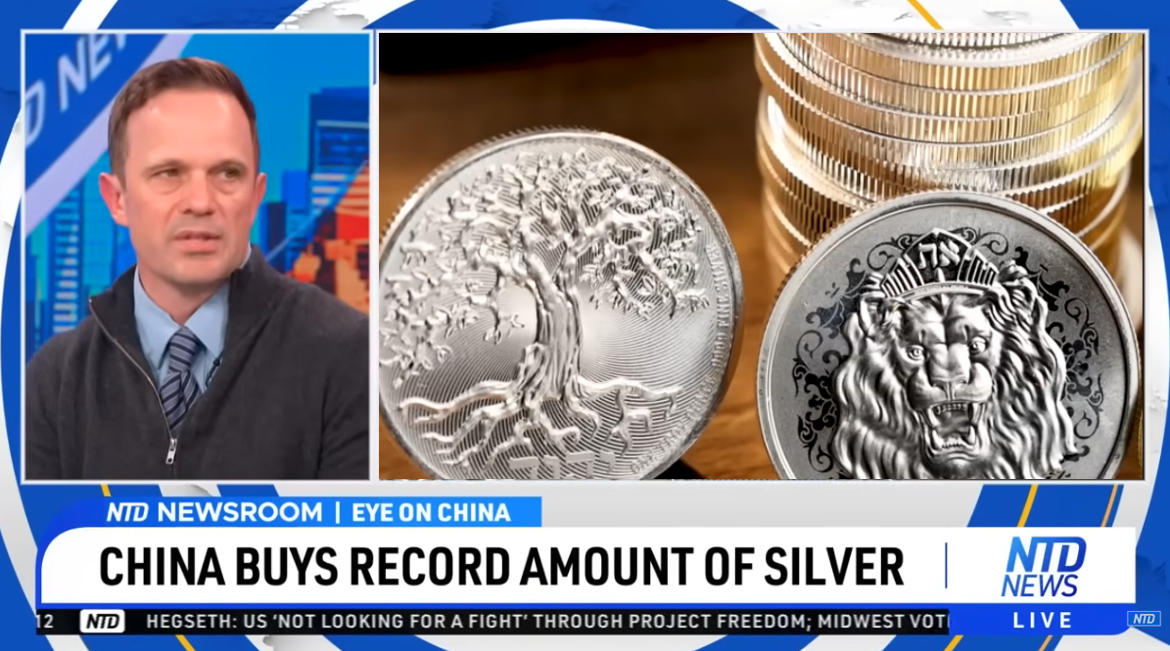
- Physical supply dynamics are tightening: COMEX inventories are declining below 250 million ounces, while China’s exchange warehouses have increased holdings above 26 million ounces, highlighting shifting global flows.
- Central banks continue to underpin the long-term case for bullion, with China reducing U.S. Treasury exposure and adding gold for 17 consecutive months, alongside other nations steadily increasing reserves—signaling a sustained move away from fiat-based assets.
A Cryptic Call for a “Powerful Reset”
President Trump sparked widespread speculation with a recent statement calling for the “world’s most powerful reset.” What exactly this means remains unclear. It could refer to geopolitical negotiations, economic restructuring, or broader financial system shifts.
However, in the context of global markets—especially precious metals—the idea of a “reset” is far from new. In fact, many analysts argue that this reset has already been unfolding for decades.
Market Snapshot: Gold, Silver, and the Ratio
Recent market performance shows relative stability with underlying tension:
- Silver spot price ended the week around $75.89/oz, holding above $76 amid volatility
- Gold price closed near $4,748/oz, largely flat
- The gold-to-silver ratio dipped slightly to 62, signaling tightening relative value
Despite modest weekly movement, the broader trend remains bullish—particularly for silver, which continues to experience strong demand and sharp price swings.
Volatility Driven by Geopolitics and Macro Forces
Silver’s recent surge above $56/oz has been fueled by several overlapping forces:
- Middle East tensions, including a temporary U.S.–Iran ceasefire
- Safe-haven demand amid geopolitical uncertainty
- A weakening U.S. dollar
- Persistent inflation concerns
- Ongoing physical supply deficits
The ceasefire triggered a sharp volatility event—silver initially dropped, then rebounded roughly 5%. Markets remain highly sensitive to geopolitical developments, suggesting continued turbulence ahead.
The Long-Term Decline of Fiat Currency
While discussions of a “reset” dominate headlines, a deeper monetary shift has been underway since the early 2000s.
Official data suggests the U.S. dollar has lost about half its purchasing power since 2002. But when measured against gold and silver, the decline is far more dramatic:
- Major fiat currencies (USD, EUR, CHF, JPY) have lost 87% to 95% of their value relative to bullion
This stark contrast highlights a long-term trend: precious metals steadily outperform fiat currencies over time.
Silver’s Explosive Rally—and What Comes Next
Silver’s recent price action has been dramatic:
- Climbed from $50 to $123/oz in a rapid rally
- Pulled back sharply, stabilizing around the $70 range
On CNBC The Big C with Manisha Gupta speaks to James Anderson, Senior Analyst at SD Bullion.
According to Anderson, this is not the end of the bull market—but just the beginning.
He argues that:
- The rally was partially driven by momentum trading
- Pullbacks are normal in early bull phases
- The true peak is likely far higher than most expect
In his view, silver must reach multiple hundreds of dollars per ounce to fully rebalance the market.
Structural Supply Deficits and Industrial Demand
One of the strongest arguments for higher silver prices is the ongoing supply-demand imbalance:
- Silver has been in a physical deficit for ~6 years
- Demand continues to rise from:
- Solar panels
- Electric vehicles (EVs)
- Electronics manufacturing
At current prices, supply is insufficient to meet demand—implying that significantly higher prices may be required to restore equilibrium.
Historical Context: A Multi-Decade Breakout
From a historical perspective, the current silver market may be in the early stages of a major breakout:
- The last major bull run (1970s–1980) saw a 16x price increase
- Today’s breakout follows a 45-year consolidation pattern
- The current move is considered the second-largest breakout in U.S. financial history
If history rhymes, the next “mania phase” could extend into the 2030s, with significantly higher price targets.
Global Bullion Shifts: Central Banks Lead the Way
While retail and institutional investors debate market direction, central banks are acting decisively:
- China is reducing U.S. Treasury holdings and increasing gold reserves
- Poland and others are aggressively accumulating gold
- Central banks have been net buyers for 17+ consecutive months
This shift reflects a broader strategy:
- Moving away from debt-based assets
- Increasing exposure to hard assets like gold
The trend appears long-term and price-insensitive, reinforcing bullish sentiment for precious metals.
Silver Inventories and Market Tightness
Silver bullion physical supply dynamics further support the bullish case:
- COMEX silver inventories are declining
- Total eligible stockpiles have dropped below 250 million ounces
- China’s silver holdings have risen above 26 million ounces
- London inventories fluctuate based on ETF flows and global demand
These movements suggest tightening availability, particularly in Western markets.
Conclusion: The Reset Is Already Underway
The idea of a dramatic financial “reset” may sound sudden, but the evidence points to a slow, ongoing transformation:
- Fiat currencies continue losing purchasing power
- Precious metals are reasserting their role as monetary anchors
- Supply deficits and industrial demand are reshaping silver markets
- Central banks are shifting toward bullion-backed strategies
Rather than a future event, the reset may already be in motion—playing out through rising gold and silver prices, shifting global reserves, and structural changes in the financial system.
The real question isn’t if the reset will happen—but how far it will go.