Central Banks Reserves Fuel Gold’s Rise and Silver’s Repricing Gains Momentum
- Gold and silver both edged lower last week, with gold closing around $4,614 and silver near $75, a modest pullback in what remains a broader uptrend.
- The gold-to-silver ratio is tightening around 61, signaling a market that’s coiling and potentially setting up for a bigger directional move.
- One of the biggest drivers right now: central banks. They’ve shifted decisively back to gold buying, reversing decades of dollar-heavy reserves.
- Since 2022, that buying spree has accelerated to record levels, fueled by geopolitical tensions and concerns over financial system stability.
- Major institutions are increasingly bullish—some projections point to $6,000 per 1 oz gold this year, while longer-term forecasts stretch toward $8,000 or higher.
- Physical demand remains strong globally, especially in China, where gold continues to outperform real estate and equities amid economic weakness.
- De-dollarization is no longer a fringe idea—it’s a clear trend, with emerging markets shifting reserves toward gold as a long-term store of value.
- Silver’s story is even tighter on the supply side, with ongoing deficits and growing investment demand, particularly from India’s rapidly expanding ETF market.
- Market veterans like Paul Tudor Jones emphasize that major price moves often stem from policy mistakes or systemic imbalances—conditions that appear increasingly present today.
- Bottom line: despite short-term consolidation, the big-picture trend for precious metals remains bullish, with both gold and silver positioned for potentially significant upside in the years ahead.
Central bank buying is driving gold back toward 40% of global reserves while silver’s supply-demand imbalance builds. Discover what’s fueling the next move.
The silver and gold markets were slightly down on the week.
The spot silver price ended the week at $75.35 oz bid.
The spot gold price closed the week at $4,614 oz bid.
The spot gold silver ratio continues coiling, closing this week at 61.
Gold's 200 day moving average continues climbing now closing in towards $4,260 oz.
Return of Global Gold Reserves
One of the most important structural shifts underway is the steady return of gold as a core global reserve asset. After decades of heavy U.S. dollar dominance, central banks are now reversing course, increasing their gold holdings at a rapid pace. The share of gold in global reserves is climbing back toward historical norms—levels that once ranged from roughly 40% to as high as 70% during prior monetary regimes.
This shift is closely tied to de-dollarization, the global trend of reducing reliance on the U.S. dollar in trade, finance, and central bank reserves. For many nations, gold represents a strategic alternative—a neutral reserve asset that sits outside the control of any single government. Unlike dollar-based assets, gold is tangible and cannot be easily frozen or seized, a reality that has become increasingly relevant in recent years.
The reversal began after the 2008 financial crisis, when central banks moved from net sellers to net buyers of gold. More recently, the 2022 freezing of Russian U.S. Treasury assets accelerated this trend, prompting countries like China, Russia, and India to aggressively expand gold reserves and diversify away from U.S. debt instruments.
Central Banks Fuel Gold’s Rise
Central banks are now the dominant force driving gold’s bull market. Their buying has reached record levels in recent years, underpinning prices even as gold trades near all-time highs around $4,600 per ounce.
This demand is not speculative—it’s strategic. Governments are increasingly wary of holding reserves tied to any single nation’s currency or policy decisions. Gold offers independence, stability, and long-term purchasing power in an era of rising debt and geopolitical fragmentation.
Institutional forecasts are reflecting this reality. Some projections suggest gold could approach $6,000 in the near term, with longer-term estimates reaching $8,000 per ounce or higher as global reserve allocations continue to shift.
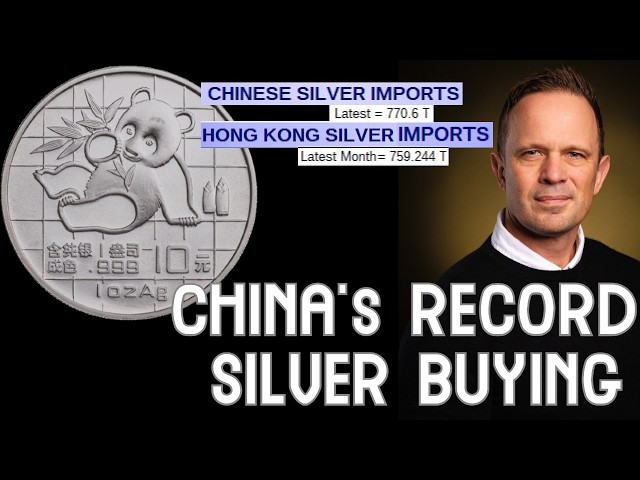
At the same time, physical demand remains strong. China continues importing large volumes of gold—on pace for over 1,000 tons annually—while domestic investors increasingly favor gold over struggling real estate and equity markets.
Silver’s Repricing Gains Momentum
While gold is the primary beneficiary of de-dollarization, silver is gaining traction as part of the broader move into hard assets. As confidence in fiat currencies erodes, investors are increasingly turning to both gold and silver as tangible stores of value. Wealth managers often recommend allocating 10–15% of portfolios to physical precious metals as a hedge against long-term dollar depreciation.
Silver’s fundamentals add another layer to the story. The market has been running supply deficits for roughly six consecutive years, leaving it vulnerable to future liquidity squeezes. Even with recent ETF and COMEX outflows providing temporary relief, the underlying supply-demand imbalance remains intact.
A major emerging driver is India, where silver investment demand is expanding rapidly. The country now holds billions in silver ETFs, with participation growing across hundreds of millions of trading accounts—adding a powerful new source of demand alongside traditional bullion buying.
From a valuation perspective, silver may still be significantly underpriced. Long-term historical comparisons suggest it could require a multiple increase in price to reach a new equilibrium.
Taken together, gold’s return to global reserves and silver’s tightening supply backdrop point to a continued bullish environment for precious metals—one increasingly shaped by de-dollarization and the global search for financial stability.
James Anderson's Market Update Notes:
The Return of Gold to 40% Global Reserves
Macro analyst Luke Gromen put this week's lead story perhaps most succinctly.
"If the world is breaking up into blocs again, then this chart is going back to where it traded the last time the world was broken into blocs. Gold is still one of the cheapest assets on the board - would need to rise 2-3x to mean revert."
The chart he posted was from Deutsche Bank Research's free report entitled "The return of history: gold, the dollar, and the monetary future". A link to it is in the show notes, and we'll go through a few highlights to start this week's Bullion Market Update.
The percentage share of gold in central bank reserves has been rapidly climbing this decade, trending back towards it pre-1990s range of 40% to upwards near 70% or more following WW2 and during last major gold bull market price peak in Jan 1980.
The fiat US dollarization that surged onto central bank balance sheets in the 1990s, is now reverting as de-dollarization and a move of especially emerging market central banks back to gold reserves as a more preferred long term savings anchor.
Even mainstream media consuming normies are increasingly being shown this phenomenon on a more regular basis.
Still most normies are unaware the USA lost over half its Gold Reserves following WW2 during Bretton Woods era trade deficits for decades. Or that the Euro Area did similar gigantic gold reserve tonnage sales in the 1990s, and 2000s before the 2008 GFC killed their gold reserve sale quota plans.
Following 2008, is when the world central banks began snapping out of their gold sales stupor and returned to being net Gold Reserve buyers.
Following the Russia Ukraine War and Russian US Treasury asset freezure in early 2022, central bank gold buying went next level to record sizes in tonnage terms.
We are now living in a world where the physical gold market is again more valuable than all marketable US Treasuries, echoing with the last time the Western world financial system got called to account by an exponentially rising gold price during the late 1970s.
Emerging market central banks have over $8 trillion in fiat FX reserves most of them are held by China, broader Asia, and Middle Eastern countries.
The base case of the report suggest $8000 oz gold by early next decade even if emerging market central bank balance sheets shrink down to $5 trillion by that time.
The more likely scenario IMHO is further mass fiat currency debasement given record debt piles the world over and five figure gold per oz would be my more likely suggestion.
Even with record nominal gold prices, physical demand remains strong worldwide through Q1 2026.
China is on pace to match her typical annual import tonnage figures over the last decade of well over another thousand tons of gold bullion imports, on top of her world leading gold mining internally.
And even in the face of near nominal record highs hit in the first quarter this year 2026, gold in fiat yuan since 1970 in the top left quadrant, silver top right, platinum bottom left, palladium bottom right.
The Chinese real estate bubble continues slowly collapsing in values now near where residential house prices were 20 years ago before the 2006. That market is tanking in other words.
Their internal stock market is getting trounced in underperformance vs gold in yuan over the last few years.
Motivations for continued Chinese gold buying are led by typical reasonings in other markets.
Geopolitical risks, outperformance of gold over other asset classes, de-dollarization trends, yuan depreciation concerns, and price dip buying culture that often culturally hold physical precious metals long term.
Today being May Day an international workers holiday in most of the world akin to our US Labor day.
The Chinese were out and about buying physical gold and silver bullion and high grade jewelry on their day off.
On the other side of this break we will break down this current gold price consolidation analog vs past gold bullion bull market price corrections and consolidations. To try and consider the typical timing before more bullish price action resumes heavily higher.
As well, a big picture look at the still precarious silver supply position worldwide.
Considering a famed billionaire trader's views on some of the factors that make for some of the biggest moves in wealth enhancement success for those looking to take advantage of market imbalances yet to fully rectify.
One way to try and assess how much more time this price consolidation will last, Jordan Roy-Bryne's analog chart extrapolates past price corrections from 1973, 2006, and today to get a sense of where gold has historically gone during these corrective phases.
The average gray line suggests gold will again be threatening new nominal record price highs later this year in the fall. Swiss bank UBS' CIO View on Gold calls for nearing $6000 oz gold later in this year. The general consensus remains bullish with a coming summer of patience and perhaps further positioning if you are not properly allocated as of yet.
Turning to silver, over the past month most selloffs and 1000 oz bar pulls have come from the COMEX, weak handed $SLV and Indian ETF net sellers.
According to precious metals industry analysts Metals Focus out of London, the world silver market is still in a precarious spot with only some recent breathing room given some ETF and COMEX outflows the last few months. This silver market remains still susceptible to further future liquidity squeezes to come.
And even though we have seen some silver ETF selloffs in India over the past few months, the trend remains that they are increasingly able to access a myriad of Indian Silver ETPs with no upwards of 200 million trading accounts and growing.
Adding a new layer on ongoing silver demand in India which coincides with ongoing outright silver bullion buying nationwide growing into a hoard of Indian ETF silver now over 1/3rd the size of the entire COMEX underlying in less than a few short years this decade thus far.
Just under $9 billion in silver ETFs in total in India in a national stock market worth presently just under $5 trillion currently. This is a setup for much larger inflows and demand to come in India and elsewhere around the world.
This week famed billionaire hedge fund trader, Paul Tudor Jones, a commodity trader who cut his teeth during the late 1970s bullion and commodity bull markets. Dropped a more 1 hour interview that covered a bit on the experience, the recent historic selloff in precious metals a few months ago. I left the video's link and some silver related timestamp notes in this week's show notes.
The following clips I think remain relevant to today's situation looking out some 5 years like Deutsche Bank Research did this week in the context of gold and its return to central bank balance sheets in size.
So central banks are leading this gold bullion bull ongoing with record buying. And we still have a silver market fundamentally running supply demand deficits for some six years ongoing helped by the fact that silver's spot price has I argue by its divergent daily price data, been mispriced now for about a decade and half running. To find a new 5th market balance since 1970, silver has to still climb by a factor of about five in price using today's up to data.
This bullion bull market mania will likely get out of hand to the upside, as most other have in the past so blowing higher than the blue line would simply be modern silver price history rhyming.
Big picture and bottom line, I'm staying heavy long bullion in this trend still unfolding.
That will be all for this week's bullion market update.
Sources:
Deutsche Bank Research Institute: The return of history: gold, the dollar, and the monetary future
PDF - https://www.dbresearch.com/PROD/IE-PROD/PDFVIEWER.calias?pdfViewerPdfUrl=PROD0000000000625515&rwnode=REPORT
Lessons From a Life in the Markets | Paul Tudor Jones Interview
https://www.youtube.com/watch?v=S31J5ACsOqU
^ at 15:06 PTJ on starting his trading career in COMEX $SI $Silver futures late 1970s
^ at 32:30 - 33:40 his point on market imbalances pertinent to the modern day world silver market
^ at 47:41 talking about Gold Silver's recent record 1-day drawdowns late Jan 2026, importance of having game plans (short, medium, long term)
Chinese Investors Are Buying the Gold Price Dip While North America Sells — Here's Why It Matters
https://youtu.be/PPlQJRdeVLg?si=8D8N56YComz0m7Wu