Gold and Silver Surge Early in the Week as Governments Sink Deeper Into Debt, Before Late-Week Pullbacks Hit Precious Metals Markets and Bond Market Turmoil
- Gold and silver endured a volatile trading week, with sharp swings driven largely by turmoil in global bond markets and growing investor anxiety over sovereign debt sustainability. Gold surged roughly $100 before closing near $4,540 an ounce, while silver softened, underscoring the uneven momentum inside the broader precious metals rally.
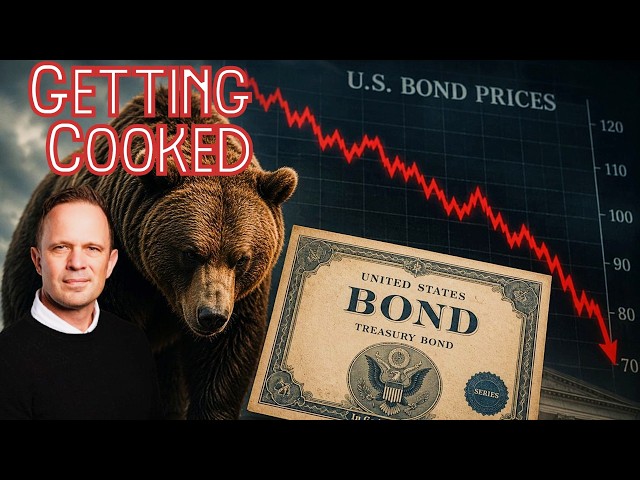
- The U.S. 30-year Treasury yield briefly climbed above 5%, its highest level since the period preceding the 2008 financial crisis, as investors demanded higher returns to finance increasingly indebted governments worldwide. Similar spikes in long-dated bond yields were seen across Japan, Germany, the U.K., Canada, and Australia.
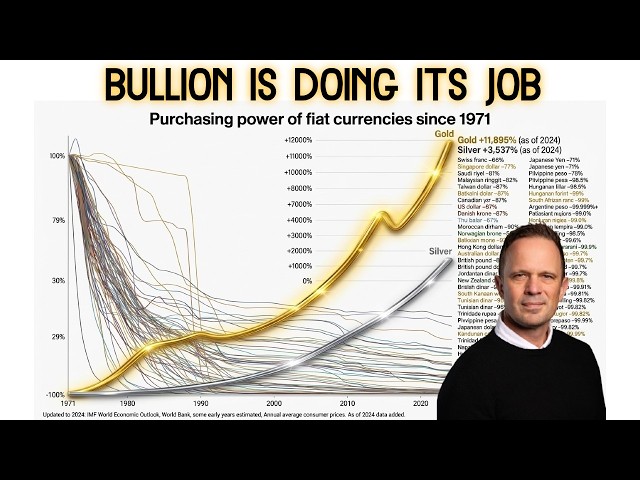
- Japan emerged as a major warning signal for global markets this week. Japanese 30-year bond yields hit record highs, while local gold prices have already quadrupled from their 1980 peak, reinforcing concerns that fiat currencies are steadily losing purchasing power against hard assets.
- Japanese investors reportedly sold nearly $30 billion in U.S. Treasuries during the first quarter of 2026, marking the largest wave of selling since 2022 and fueling speculation that foreign appetite for U.S. debt is beginning to weaken materially.
- Inflation concerns remain central to the precious metals narrative. April 2026 inflation data showed another sharp rise in energy costs, while comparisons to the inflationary environment of the late 1960s and 1970s continue circulating among market analysts forecasting a renewed period of double-digit real inflation.
- Silver market tightness intensified after a spike in London one-month lease rates suggested dwindling physical availability. At the same time, Chinese demand remained robust, with Shanghai warehouse inventories climbing toward 46.6 million ounces as physical silver continues flowing East.
- The gold-to-silver ratio (GSR) remained a focal point for bullion investors after briefly plunging into the low-50 range before rebounding near 59. Historically, sustained breaks below 60 have coincided with periods where silver dramatically outperformed gold during major precious metals bull markets.
- Bullion advocates continue to argue that physical gold has significantly outperformed gold mining equities over the last two decades. According to long-term market comparisons referenced in the update, gold bullion has outpaced major gold mining indexes by roughly fourfold since 2008.
- U.S. housing and equity markets are increasingly being measured against gold rather than fiat currency benchmarks. The median U.S. home now costs less than 90 ounces of gold, while the S&P 500 currently trades near 1.63 ounces of gold, levels that some analysts believe still signal substantial downside for financial assets relative to bullion.
- India’s efforts to curb bullion demand through higher import taxes may instead revive large-scale smuggling activity. Analysts note that when India’s gold import taxes approach 15%, illicit imports historically account for roughly one-fifth of total bullion inflows as consumers seek to bypass elevated government levies.
Rising sovereign debt concerns, inflation pressures, and tightening silver supply are fueling renewed momentum in precious metals as investors seek safety beyond traditional financial markets.
The silver and gold markets were up then down on the week's trading.
The spot silver price fell to close at $75.93 oz bid.
The spot gold price climbed $100, closing this week at $4,540 oz bid.
The spot gold silver ratio swung wildly down to as low as 52, then climbing to closing this week at 59.
I was asked this week about the importance of the 60 GSR level.
A rather volatile up and down week for the precious metals.
Reasons cited for such wild price volatility included wild swings in government debt markets.
We saw the 30 yr US bond selling above 5% the highest since just before the 2008 GFC.
The UK, Japan, Germany, Australia, Canada, many of the world's great debtor nations saw their bond yields spike to entice buyers as the market is obviously concerned about inflation to come.
After nearly a decade of ZIRP and NIRP nonsense, the world seems to want to be paid to lend to over indebted governments higher and higher now.
Japanese 30 yr bonds spiked this week to their highest yields ever.
Locally the price of gold in Japan has already nearly 4 folded in price compared to its 1980 high.
Their local silver price is still barely above their 1980 price high. That's one way to know this bullion bull market has much further to go. The bond markets haven't yet begun to fully crack.
This quarter one 2026, Japanese investors have begun selling off US Treasuries to the tune of nearly $30 billion. First time since 2022 we've seem sales that large of US debt in Japan.
US Federal government debt is a breathe away from $39 trillion officially. Count unfunded liabilities like social security, medicare, medicaid, etc. and we're already net present value owing many multiples of our annual GDP. We're not paying it back without sharply debasing our currency further to come. And being paid 5% interest in year the 2055 won't cut it as a decent return over three decades.
You all remember that phony Fort Knox audit?
Price inflation data for April 2026 came in and no surprise energy costs have blown sky high.
This late 1960s into 1970s price inflation chart made the rounds this week synching up the last dozen years of underreported CPI inflation data suggesting another phase of high double digit real inflation may be coming around the bend to close this decade.
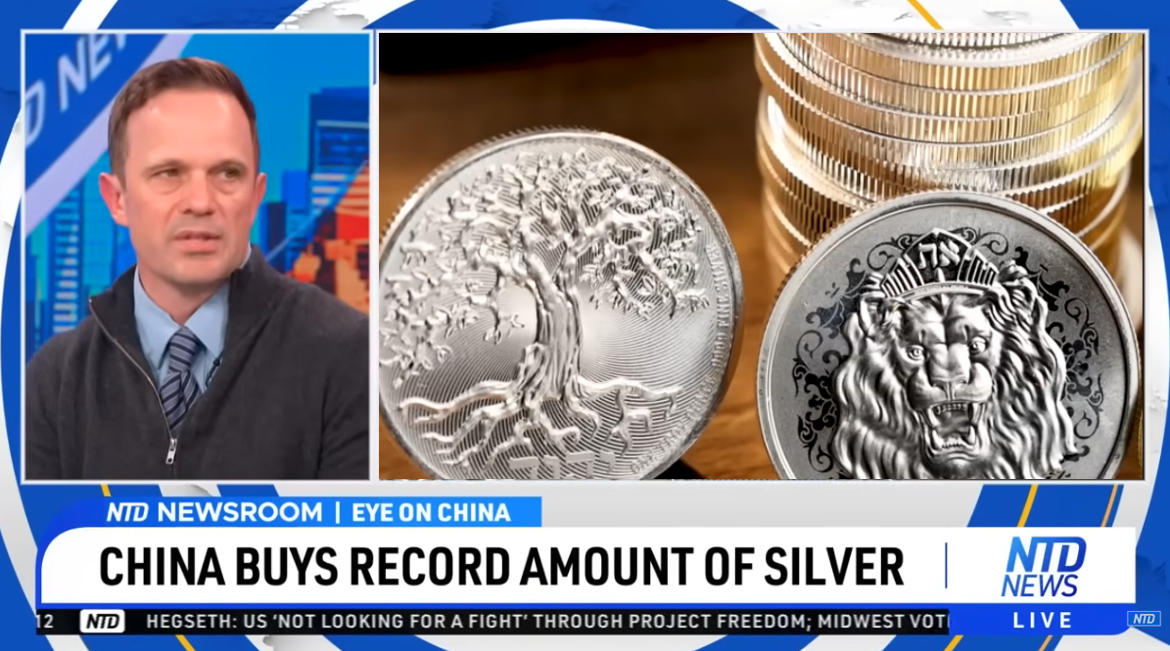
Premiums for silver in China continue staying the low double digits for now, this has been the general trend all year sucking silver East with their SHFE and SGE warehouse holdings still climbing now near 46.6 million oz.
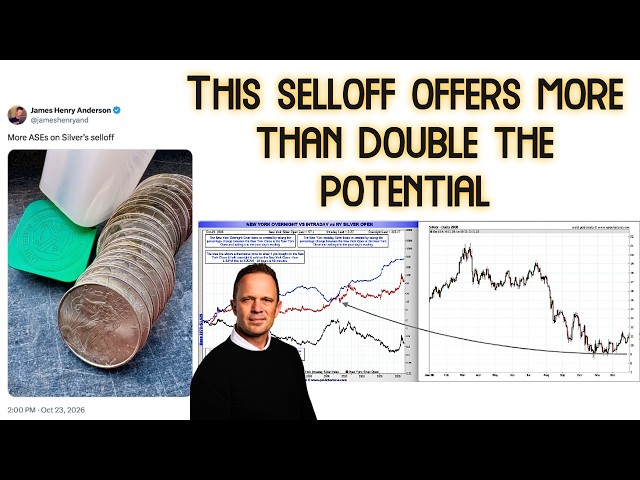
What perhaps helped set silver off this week was a fast spike in London 1 month lease rates suggesting that weak handed ETF sellers dried up enough to cause some lease rate climbing tightness in the market. Possibly with today's price shake they'll get more weak Western ETF gamblers to sell and loosen lease rates for the time being.
I continue seeing arguments on X Twitter between those who pump miners and those who pump bullion.
This chart is the best scoreboard I have since being in this industry since 2008, overall gold bullion has outperformed general gold mining indexes by a factor of about 4 multiples.
Yea there are some green line timeframes where miners outperform but the red lines signal an ongoing destruction phase of this post WW2 unipolar world. I want a return of my capital first and foremost. Give me the private bullion outright.
Swinging our eyes to data illustrating the World's Most Indebted Households. No surprise to find some of the most overpriced real estate markets extending and fiat financialized pretending to be well off. Swiss households owe about 150 grand per capita in debt.
Quick check on silver priced in fiat Swiss francs and we are still again below their 1980 nominal price high of back then much strong fiat Swiss franc currency units. Buy silver if you live in Switzerland.
Turning back the US real estate market. Latest data of US median priced home sales or the middle priced home sold in the USA is about $405,000. A bit less than 90 ounces of gold in other words and with aging boomers still owning large swaths of US homes and interest rates relatively high now vs the past ZIRP NIRP eras, well I'm suggesting the 1980 lows are gonna get blown by before this bullion bull mania phase peaks.
On the silver side of this chart we are back now just below 2011 low levels. It's the next major move for silver that likely takes it back toward the 1980 low levels. Perhaps late this decade.
Stick around on the other side of this break we're going to touch on the recent wild swings in the spot Gold Silver Ratio over the last half year in the context of the longer term.
We'll also cover India raising taxes on bullion imports to protect their fiat rupee from devaluing further and further to come.
The silver and gold markets were up then down on the week's trading.
The spot silver price fell to close at $75.93 oz bid.
The spot gold price climbed $100, closing this week at $4,540 oz bid.
The spot gold silver ratio swung wildly down to as low as 52, then climbing to closing this week at 59.
I was asked this week about the importance of the 60 GSR level.
In terms of my time in this industry when you start seeing the gold silver ratio break 60 and then do so with sharp moves lower like it did into the middle 40s only a few months ago in late Jan of this year. Well that's telling you which way the secular winds are blowing and in a bullion bull market silver eventually outperforms gold and that was just a prequel.
Even in pip squeak 2011, we saw a spot GSR in the low 30s making that a conservative low level to expect again as silver eventually goes further into shortage and hot capital makes precious metals prices get up and running hot again.
These are the two times the spot GSR fell below 60 and did for long stretches of time this Century.
They both coincided with red meet blue line #3 and 4 timeframes on this chart.
First you see the spot GSR slam below 60, then you eventually see the world silver market's price discovery fall back into balance, if only for a short price high while.
The nominal S&P 500 closed this week at just over 7,400. This chart and data shows that a stock market with price to earnings ratio of 23 historically high level, generally only returns between +2 to -2% for the next decade that follows.
Of course the powers that be will try and juice the nominal numbers of the stock market to mask the massive inflation going on. But my premise is the long term charts are already showing the stock market is going to lose to bullion in a big way this decade into next.
After falling to 1.29 oz of gold to afford the S&P 500 in late Jan with gold's then nominal record price high, we closed today at 1.63 oz to buy this stock bubble still higher than 1929. Eventually later this year or in the coming years, 1 oz of gold bullion will buy this nominal index. That's typical in US financial history, 1 to 1 parity. And in a raging commodity bull market, often a half ounce of gold or less will buy this entire index. That's the future I'm preparing for.
Off to India, trying to save their fiat currency from devaluing more and more.
The brown line on this chart shows that for the last decade there have been a few years in which India already charged 15% GST on both gold silver and other precious metals imports like platinum.
Those are high enough levels for smuggling gold bullion to make mathematical sense, so think gold dust painted jeans, bars in backsides, and gold flake toupees.
Estimates are when Indian bullion taxes get this high about 1/5th of bullion imports go dark smuggled to avoid the tax costs and make much more in local sales spreads. One way of another, the bullion buyers will get their tonnage.
That is going to be all for this week's bullion market update.
As always, to you out there.
Take great care of yourselves, and those you love.
Source:
India hikes Gold & Silver taxes as Modi pushes to protect the Rupee
https://www.youtube.com/watch?v=Ha3qkXkaiag&pp=ygUJZ29sZCBjbmJj