SD Bullion travels to Wales for an exclusive behind-the-scenes look at the revival of one of Britain’s most historic iconic coin designs — from centuries-old Angel coins and royal ceremonies to the striking of brand-new gold and silver Angels on the minting floor itself.


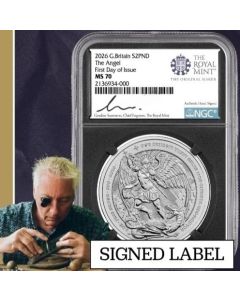
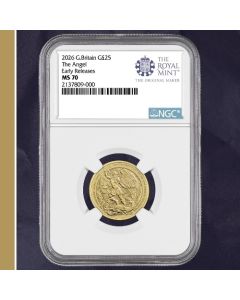
There are moments in the bullion world that feel bigger than coins. Bigger than ounces, premiums, or mintages. Standing inside The Royal Mint in Wales, watching molten history transformed into modern bullion art, was one of those moments — the kind of experience that reminds you why precious metals collectors become so obsessed with this hobby in the first place.
The Royal Mint does not feel like a factory.
It feels like a cathedral dedicated to metal.
The drive into Llantrisant, Wales, already sets the tone. The roads twist through rolling green countryside under heavy gray skies that seem pulled straight from a medieval painting. Even getting there feels symbolic — SD Bullion CEO Chase Turner and COO Cole Keller navigating the “wrong” side of the road from London, laughing through roundabouts and narrow Welsh roads before arriving at one of the oldest minting institutions on Earth.

And then suddenly, there it is.
The Royal Mint.
Not just a building, but a living continuation of British monetary history stretching back over 1,100 years.
The kind of place where you instantly lower your voice without realizing it.
Where every hallway feels heavy with legacy.
Where gold has been transformed into symbols of power, empire, protection, and belief for centuries.
But this visit was about something different.
Something almost mythical.
The rebirth of the Angel.
The First Time Seeing the Angel
Every serious collector knows the feeling.
That split second when you see a coin design and immediately know it is special.
Not “interesting.”
Not “nice.”
Special.
Cole Keller described it perfectly during the visit. The Angel design appeared during a product roadmap presentation, buried among other concepts and pitch decks. Then suddenly — the meeting stopped. Completely.
“What is this?”
That was the reaction.
Because the Angel does not look like modern bullion. It looks timeless.
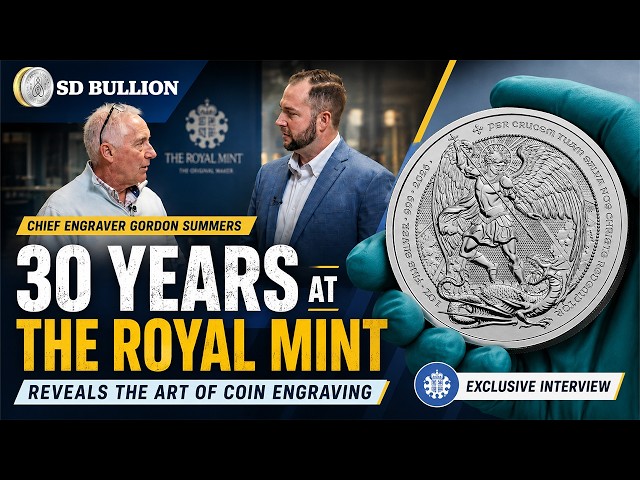
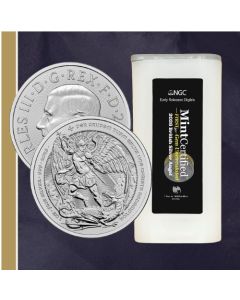
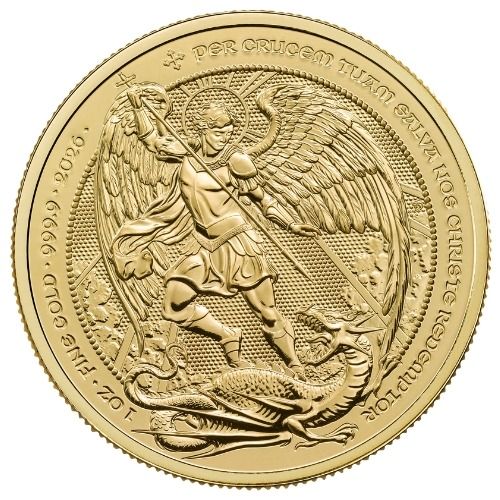
The design strikes with immediate force: St. Michael descending in triumph, slaying the dragon beneath him — good overcoming evil in a single dramatic moment frozen in metal. The composition carries movement, energy, and symbolism all at once. Unlike sterile modern coinage, the Angel feels alive.
And holding the finished pieces inside The Royal Mint museum made it even more surreal.
Freshly struck gold Angels sat gleaming under museum lights beside genuine 600-year-old originals from the 1460s.
Six centuries separated them.
Yet the connection was unmistakable.
The original Angel coin was first introduced during the reign of Edward IV in 1465. At a time when monarchs ruled through divine authority, the Angel became more than currency. It represented heavenly protection, royal legitimacy, and spiritual power.
Royal Mint historian Chris Barker explained the imagery with visible admiration.
St. Michael, protector against evil, stands victorious over a beast-like dragon figure representing the devil itself. Even the Latin inscription carried over into the modern release translates to:
“By Thy Cross Save Us, O Christ Redeemer.”
That inscription alone feels like something pulled from a lost medieval relic.
Because in many ways, it is.
The Ceremony of the King’s Evil
Then the story became even stranger.
And better.
Inside the museum, Chris Barker revealed historic Angel coins pierced with holes. At first glance, they almost seem damaged. But the truth behind them transports you directly into medieval England.
For centuries, people believed monarchs possessed divine healing powers granted directly from God.
Victims suffering from scrofula — known as “The King’s Evil” — would attend ceremonial healing rituals where the monarch touched them while presenting blessed Angel coins. Those coins were then pierced, threaded with silk, and worn around the neck like sacred amulets for protection and healing.
Imagine that.
A gold coin functioning simultaneously as money, spiritual object, royal symbol, and protective talisman.
That is the kind of layered history modern bullion almost never captures anymore.
Most coins today are products.
The Angel is a story.
Standing there hearing this while holding the modern reinterpretation created a strange feeling difficult to describe as a collector. Suddenly the design was no longer just beautiful artwork.
It had weight.
Meaning.
Continuity.
The modern release suddenly felt less like a new coin and more like a resurrection.
Seeing Ancient Craftsmanship Up Close
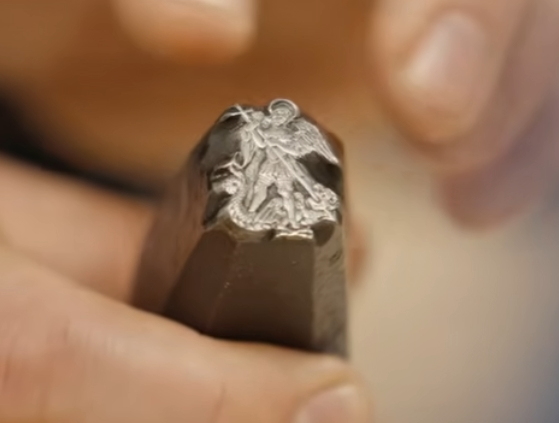
Then came one of the most jaw-dropping moments of the entire tour.
Chris Barker unveiled an original Angel coin punch dating back to the 1620s.
The room practically froze.
Because the detailing was unbelievable.
The engraving was razor sharp despite being over 400 years old. Every line had been cut entirely by hand. No CNC machines. No lasers. No digital sculpting software. Just human skill, patience, and artistry.
The realization hits hard when you see it in person:
Every historic coin collectors admire today once began as raw steel touched by an engraver’s hand.
Barker explained how these master punches became the foundation for creating working dies, which then struck hundreds of coins before wearing out. The actual minting process during the Tudor and Stuart eras was shockingly primitive by modern standards — dies fixed into wooden blocks, blanks placed between them, then struck manually with hammers.
Yet somehow, those craftsmen still produced coins beautiful enough to survive six centuries and inspire an entirely new bullion program today.
That connection between ancient craftsmanship and modern minting becomes impossible to ignore during this tour.
Entering the Production Floor
Then came the moment every bullion collector dreams about.
Walking onto the production floor.
The atmosphere changes immediately.
The museum carries reverence.
The mint floor carries energy.
Machines thunder rhythmically across the facility while polished blanks move through highly controlled production lines under bright industrial lighting. Massive presses operate with hypnotic precision, each strike delivering enormous force in fractions of a second.
And somewhere in the middle of that controlled chaos, gold Angels were being born.
Not displayed.
Not photographed.
Created.
Fresh one-ounce gold Angel coins emerged from the presses with blazing luster, their surfaces catching light in sharp bursts as employees carefully monitored production.
But the unforgettable part?
Chase and Cole actually got to strike them.
Not symbolic participation.
Real minting.
Real presses.
Real gold coins.
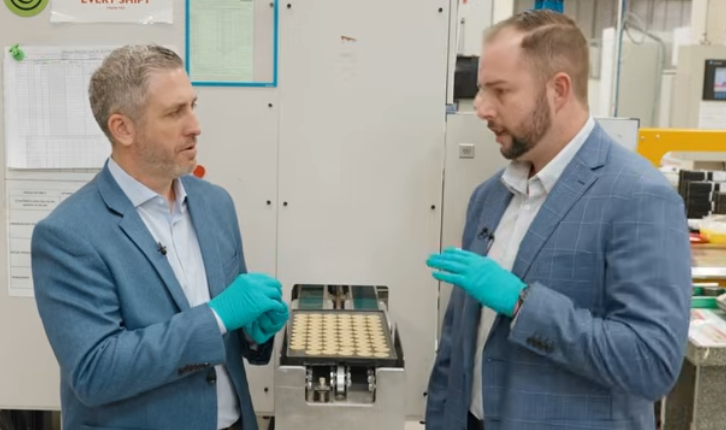
“I got to start the press. I got to make these,” Chase said with obvious disbelief while holding newly struck pieces.
For collectors, that is almost impossible to imagine.
Most people buy bullion after it disappears into tubes and monster boxes. Very few ever witness the exact instant a coin enters existence.
Inside The Royal Mint, that veil disappears.
You hear the presses.
You smell the machine oil and metal.
You watch blanks transform into finished bullion in seconds.
And suddenly coins stop feeling mass-produced.
They feel engineered.
Crafted.
Earned.
Gordon Summers and the Modern Angel
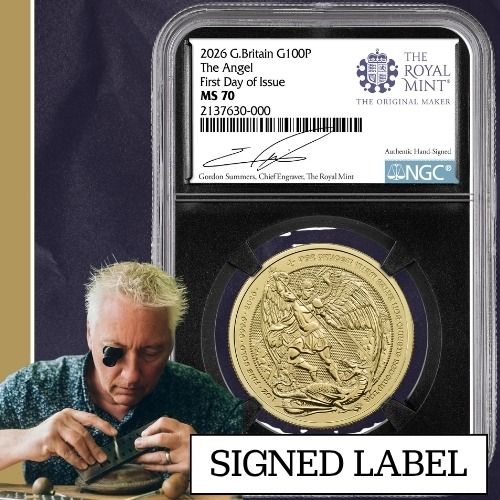
Meeting Chief Engraver Gordon Summers revealed just how much artistry hides behind great bullion design.
Summers is not merely an engraver.
He is a sculptor of national identity.
Having worked at The Royal Mint for over 30 years, his career began after winning a medal design competition and teaching himself engraving almost entirely on his own.
His explanation of coin design was fascinating because it exposed the balance between beauty and technical survivability.
A design cannot merely look good on paper.
It must strike correctly.
Flow correctly.
Resist defects.
Maintain detail through large production runs.
And still emotionally connect with collectors.
That challenge becomes even harder with bullion because unlike low-mintage proofs, bullion coins must maintain exceptional quality across massive volumes.
Summers explained how the Angel’s radiating background lines serve dual purposes — enhancing visual drama while also reducing visible imperfections and strengthening anti-counterfeit security.
That tiny detail perfectly captures modern minting philosophy:
Beauty fused with function.
And perhaps the most powerful statement came directly from Summers himself.
“This is a design that’s an instant classic.”
Collectors know exactly what he means.
Some coins become popular.
Others become timeless.
The Angel feels destined for the second category.
The Royal Mint’s Future Meets Its Past
One of the most fascinating aspects of the entire visit was realizing how intentionally The Royal Mint balances innovation with heritage.
During conversations with Andrew Dickey, Director of Precious Metals, discussions shifted toward Britannia security technology, advanced micro-detailing, latent imaging, tincture lines, and anti-counterfeit innovations.
Yet despite all the technological sophistication, the emotional core of the Angel program remains ancient.
Protection.
Strength.
Triumph over evil.
Divine symbolism.
Those ideas resonate today just as powerfully as they did in medieval England.
That is why the Angel works.
It does not feel like a marketing creation.
It feels rediscovered.
The Feeling Collectors Chase
Every serious bullion collector eventually realizes something important:
The best coins are not just metal.
They carry atmosphere.
And the Angel carries atmosphere in abundance.
Standing inside The Royal Mint while these coins emerged from the presses felt like watching history loop back on itself. Ancient symbolism met modern precision. Medieval iconography collided with contemporary bullion demand. Six hundred years of British minting tradition condensed into a single ounce of gold.
That is what makes this release exciting.
Not just scarcity.
Not just craftsmanship.
Not just exclusivity.
But the feeling.
The feeling that when you hold an Angel coin, you are holding a design that already survived centuries — and may very well survive centuries more.
For modern bullion collectors, experiences like this are why the hobby becomes an obsession.
Because every now and then, a coin comes along that reminds you precious metals were never only about investment.
Sometimes they are about legacy.
Sometimes they are about history.
And sometimes, like the Angel, they feel almost immortal.
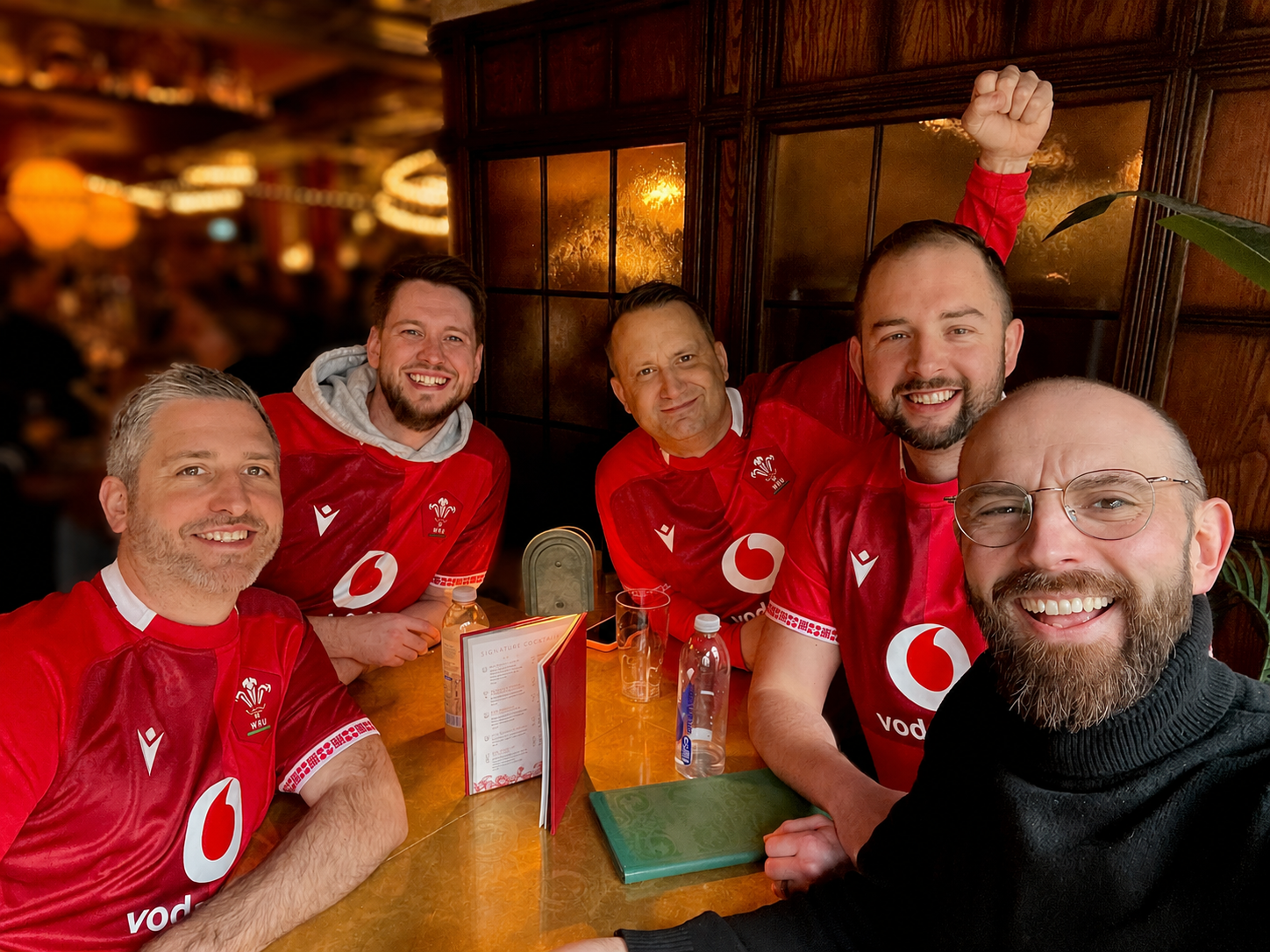
As the day at The Royal Mint came to a close, the experience shifted from historic minting halls to something equally authentic — Welsh culture itself. Andrew Dickey, Director of Precious Metals at The Royal Mint, and his team welcomed Chase and Cole to a local pub to watch the Wales national rugby union team, ending the evening surrounded by passionate fans, great conversation, and the unmistakable pride that runs through the country. It was the perfect reminder that behind every legendary mint are real people — engravers, historians, craftsmen, and leaders — all deeply connected to the traditions they help preserve. At SD Bullion, these are the moments we love sharing most. Not just the finished coins, but the stories, personalities, and history behind them. As long as we have the opportunity to work alongside the world’s greatest mints, we’ll continue bringing collectors an all-access pass behind the scenes of the bullion world.