Gordon Summers: The Master Engraver Shaping Modern Royal Mint Coinage
Inside the 30-Year Career of The Royal Mint’s Chief Engraver and the Artistry Behind Britain’s Most Iconic Modern Coins
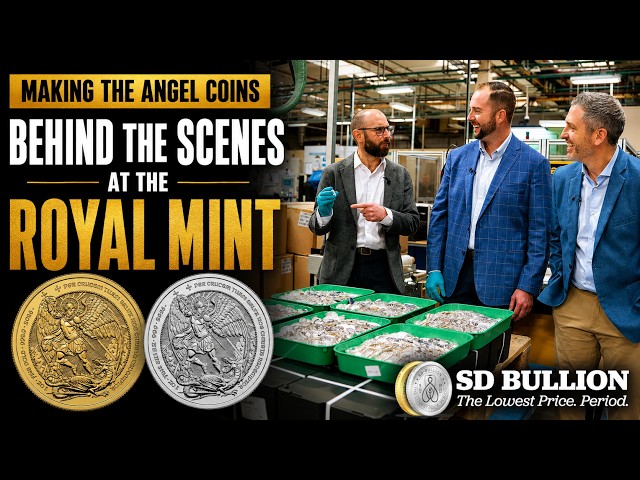
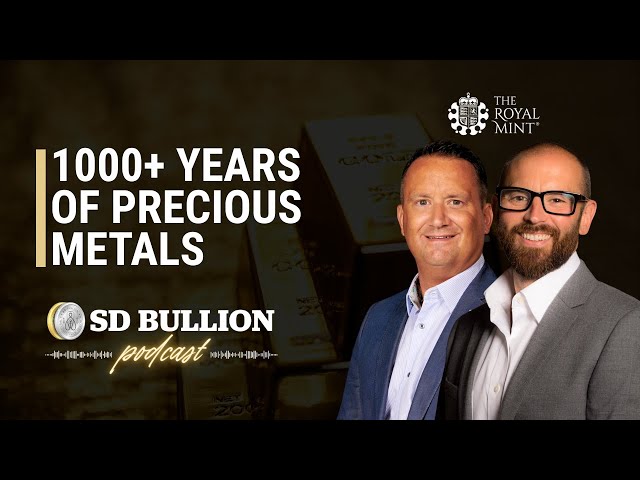
For most coin collectors, the fascination begins with the finished product — the gleam of a proof strike, the sharpness of relief, the timeless symbolism pressed into precious metal. But every truly memorable coin has a story behind it, and at The Royal Mint, few people have shaped those stories more profoundly than Chief Engraver Gordon Summers.
After hearing Summers speak candidly about his career and philosophy at The Royal Mint, I came away with even greater respect for the craftsmanship hiding behind every great coin design. What collectors often see as “just another release” is, in reality, the product of decades of artistic discipline, technical problem-solving, and relentless refinement.
Summers is not merely an engraver. He is one of the key custodians of modern British numismatic artistry.
From Jewelry Design Student to Chief Engraver
What makes Gordon Summers’ journey especially compelling is how unplanned it initially was.
Summers joined The Royal Mint in 1993 after studying jewelry design in college. While there, he won a medal design competition — an achievement that first connected him with The Royal Mint. Interestingly, he admitted that when he entered Royal Mint coin design competitions afterward, he “repeatedly lost badly.”
That honesty says a lot about him.
Rather than giving up, Summers essentially created his own opportunity. After asking what qualifications he needed to work at the Mint, he was told it “might be good if you could engrave.” So he spent an entire year teaching himself engraving before applying again.
For collectors, that detail matters. Great coin engraving is not something casually learned. Summers himself explained it perfectly:
“Five years and you become an engraver. Ten years and you become a competent engraver. Thirty years and you’re pretty good and then you retire.”
That statement may be one of the best descriptions of numismatic craftsmanship I’ve ever heard.


The Hidden Complexity Behind Coin Design
Collectors often focus on aesthetics alone, but Summers gave rare insight into the brutal balancing act between artistry and manufacturability.
A beautiful sketch does not automatically become a beautiful coin.
Every British coin must pass through advisory committees that evaluate designs from both internal artists and outside contributors. The Royal Mint deliberately welcomes external artists because they are not constrained by the technical realities of coin production.
That point fascinated me.
Internal engravers understand all the limitations of striking metal efficiently. Outside artists often challenge those boundaries simply because they do not know what is “supposed” to be impossible. According to Summers, that tension is healthy because difficult designs are not necessarily impossible ones.
That philosophy explains why modern Royal Mint coins continue pushing technical boundaries.
And Summers has certainly had enough experience tackling those challenges. At one point, he estimated he had worked on roughly 5,000 coins during his career — and believed the number had likely climbed closer to 7,000 by now.
That figure is staggering.
The Artist Behind Innovation and Security
One of the most revealing aspects of Summers’ commentary involved bullion coin security.
Collectors and investors increasingly appreciate advanced security features, but many may not realize these elements also serve artistic and manufacturing purposes. Summers explained how textured backgrounds and radiating line patterns used on bullion silver coins help reduce visible defects while simultaneously making counterfeiting dramatically more difficult.
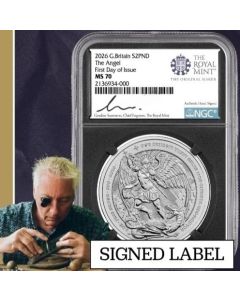
The modern Angel bullion coin is a perfect example.
Summers described the Angel design by artist Sandra Deiana as an “instant classic,” praising its blend of beauty and classical styling. As a collector, I completely understand what he meant. Some designs feel forced or overly modern. Others simply look timeless from the moment you see them.
The Angel feels like one of those rare coins.
What impressed me most was Summers’ explanation of how technical decisions enhance both beauty and durability. The textured surfaces are not just decorative — they help minimize fingerprints, dust visibility, and production imperfections across massive bullion mintages.
That is the kind of behind-the-scenes engineering collectors rarely get to hear about directly.
Reviving Historic British Masterpieces
Another aspect of Summers’ career that deserves admiration is his role in remastering classic British coin designs.
One standout project discussed was the famous Una and the Lion design originally created by William Wyon. Summers described it as one of the most iconic coin designs in British numismatic history.
And honestly, it is hard to disagree.
Rather than merely reproducing historical designs, Summers and his team aim to give original artists the opportunity to realize their vision using modern minting technology.
That approach is deeply respectful to numismatic history.
Too often, modern reinterpretations lose the soul of the original. But The Royal Mint’s recent remastered classics feel like careful restorations rather than commercial reproductions.
For serious collectors, that distinction matters immensely.
Why Gordon Summers Matters to Collectors
Many collectors know the names on the coin labels. Fewer know the people responsible for translating artistic vision into struck metal.
Gordon Summers belongs in that second category — the craftsmen whose influence quietly shapes modern numismatics.
After more than 30 years at The Royal Mint, his perspective reflects something increasingly rare: a lifetime dedicated to mastering a specialized art form.
And perhaps what I appreciated most was his humility.
Even after thousands of coins and decades of experience, Summers admitted that every new coin remains a challenge. That mindset is probably why his work continues to resonate so strongly with collectors today.
The best engravers never stop learning.
For collectors like myself, hearing Gordon Summers discuss coin design reminds us why numismatics is so captivating in the first place. Coins are not merely pieces of metal. They are miniature sculptures carrying history, technology, artistry, and national identity all at once.
And behind many of the finest modern British coins stands Gordon Summers — quietly engraving his legacy into numismatic history.