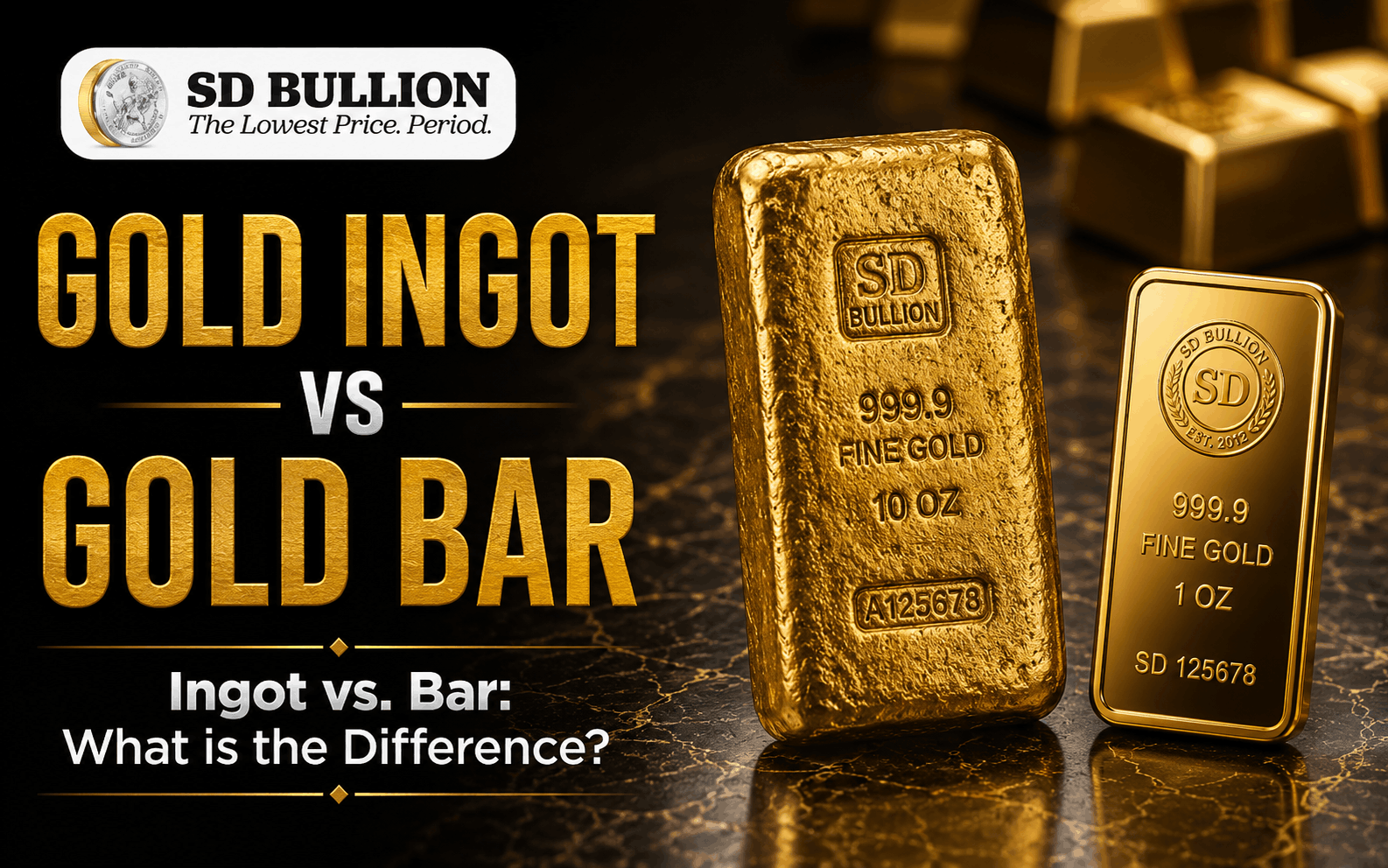
The primary difference in ingot vs bar comes down to manufacturing: a gold ingot is traditionally cast by pouring molten metal into a mold, while gold bars are typically minted or stamped. Both give individual investors and precious metals buyers direct exposure to physical gold bullion, but cast ingots usually have a more rustic, poured finish and lower manufacturing premiums, while minted gold bars offer polished surfaces, intricate designs, and slightly higher over-spot costs.
For buyers deciding which form fits a wealth-preservation strategy, those differences affect more than appearance alone. They influence premium cost, common sizes, retail versus institutional use, and how each product may fit into a portfolio built for liquidity, price efficiency, and long-term wealth protection. Individual investors looking to purchase precious metals can track the live spot price at SD Bullion to compare how these distinct production styles alter the total premium per ounce.
Key Takeaways
-
Manufacturing Process: The primary difference lies in production; gold ingots are traditionally cast from molten metal, while gold bars are typically minted or stamped.
-
Visual Appearance: Gold ingots feature a rustic, poured finish with a slightly uneven surface. Minted gold bars display polished, uniform surfaces with precise dimensions.
-
Premium Variance: Gold ingots generally carry a lower premium due to a simpler production process, while bars often command higher premiums due to advanced minting and detailed artistic finishes.
-
Portfolio Protection: Both asset forms preserve long-term wealth and protect money purchasing power against inflation.
Jump to: What is a Gold Ingot? | What is a Gold Bar? | Key Differences | FAQs
What Is a Gold Ingot and How Is It Made from Molten Gold?
A gold ingot is a cast mass of fine gold intended for shaping, remelting, or refining, formed by pouring molten metal into a mold and allowing it to cool and solidify. This traditional casting method gives ingots their characteristic shape and slightly uneven surface, which is why they are frequently referred to as poured gold bars and can appeal to collectors seeking a more distinctive finish. The physical production starts with refining gold ore to a target purity such as 99.9% or .999 fine before melting and pouring. Once poured , the metal is left to cool , hardens completely, and is removed from the mold. Each individual piece is then inspected by manufacturers and directly marked with its exact weight , purity , and fineness parameters.
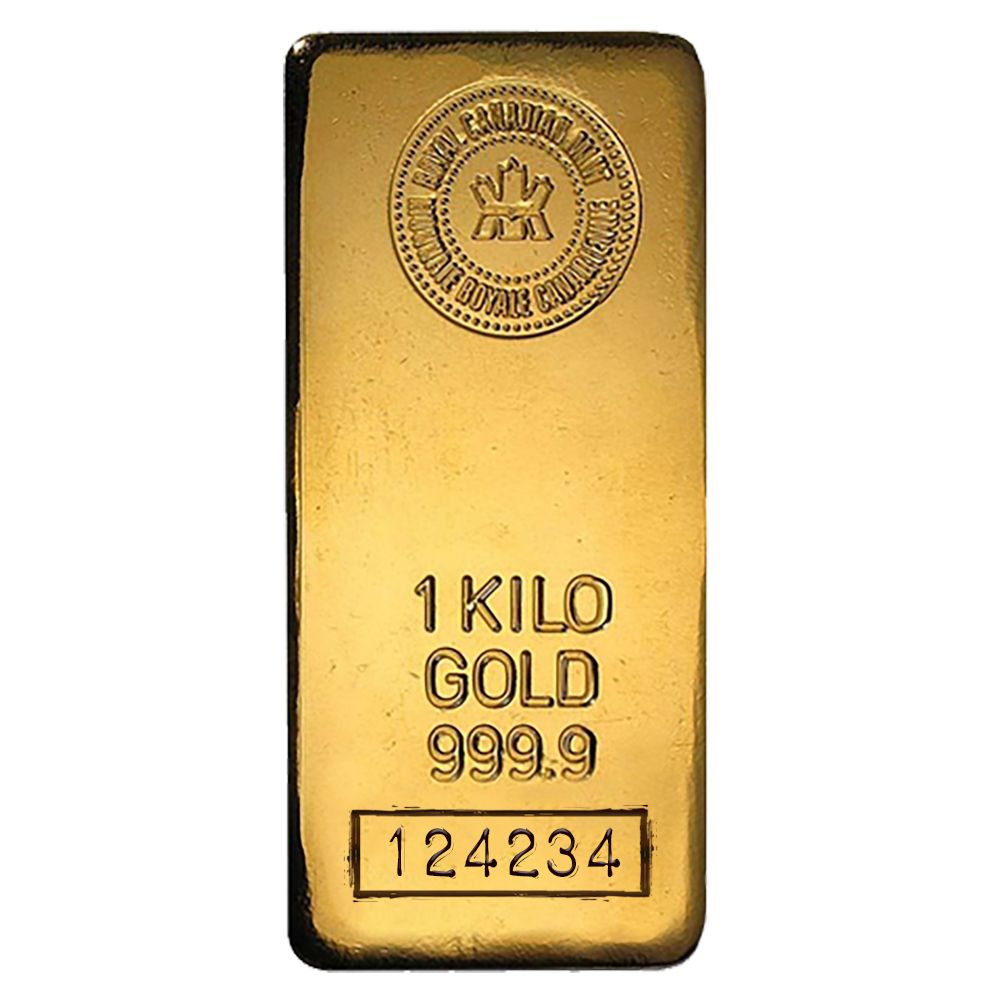
Physical ingots are produced in various sizes to serve different sectors of the precious metals market. While retail buyers often acquire smaller variations, ingots are generally larger and heavier than bars, and standard institutional gold ingots weigh about 400 troy ounces. These larger institutional units must comply with strict size requirements and refining guidelines set by the London Bullion Market Association (LBMA), including a minimum fineness of 99.5% or .995 to qualify for the Good Delivery List and enter global vaults. Because of their highly standardized purity metrics, these poured products are easily recognizable and liquid worldwide.
Each ingot is then inspected and imprinted with details such as purity, weight, and manufacturer identification.
What Is a Gold Bar?
A minted gold bar is an investment-grade product made from refined gold that is manufactured using a precise stamping or minting system. Unlike poured products, this method involves taking extended strips of metal , cutting uniform blank shapes, and striking them under immense pressure with industrial dies. This process ensures every piece is characterized by a highly polished appearance , uniform edges , and exact dimensions. To enhance security and visual value , stamped bars often incorporate intricate designs , brand logos, serial numbers, and specialized fineness certificates.


Minted gold bars are actively produced across an expansive range of weight increments, including the globally popular one troy ounce size. Unlike sovereign coins , physical bullion bars carry no legal face value and are not considered legal tender by government banks. Instead, their total market value is completely transparent and derived from two distinct factors: the exact gold content weight and the live spot price of the precious metals market. This straightforward asset structure makes them exceptionally efficient for personal investing.
"Stamped bars are known for their uniform aesthetic, sharp edges, and clean finish—many feature intricate designs, serial numbers, logos, and inscriptions..."
Key Differences Between Gold Bullion Ingots and Bars
While both options represent physical gold bullion that possesses deep inherent value, analyzing their key differences helps investors build a highly optimized portfolio. The operational difference stems from the physical production process. Gold ingots are cast directly by pouring hot liquid into open frames, creating an industrial finish. Gold bars are mechanically pressed, yielding a flawless, geometric asset format.
Furthermore, because pouring requires less intensive machinery and labor, gold ingots generally exhibit a lower premium over the market spot price. Pressed bars command higher premiums to cover the costs of protective assay cards and advanced decorative features. In terms of market circulation, smaller minted pieces populate retail avenues, while heavy good delivery bar units are predominantly stored within central banks and international financial firms.
|
Feature |
Gold Ingots |
Gold Bars |
|
Production Method |
Cast from molten gold |
Minted or stamped |
|
Appearance |
Rustic, poured finish |
Polished and uniform |
|
Common Sizes |
Various sizes, up to heavy institutional weights |
Wide range, starting at one troy ounce |
|
Premium |
Generally lower over market spot |
Often higher due to processing |
|
Market Use |
Wholesale trade and institutional storage |
Retail asset allocation and personal investing |
|
Recognition |
Globally accepted across the industry |
Universally recognized by dealers |
Conclusion
Gold ingots and gold bars offer a practical way to acquire and hold physical gold for the long term. Poured gold ingots can provide cost efficiency through lower manufacturing costs, making them well suited for larger purchases. Minted gold bars offer refined finishes, precise dimensions, and, in many cases, individual serial numbers that can help with identification and verification.
Before completing your next physical gold purchase, consider your goals, budget, and the current gold price per ounce. Visit SD Bullion to track live precious metals prices, compare the cost per troy ounce, evaluate premiums over spot, and choose from a wide selection of physical gold products.
Frequently Asked Questions (FAQs)
Are silver bullion bars and silver ingots subject to the same production differences?
Yes, silver bullion follows the exact same manufacturing rules as gold; silver ingots are poured into a mold , while silver bars are cleanly minted or cut as rounds. Both forms must meet a minimum purity standard of 99.9% pure silver to achieve global market liquidity.
Can both asset types be safely stored in a precious metals retirement account?
Both gold bars and cast ingots are eligible for inclusion within a self-directed retirement account, provided their gold content meets strict industry fineness requirements. To preserve your wealth , these physical products cannot be stored at home; they must be securely stored inside an IRS-approved vaulting facility.
How does jewelry compare to physical bars and ingots for investment?
Unlike investment bullion, jewelry carries exceptionally high manufacturing premiums because of intense fabrication labor and retail markups. Furthermore, jewelry is rarely crafted from pure, unalloyed metal , making other forms of gold—such as minted bars , sovereign coins, or cast frames—significantly more efficient for direct market exposure.
Are silver bullion bars and silver ingots subject to the same production differences?
Yes, silver bullion follows the exact same manufacturing rules as gold; silver ingots are poured into a mold , while silver bars are cleanly minted or cut as rounds. Both forms must meet a minimum purity standard of 99.9% pure silver to achieve global market liquidity.
Can both asset types be safely stored in a precious metals retirement account?
Both gold bars and cast ingots are eligible for inclusion within a self-directed retirement account, provided their gold content meets strict industry fineness requirements. To preserve your wealth , these physical products cannot be stored at home; they must be securely stored inside an IRS-approved vaulting facility.
How does jewelry compare to physical bars and ingots for investment?
Unlike investment bullion, jewelry carries exceptionally high manufacturing premiums because of intense fabrication labor and retail markups. Furthermore, jewelry is rarely crafted from pure, unalloyed metal , making other forms of gold—such as minted bars , sovereign coins, or cast frames—significantly more efficient for direct market exposure.