















1 oz Gold Bars
A 1 oz gold bar contains one troy ounce (31.1035 grams) of gold and is typically .9999 fine. As one of the most widely traded formats of physical gold bullion, it offers investors a practical balance of liquidity, global recognition, store of wealth and manageable storage. Compared with many gold coins, these bars also tend to carry lower premiums, allowing buyers to acquire gold at a lower cost relative to its spot value.
Produced by established mints and refineries worldwide, 1 oz gold bars are available in a variety of designs and packaging options. Their standardized weight and broad market recognition make them a practical choice for investors building or diversifying a precious metals portfolio.
1 oz Gold Bar Highlights
-
Contains 1 troy ounce (31.1035 grams) of gold;
-
Typically .9999 fine gold, although purity varies by product;
-
Produced by established global mints and refineries;
-
Often supplied in protective assay packaging;
-
Offers broad market recognition and strong resale liquidity;
-
Typically carries lower premiums than many comparable gold coins;
-
Compact and convenient to store;
-
Available in a variety of recognized brands and designs;
-
May qualify for a Precious Metals IRA when the bar meets applicable IRS requirements.
1 oz Gold Bars vs. Other Gold Bar Sizes
Gold bars are available in a variety of weights, from small gram-denominated gold bars to large 10-oz and kilogram bars. Each size offers different advantages depending on an investor's goals, budget, and liquidity needs.
Smaller bars, such as 1 gram gold bars, often appeal to first-time buyers because of their lower purchase price, though they typically carry higher premiums. Larger bars generally offer lower premiums per ounce but require a greater upfront investment and may be less flexible when it comes time to sell.
A 1oz gold bar combines many of the advantages of both. It offers meaningful tangible ownership, broad market recognition, and strong liquidity while remaining accessible to a wide range of investors.
|
Gold Bar Weight |
Best For |
Key Advantage |
|
1 Gram |
New investors |
Lowest entry cost |
|
5–10 Gram |
Gradual accumulation |
Affordable purchases |
|
1 oz |
Most investors |
Balance of liquidity and value |
|
100 Gram |
Larger investments |
Lower premiums |
|
10 oz+ |
High-volume buyers |
Maximum gold per purchase |
When comparing gold bar sizes, investors should consider premiums, liquidity, storage requirements, and resale flexibility—not just the purchase price.
1 oz Gold Bars vs. Gold Coins
Gold bars and gold coins offer valuable ways to invest in physical precious metals. The right choice depends on an investor's objectives and preferences.
One of the primary advantages of 1 oz gold bars is cost efficiency. Because bars generally require less intricate manufacturing, they often carry lower premiums than comparable gold coins. This allows investors to maximize the amount of gold they acquire.
Gold coins offer their own benefits, including government backing, legal tender status, and collectible appeal. Popular examples include the American Gold Eagle, American Gold Buffalo, Canadian Gold Maple Leaf, and South African Krugerrand.
|
Feature |
1 oz Gold Bars |
1 oz Gold Coins |
|
Premiums |
Typically lower |
Often higher |
|
Gold Content |
1 troy ounce |
1 troy ounce |
|
Legal Tender Status |
Typically no |
Yes |
|
Collectible Appeal |
Limited |
Often higher |
Many investors hold both gold bars and gold coins, using bars to accumulate gold efficiently and coins to diversify their precious metals holdings.
Best 1 oz Gold Bar Brands to Consider
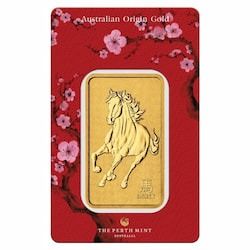
Some of the most recognizable 1 oz gold bars come from established refiners and mints, including PAMP Suisse, Valcambi Suisse, Perth Mint, Royal Canadian Mint, Sunshine Mint, Scottsdale Mint, Argor-Heraeus, and The Royal Mint.
These brands offer a variety of designs, packaging formats, and authentication features, giving investors several options when comparing gold bullion. Availability and specifications vary by product, so buyers should check current listings before choosing a specific bar.
1 oz Gold Bar Brand Comparison
|
Mint/Refiner |
Purity |
Assay Packaging |
Design or Security Feature |
Best For |
|
Perth Mint |
Typically .9999 fine gold |
Assay card on applicable products |
Product-specific designs and features |
Investors seeking global recognition |
|
Sunshine Mint |
Typically .9999 fine gold |
CertiCard on the listed 1 oz bar |
Eagle design and MintMark SI™ technology on the applicable bar |
Buyers interested in authentication features |
|
Scottsdale Mint |
Typically .9999 fine gold |
Varies by product |
Lion emblem on applicable designs |
Investors seeking recognizable designs |
|
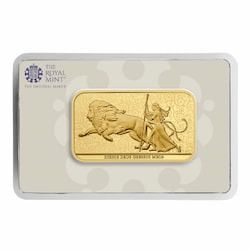
The Royal Mint |
Typically .9999 fine gold |
Assay packaging on the listed Britannia bar |
Britannia design |
Buyers seeking bullion from an established mint |
|
Royal Canadian Mint |
Typically .9999 fine gold |
Verify by product |
Maple leaf imagery on applicable designs |
Investors seeking recognized Canadian bullion |
|
Valcambi Suisse |
Typically .9999 fine gold |
Assay card on applicable products |
Recognized Swiss refining brand |
Investors seeking international recognition |
|
PAMP Suisse |
.9999 fine gold on the listed 1 oz Lady Fortuna bar |
Assay packaging |
Lady Fortuna design and Veriscan authentication technology |
Buyers interested in recognizable branded bullion |
|
Argor-Heraeus |
.9999 fine gold on the listed 1 oz Kinebar |
Assay card |
Kinebar holographic security technology |
Buyers interested in authentication features |
Regardless of the brand, investors should evaluate gold bullion bar purity, authenticity, liquidity, and market recognition when comparing products and choosing one that aligns with their investment goals.
What to Look for When Buying a 1 oz Gold Bar
When choosing a 1 oz gold bar, focus on purity, authenticity, and liquidity. Most investment-grade bars are refined to .9999 fine gold and produced by trusted refiners such as Perth Mint, Royal Canadian Mint, Sunshine Mint, Scottsdale Mint, Valcambi, and Argor-Heraeus.
Most 1 oz gold bars are also stamped with their weight, purity, and the mintmark or name of the producing refinery, making them easy to identify and authenticate.
After comparing purity, mint recognition, packaging, and premiums, investors can browse SD Bullion's live selection of 1 oz gold bars to find products that align with their investment objectives or use SD Bullion's precious metals buyback program when it comes time to sell.
How to Compare Gold Spot Price and Premiums Before Buying
When comparing 1 oz gold bars, investors should evaluate the dealer premium alongside the current gold spot price. The premium represents the amount paid above the spot value of the gold and can vary by brand, packaging, product availability, purchase quantity, and market demand.
Gold spot prices change continuously during trading hours. Check SD Bullion's live gold spot price for the current figure, then add the dealer premium to estimate total cost (spot price × 1 oz + premium).
Based on a sampled comparison of SD Bullion's listed 1 oz gold bar prices and displayed spot price, premiums ranged from approximately 1.6% to 4.5%. This observed range supports the approximate 1%–5% range but reflects a specific pricing snapshot, not a guaranteed premium for every bar or future purchase.
Understanding the relationship between the gold spot price and dealer premiums helps investors compare available options and evaluate the total cost of purchasing physical gold.
How to Store a 1 oz Gold Bar
1 oz gold bullion bars are compact and easy to store in a home safe, bank safe deposit box, or professional depository. Although each bar contains one troy ounce of gold, its physical dimensions vary by manufacturer and design. Many minted bars measure approximately 41 mm × 24 mm, with a thickness of around 1.7–2.0 mm.
Choosing a secure storage location helps protect physical gold from theft, loss, and unauthorized access. Investors should consider their security needs, access preferences, and any associated storage fees when deciding where to keep their gold bars.
How to Verify a 1 oz Gold Bar's Authenticity
Verifying a 1 oz gold bar involves checking its weight, dimensions, purity markings, and identifying details, and examining its original packaging for signs of tampering.
-
Check weight and dimensions. Compare the bar's weight and measurements with the manufacturer's specifications. A 1 oz gold bar contains one troy ounce (31.1035 grams) of gold, although its gross weight and dimensions may vary slightly depending on its fineness and design.
-
Inspect the purity stamp and mintmark. Look for markings identifying the bar's weight, gold purity, and producing refinery. Investment-grade bars commonly feature a purity stamp of .9999 fine gold, although specifications vary by product.
-
Match the serial number to the assay card. If the bar comes with an assay card, check that the serial number on the bar matches the number printed on the accompanying card.
-
Inspect the original packaging. Examine the packaging for broken seals, signs of tampering, or other irregularities. When supplied in tamper-evident assay packaging, keeping the bar sealed helps preserve its condition and supports future verification.
Some refiners incorporate additional authentication features, such as Sunshine Mint's MintMark SI™ technology. Features vary by manufacturer and product, so consult the refinery's specifications when verifying a particular bar. Retaining the original assay card and packaging can also support buyer confidence during resale.
If a bar's weight, markings, serial number, or packaging raises concerns, consult a reputable bullion dealer or qualified precious metals professional for further verification.
Are 1 oz Gold Bars Easy to Sell?
One major advantage of 1 oz gold bars is their strong liquidity. In an investment portfolio, these bars would usually function as a store of value. Products from widely recognized mints and refiners are actively traded by bullion dealers, online marketplaces, and private buyers around the world.
Because the 1 oz format is one of the most popular sizes in the precious metals market, it typically offers an excellent balance between affordability and resale flexibility. Maintaining original assay packaging and purchasing products from established refiners can further support resale value and buyer confidence.
Why Buy 1 oz Gold Bars From SD Bullion?
SD Bullion offers a selection of 1 oz gold bars from established mints and refiners, with live pricing to help buyers compare available options against the current gold spot price. Orders are shipped with insurance subject to the company's shipping policy, and customers can access support throughout the purchasing process. Investors can also review product specifications and explore gold bars eligible for Precious Metals IRAs.
Before purchasing, compare available prices and review the applicable shipping terms to find a bar that fits your investment goals. Investors can also check SD Bullion's live gold spot price, learn more about Precious Metals IRAs, or visit our other precious metals categories, such as silver, to diversify their holdings with silver coins, bars, and rounds.
Start Investing in 1 oz Gold Bars Today
Whether you're building a precious metals portfolio, diversifying retirement savings, or purchasing physical gold for the first time, 1 oz gold bars offer an efficient combination of value, liquidity, and global recognition, and many investors complement them with silver bars for sale.
SD Bullion offers fast and discreet delivery and has served over 500,000 precious metals investors for more than a decade, supported by thousands of verified customer reviews. Buyers can review customer feedback, compare current gold bar prices, and explore products from established mints and refiners before choosing a bar that aligns with their investment goals.
How much is a 1-oz gold bar worth?
A 1-oz gold bar is worth the current gold spot price plus a dealer's premium. The premium varies based on factors such as the refinery, packaging, market demand, and product availability. Because gold prices change throughout the trading day, the value of a 1-oz gold bar fluctuates as well. Investors should always review live pricing before purchasing or selling gold bullion.
How many grams are in a 1-oz gold bar?
A 1-oz gold bar contains one troy ounce of gold, which equals 31.1 grams. The troy ounce is the standard unit of measurement used throughout the precious metals industry for gold, silver, platinum, and palladium products. Understanding this conversion can help investors compare bullion products sold in grams, ounces, or larger metric weights when evaluating different investment options.
Are 1 oz gold bars a good investment?
Many investors consider 1 oz gold bars an attractive way to gain exposure to physical precious metals. They offer an investment strategy that combines affordability, liquidity, and broad market recognition while typically carrying lower premiums than many gold coins. Like any investment, gold prices can rise or fall over time, so investors should evaluate their financial goals and risk tolerance before purchasing.
Are 1 oz gold bars IRA-eligible?
Many 1 oz gold bars may qualify for a Precious Metals IRA if they meet applicable IRS requirements, including the minimum gold fineness of .995, subject to specific exceptions. The IRA must be administered by a qualified trustee or custodian, and the physical metals must be held by a bank or an IRS-approved nonbank trustee. Investors should confirm a bar's eligibility and approved storage arrangements with their IRA custodian before purchasing.
What is an assay card?
An assay card certifies a gold bar's authenticity, weight, and purity. It is typically attached to a protective plastic case that houses the gold bar and includes identifying details such as the refinery name, serial number, and purity information. Keeping a gold bar in its original assay packaging can support authenticity verification and enhance buyer confidence during resale transactions.
Are gold bars better than gold coins?
Gold bars and gold coins each offer unique advantages. Gold bars typically carry lower premiums and may allow investors to accumulate more gold for their money, while some buyers also choose 1 oz silver bars for additional diversification. Gold coins often feature government backing, legal tender status, and collectible appeal. The better choice depends on an investor's goals, budget, and preferences. Many precious metals investors choose to own both bars and coins.
What is the best way to store a 1-oz gold bar?
The best storage method depends on your security preferences and investment objectives. Some investors use a home safe, while others prefer bank safe deposit boxes or professional depositories. High-security storage facilities often provide insurance coverage and regular audits. Regardless of the storage method chosen, maintaining original packaging and protecting documentation can help preserve the value and authenticity of your gold.
Can I sell my 1 oz gold bar back to a dealer?
Yes. SD Bullion buys back gold bars through its precious metals buyback program, and most reputable dealers purchase 1 oz gold bars as well. Offers are generally based on the current gold spot price, the bar's brand, and its condition. Keeping the original assay packaging can help support verification and buyer confidence during resale.
Do 1 oz gold bars come with certificates of authenticity?
Many 1 oz gold bars are sold with assay cards or certificates of authenticity that verify their weight, purity, and origin. These documents provide valuable information for buyers and can simplify future resale transactions. While packaging formats vary among manufacturers, investors generally prefer products that include authentication documentation because it increases confidence in the bar's legitimacy and traceability.
What are the top-rated gold mints for 1oz bars?
PAMP Suisse, Perth Mint, and Valcambi Suisse are among the top-rated brands for 1 oz gold bars, recognized for their high purity, quality standards, and international reputation. PAMP Suisse stands out for its distinctive designs and assay-certified packaging, while Perth Mint offers .9999 fine gold bars with global recognition. Valcambi Suisse is another trusted option, known for its Swiss refining standards and widely recognized bullion products.
Are 1 oz .999 and .9999 gold bars different in price and resale value?
Both .999 and .9999 gold bars contain nearly pure gold, but .9999 bars have a slightly higher gold content. For a 1 oz bar, this difference is small and may have limited impact on resale value. Pricing and buyback offers depend more on the current gold spot price, dealer premiums, brand recognition, market demand, and the bar’s condition than on purity alone.
How can you sell a 1 oz gold bar quickly and get a fair price?
To sell a 1 oz gold bar at a competitive price, compare offers from reputable bullion dealers and check the current gold spot price. SD Bullion offers a Sell to Us buyback program through which sellers can request a quote, lock in a price, ship their gold, and receive payment after inspection. Buyback offers vary with market conditions, product type, and quantity, so compare current quotes before accepting an offer.
Should first-time investors buy a 1 oz gold bar or several fractional gold bars?
First-time gold investment buyers should consider their budget, purchase premiums, and resale needs when comparing gold bar sizes. A 1 oz gold bar typically offers a lower premium per ounce, while fractional gold bars, such as 1/10 oz or 1/4 oz options, require less upfront spending and allow more flexibility when selling smaller quantities. Fractional bars may carry higher premiums per ounce, so compare total costs before choosing.