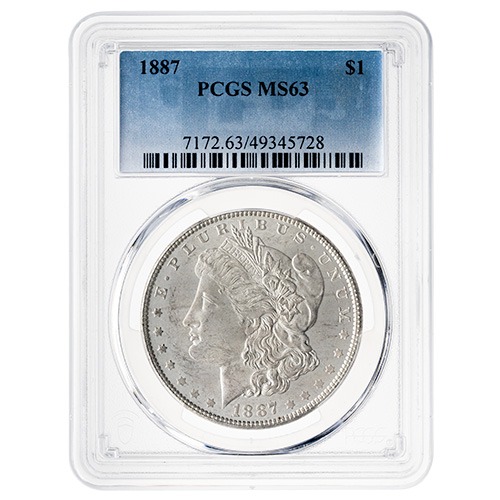
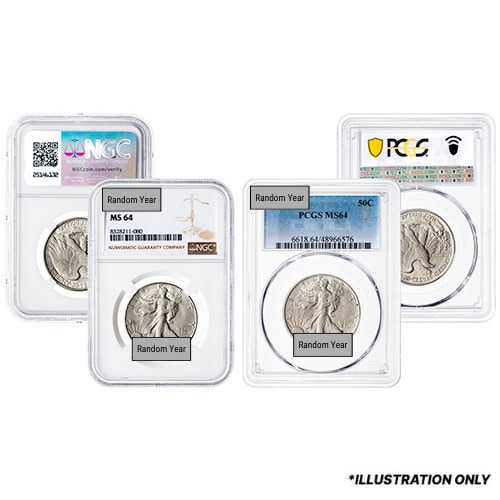
Certified historic U.S. silver coins

Certified silver coins bring documented condition assessments to historic U.S. coinage. This selection centers on independently graded pieces, with distinctions in design, denomination, date, and condition that help collectors compare options. Certification details and clearly stated grades provide context for exploring a familiar design, building a collection theme, or finding a piece connected to a coin enthusiast’s interests.
Grid
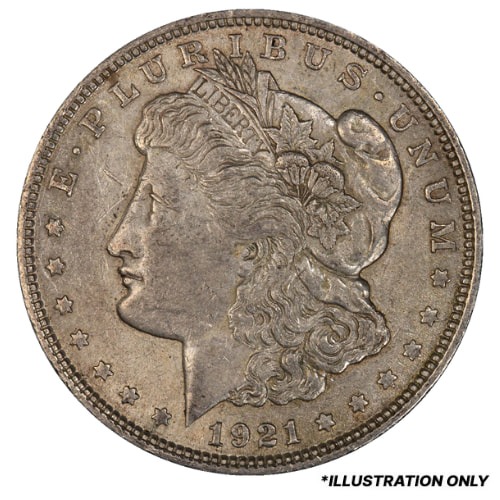
Pre-1921 NGC/PCGS MS-64 Morgan Silver Dollar - Random Year
A lustrous silver coin graded MS-64 by NGC or PCGS from a random year before 1921.
0 reviews
Pre-1935 NGC/PCGS MS-63 Peace Silver Dollar - Random Year
A certified silver coin featuring the iconic Peace Dollar design from a random year before 1935.
0 reviews
1916-1947 NGC MS-64 Walking Liberty Half Dollar Coin - Original Bag Fragment
A certified silver coin featuring the iconic Walking Liberty design and an original bag fragment.
0 reviews
1795 PCGS VF-35 US Flowing Hair Half Dollar Silver Coin
A historic silver coin featuring the iconic Flowing Hair design from early American mintage.
0 reviews
Grid

Certified historic U.S. silver coins

Certified historic U.S. silver coins are original coinage examined for authenticity and condition by an independent grading service and enclosed in a protective holder with an identifying label. They bring together two distinct interests: the physical character of silver and the history recorded in American circulating money. Certification provides a documented assessment of a coin, while its date, denomination, mint origin, design, and surviving surfaces tell the broader story. Many U.S. dimes, quarters, and half dollars struck from 1837 through 1964 used an alloy of 90% silver and 10% copper. The copper added hardness to a metal that, in its pure form, is relatively soft for everyday circulation. Earlier coinage and later transitional issues followed different composition standards, making the original specifications important to understanding an individual coin. Traditional 90% silver dollars contain approximately 0.7734 troy ounce of silver at their standard struck weight, although circulation wear can reduce the metal remaining in a particular example. Silver content is only one part of their identity. Changes in portraits, lettering, national emblems, and artistic style reflect different periods in American minting, while mint marks identify production facilities when present. On a well-preserved surface, small details such as feather edges, strands of hair, or folds in a garment reveal the engraver’s work. A circulated coin may show those same details softened by years of handling, giving it a different character without erasing its historical interest. These pieces are intended primarily for collecting, display, and the study of American coinage rather than routine spending or frequent handling. Their appeal can lie in a particular era, a hometown connection to a mint, or the craftsmanship of a design that once passed through everyday commerce. Even within the same denomination and date, differences in strike, wear, and surface appearance can make two coins look noticeably different when viewed side by side.

Grading gives collectors a shared vocabulary for describing those differences. The widely used Sheldon scale runs from 1 to 70, with higher numbers generally indicating a higher state of preservation within the applicable grading category. For historic circulation coinage, Mint State grades run from 60 through 70 and indicate that no circulation wear is evident; they do not mean that every surface is free of contact marks or that every detail was fully struck. A coin can retain its original mint luster yet show small abrasions from contact with other coins during production, storage, or transport. Conversely, a lightly circulated piece may retain considerable detail while showing friction on the highest points of its design. Strike quality and wear are separate considerations: a softly struck area was incompletely formed during minting, while a worn area lost detail afterward. Proof is also a method of manufacture, not simply another word for a high numerical grade. Depending on the issue, a proof may display specially prepared surfaces and sharply defined details. The certification label commonly records the denomination, date, grade, certification number, and relevant mint mark or designation. Some authenticated coins receive a details designation rather than a standard numerical grade because cleaning, damage, or another surface condition affects their assessment. Such descriptions help distinguish original wear from later alteration. Natural toning can range from pale gray to deeper charcoal or iridescent color, but color alone does not establish authenticity, originality, or grade. Certification numbers often correspond to records maintained by the grading service, providing another source of identification information. For larger denominations, silver dollar coins with certificate represent a related collecting category, although a separate paper certificate is not the same as a third-party grading holder. The document’s issuer, its contents, and its connection to the coin determine what it actually records.

Preservation remains relevant even after encapsulation. A grading holder reduces direct contact with the coin and keeps its identifying label alongside it, but the holder itself can become scratched, cracked, or otherwise damaged. Clear, intact plastic makes fine details easier to examine, especially when light moves across the surface and reveals luster, shallow marks, or wear. Storage conditions matter because silver can react with substances in its surroundings, and a holder does not make the enclosed coin immune to every environmental influence. Stable indoor conditions, limited exposure to moisture, and storage materials intended for coins are associated with long-term preservation. Soft plastics containing PVC, household cleaning products, and abrasive materials can cause problems for coin surfaces or their packaging. Polishing is especially consequential: it can remove original surface texture and leave fine lines that remain visible under magnification. Keeping a certified coin in its original holder preserves the physical connection between the piece and the grading label; once removed, that label no longer accompanies an intact certified unit. For display, fitted compartments and holder-compatible cases keep encapsulated coins separated and make dates and labels easy to read without repeated handling of the coin itself. A compact group arranged by denomination can illustrate how size and design changed across American coinage, while a date-focused collection can connect coins to a family milestone or a period of historical study. Certified historic silver coins can also serve as gifts for a graduate interested in American history, a relative who remembers silver circulating money, or a collector who enjoys studying minting techniques. Their significance comes from the individual recipient’s interests rather than an expectation about future outcomes. A clearly identified coin, its documented condition, and the surviving evidence of its manufacture offer something concrete to examine and discuss. Whether the attraction is a crisp inscription, a well-worn portrait, or the relationship between silver composition and everyday use, these coins preserve a small, tangible record of American craftsmanship and daily life.

FAQs