Shipwreck Coins & Recovered Treasure

Explore Shipwreck Coins & Recovered Treasure featuring coins and artifacts connected to historic maritime discoveries. This collection may include salvaged pieces, recovered coins, and treasure with distinctive provenance or preservation characteristics; available items, metals, dates, conditions, and documentation vary by product. Review each listing for specific details about origin, authenticity, and included certification.
Read More
Grid
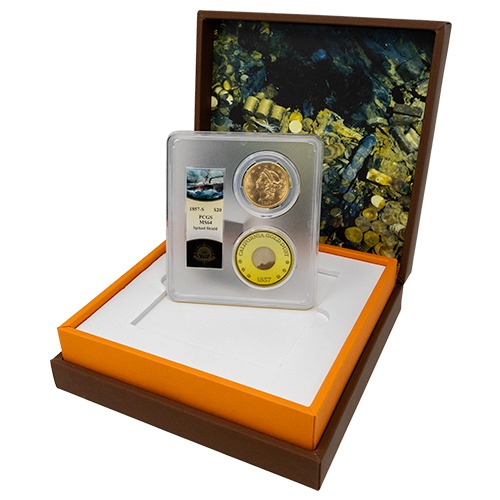
1857-S PCGS MS-64 (20A) $20 Liberty Gold Double Eagle – SS Central America Shipwreck with Gold Pinch
A historic gold coin recovered from the SS Central America shipwreck, paired with an authentic gold pinch.
0 reviews
1857 S.S. Central America Shipwreck Gold Pinch - 49er California Gold Rush
A historic gold pinch recovered from the legendary 1857 S.S. Central America shipwreck.
0 reviews
2013 1/4 oz S.S. Gairsoppa (Ship Wrecked) Britannia Silver Coin
A historic quarter-ounce silver coin recovered from the legendary S.S. Gairsoppa shipwreck.
23 reviews
Grid

Shipwreck Coins & Recovered Treasure

Shipwreck coins and recovered treasure bring together tangible history, maritime exploration, and the enduring appeal of hand-crafted currency. Each piece reflects a time when coins crossed oceans aboard wooden ships, passed through port cities, and changed hands in a world shaped by trade, empire, and long sea voyages. Centuries beneath the water can leave visible traces: darkened surfaces, uneven edges, mineral deposits, or a muted patina formed by the surrounding seabed. These details are not uniform, and that variation is part of the character of recovered treasure. Spanish colonial cobs, sometimes called pieces of eight, were struck by hand and often show irregular shapes, partial legends, or off-center designs. Later coins carried more standardized portraits, dates, and mint marks, yet their connection to a lost vessel gives them a story beyond what appears on the face. The 1715 Treasure Fleet, which sank off Florida’s east coast during a hurricane, is associated with gold and silver pieces recovered from the Atlantic. The Nuestra Señora de Atocha, lost in 1622 near the Florida Keys, became one of the best-known wrecks connected with recovered Spanish colonial currency. The SS Central America, often called the Ship of Gold, carried a substantial quantity of United States gold coinage before sinking in 1857. These historic events help explain why shipwreck coins remain a distinctive category within numismatics: they are not simply old coins, but surviving objects linked to a documented maritime chapter. Availability is naturally limited because only a small portion of known wrecks have been located, and an even smaller number have yielded identifiable coins or other artifacts. For collectors, the appeal may come from the combination of age, origin, craftsmanship, and the physical evidence of a long journey beneath the sea.

When examining shipwreck coins and recovered treasure, provenance deserves close attention. A piece presented as recovered material should be accompanied by documentation that explains its source, recovery history, and chain of custody. Certificates of authenticity, grading or identification records, salvage information, and references to the relevant recovery operation can help place an artifact within its historical setting. Documentation may vary according to the wreck, the era, the issuing authority, and the condition of the coin. Some pieces are individually recorded, while others are identified by a group, cargo lot, or recovery division. Legal salvage rights also matter, since historic artifacts recovered from the sea can be subject to maritime law, ownership claims, and jurisdictional requirements. Surface appearance alone cannot establish a coin’s origin. A dark patina may be associated with prolonged exposure to seawater, but similar color can develop through other processes, and irregular edges can reflect hand striking without proving a shipwreck connection. Careful descriptions should distinguish between a coin’s documented history and the general appearance of an underwater-recovered piece. Collectors often compare the stated wreck, date range, mint mark, metal, weight, dimensions, condition, and accompanying paperwork before adding an item to a collection. Storage is another practical consideration. Recovered coins may have delicate surfaces, and unnecessary cleaning can remove the patina or alter details that contribute to their character. Handling a piece by its edges, keeping it in suitable archival packaging, and avoiding household polishing products are customary ways to preserve its presentation. The appropriate approach can depend on the coin’s composition and conservation history, so the original holder and documentation are worth retaining whenever possible. In this category, the paperwork is part of the object’s story, not an afterthought.

Shipwreck coins can suit collectors drawn to maritime history, early commerce, colonial-era craftsmanship, or the tangible side of archaeology. They may also appeal to someone building a collection around a particular region, century, mint, or type of coinage. A recovered silver piece can serve as a conversation piece in a study or display case, while a small documented artifact may make a thoughtful gift for a history enthusiast, museum visitor, diver, sailor, or reader fascinated by lost expeditions. The best fit often depends less on size than on the story attached to the item. Some people enjoy studying the details under magnification: a partial date, a crown, a cross, a mint mark, or the evidence of hand striking. Others are drawn to the broader narrative, imagining a vessel leaving port with cargo below deck and meeting a storm far from shore. Collectors who prefer a modern presentation may look for recovered coins housed in holders with printed documentation, while those interested in the raw character of discovery may appreciate visible surface variation and irregular form. Shipwreck coins also sit naturally alongside books, nautical maps, historical prints, and other objects connected to exploration and seafaring. For additional material related to collectible coins, browse Rare Coin Collector Presents. As the weather turns cooler and more time is spent indoors, a carefully documented piece can invite closer study, family conversation, and a deeper appreciation for the people, places, and technology behind its recovery. Domestic orders of $199 or more ship and include shipping coverage at no additional charge, giving shoppers another practical detail to review alongside authenticity records, condition, metal content, and historical documentation. In every case, the most meaningful feature is the connection between the object and its past: a small piece of metal that survived a voyage, rested beneath the water, and returned to the public record with its history still attached.
Read More

FAQs